Review · TBILISI
Mtskheta, Jvari, gori, uflistsikhe, history and panorama (group tours)
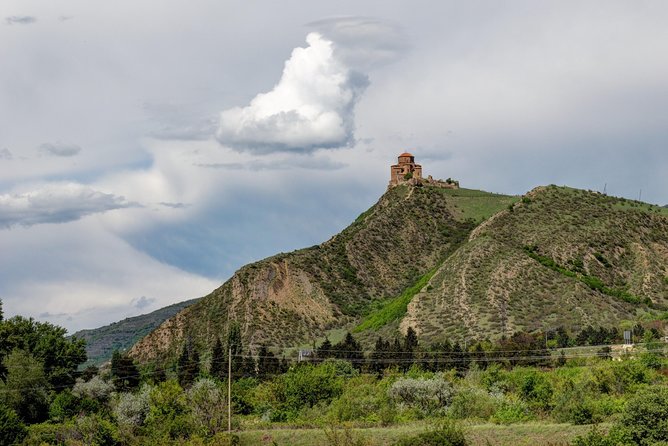
Jvari’s hilltop view gives this day its strongest opening: below you, the Aragvi and Kura rivers meet beside Mtskheta, Georgia’s old religious center. From there, you move through medieval churches, a pre-Christian cave city, and Gori, the birthplace of Joseph Stalin.
I like the wide historical range packed into one outing, and I like the low price of $19 for roughly nine hours with transport and a guide. Guides such as Luka, Paata, Tornike, Emilia, and George have earned especially warm praise for clear explanations and friendly help.
The catch is consistency. Several people found the English commentary short compared with the Russian version, and some described rushed stops or unsafe driving. Also check the exact schedule and admission fees before you go.
Key points to know before booking
- Jvari gives you the day’s best panorama: The sixth-century monastery looks over Mtskheta and the meeting point of the Aragvi and Kura rivers.
- Mtskheta supplies the strongest church visit: Svetitskhoveli Cathedral is the patriarchal cathedral of the Georgian Orthodox Church.
- Uplistsikhe is the most unusual stop: You walk through an ancient rock-cut settlement with rooms, passages, religious spaces, and views over the Kura Valley.
- Gori and the Stalin Museum may be optional: The museum visit is described as being taken at the group’s request, so confirm whether it is part of your departure’s plan.
- The language balance matters: The tour is offered in English, but some departures have included much more Russian than English.
- Bring extra cash: Lunch is not included, and Uplistsikhe and the Stalin Museum require separate admission payments.
Four eras of Georgia in one long day
This excursion works because the sites tell different chapters of Georgian history. You begin with Christianity on a wooded hill, continue to the country’s old spiritual capital, then step much farther back into a pagan cave settlement. Gori adds a difficult modern chapter through Stalin’s personal story.
That range is the main reason to choose this tour instead of a simple Mtskheta visit. You see more than pretty churches. You also get a sense of how Georgia moved from ancient trade and religious ritual to Soviet political power.
The day begins at 9:00 a.m. from 3 Vakhtang Gorgasali Street in Tbilisi, with the outing ending back at the meeting point. The group is capped at 15 people, which is a useful size for a minibus tour, though the quality of the day will depend heavily on the guide assigned to your departure.
The advertised duration is about nine hours. One provider response elsewhere describes the program as four to five hours, so I would treat the nine-hour schedule as the safer planning figure and ask for clarification before booking. Road time, lunch, church visits, and the cave complex make this a full day outside the capital.
More History Tours in the world:
- New York City: American Museum of Natural History Ticket
★ 4.5 · 15,447 reviews - History and Hauntings of Salem Guided Walking Tour
★ 5.0 · 14,564 reviews - Colosseum: Underground and Ancient Rome Tour
★ 4.7 · 12,691 reviews
Jvari Monastery and the river meeting point
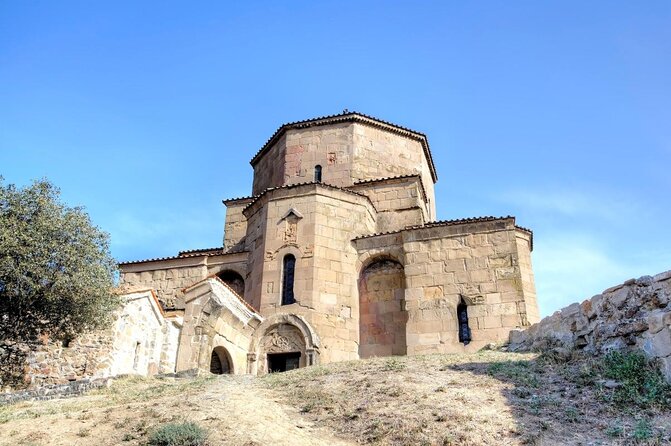
Jvari Monastery is the first major stop, and it is a smart choice. Set high above Mtskheta, the sixth-century church gives you an immediate sense of why this area matters. You can look down toward the old city and see the Aragvi and Kura rivers coming together.
The view is more than a photo stop. Mtskheta sits in a natural corridor, and the hill explains its importance better than a paragraph of history can. The route also connects with literary images associated with Mikhail Lermontov’s poem Mtsyri, as well as the journeys of writers including Pushkin, Tolstoy, Dumas, and Tchaikovsky.
Plan on about an hour here. Admission is listed as included, but this is still a walking visit with uneven ground and an uphill setting. Wear shoes with a firm sole, especially if the weather has been wet.
Jvari is an active religious site, so modest clothing is the sensible choice. The appeal is strongest on a clear day, when the river junction and surrounding hills are easy to read. In poor weather, the panorama loses much of its force, and the operator says the tour may be rescheduled or refunded if conditions make it impractical.
Svetitskhoveli Cathedral in Mtskheta
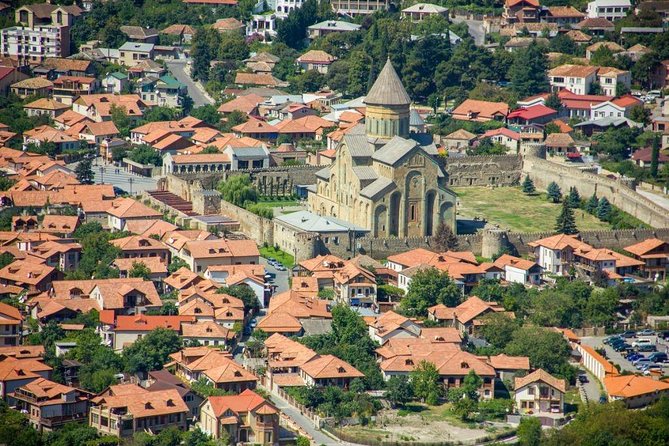
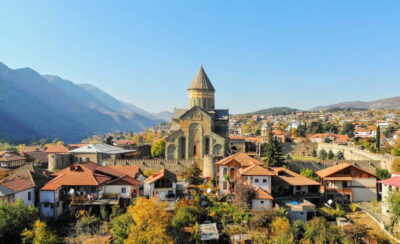
Svetitskhoveli Cathedral is likely to be the emotional high point for anyone interested in Georgian Christianity. The cathedral is the patriarchal center of the Georgian Orthodox Church and occupies an important place in the religious story of Mtskheta.
The visit focuses on the cathedral’s past, its major events, and the Christian relic traditions connected with the site. The information provided identifies the tunic of Jesus Christ, the mantle of Elijah the Prophet, and the relics of St. Andrew the First-Called among the sacred associations you will hear about.
Give this stop your attention rather than treating it as another quick church photo. The architecture, religious use, and stories work together. One particularly positive account described Svetitskhoveli as the best part of the day, which makes sense if you prefer a living place of worship to a museum display.
The schedule allows about an hour. That is enough for an introduction, though not for a slow architectural study. If your guide provides only brief English explanations, read the site information carefully and use your free moments to look at the stone carving, interior decoration, and layout.
Mtskheta also gives you a welcome change of pace after Jvari. Jvari is about the view and setting. Svetitskhoveli is about the depth of Georgia’s Christian tradition.
Uplistsikhe, where stone becomes a city
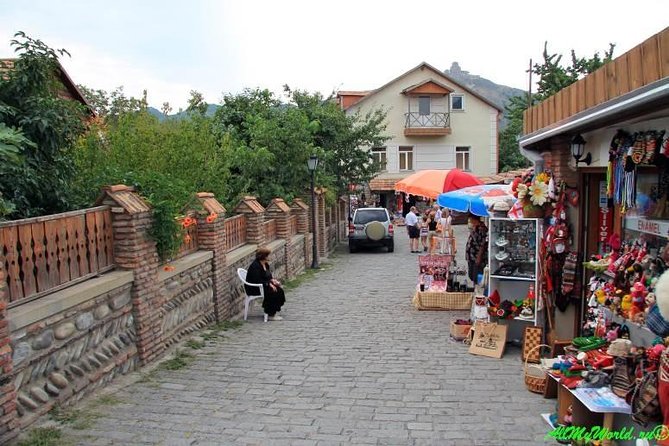
Uplistsikhe is the day’s most distinctive stop. This ancient cave settlement dates from the end of the second millennium to the beginning of the first millennium BC, according to the supplied description. Instead of entering one isolated cave, you walk through a network of carved rooms, passages, utility spaces, and ritual areas.
The site helps you picture a pre-Christian Georgia. Your guide is meant to explain pagan ceremonies, daily life, and Uplistsikhe’s links with ancient states such as Urartu and Media. The settlement also sat near trade routes, which helps explain why a place cut into rock could grow into an important center.
You will walk through a stone maze, climb around the remains, and look across the Kura Valley. The terrain is a real part of the experience. Comfortable shoes and practical clothing are essential, and you should be prepared for sun, wind, uneven steps, and exposed sections. The information does not promise shade or easy access throughout the site.
The planned stop is about two hours and 20 minutes, including time at a local restaurant. That sounds generous, but the actual pace can vary. Some departures have been praised for the way the guide brought the cave city to life. Others have been criticized for rushing through Uplistsikhe, with too little time to see the complex properly.
This is the stop where guide quality matters most. A strong guide can explain how rooms functioned and why the settlement mattered. A weak or distracted guide leaves you walking through bare stone without much context. If Uplistsikhe is your main reason for booking, ask whether the departure will allow the full scheduled time.
The entrance fee is listed inconsistently as 15 or 17 GEL in the supplied information. Since the more detailed payment notes say it is not included, budget for a separate ticket and confirm the current amount before departure.
Same old streets, another chapter:
- Lisbon: History, Stories and Lifestyle Walking Tour
★ 4.8 · 10,902 reviews - London Small Group Tour of Historical Pubs
★ 5.0 · 10,422 reviews - Prague: Oldtown, Medieval Underground & Dungeon History Tour
★ 4.3 · 10,277 reviews - Charleston’s Old South Carriage Historic Horse & Carriage Tour
★ 5.0 · 10,023 reviews
Lunch at a local restaurant
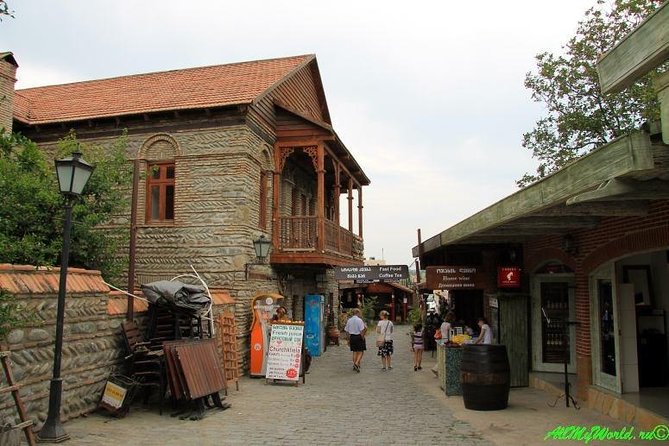
A local restaurant stop is built into the Uplistsikhe portion of the day. Lunch is not included in the $19 price, so you pay for your own meal.
This is useful rather than luxurious. A meal break keeps the long outing from becoming one continuous sequence of monuments, and it gives you a chance to try local products. One account praised the restaurant stop, while another found the food heavy with oil and the service less appealing.
That difference is worth keeping in mind. This is a practical group lunch, not a carefully chosen food tour. If you have a sensitive stomach or specific dietary needs, ask what will be served and bring a small snack as backup. The supplied information does not provide a fixed menu.
Gori and the Stalin Museum
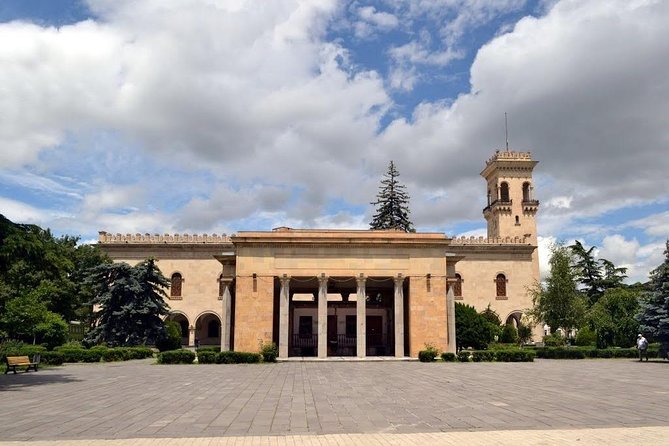
Gori adds a very different kind of history. It is Stalin’s birthplace, and the museum presents his sculpture, personal possessions, furniture, and a guided museum visit.
The museum is listed as an optional stop at the group’s request. That wording matters. Some departures may include it, while others may move on or adjust the schedule. If you specifically want the museum, confirm this before paying and ask how much time will be allocated.
The museum can be useful if you want to examine how a political figure is presented in his hometown. It is also a place where the tone may feel more complicated than the surrounding church visits. You are not simply looking at an ancient monument. You are confronting the memory of a dictator responsible for mass suffering, while also seeing the way a city preserves and frames his personal story.
The separate admission is listed as 15 or 17 GEL, so again, check the current price. Some descriptions call the museum paid, while one complaint says the advertising was unclear about admission. I would not assume it is covered by the tour price.
If your priority is medieval Georgia, you may find the museum less rewarding than Mtskheta and Uplistsikhe. If modern political history interests you, Gori gives the day a sharper edge.
The guide can make or break the experience
The best accounts name the guide, and that is revealing. Luka is praised for making each site more engaging through historical explanations. Paata is described as warm, helpful, and particularly good at connecting history with the places you see. Tornike is credited with clear, easy-to-follow explanations, while Emilia and George also received strong personal praise.
At the same time, the departure quality is not uniform. Several complaints describe very short English explanations, with much fuller commentary delivered in Russian. One account says about 85 percent of the spoken tour was in Russian. If you are booking specifically for English, contact the operator and ask how the language will be divided on your date.
There are also serious complaints about rude guiding, weak explanations, and unsafe driving, including phone use while driving. These are not minor matters. The tour price is low, but low cost should never mean accepting careless road behavior.
The group limit of 15 gives you a reasonable chance to ask questions, but it does not guarantee a particular guide. If the provider can confirm Luka, Paata, Tornike, Emilia, or George, that may help you decide. If not, go in knowing that the guide is the largest unknown.
What the $19 price really covers
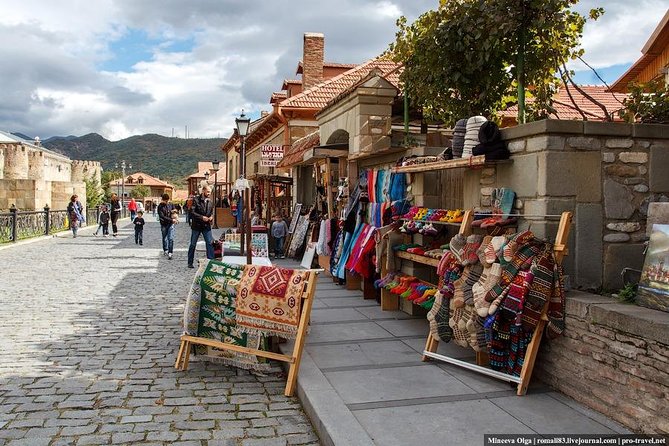
At $19 per person, this is an unusually inexpensive way to reach several major sites outside Tbilisi. The price includes transport and guide service, and it removes the need to arrange separate rides to Jvari, Mtskheta, Uplistsikhe, and Gori.
The value is strongest if you want breadth. You get churches, a cave city, river views, and the option of a political museum in one day. Hiring separate transport would normally require more planning, and you would lose the convenience of a group route.
The low price also explains the compromises. Lunch is extra. Site admission is extra. The vehicle is shared. The schedule may feel tight, and the guide may divide attention between English and Russian speakers.
I would budget for the Uplistsikhe ticket, the possible Stalin Museum ticket, lunch, and any small personal expenses. Because the admission amounts appear as both 15 and 17 GEL, confirm the latest figures before setting your budget.
Who should book this day trip?
I would choose this tour if you have limited time in Tbilisi and want a broad introduction to Georgia beyond the capital. It suits people who enjoy historical variety and do not mind spending most of a day on the road.
It is also a good fit if your priorities include:
- A hilltop monastery and major river panorama
- Georgian Orthodox churches
- Ancient ruins with an unusual setting
- A low-cost shared excursion
- The option of adding Gori and Stalin-related history
I would hesitate if you want slow, detailed visits or guaranteed English commentary throughout. The day may feel hurried at Uplistsikhe, and the language balance can vary. It is also not ideal for anyone who wants a food-focused outing, since lunch is simply a paid restaurant stop.
Book at least 24 hours ahead if you want the free cancellation option. The tour requires good weather, and changes made within 24 hours are not refundable.
Final verdict: strong route, uneven execution
The route itself is excellent. Jvari and Svetitskhoveli show Georgia’s Christian heart, Uplistsikhe brings ancient pagan life into view, and Gori adds a modern political question. For $19, that is a lot of ground and history.
The risk is not the destinations. It is the execution. Ask about the guide’s English, the exact order of stops, whether Gori is included, the current entrance fees, and how much time you will receive at Uplistsikhe. If those answers are clear, this can be a very good-value day outside Tbilisi.
I would book it for variety and price, but not blindly. If your main goal is a careful English-language history lesson, a private guide or a smaller specialist tour may be worth the extra cost.
FAQ
Where does the tour start?
It starts at 9:00 a.m. from 3 Vakhtang Gorgasali Street in Tbilisi, Georgia.
Where does the tour end?
The activity ends back at the meeting point in Tbilisi.
How long does the tour last?
The advertised duration is approximately nine hours.
What language is the tour offered in?
The tour is offered in English. Some departures also use Russian, and the amount of English commentary can vary.
How many people can join the group?
The group can include a maximum of 15 people.
Is lunch included?
No. Lunch at a local restaurant is not included in the tour price.
Are the Uplistsikhe and Stalin Museum tickets included?
No. Separate admission fees apply. The supplied information lists each fee as either 15 or 17 GEL, so confirm the current amount before departure.
Is the Stalin Museum always part of the tour?
The museum visit is described as available at the group’s request. Ask the provider to confirm whether it will be included on your departure.
Can I cancel for a full refund?
Yes, if you cancel at least 24 hours before the start time. Cancellations or changes made less than 24 hours in advance are not refundable, and poor weather may result in a new date or full refund.
Latest history tours reviewed in the world
- From Athens: Explore Ancient Corinth & Charming Nafplion★ 4.6 · 102 reviews
- From Athens: Explore Ancient Greece 4-Day Tour★ 4.7 · 73 reviews
- From Athens: Ancient Olympia Full-Day Private Tour★ 4.8 · 22 reviews
- From Albufeira: Wine Tasting & Historic Silves Tour★ 4.9 · 421 reviews
- From Albufeira: Historical Algarve Region Tour★ 4.7 · 585 reviews
- From Alexandria: Full-Day Guided Tour of Historical Sights★ 4.5 · 54 reviews
- Franklin: Ghost Tour in Historic Franklin★ 4.8 · 65 reviews
- Freiburg: Exciting City Tour with sightseeing and history★ 4.3 · 103 reviews
Tbilisi History Tours, compared.
Mtskheta: Ancient Capital of Georgia Half-Day Tour
Read our review →