
Review · QUEBEC CITY
Walking Tour Through Quebec City’s History
Quebec City’s past is written into its streets, walls, churches, and steep stairways. This small-group walk makes that past easier to read, using a costumed guide and a route that drops from the upper town toward the St. Lawrence River. You’ll see the only walled city in North America and finish at Place Royale, where Samuel de Champlain founded Quebec in 1608.
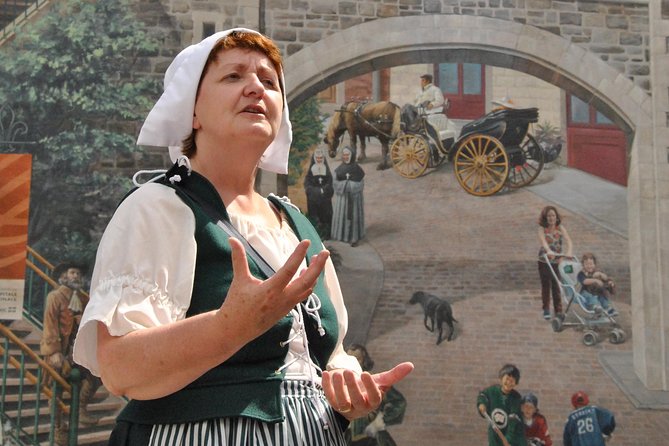
I like the way the tour joins history with orientation. Dufferin Terrace gives you a quick sense of the city’s setting, while Petit-Champlain and Place Royale show you the details you might miss alone. I also like the period-character guides, including guides such as Keven, Mark, Annabelle, Guy, Louise, Chantal, and Gary, who use stories and humor rather than a dry list of dates.
The main caution is the route itself. You’ll walk downhill from the upper town through cobblestones, steep streets, and stairs, including the old Breakneck Steps. Good shoes and a moderate level of fitness matter, and older walkers may find the descents tiring.
What makes this walk worth your two hours
- The route connects upper and lower Old Quebec, so you get both the grand views and the intimate lanes near the river.
- Dufferin Terrace frames Château Frontenac and the St. Lawrence River, giving you a useful first look at Quebec City’s setting.
- Place Royale links the modern visit to 1608, the year Samuel de Champlain founded Quebec.
- A costumed guide turns dates into personal stories, with some guides taking on the identity of a historical figure.
- Petit-Champlain and Breakneck Steps provide the most photogenic stretch, but also the steepest walking.
- The $24.03 price is fair for a two-hour orientation tour, especially if you take it early in your stay and use the route to plan the rest of your visit.
Starting above the old city at Dufferin Terrace
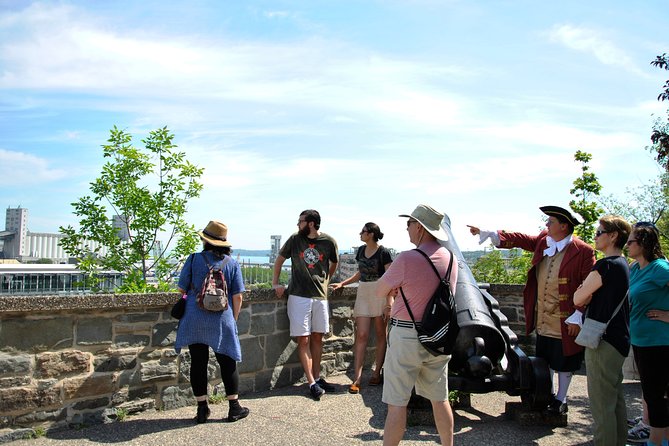
The tour begins at 12 Rue Sainte-Anne, in the upper part of Old Quebec. From there, the route reaches Terrasse Dufferin, the long wooden promenade beside Château Frontenac. This is a strong opening because it gives you more than a pretty photograph. You can see how Quebec City sits above the St. Lawrence River and why control of this high ground mattered so much.
The terrace is free to visit and works well in any season, though weather will affect how long you want to linger. The stop is scheduled for about 10 minutes, enough for orientation, photographs, and a first explanation of the city’s role as a fortified center.
I appreciate that the tour starts with the broad view before moving into narrow streets. You first see the city as a strategic place, then learn how people lived within it. The Château Frontenac provides an unmistakable landmark, so you can find your way back to this part of town later.
The terrace can also be busy, and wind or street noise may make it harder to hear every word. Stay close to the guide, especially if the group spreads out for photographs. The maximum group size is 20, which is still manageable, but not the same as a private walk.
More History Walking Tours in Canada
- Gastown Historic Walking Food Tour
★ 5.0 · 1,863 reviews - Vancouver: Gastown Historical Walking Food Tour
★ 4.8 · 539 reviews - Quebec City: Old Quebec Historical Walking Tour
★ 4.8 · 409 reviews
The Basilica and the story inside its walls
The route also includes the Basilica of Notre-Dame de Québec, a major stop for understanding the city’s religious and political past. The cathedral has occupied this site since 1647 and is a Canada National Historic Site because of its architectural value.
Inside, you can expect references to four governors of New France, bishops of the Diocese of Quebec, and a funerary chapel connected with François de Laval. Works of art, archival pieces, and elaborate interior decoration help show how much religious institutions shaped the city’s early life. You may also see the Holy Door.
The amount of time inside can depend on the day and the guide’s route, so think of this as part of the historical walk rather than a dedicated church tour. One useful feature of the experience is that you can decide later if you want to return for a closer look. The guide supplies context, then you can set your own pace on a second visit.
This is one place where quiet attention helps. The tour is often story-driven and lively, but the basilica calls for a calmer pause. If church interiors are important to you, note the details you want to revisit after the group moves on.
Place Royale, where Quebec began
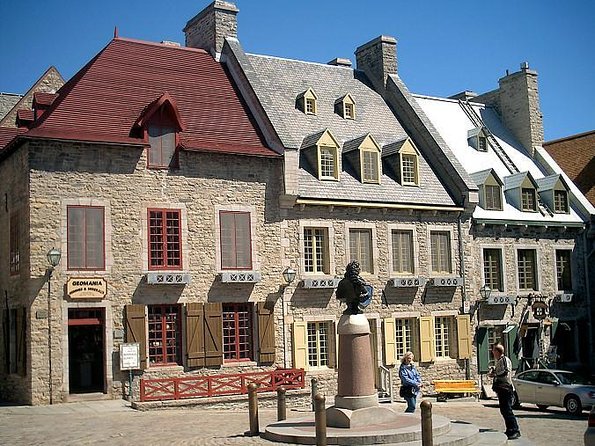
The route eventually reaches Place Royale, the official end point, but it is also one of the tour’s historical centers. Samuel de Champlain founded Quebec here in 1608, making this square the clearest place to connect the city you see today with its earliest French settlement.
The buildings around the square show French and British influences. That mixture is central to Quebec City’s character, and a guide can point out how the two traditions appear in the architecture and urban layout. The square is also home to the oldest stone church in North America, giving the stop added weight beyond its good looks.
Place Royale is compact, so it is easy to explore after the tour ends. I like the fact that the experience does not leave you at a random street corner. You finish at the birthplace of Quebec, with time to look around, take photographs, or continue through the lower town on your own.
This is also a useful place to pause and ask questions. The strongest guides on this walk make room for questions about rulers, wars, daily life, and how Quebec developed over time. The style is not purely academic. It is meant to help you remember the city by attaching facts to buildings and people.
Petit-Champlain brings the history down to street level
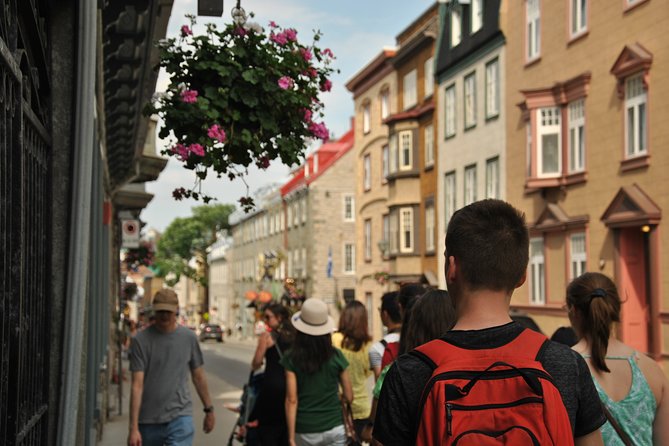
The longest part of the tour, about 45 minutes, takes place in Quartier Petit-Champlain and around Place Royale. This is the section most likely to charm you, but its value is more than atmosphere. The narrow streets and old buildings make the city’s age visible in a way that a museum display cannot quite match.
You’ll walk along Rue du Petit-Champlain, where the setting can feel almost storybook-like. The route helps you see the lower town as a place with its own identity, rather than simply an extension of the upper town. Small lanes, old façades, and the slope toward the river create a sharp contrast with the open terrace near Château Frontenac.
The guide’s storytelling matters most here. Several guides have been praised for making the history feel like a story, with humor and personal detail. Some take on the persona of a historical figure, even making striking comments about family life, mortality, and the hard realities of earlier centuries. That approach can make the material stick, though a particularly dramatic guide may feel like too much if you prefer a quiet architectural walk.
The tour generally focuses on the outside of buildings. That is not a weakness for everyone. You cover more ground and can decide which interiors deserve your own time later. If you want a long series of indoor visits, this is not the right format. If you want the city itself to be your exhibit, it works well.
More History Walking Tours in the world:
- History and Hauntings of Salem Guided Walking Tour
★ 5.0 · 14,564 reviews - Lisbon: History, Stories and Lifestyle Walking Tour
★ 4.8 · 10,902 reviews - Boston: Freedom Trail History Small Group Walking Tour
★ 5.0 · 6,450 reviews - Historic Charleston Guided Sightseeing Walking Tour
★ 5.0 · 6,216 reviews
Breakneck Steps are short, steep, and worth a look
The Escalier Casse-Cou, or Breakneck Steps, is only a five-minute stop, but it is a memorable one. Dating to the early French colony, it is the oldest outdoor staircase in Quebec City. From the steps, you get a fine view down toward Rue du Petit-Champlain.
The name tells you something about the route. You are not climbing a gentle museum ramp. The stairs and nearby slopes require care, particularly in poor weather or if your balance is limited. The tour requires moderate physical fitness, and that description should be taken seriously.
The reward is a quick look at how Quebec City’s upper and lower levels connect. The stairs also make a good photograph, but do not let the photo stop turn into a traffic jam. Listen for instructions and keep moving with the group.
If you have trouble with steep descents, ask about the route before booking. One person may find the hills enjoyable, while another may feel caught off guard. This is the clearest practical issue with the tour, and it is better to know it before you arrive.
A guide-led history lesson, not just a sightseeing stroll

The best reason to book this walk is the guide. Names such as Keven, Mark, Annabelle, Guy, Louise, Chantal, Gary, and Yves have been associated with lively, informed presentations, but your guide will depend on the departure. The common thread is a style built around stories, character, and questions.
You may hear about different rulers, the city’s changing identity, religious leaders, military events, and the people who lived through those changes. The walk is designed to cover roughly 400 years, so it cannot explain everything. Its job is to give you a framework that makes later sightseeing easier.
I especially value this kind of introduction on the first day in Quebec City. You get the lay of the upper and lower town, learn the names of key places, and discover corners you might not reach on your own. Afterward, you can return to the basilica, Place Royale, or Petit-Champlain with a better sense of what you are seeing.
The performance style is not for every personality. A guide who acts out a historical character can be funny and memorable, but the dramatic delivery may feel a little strong at times. If you prefer a quiet, strictly chronological lecture, this walk may not suit you. If you enjoy a guide who tells stories and plays with the material, it should be a good fit.
Price, group size, and practical value
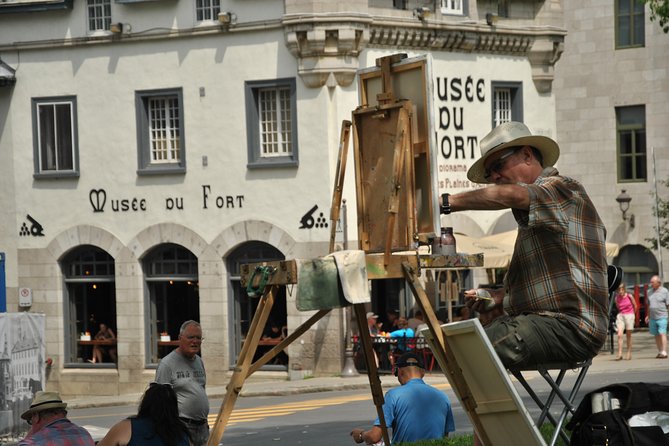
At $24.03 per person, this is a reasonably priced way to spend two hours in Old Quebec. You are paying for a local and professional guide, not admission to a museum or a set of indoor attractions. The real value is the interpretation, route planning, and time saved figuring out how the upper and lower town fit together.
A group of up to 20 people is small enough for a personal feel in most parts of the route. It is not guaranteed to be intimate, and hearing may become harder near street cleaning, garbage pickup, or other city noise. Stay near the guide and ask questions during quieter pauses.
The tour is offered in English and includes a mobile ticket. Service animals are allowed, and the start is near public transportation. Wear sturdy walking shoes, bring weather-appropriate clothing, and allow yourself enough energy for the hills.
The experience requires good weather. If poor weather cancels it, you can receive a different date or a full refund. You can also cancel up to 24 hours before the start time for a full refund. Changes or cancellations made inside that 24-hour window are not accepted for a refund.
Who should book this Old Quebec walk
I would choose this tour for a first visit, especially if you want history tied to real streets rather than delivered in a classroom. It suits couples, families with older children, and anyone who likes to ask questions while walking. One two-hour session can give you the basic map you need for several days of independent exploring.
It is also a good match for people who enjoy local guides with personality. The period costumes and historical roles make the walk more theatrical than a standard city orientation. That can be a real plus for you if dates and names tend to blur together in ordinary tours.
I would think twice if stairs are difficult, if you need a completely level route, or if you want extensive time inside the basilica and other buildings. You should also consider the age and attention span of your children. Two hours of historical explanation suits many teenagers and adults better than very young children.
My final take on the $24.03 experience
I would book this tour early in a Quebec City visit. The route gives you Dufferin Terrace, the basilica, Place Royale, Petit-Champlain, and Breakneck Steps in one clear sweep, while the cost stays modest. The guides’ strongest asset is their ability to turn Quebec’s past into a story you can follow.
The choice comes down to your legs and your preferred style. If you can manage hills, cobblestones, and stairs, and you like a guide who may perform a historical character, this is a strong introduction to Old Quebec. If you want a slow, level walk or a quiet indoor church tour, spend your money elsewhere and explore the city at your own pace.
FAQ
How long is the Walking Tour Through Quebec City’s History?
The tour lasts approximately two hours.
Where does the tour begin?
The meeting point is 12 Rue Sainte-Anne, Québec, QC G1R 3X3, Canada.
Where does the tour end?
The tour ends at Place Royale, the historic birthplace of Quebec City. You can continue exploring the area independently afterward.
What places are included on the route?
The route includes Dufferin Terrace, the Basilica of Notre-Dame de Québec, Place Royale, Quartier Petit-Champlain, and Breakneck Steps.
Is the tour physically demanding?
You should have a moderate level of fitness. The route includes hills, cobblestones, and stairs, including a downhill walk from the upper town toward the waterfront.
How many people can join the tour?
The maximum group size is 20 people.
Latest history tours reviewed in the world
- From Athens: Ancient Olympia Full-Day Private Tour★ 4.8 · 22 reviews
- From Athens: Explore Ancient Corinth & Charming Nafplion★ 4.6 · 102 reviews
- From Athens: Explore Ancient Greece 4-Day Tour★ 4.7 · 73 reviews
- From Albufeira: Wine Tasting & Historic Silves Tour★ 4.9 · 421 reviews
- From Albufeira: Historical Algarve Region Tour★ 4.7 · 585 reviews
- From Alexandria: Full-Day Guided Tour of Historical Sights★ 4.5 · 54 reviews
- Franklin: Ghost Tour in Historic Franklin★ 4.8 · 65 reviews
- Freiburg: Exciting City Tour with sightseeing and history★ 4.3 · 103 reviews
Quebec City History Tours, compared.
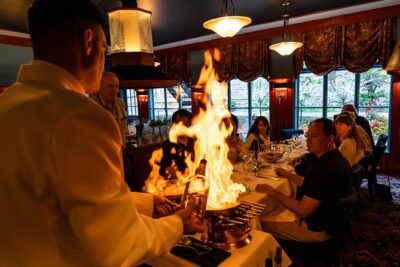
Evening Gourmet Tour 5 Course Dinner – History and Food in Old Quebec City
Read our review →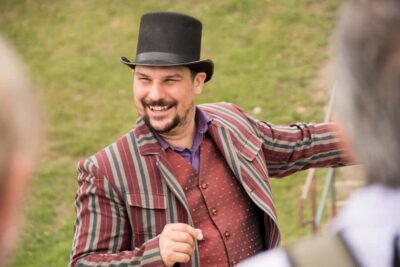
Quebec City: Old Quebec Historical Walking Tour
Read our review →
Browse the lists this tour appears in