Review · MEXICO CITY
Walking Tour of the Historic Center of Mexico City
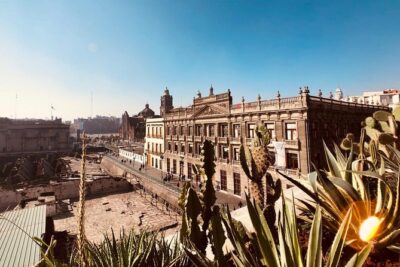
Mexico City’s historic center makes the most sense on foot, where a cathedral, an Aztec temple, a colonial plaza, Diego Rivera murals, and a grand post office can all appear within a few blocks. This three-hour small-group walk connects those layers without asking you to sort out the city’s long story on your own.
I like the mix of big sights and smaller clues, especially the archaeological window and the courtyard murals in the Ministry of Education. I also like the guides’ practical care: Fernanda, Luis, Alexia, Nat, and Benjamin are noted for clear English, good answers, shade breaks, street-crossing help, and a pace that can work for a mixed group.
The catch is simple: this is a real city walk at high altitude, with cobblestones, sun, and limited places to sit. One group moved slowly enough that it missed part of the planned route, so anyone with walking limits should think carefully before booking.
Key points to know before you book
- A compact route with major history: You move from the Zócalo and the Aztec world to colonial Mexico, the independence era, the Revolution, and modern city life.
- Small groups capped at 10: This makes questions easier and lets the guide adjust the pace more than a large coach tour can.
- Diego Rivera murals are a highlight: The Ministry of Education holds about a third of the murals he painted during his career.
- Most of the experience is outside: The cathedral and Palacio Postal are explained from the exterior, while some admission fees are not included.
- The route ends near Bellas Artes: You finish beside the Palace of Fine Arts and the House of Tiles, a useful spot for continuing your own sightseeing.
- Bring walking stamina: Expect around three hours on foot, often over uneven streets and in changing weather.
Why this is a smart first look at Centro Histórico
The best feature here is not any single building. It is the order of the route. You begin at the center of present-day Mexico City, stand above the former Aztec capital, then follow the city through Spanish rule, trade, religion, art, politics, and daily life.
That sequence gives you a usable framework for later sightseeing. After the tour, the National Palace, Templo Mayor Museum, Metropolitan Cathedral, Bellas Artes, or the National Museum of Art will feel less like isolated attractions.
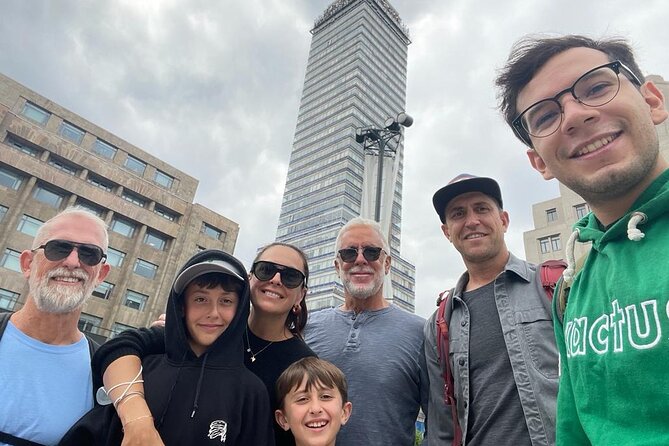
The maximum group size of 10 matters. In a small group, you can ask why a building looks the way it does, stop for clarification, or request a little more time with something that interests you. The guides also appear to treat the walk as a conversation rather than a nonstop speech. Alexia is noted for combining history, architecture, current life, and thoughtful commentary, while Luis is praised for sharing recommendations as well as facts.
You should still set your expectations correctly. This is an overview, not a museum tour with extended time inside every landmark. Several stops are short, and some are exterior explanations. The value comes from the connections between places, not from exhaustive visits to each one.
More History Walking Tours in Mexico
- Historic Downtown Walking Tour
★ 5.0 · 1,289 reviews - Mexico City: Historic Downtown Walking Tour
★ 4.8 · 1,039 reviews - Historical and Cultural Walking Tour of San Miguel de Allende
★ 5.0 · 641 reviews
Starting at the Zócalo, the city’s grand front room
The walk begins at Plaza de la Constitución, usually called the Zócalo. This huge square is surrounded by the National Palace, the Supreme Court of Justice, and shops associated with the city’s long silversmith tradition.
The Zócalo is the right place to begin because it shows how Mexico City gathers power in one public space. Government, law, religion, commerce, and ceremony all face the same square. You get about 15 minutes here, enough for orientation and a first explanation of how the modern center grew over the older city.
The square can be crowded, and open public spaces offer little shade. Guides such as Luis and Fernanda are praised for managing street crossings and finding shade when needed, but you should still wear a hat and carry water.
The Metropolitan Cathedral and the layers of Spanish Mexico
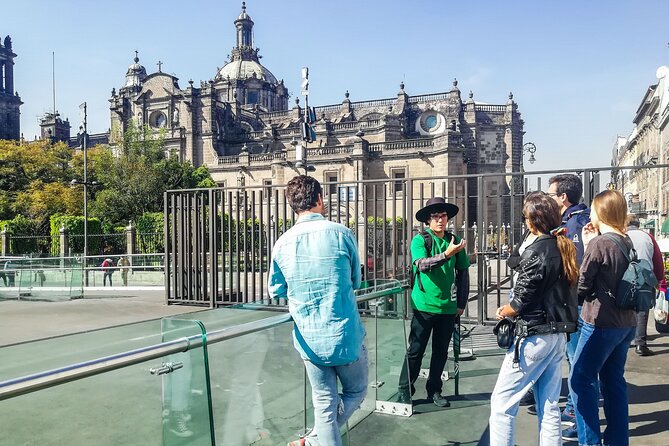
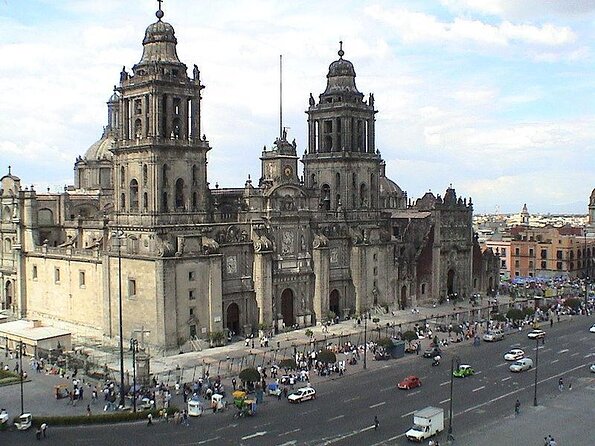
The Metropolitan Cathedral is covered from the outside, with about 10 minutes devoted to its construction, origins, and Baroque and neoclassical design.
That short stop is useful if you want to understand why the cathedral looks less uniform than a single-period church. Mexico City grew in stages, and the building reflects those changing tastes and eras. You will not receive an extended interior visit, and admission is not included, so plan a separate visit if you want to explore inside.
This is one of the tour’s recurring patterns: the guide gives you the story and visual details, then you decide which places deserve more of your own time. I find that a good arrangement on a first day, especially when you want orientation rather than a tightly packed list of admissions.
Templo Mayor and the city beneath the city
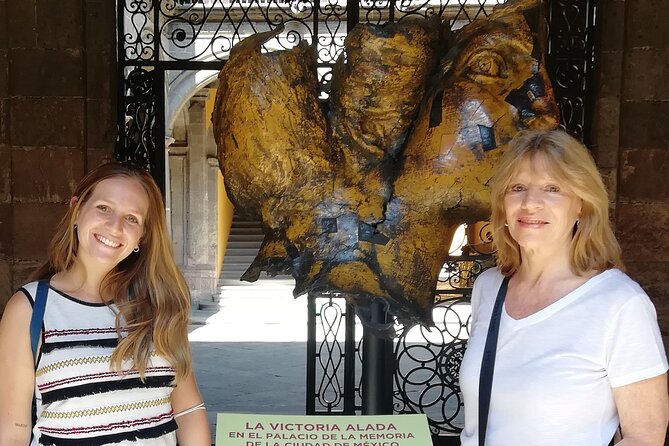
Near the cathedral, the route turns toward the exposed archaeological remains of Templo Mayor. The ruins belonged to the Mexica capital and were dedicated to the rain god and the sun god.
The guide explains why the temple mattered and how the old city was laid out. That geographical point is important. Modern Mexico City can make the pre-Hispanic capital hard to picture, but the ruins give you a physical reference for what came before Spanish rule.
The tour looks at the ruins from outside, so do not confuse this stop with a full archaeological museum visit. Still, even a brief explanation helps you read the center differently. Streets and buildings no longer seem to sit on an empty site. They occupy a place with a much older civic and sacred plan.
More Old Town and Historic Centre Walks in Mexico
- Historic Center Food Tour in Mexico City
★ 5.0 · 1,263 reviews - Mexico City Historical Centre Food Tour with 7 Authentic Tastings
★ 5.0 · 723 reviews - Private Walking Tour Gems of the Historic Center of Mexico City
★ 5.0 · 87 reviews
Diego Rivera inside the Ministry of Education
The Museo Vivo del Muralismo is one of the strongest parts of the route. You enter the Ministry of Education and spend about 25 minutes with murals by Diego Rivera. The building contains roughly a third of the murals he painted during his career.
This is not just a quick look at famous faces on a wall. The scenes cover festivals, traditions, trade, political life, and social struggle in early twentieth-century Mexico. The murals give you a visual way to discuss who held power, how ordinary people lived, and how art became part of a public argument.
This stop is also a good test of the tour’s flexibility. Fernanda is noted for allowing extra minutes in the education building courtyard so the group could look more closely at the murals. The listed visit is short, but a thoughtful guide can make it feel less hurried when the group has time.
Admission here is included. Since much of the experience takes place outside, this indoor courtyard provides a welcome break from sun and street noise.
Santo Domingo and the machinery of colonial power
Plaza de Santo Domingo brings the walk into the colonial period. The square witnessed major events during the viceroyalty of New Spain, and its story reaches beyond local politics.
You hear about trade in spices and goods with Asia, the Holy Inquisition, and French efforts to conquer Mexico. Those subjects show how Mexico City was tied to overseas commerce and European power. The square is not treated as a pretty colonial backdrop alone. It becomes a place where religion, money, empire, and military pressure met.
The 15-minute stop is enough to give context, but not enough for a full study of every building. If colonial architecture is your main interest, you may want to return later at a slower pace.
Plaza Tolsá, local subjects, and the Little Horse
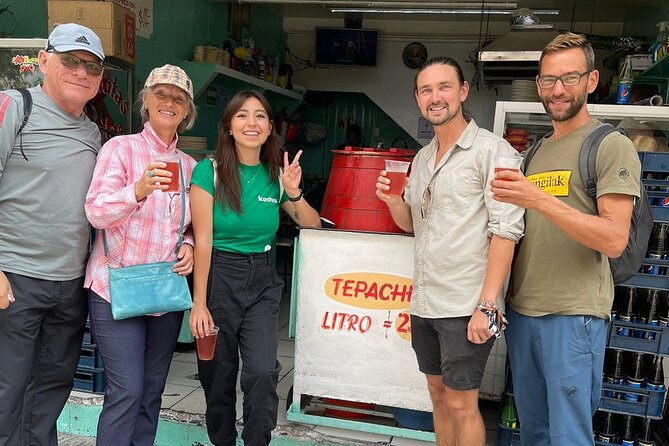
Plaza Tolsá offers a planned rest in the shade, which is welcome after several hours of walking. Here the discussion broadens to indigenous languages, Day of the Dead traditions, music, politics, and gastronomy.
I like this part because it moves beyond monuments. A good historic walk should explain how the past still shapes daily life, and these subjects help connect old buildings with Mexico as you experience it now. The guide’s own interests matter here, and the format leaves room for questions.
The square also contains the equestrian statue of Charles IV, widely known as El Caballito, or the Little Horse. You see the exterior of the National Museum of Art and the Mining Palace as well. The 20-minute stop combines architecture, a famous statue, and a chance to sit or stand in the shade.
The archaeological window beneath the street
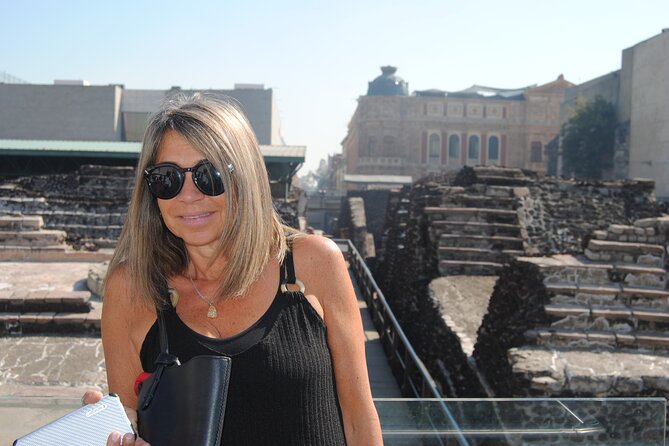
The Ventana Arqueológica is a brief but memorable stop. For about five minutes, you look at the past beneath a street near the main temple and hear how the remains were found.
Its small size is part of the appeal. You do not need a full museum visit to grasp the basic idea that the historic center contains older structures below its streets and buildings. The window turns a normal walk into an act of noticing.
Admission is included. This is also the kind of stop you could easily miss without a guide, since the clue is underfoot rather than towering above the street.
Bellas Artes, the Palacio Postal, and the House of Tiles
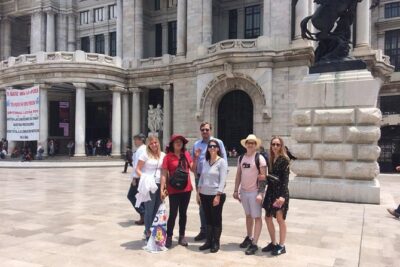
The route continues to the Palace of Fine Arts, one of Mexico City’s essential landmarks. The building’s exterior and interior are both works of art, though this tour focuses on the outside and gives you about 15 minutes.
That makes Bellas Artes an excellent photo and orientation stop, but not a substitute for visiting the performance and exhibition spaces. If you want to go inside, set aside separate time.
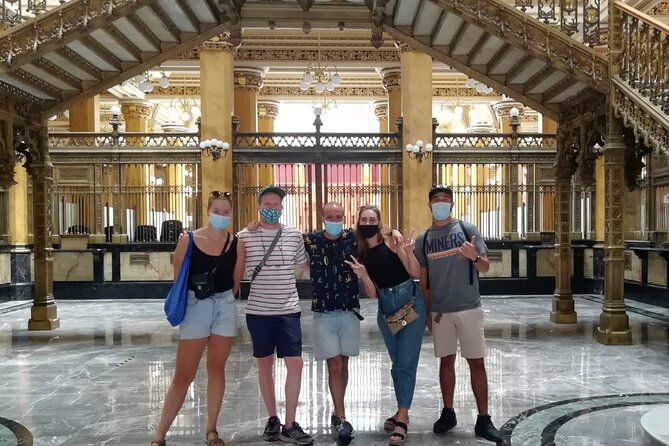
Nearby, the Palacio Postal receives about 10 minutes of attention. This grand building is still in operation, and the guide connects its design with the economic and political ambitions behind such a majestic public project. Admission is not included, so again, think of the stop as an introduction.
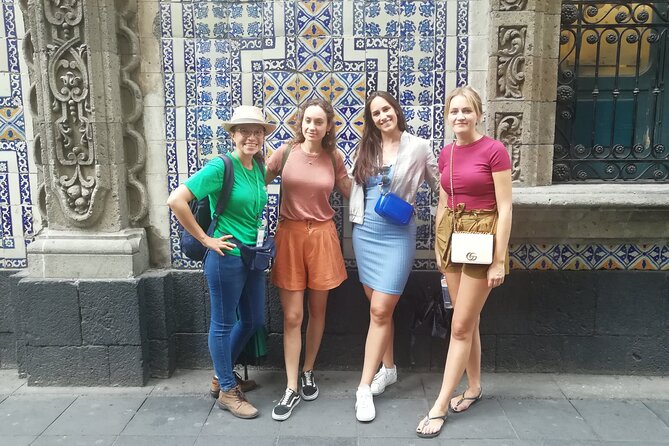
The final major sight is the House of Tiles, one of the city’s most photographed buildings. Its tiled facade is instantly recognizable and makes a fitting end to a route built around architecture. The walk ends at Edificio Guardiola on Avenida 5 de Mayo, beside Bellas Artes and the House of Tiles, so you can continue exploring without needing to retrace the route.
Pace, comfort, and the practical side of the walk
The tour is offered in English and uses a mobile ticket. It starts at the Zócalo, so you need to arrange your own way there. The area is near public transportation, but transportation to the meeting point is not included.
The group limit is 10 people, and that is one of the strongest practical reasons to choose this experience over a large sightseeing bus. The guides can answer questions and keep an eye on the group. Several guides are praised for warmth, humor, clear English, and patience, including Fernanda, Alexia, Luis, Nat, Benjamin, Sarah, Gabby, Oscar, Thomas, and Eduardo.
You should wear comfortable shoes and expect uneven surfaces. There may be long stretches without a place to sit, and the altitude can make a normal city walk feel harder than expected. The guide may help with shade and breaks, but you need to judge your own limits.
Service animals are allowed, and most people can take part. The experience requires good weather and a minimum number of participants. You can cancel for a full refund up to 24 hours before the local start time. Within 24 hours, the payment is not refunded. Tips, food, sweets, and some admission costs are extra.
Is the tour good value?
No price is provided here, so I cannot judge the exact cost against competing walks. I can judge what you receive for the time and format.
The value is strongest if you want a well-organized first orientation with a small group, an English-speaking guide, and a route that combines archaeology, colonial buildings, murals, public art, and modern cultural context. You are paying for the guide’s connections between the sights, not simply access to them.
It is less valuable if you want long interior visits or a specialist focus on one period. The cathedral and Palacio Postal are exterior stops, Templo Mayor is viewed from outside, and Bellas Artes is introduced rather than toured in depth. You may spend more later on individual admissions, but the walk helps you choose which places deserve that time.
Should you book this Mexico City walking tour?
I would book it as an early activity in Mexico City, especially if this is your first visit and you want the center to make sense quickly. The route covers an impressive range, and the best guides add humor, present-day context, personal recommendations, and useful care with shade and crossings.
Book it if you enjoy walking, asking questions, and seeing how pre-Hispanic, colonial, and modern Mexico overlap. Skip it if uneven streets, altitude, sun, or three hours on foot will make the day uncomfortable. For a slower visit, choose the tour only if you are comfortable treating it as a brisk introduction, then return on your own to the museums and buildings that catch your attention.
FAQ
How long is the walking tour?
The tour lasts approximately three hours.
Where does the tour begin?
It begins at Plaza de la Constitución in the Centro Histórico of Mexico City.
Where does the tour end?
It ends at Edificio Guardiola on Avenida 5 de Mayo, beside the Palace of Fine Arts and the House of Tiles.
Is the tour offered in English?
Yes. The experience is offered in English.
How large is the group?
The group can include a maximum of 10 people.
Are admission tickets included?
Admission is included for the Museo Vivo del Muralismo and the Ventana Arqueológica. The cathedral and Palacio Postal list admission as not included, while several other stops are free.
Does the tour include transportation?
No. Transportation to the meeting point is not included.
Are service animals allowed?
Yes. Service animals are allowed.
What happens if I cancel?
You receive a full refund if you cancel at least 24 hours before the local start time. Cancellations or changes made within 24 hours are not refunded or accepted. If poor weather or an insufficient number of participants cancels the tour, you are offered another date or a full refund.
Latest history tours reviewed in Mexico
- Private Walking Tour Gems of the Historic Center of Mexico City★ 5.0 · 87 reviews
- Private Tour Mexico City – Best Rated★ 5.0 · 220 reviews
- Private Historic City Tour + Street Food of Oaxaca – Best Rated★ 5.0 · 53 reviews
- Coba Private Tour – Ancient Ruins & Refreshing Cenote Swim★ 5.0 · 85 reviews
- Walking Tour in Mexico City for Exploring their Cultural Heritage★ 5.0 · 245 reviews
- Historical and Cultural Walking Tour of San José del Cabo★ 5.0 · 576 reviews
- Historical & Cultural Walking Tour of San Miguel de Allende★ 4.8 · 225 reviews
- Historical and Cultural Walking Tour of San Miguel de Allende★ 5.0 · 641 reviews
Mexico City History Tours, compared.

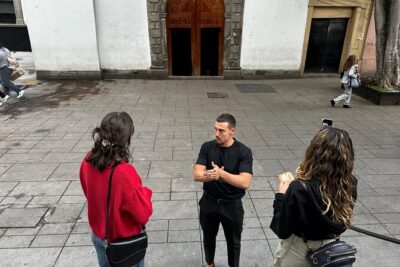
Mexico City Historical Centre Food Tour with 7 Authentic Tastings
Read our review →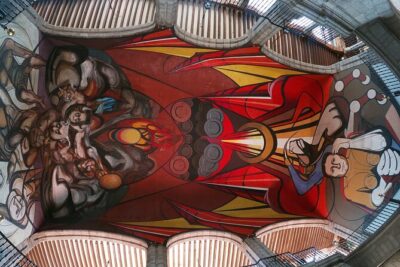
Walking Tour in Mexico City for Exploring their Cultural Heritage
Read our review →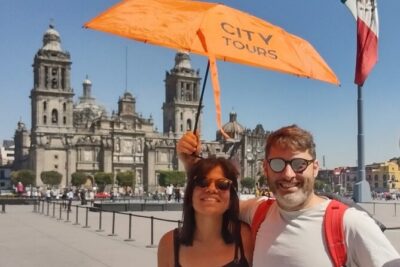

Tour to Teotihuacan with visit to ancient caves and CDMX transportation
Read our review →