Review · MEXICO CITY
Historic Downtown Walking Tour
Mexico City’s center makes sense when you walk it. In a few blocks, you move from the Aztec capital beneath your feet to the Spanish cathedral, grand 19th-century buildings, and the cultural power of Bellas Artes. I like the way this tour connects those layers instead of treating each sight as a separate photo stop. I also like the practical start-to-finish route, from the Zócalo to the National Museum of Art, which helps you get your bearings early in your visit.
The main consideration is pace. Three hours covers a lot, and some guides speak quickly when explaining complex history. The published details describe groups of up to 15, while the additional information allows as many as 25, so ask about the expected group size if hearing every word matters to you.
Key points at a glance
- The route links six major sights: You see the Zócalo, Templo Mayor, Metropolitan Cathedral, Plaza Manuel Tolsá, Palacio Postal, and Palacio de Bellas Artes.
- The best value is the historical connection: The guide explains how Aztec, Spanish colonial, Catholic, and modern Mexican culture overlap in the same compact district.
- Several guides receive especially strong praise: Estefania, Emiliano, Mar, Nadia, Mariel, Sandra, and Daniela are all named in positive comments, with clear English and good explanations noted repeatedly.
- The tour is a fast orientation: You get an outdoor introduction to Templo Mayor, not a full museum visit, so plan another visit if you want the archaeological collection.
- You finish near the National Museum of Art: The end point by the El Caballito statue puts you in a useful spot for continuing your day on foot.
- The price is modest for a three-hour guided walk: At $26.53 per person, the value depends mainly on how much historical context and local advice you want.
Why this is a smart first walk in Mexico City
I would put this tour near the beginning of a Mexico City visit. The historic center can feel like a jumble of plazas, government buildings, churches, museums, street activity, and layers of history that are not obvious at first glance. A good guide gives you a framework, so later visits to museums and landmarks have more meaning.
The route is especially useful because the main story is one of change. The Aztec city of Tenochtitlan once occupied this area. Spanish rule reshaped it around churches and colonial institutions. Later, independent Mexico filled the center with grand civic buildings, art, politics, and national symbols.
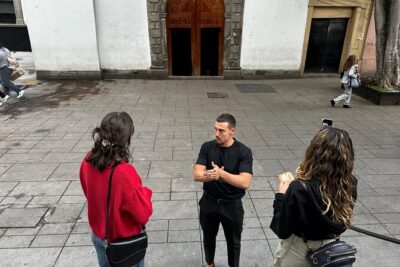
The walk does not try to cover the whole city. That is a strength. You stay in a compact part of Centro Histórico and spend enough time at each stop to understand why it matters. Guides named in the feedback, including Estefania, Emiliano, Mar, Nadia, Mariel, Daniela, and Sandra, are repeatedly praised for clear English, useful food suggestions, and explanations that connect politics, culture, and daily life.
You should expect a brisk walk rather than a slow architectural stroll. One person found the pace comfortable, while another had trouble keeping up when the guide moved ahead in crowded streets. Stay close to the guide, especially around busy plazas, and tell the guide early if you need a slower pace.
More History Walking Tours in Mexico
- Mexico City: Historic Downtown Walking Tour
★ 4.8 · 1,039 reviews - Walking Tour of the Historic Center of Mexico City
★ 5.0 · 870 reviews - Historical and Cultural Walking Tour of San Miguel de Allende
★ 5.0 · 641 reviews
Starting at the Zócalo, Mexico’s great public room
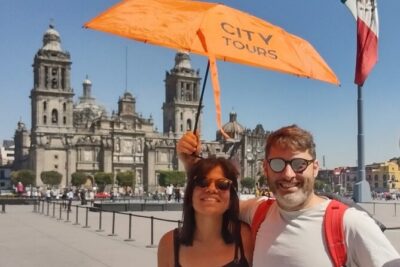
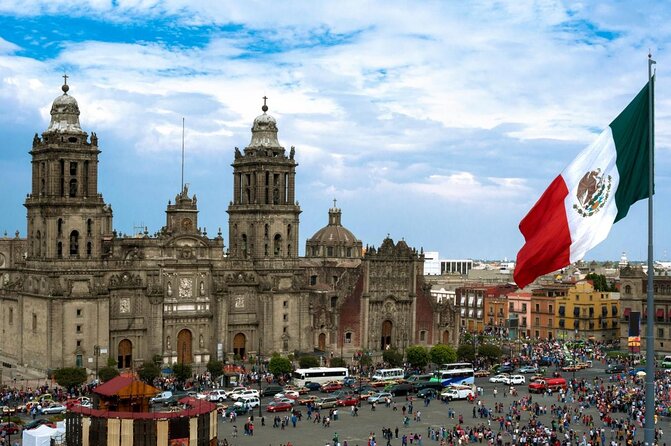
The tour begins at C. de Monte de Piedad 11, close to the Zócalo. This enormous square is the right place to begin because it is not just a plaza to cross on the way somewhere else. It is the symbolic heart of Mexico City and a major setting for national ceremonies, public gatherings, political events, and everyday city life.
Your guide uses the square to explain the basic shape of Mexico’s story. From here, you can understand how the city grew outward from its earliest center and why so many important buildings face this open space.
The stop lasts about 15 minutes, so do not expect a detailed study of every building around the square. Instead, use it as a scene-setting lesson. Look around as the guide speaks. The value lies in learning how to read the space before moving into the older and more detailed stops.
Because the starting point is near public transportation, you can reach it without arranging private transport through the tour. Transport to the meeting point is not included, so plan that part yourself.
Seeing Templo Mayor beneath the modern city
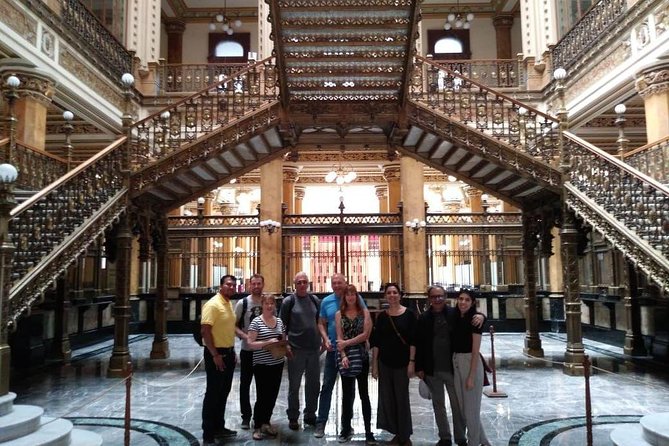
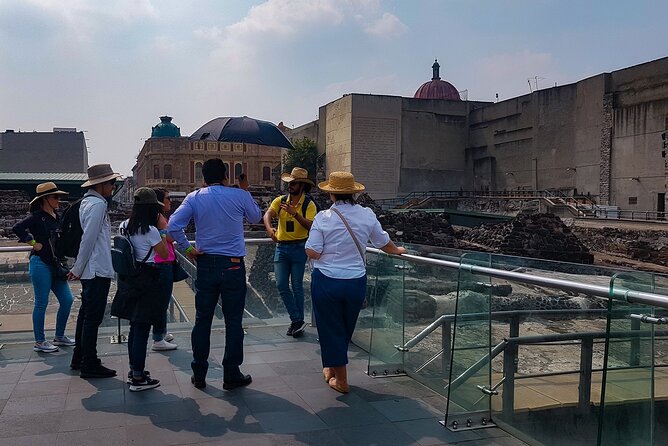
At Plaza Manuel Gamio, the tour turns toward the remains of Templo Mayor, the central religious complex of the Aztec capital. This is one of the most important moments of the walk because it makes the city’s earlier foundations visible.
You spend about 30 minutes in the area, learning about the ruins and the Aztec city that once occupied this ground. The guide’s role matters here. The exposed remains can be difficult to understand without a map, explanation, or sense of scale. A strong guide helps you picture the ceremonial center that existed before the Spanish conquest.
The outdoor portion is only an introduction. You will see some of the ruins, but a museum entrance is not part of the walking route. If archaeology interests you, plan to return for the Templo Mayor Museum. One useful comment about the tour was that the route made the museum visit feel like an obvious next step.
This stop also shows why walking works so well in the historic center. You are not simply being driven between old buildings. You can see how modern streets and colonial structures sit directly beside archaeological remains.
Entering the Metropolitan Cathedral
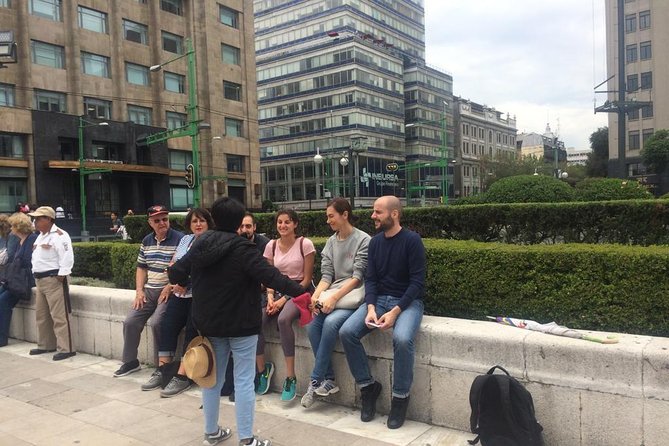
The Metropolitan Cathedral receives about 30 minutes, making it one of the more substantial stops. The tour goes inside, which gives you time to consider both the building and its role in Mexican religious life.
The cathedral is described as the heart of Catholic faith in Mexico. Your guide places it within the wider story of Spanish colonization and the transformation of the city after the conquest. The point is not only to admire the interior. You are also learning how religion, government, art, and public life became tied together in the center.
This is a good place to ask questions. Several guides are praised for answering questions clearly and explaining culture as well as architecture. Guides such as Daniela and Emiliano are noted for strong English and organized explanations, while Mar is praised for connecting history with food and everyday life.
The cathedral stop can feel short if you want a detailed architectural tour. Still, 30 minutes gives the guide room to explain the essentials without allowing one building to swallow the entire morning.
More Old Town and Historic Centre Walks in Mexico
- Historic Center Food Tour in Mexico City
★ 5.0 · 1,263 reviews - Mexico City Historical Centre Food Tour with 7 Authentic Tastings
★ 5.0 · 723 reviews - Private Walking Tour Gems of the Historic Center of Mexico City
★ 5.0 · 87 reviews
Plaza Manuel Tolsá and the changing face of Mexico City
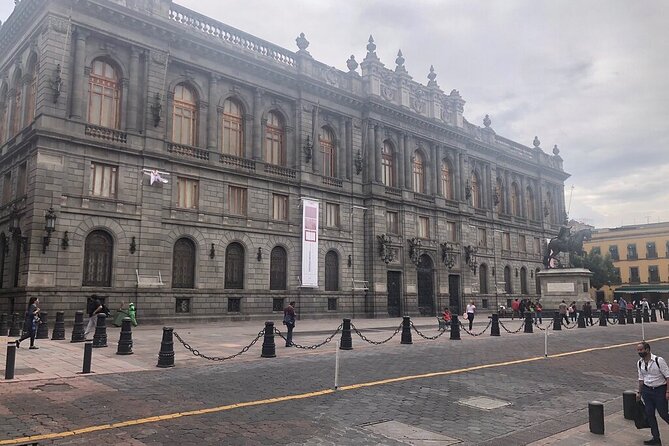
The walk continues to Plaza Manuel Tolsá for about 10 minutes. This is a brief stop centered on one of the city’s most emblematic statues.
It works as a transition between the older religious and archaeological sites and the grand civic architecture that follows. The statue and the surrounding square offer a compact lesson in how Mexico City presented itself in later periods, with formal public spaces and imposing buildings designed to project civic importance.
Do not expect a long pause here. Ten minutes is enough for an explanation and a few photographs, but not for a close study of the surrounding buildings. The guide’s interpretation is what makes this stop worthwhile.
Palacio Postal, an unexpectedly ornate stop
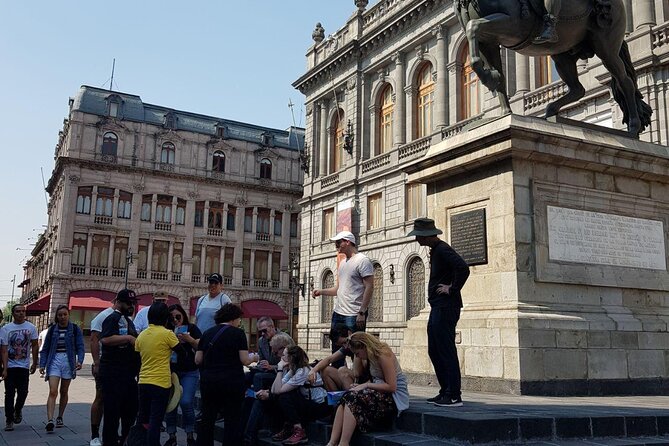
Palacio Postal is one of the most enjoyable surprises on the route. The tour goes inside this unusually glamorous post office, giving you a look at a working public building that is also an architectural showpiece.
The stop lasts about 15 minutes. That is enough to appreciate the decorative interior and hear why the building matters without turning the tour into an architecture seminar. I like this kind of stop because it takes you beyond the usual list of churches and museums. You see how civic life was presented through design and craftsmanship.
The building also helps break up the historical story. After ruins and religious architecture, Palacio Postal shows a later Mexico City interested in modern institutions, elegance, and public presentation.
Palacio de Bellas Artes and the final stretch
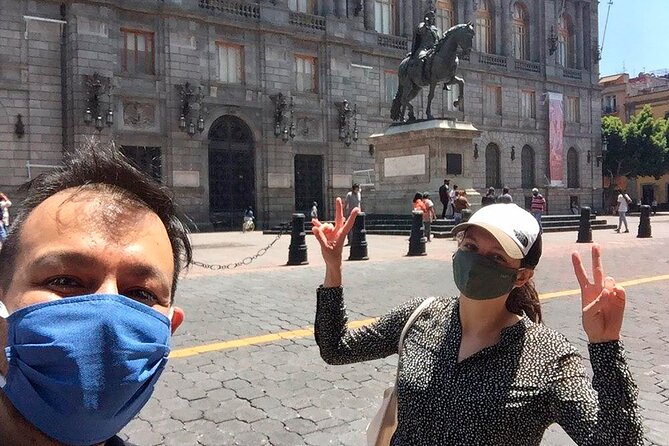
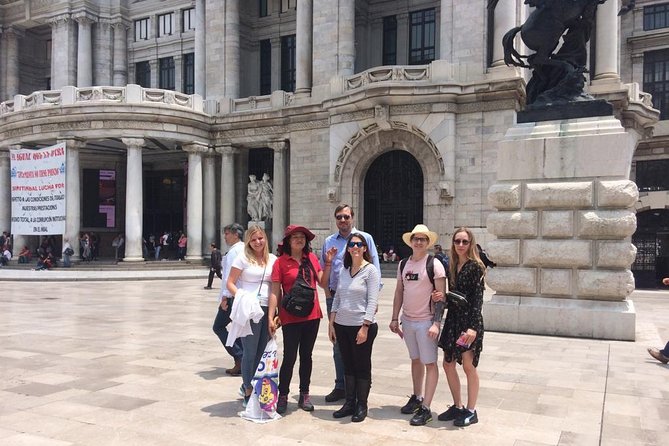
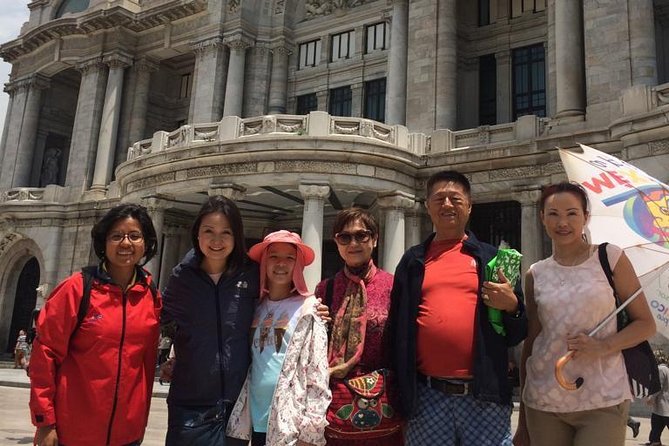
The tour finishes at Palacio de Bellas Artes, one of Mexico City’s most recognizable buildings. The stop lasts about 15 minutes and focuses on the art nouveau exterior and its place in the city’s 20th-century identity.
Bellas Artes is more than a beautiful building. It is a national cultural symbol, and the guide uses it to explain how Mexico City expressed its modern ambitions through art and architecture. You may leave wanting more time inside, but the walking tour does not provide a full museum visit.
The official end point is the National Museum of Art on C. de Tacuba, near the El Caballito statue and in front of the museum. That location is convenient because you can continue exploring the area after the guide leaves. Museum entrance tickets are not included in the tour price, so check admission costs before adding a museum visit.
What the guide adds to the three-hour route
The guide is the most important variable in this experience. The route itself is strong, but the same buildings can feel flat if the explanations are rushed or disconnected.
The strongest guide comments center on clear English, historical depth, good pacing, and practical suggestions. Emiliano is praised for strong English, a clear voice, and storytelling that made the history easier to follow. Estefania is repeatedly singled out for making the transition from the Aztecs to modern Mexico understandable. Mar is praised for pre-Hispanic history, food advice, and an easy manner. Nadia receives credit for accessible explanations, humor, and useful recommendations.
Other positive comments name Mariel, Sandra, and Daniela. The common thread is not theatrical performance. It is the ability to explain a lot without making the walk feel like a lecture.
There is some variation. One participant found a guide’s accent and fast speech hard to follow. Another felt the guide was less engaging than expected. A separate comment raised concerns about the handling of Frida Kahlo and Diego Rivera. These points do not outweigh the overall strong response, but they are a reminder that guide style can differ.
Price, group size, and physical demands
At $26.53 per person, this is a reasonable price for more than three hours with a certified local guide. You are paying for orientation and context rather than admission to a major museum. If you explored the same route alone, you would save the tour fee but likely miss much of the connection between the sites.
The value is best for a first visit, especially if you plan to explore several museums afterward. The tour can save you time by showing you which buildings deserve a return visit and by giving you food and sightseeing suggestions for the rest of your stay.
The walk requires a moderate level of fitness. There is no claim that the route is difficult, and several comments describe it as manageable, but you will be on your feet for roughly three hours. Wear comfortable shoes and keep water with you.
The group information needs a little care. The tour is presented as a small-group experience, with the main description listing a cap of 15 people. The additional details allow up to 25 participants. That difference may affect how easy it is to hear the guide, so check the current booking details if a truly small group is important to you.
English and Spanish tours are offered in the general description, while the supplied booking information lists English. Confirm your selected language when booking.
Who should book this walk
You should book it if you are new to Mexico City, want a history-based introduction, or prefer to understand a district before exploring its museums on your own. Families can benefit because the route mixes ruins, churches, public squares, art, and architecture rather than spending three hours inside one museum.
It also suits solo visitors and couples who want local food suggestions and a clear starting point for the rest of the trip. The guides often include recommendations for places to eat and things to see after the tour.
You may want something else if you prefer a slow photographic walk, extensive museum time, or a highly specialized architecture tour. The route is broad and brisk. Templo Mayor and Bellas Artes are introductions, not full visits.
Free cancellation is available up to 24 hours before the start time. Cancellations inside that window are not refunded, and changes made within 24 hours are not accepted.
Should you book the Historic Downtown Walking Tour?
For most first-time visitors, yes. The tour covers the essential center in a compact three-hour route and gives you the historical links that make the district easier to understand. Its strongest features are the cathedral interior, the outdoor Templo Mayor ruins, the unusual Palacio Postal, and guides who can explain culture as well as dates and buildings.
Book it early in your stay, then use the rest of the day to revisit the places that caught your attention. Just stay near the guide in crowded areas, expect a brisk pace, and confirm the group size and language before paying.
FAQ
How long does the Historic Downtown Walking Tour last?
The tour lasts approximately three hours and includes more than three hours of walking through Mexico City’s historic center.
What sights are included?
The route includes the Zócalo, Plaza Manuel Gamio and the Templo Mayor ruins, Mexico City Metropolitan Cathedral, Plaza Manuel Tolsá, Palacio Postal, and Palacio de Bellas Artes.
Does the tour go inside the Metropolitan Cathedral?
Yes. The cathedral stop includes going inside and lasts about 30 minutes.
Can I enter the Templo Mayor Museum during the tour?
The route includes the outdoor ruins at Templo Mayor, but it does not include a full museum visit. Museum entrance tickets are not included in the tour price.
Where does the tour begin?
The meeting point is C. de Monte de Piedad 11 in Centro Histórico, near the Zócalo.
Where does the tour finish?
The tour ends at the National Museum of Art on C. de Tacuba, near the El Caballito statue and in front of the museum.
Is transportation included?
No. Transport to the meeting point is not included. The meeting point is near public transportation.
What languages are available?
The tour is offered in English or Spanish in the general tour information. The supplied booking details specifically list English, so confirm your preferred language when booking.
How many people can join the tour?
The main description lists groups capped at 15 participants. Additional information allows a maximum of 25 travelers, so confirm the expected group size before booking.
Can I cancel for a refund?
Yes. You can cancel at least 24 hours before the local start time for a full refund. Cancellations or changes made less than 24 hours before the start time are not accepted or refunded.
Latest history tours reviewed in Mexico
- Private Historic City Tour + Street Food of Oaxaca – Best Rated★ 5.0 · 53 reviews
- Coba Private Tour – Ancient Ruins & Refreshing Cenote Swim★ 5.0 · 85 reviews
- Private Walking Tour Gems of the Historic Center of Mexico City★ 5.0 · 87 reviews
- Private Tour Mexico City – Best Rated★ 5.0 · 220 reviews
- Historical and Cultural Walking Tour of San José del Cabo★ 5.0 · 576 reviews
- Historical & Cultural Walking Tour of San Miguel de Allende★ 4.8 · 225 reviews
- Walking Tour in Mexico City for Exploring their Cultural Heritage★ 5.0 · 245 reviews
- Historical and Cultural Walking Tour of San Miguel de Allende★ 5.0 · 641 reviews
Mexico City History Tours, compared.

Mexico City Historical Centre Food Tour with 7 Authentic Tastings
Read our review →
Walking Tour in Mexico City for Exploring their Cultural Heritage
Read our review →