
Review · MEXICO CITY
Walking Tour in Mexico City for Exploring their Cultural Heritage
Mexico City’s historic center is a dense history lesson with traffic, crowds, grand buildings, ruins, murals, and public life all sharing the same few blocks. This $25 walking tour gives you a useful first look, beginning in the Zócalo and ending near the Palace of Fine Arts.
I like the way the route connects Aztec Tenochtitlan, Spanish rule, and modern Mexico instead of treating each sight as a separate stop. I also like the guides’ personal approach. Sofía, Carmina, Jesús, Diana, David, Marco, and Ulysses Warryor have each been praised for clear explanations, warm conversation, and helpful food and sightseeing tips.
The main consideration is pace. You cover a lot in two to three hours, but some stops are brief, and this is not a substitute for a full museum visit. You should also be ready to walk for nearly three hours in the busy center.
Key points at a glance
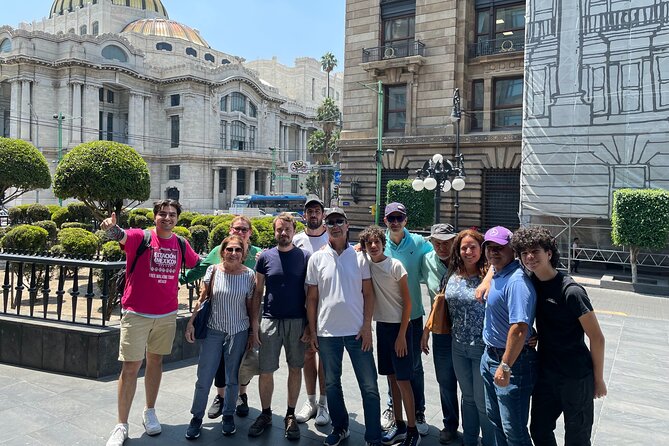
- A strong first-day route: Start at the Zócalo and finish near the Palace of Fine Arts, giving you a clear map of central Mexico City.
- Three eras in one walk: See the remains of Tenochtitlan, colonial buildings, government power, murals, and twentieth-century architecture.
- Guides make the difference: Past guides including Diana, David, Carmina, Jesús, Sofía, Marco, and Ulysses Warryor have been praised for answering questions and adjusting the pace.
- Good value at $25: For a small fee, you receive two to three hours of guided context across several major landmarks.
- Expect a walking workout: You should be able to walk for about three hours, often in busy public areas.
- Limited group size: The tour allows a maximum of 20 people, though the experience can feel more personal when attendance is low.
Why this walk helps you understand Mexico City
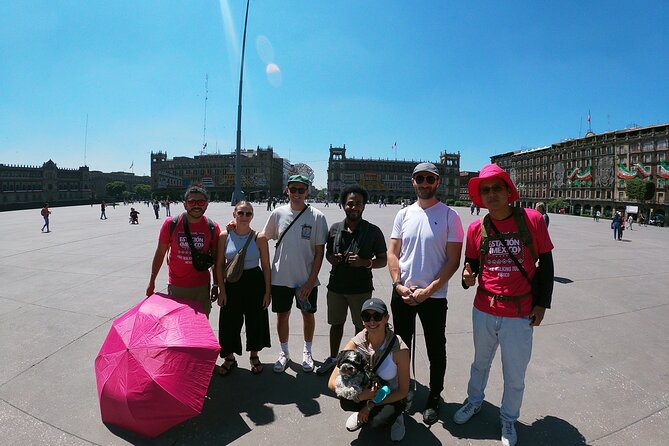
Mexico City can be hard to read at first. The broad Zócalo suggests Spanish colonial power, yet just beside it are the ruins of the Mexica capital. A government palace may carry murals about revolution and Indigenous identity, while a nearby art museum reflects a later European influence.
This route helps you connect those pieces. Instead of simply checking off the cathedral, a museum, and a palace, you get a story about how the city changed hands, ideas, and styles over many centuries.
The tour is offered in English and begins at 9:00 a.m. That early start is useful. The historic center is easier to study before the heat and activity build, and you finish early enough to return to a museum, find lunch, or continue on your own.
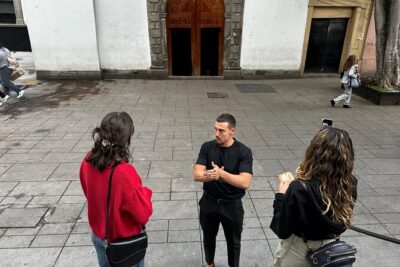
The group limit is 20 people. That is not a private tour, but it is small enough for questions if everyone stays engaged. When attendance is light, the experience can become almost private. One person described having the guide to the group alone, which allowed for a more relaxed pace and plenty of questions.
More History Walking Tours in Mexico
- Historic Downtown Walking Tour
★ 5.0 · 1,289 reviews - Mexico City: Historic Downtown Walking Tour
★ 4.8 · 1,039 reviews - Walking Tour of the Historic Center of Mexico City
★ 5.0 · 870 reviews
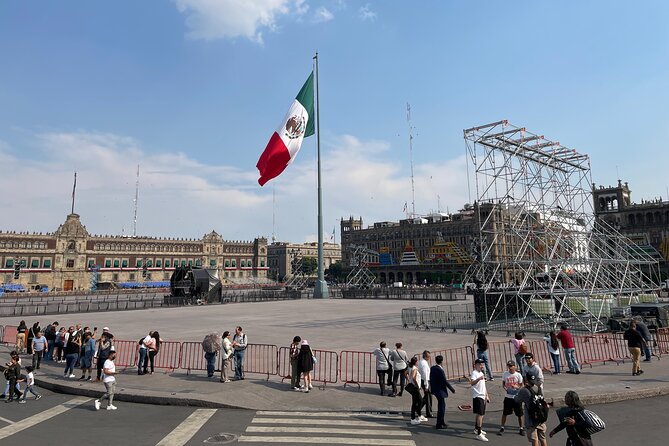
Starting in the Zócalo, the city’s great public room
The tour begins at P.za de la Constitución 463, in the Centro Histórico. This is the Zócalo, Mexico City’s main square and one of the best places to grasp the city’s public life.
Your guide explains how the square has served as a setting for politics, social movements, traditions, and public celebrations. That matters because the Zócalo is not just a scenic plaza. It is still a working civic space, where national identity and current events meet.
Look around before the explanation begins. The scale is immense, and the surrounding buildings show several layers of power. The Metropolitan Cathedral occupies one side, while the federal government’s most important office is nearby. The square’s open space makes the political role of the center easy to understand.
You have about 30 minutes here. That is enough for orientation and context, but not enough for a detailed architectural study of every building. I see this as a strength for a first visit. You get the larger picture without spending the first morning inside one landmark.
The cathedral and federal government buildings
The cathedral is presented as the largest on the continent. Its size helps explain the reach of the Spanish Catholic establishment in colonial Mexico, and its position beside the Zócalo makes the relationship between religion and government plain.
The route also points out the country’s most important federal government office. This is a useful contrast with the nearby ruins of Templo Mayor. Within a short walk, you move from Indigenous imperial power to Spanish religious power and then to the modern Mexican state.
The tour information does not promise a long interior visit at either building, so you should think of these stops as guided outdoor interpretation rather than a full architectural tour. If the cathedral or government complex is a priority for you, leave time to return independently.
That approach keeps the walking tour moving. The guide’s job here is to explain why the buildings matter, not to make you spend the entire morning at one facade.
Templo Mayor and the remains of Tenochtitlan
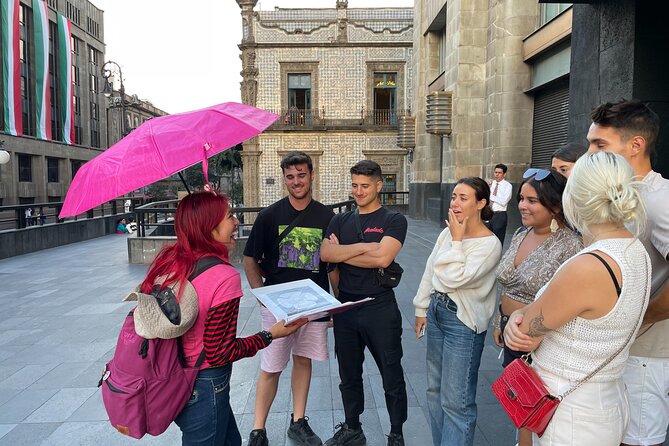
The next major stop is Museo del Templo Mayor, where you see the ruins of the most important temple of ancient Tenochtitlan. The site introduces the Aztec, or Mexica, world that existed before the Spanish conquest.
This is one of the most important moments of the tour. Without it, the colonial center can look like a complete story. Templo Mayor makes clear that the Spanish city was built in the heart of an older Indigenous capital.
You have around 20 minutes here. That is a short visit, especially if you want to study the ruins and museum displays in detail. Still, the stop works well as a powerful introduction. Your guide can explain the site’s place in Mexica culture, then you can return later if you want a slower museum visit.
The stated admission for the stop is free, but the experience does not promise an extended museum session. I would treat this as a chance to see the archaeological area and understand its importance, not as a replacement for a dedicated visit to the museum.
More Local Culture and Traditions Tours in Mexico
- Historical and Cultural Walking Tour of San Miguel de Allende
★ 5.0 · 641 reviews - Historical and Cultural Walking Tour of San José del Cabo
★ 5.0 · 576 reviews - Historical & Cultural Walking Tour of San Miguel de Allende
★ 4.8 · 225 reviews
Santo Domingo and Mexico’s changing identity
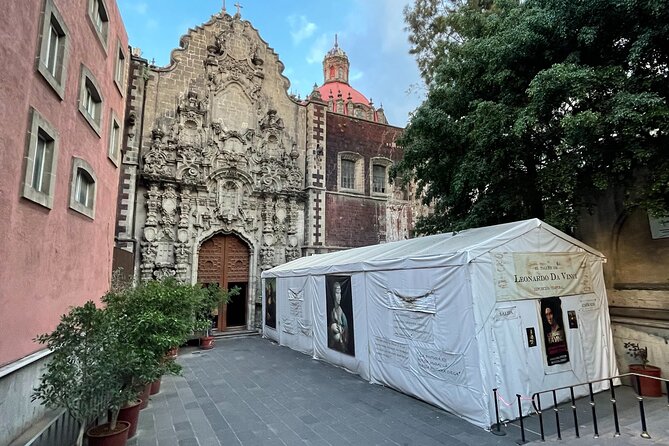
At Plaza de Santo Domingo, the route shifts toward the Spanish past and the later development of Mexican art. The square offers a useful contrast to Templo Mayor because the visual setting feels more colonial.
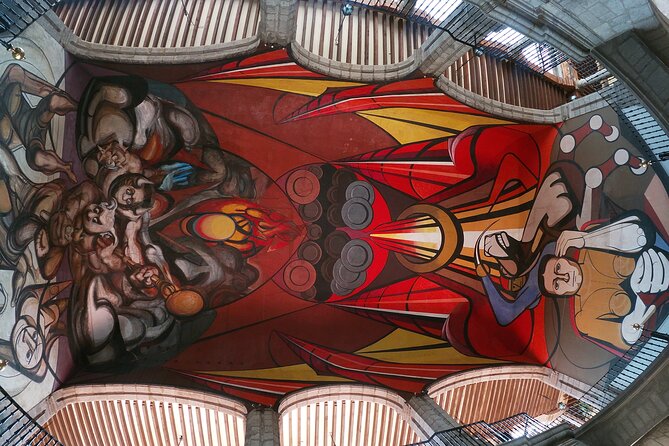
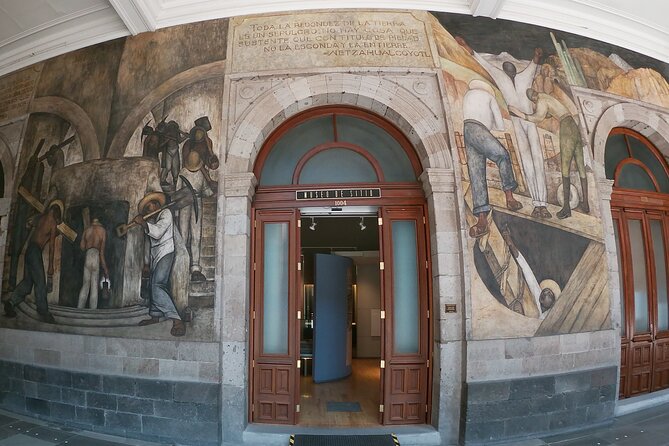
The guide also connects this area with the origin of the Mexican muralist movement. That link is important. Mexican muralism was not simply decoration on large walls. It became a way to present national history, Indigenous identity, labor, revolution, and social ideas in public spaces.
You have about 30 minutes here. This gives the guide room to explain the square and point out the contrast between colonial authority and modern Mexican cultural expression.
I like this part of the route because it avoids a narrow story of Mexico City as either Spanish or Indigenous. You see how later Mexican identity grew through conflict, memory, and new forms of public art.
Museo Nacional de Arte and the city’s modern face
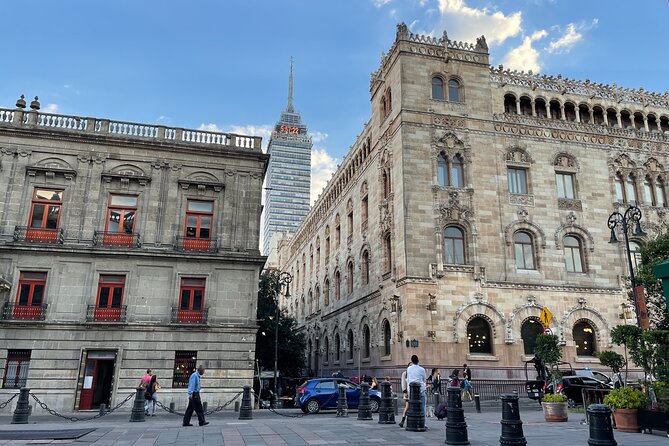
The Museo Nacional de Arte introduces the architectural style of the twentieth century. The building itself becomes part of the lesson, showing how Mexico City continued to reshape its public image long after the colonial period.
You spend about 30 minutes at this stop. Again, that is enough for an introduction, but not enough for a complete museum visit. If you are serious about art, check the museum’s displays and return with more time after the tour.
The value here is the connection between building and city. Your guide can help you see modern architecture as part of Mexico’s effort to define itself through art, public institutions, and national culture. That context makes the later murals at Bellas Artes easier to appreciate.
One especially strong guide for this kind of discussion has been Diana, who linked art and history in a way that made the works easier to approach even for someone who did not think of themselves as an art person. That kind of guide can change the experience from looking at painted walls to understanding why the images were made.
Casa de los Azulejos and the final walk to Bellas Artes
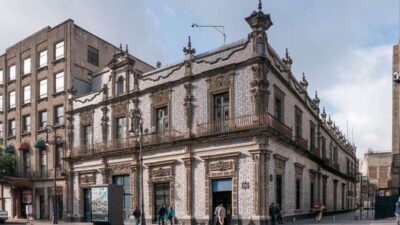
The route includes a beautiful palace known for its tiles, widely recognized as the Casa de los Azulejos. Its tiled exterior gives you a quick lesson in decorative architecture and the city’s taste for theatrical public buildings.
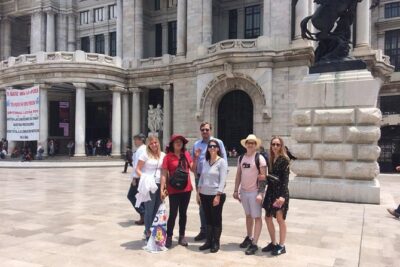
The tour then finishes near the Palace of Fine Arts at Av. Juarez 39. Bellas Artes is one of Mexico City’s best-known landmarks, and the ending is well chosen. You finish near a major cultural center rather than at an out-of-the-way street.
The Palace of Fine Arts also provides the tour’s strongest setting for murals. The guide can explain how art, politics, and national identity meet inside this famous building. One guide was specifically praised for making the murals easier to understand, while another helped connect the city’s history to what you see in the artwork.
The tour description calls Bellas Artes the final destination and an icon of Mexico City. Do not assume you will have time for a full visit to every gallery or performance space. Plan to stay afterward if the palace is high on your list.
What the guides add to the experience
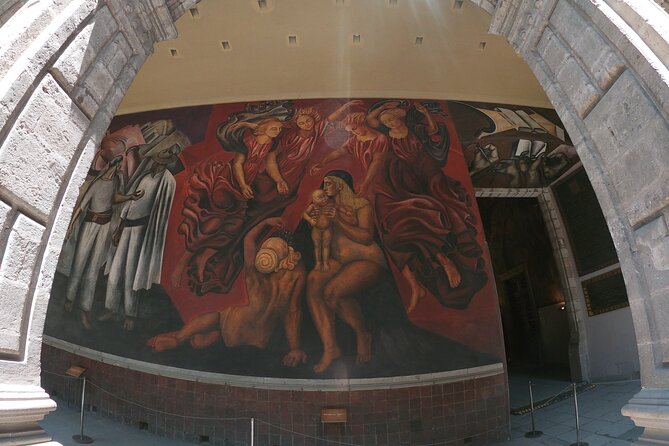
The strongest feature is the human explanation. The route itself is excellent, but these landmarks are easy to pass without context.
Guides who have led the experience include Sofía, Carmina, Jesús, Ulysses Warryor, Diana, David, and Marco. You cannot choose a particular guide based on the information provided, but the range of feedback points to a consistent strength: guides answer questions, explain clearly, and bring energy to a long history lesson.
Carmina was praised for being especially enthusiastic and willing to answer questions. Jesús was described as entertaining and able to make the visitor want to return for more. David was appreciated for presenting a large amount of information in an interactive way.
Marco also adjusted the pace and offered extra suggestions at the end. Another guide shared ideas about what and where to eat, which is useful when you are still finding your way around the center.
That personal advice is a real bonus. A good walking guide can help you decide which museum deserves a longer visit, where to continue after Bellas Artes, and how to make sense of the streets around the Zócalo.
Is $25 a fair price?
At $25 per person, this is a good-value introduction to the historic center. You receive two to three hours with a guide, several major landmarks, and a route that links the city’s main historical periods.
The value is highest if this is your first day in Mexico City. You get a mental map of the center and learn which places deserve a second visit. The price is also reasonable for anyone who prefers context to simply walking between buildings with a phone guide.
The limitation is depth. Templo Mayor receives about 20 minutes, while other stops receive about 30 minutes. You are paying for a broad overview, not a series of long museum visits.
Food and drinks are not included. That is easy to manage because the tour ends near Bellas Artes, but you should plan your own refreshment stop. The tour does not list meals, hotel pickup, or private transportation.
Who should book this walking tour?
I would choose this tour if you are visiting Mexico City for the first time, especially if you want a clear introduction before exploring alone. It also suits history lovers who want the Aztec, colonial, government, and muralist stories connected in one morning.
It is a good match for solo visitors because the guide gives you a human starting point in a complicated city. Couples and families can also use it to settle into the center before choosing which museums to visit at greater length.
You should think twice if you dislike walking, prefer slow museum visits, or want a private guide. The experience lasts two to three hours, has up to 20 participants, and requires you to walk for most of that time.
Service animals are allowed, public transportation is nearby, and most people can participate. You should still be comfortable walking for about three hours in the historic center.
Booking and cancellation details
Confirmation is provided when you book, and the activity is offered in English with a mobile ticket. The meeting point is the Zócalo, and the finish is near the Palace of Fine Arts.
Free cancellation is available up to 24 hours before the 9:00 a.m. start time. Cancellations or changes made within 24 hours are not refunded or accepted, so keep that cutoff in mind.
The tour is commonly booked about eight days ahead. If your dates are fixed, reserving early is sensible, especially if you want the morning time.
Should you book it?
Book this walking tour if you want an affordable, well-shaped introduction to Mexico City’s historic center. Its best quality is the way it links Tenochtitlan, colonial rule, government, muralism, and modern architecture across a manageable route.
Do not book it expecting full access to every museum or a leisurely study of each building. Instead, use it to get your bearings, ask questions, find your favorite subjects, and plan the rest of your time.
With a 4.8 rating from 245 reviews and 95 percent of participants recommending it, the experience has a strong record. The most convincing reason to choose it is simpler: guides such as Diana, David, Carmina, Jesús, Sofía, Marco, and Ulysses Warryor have made a complicated center easier to understand. For a first morning in Mexico City, that is a worthwhile service.
FAQ
Where does the Mexico City walking tour begin?
It begins at P.za de la Constitución 463 in the Centro Histórico, beside the Zócalo.
Where does the tour end?
It ends at Av. Juarez 39, near the Palace of Fine Arts.
What time does the tour start?
The start time is 9:00 a.m.
How long does the walking tour last?
The experience lasts approximately two to three hours.
Is the tour offered in English?
Yes. The tour is offered in English and includes a guide throughout the experience.
What happens if I cancel the tour?
You can receive a full refund if you cancel at least 24 hours before the start time. Cancellations or changes made less than 24 hours before the start time are not refunded or accepted.
Latest history tours reviewed in Mexico
- Private Historic City Tour + Street Food of Oaxaca – Best Rated★ 5.0 · 53 reviews
- Coba Private Tour – Ancient Ruins & Refreshing Cenote Swim★ 5.0 · 85 reviews
- Private Walking Tour Gems of the Historic Center of Mexico City★ 5.0 · 87 reviews
- Private Tour Mexico City – Best Rated★ 5.0 · 220 reviews
- Historical and Cultural Walking Tour of San José del Cabo★ 5.0 · 576 reviews
- Historical & Cultural Walking Tour of San Miguel de Allende★ 4.8 · 225 reviews
- Historical and Cultural Walking Tour of San Miguel de Allende★ 5.0 · 641 reviews
- Ancient Chacchoben Mayan Ruins & Mayan Experience from Costa Maya★ 5.0 · 96 reviews
Mexico City History Tours, compared.

Mexico City Historical Centre Food Tour with 7 Authentic Tastings
Read our review →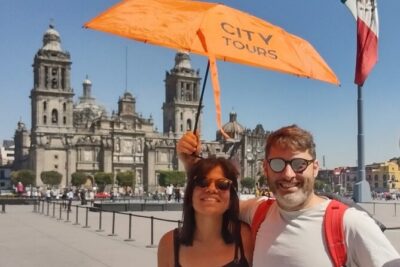

Tour to Teotihuacan with visit to ancient caves and CDMX transportation
Read our review →Browse the lists this tour appears in