
Review · GERMANY
Bremen: Walking Tour of Historic Schnoor District
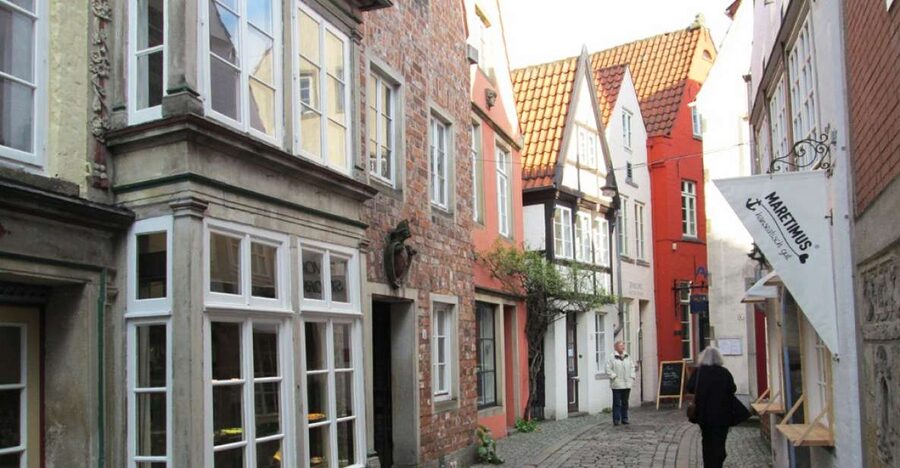
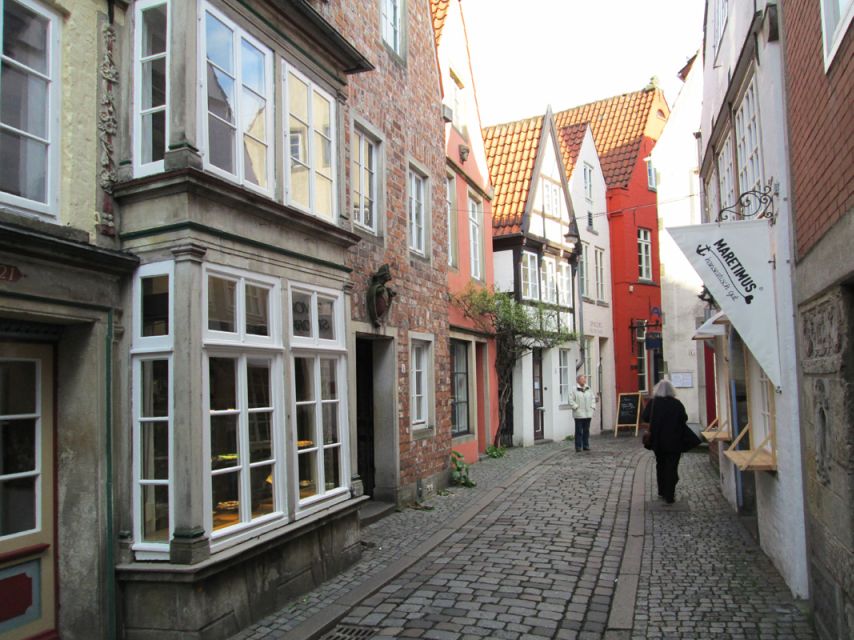
The most memorable part of Bremen’s Schnoor quarter is its scale. Little houses crowd narrow lanes, with upper floors leaning toward one another as if the buildings were strung together like pearls. This one-hour walk gives you the stories behind that unusual setting, not just a quick photo stop.
I like the tour’s compact route and its close look at old building styles, from half-timbering to Baroque, Renaissance, classicism, and historicism. I also like the chance to hear local tales from guides such as Sönke, whose lively stories and humor can make familiar streets feel new. The main drawback is simple: the tour is in German, lasts only one hour, and buildings are viewed from outside.
Key points to know before you book
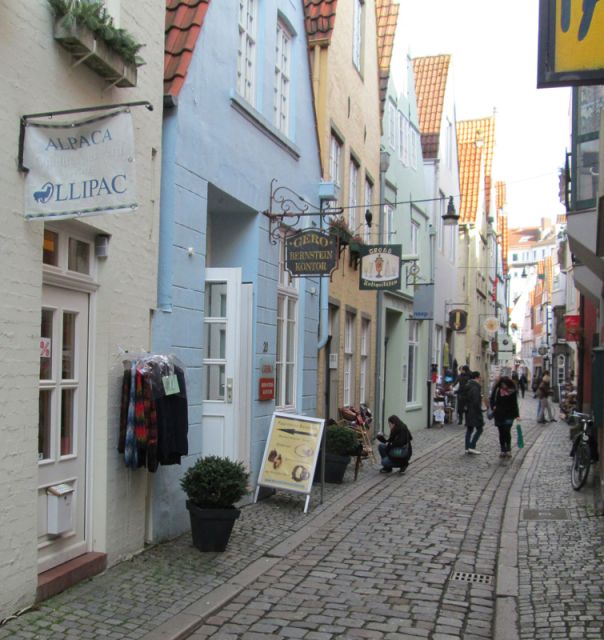
- Schnoor’s narrow lanes: Walk through Bremen’s oldest-feeling quarter, where small houses sit tightly along winding passages.
- Four centuries of architecture: See preserved 17th- and 18th-century homes, older structures, reconstructed facades, and several distinct styles.
- Important historic stops: The route includes St. John’s Church, Haus Schnoor 15, also called Brasilhaus, and Packhaus Schnoor 2.
- A guide-led history lesson: Expect stories about Schnoor, its inhabitants, and the Franciscan monastery that once stood at the edge of the quarter.
- German-language experience: The live tour is conducted in German, with shared and private group options.
- Easy-to-plan timing: At $14 per person and one hour long, it fits neatly before or after other central Bremen sights.
Entering Schnoor from Domsheide
The tour begins in front of Die Glocke concert hall at Domsheide 6, in central Bremen. Your guide waits with a Bremen Tour Guide sign, so you have a clear place to meet rather than hunting for a small doorway in the old quarter.
This starting point matters because Schnoor is best approached on foot. You are not being driven to a distant suburb or asked to spend half the tour sorting out transport. From the meeting point, the guide leads you toward the historic district and sets the scene for what you are about to see.
I would arrive a few minutes early. Domsheide can be a busy central area, and the guide’s sign is the detail that helps you find the correct person. Wear comfortable shoes, since the tour is entirely on foot and the lanes are narrow.
The opening explanation places Schnoor in a wider story. The first known written reference dates to the 13th century, when a Franciscan monastery was built near what is now the quarter. Only the monastery church remains, but that small surviving detail helps explain why this part of Bremen feels older than the surrounding city.
More History Walking Tours in Germany
- Leipzig: 1.5-Hour Historical Walking Tour in German
★ 4.7 · 2,217 reviews - Berlin: History of the Third Reich Guided Walking Tour
★ 4.7 · 791 reviews - Trier: Guided Old Town Highlights and History Walking Tour
★ 4.7 · 687 reviews
Why Schnoor feels different from ordinary old towns
Many historic districts have one grand square and a row of handsome buildings. Schnoor works differently. Its appeal comes from the tight pattern of small houses and passages, with one lane leading into another and façades appearing at close range.
The name and layout are often explained through the district’s traditional links to crafts and trade. The important point for you is visual: this is not a broad boulevard district. It is a compact quarter where the buildings, lanes, and shopfronts are part of one tightly packed setting.
You will pass half-timbered houses close to the Weser River and see how differently old buildings were put together. Some homes are narrow and tall. Others show brick, plaster, or timber details. The tour helps you read these differences instead of treating every old façade as the same.
I especially like this kind of walking tour because the details are close enough to inspect. You can look at rooflines, window placement, timber framing, and small changes in materials without standing across a large plaza. The trade-off is that the same narrowness can make the route feel crowded, and it leaves little room for a large group to spread out.
St. John’s Church and the Franciscan connection
One important stop is the Catholic St. John’s Church, built in the 14th century in redbrick Gothic style. Its brick construction gives it a different character from the small domestic houses around it, and it provides a useful visual marker within the quarter.
The church also connects present-day Schnoor to its early religious past. The Franciscan monastery once stood at the edge of the district, and only the monastery church survives today. That makes the church more than a pretty building on the route. It is one of the clearest links between the written record of medieval Schnoor and the neighborhood you see now.
Do not expect a long interior visit here. The buildings on this tour are viewed from the outside, so the value comes from the guide’s explanation and the chance to study the architecture from the street. If you want extended time inside churches or museums, you will need to plan those separately.
A German-speaking guide can add detail that is hard to get from a quick self-guided walk. The tour is not only about dates. It also explains how the neighborhood and its inhabitants fit into Bremen’s past. For German speakers, that makes the short route much more useful than simply following a map.
The oldest houses: Haus Schnoor 15 and Packhaus Schnoor 2
The walk includes some of Schnoor’s oldest surviving secular buildings, including Haus Schnoor 15, also known as Brasilhaus, and Packhaus Schnoor 2. Both date to the 15th century, giving you a chance to compare early domestic and commercial architecture within a very small area.
These addresses are valuable because they show that Schnoor was not built as a single planned attraction. It grew over time, with houses and working buildings adapted to the needs of people who lived and traded here. The guide’s job is to point out those changes and explain why a particular façade or building shape matters.
You may also see buildings recreated according to historical specifications. That distinction is worth keeping in mind. Not everything you see is untouched medieval fabric, but a carefully rebuilt façade can still show how the street once looked.
One unusual detail is the half-timbered house with a tea room. Other structures now consist only of façades, although the buildings originally stood elsewhere. For me, these details add an honest layer to the visit. Schnoor is not a frozen time capsule. It is a historic quarter shaped by preservation, reconstruction, relocation, and modern use.
Same old streets, another chapter:
- Leipzig: City History Canal Sightseeing Tour on a Motorboat
★ 4.7 · 7,671 reviews - Berlin: 3-Hour World Heritage Cruise to Potsdam
★ 4.5 · 1,569 reviews - Heidelberg: Night Watchman Historic Adventure Tour
★ 4.7 · 1,186 reviews - The Local Tour of Hamburg Historic Centre
★ 5.0 · 1,058 reviews
From Renaissance details to historicist façades
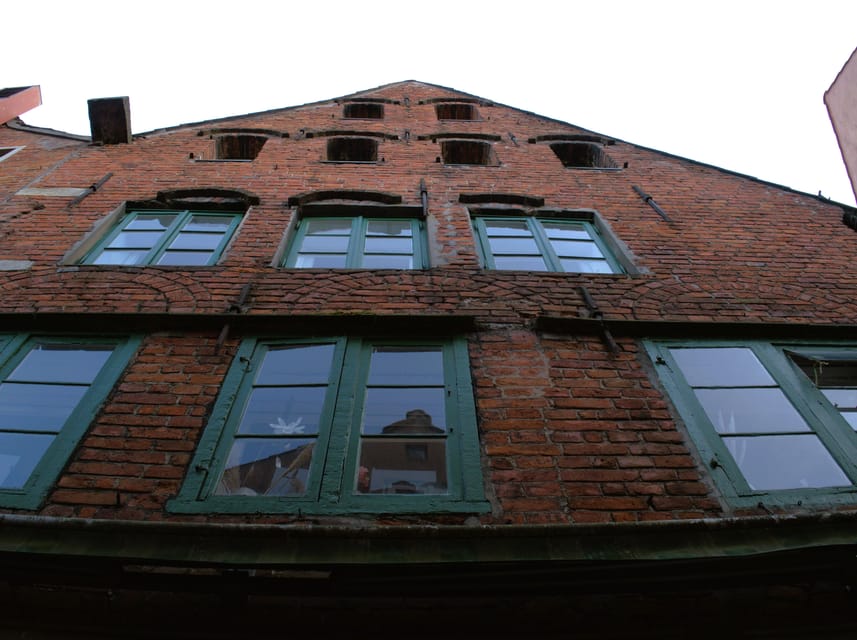
The tour covers a surprising range of styles for such a short walk. You may hear about Renaissance and Baroque elements, then move on to classicism and historicism as the buildings change around you.
This range is one of the strongest reasons to take the tour with a guide. Without explanation, you might see an attractive old house but miss the clue that separates a Baroque detail from a later historicist design. You do not need to memorize every architectural term. A good explanation simply gives you a way to look more closely.
I would pay attention to the contrast between buildings rather than searching for one perfect house. A narrow half-timbered structure, a redbrick Gothic church, and a reconstructed façade each tell a different story. Together they show how Schnoor changed while keeping its tightly packed street pattern.
The tour also discusses the people who lived in the quarter. That human angle keeps the walk from turning into a parade of dates and styles. You get a sense of Schnoor as a working neighborhood, not only as a picturesque place for photographs.
Goldsmiths, handicrafts, and the modern Schnoor
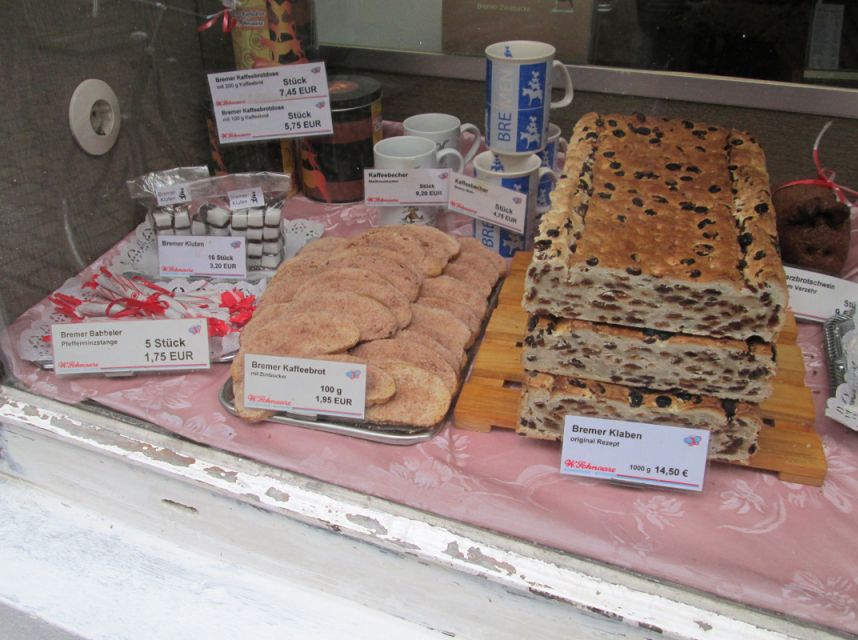
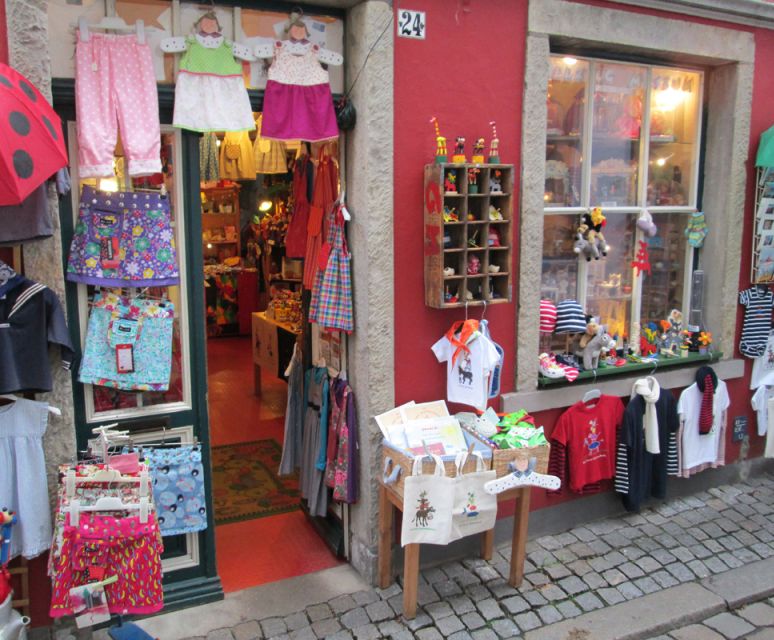
Schnoor still has shops connected with goldsmithing, local handicrafts, and small specialty businesses. These shops give the lanes a present-day purpose, even though the surroundings look centuries old.
I like this balance. You can admire a timber-framed house, then notice a shop window showing that the quarter is still used by people making and selling things. The modern businesses do not replace the history. They help keep the streets from feeling like an outdoor museum.
At the same time, the commercial side may not appeal to everyone. If you want a completely quiet residential quarter, you may find the shops and narrow passageways more tourist-oriented than expected. The tour does not promise private access or a behind-the-scenes look at workshops. You see the goldsmiths and craft shops as part of the streetscape.
The best approach is to treat the shops as another layer of the neighborhood. Look at the building first, then notice how a modern business fits into the old shell. That is often more revealing than trying to separate the past from the present.
What the one-hour format really gives you
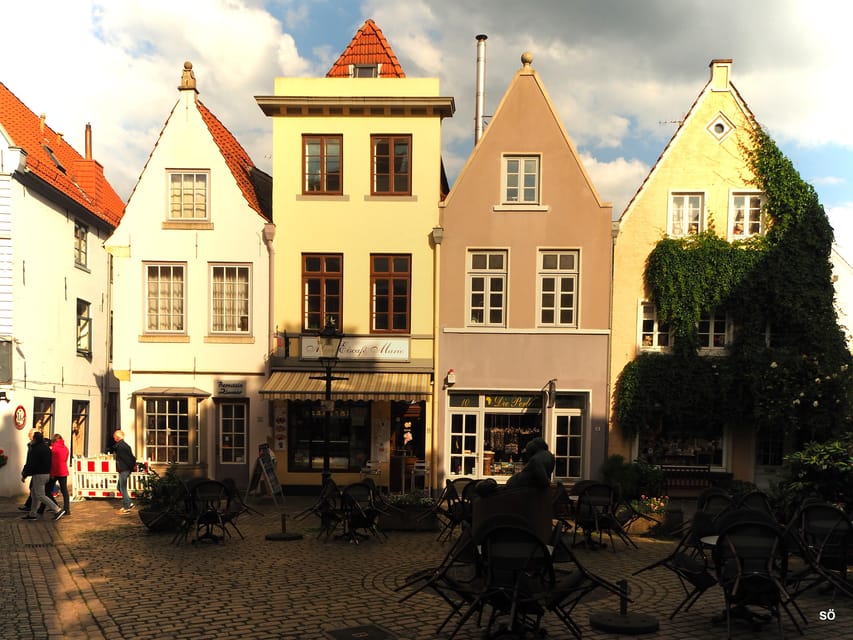
One hour is enough to get a clear introduction to Schnoor, but not enough to inspect every lane at leisure. The pace should suit you if you want orientation, context, and a focused walk before exploring independently.
At $14 per person, I consider the price good for a guided introduction, especially if you are interested in architecture or local history. You are paying for a live explanation of a compact district rather than for entry to a major museum or an extended excursion. The value comes from what the guide helps you notice.
The short duration also makes this easy to add to a day in Bremen. You can schedule it around other central sights without giving up half a day. It works well for a first visit, a short stop in the city, or anyone who wants to understand Schnoor before wandering through it alone.
A private group is available if you prefer a more personal setting. The supplied price is listed per person, but you should check the cost of the specific shared or private option when booking. Private touring can be useful if your group wants to ask more questions, though the route and one-hour length still limit how much ground the guide can cover.
The guide makes the difference
The tour is conducted in German, so you should be comfortable following a live explanation in that language. There is no indication of an English-language option, so German is an important booking condition, not a minor detail.
Guide Sönke has been singled out for a warm Bremen personality, humor, and entertaining stories about Schnoor and its surroundings. That gives you a sense of the best version of this experience: less like a formal lecture and more like a local telling you why these streets matter.
The guide may also add local anecdotes and light musical or spoken touches. The central strength is not speed. It is the combination of clear facts, amusing stories, and small observations that you would likely miss on your own.
I would choose this tour if you enjoy learning through conversation. If you prefer to move silently and take photographs at your own pace, a self-guided walk may suit you better. The tour gives you structure, but structure means stopping when the guide stops and staying with the group.
Practical limits you should know
The buildings are seen from the outside only. That means you should not book this expecting interior access to historic houses, St. John’s Church, the tea room, or other structures along the route.
The tour is also not suitable for wheelchair users. The narrow historic lanes and walking format are important factors, so check your own mobility needs carefully before booking.
Food and drinks are not included. The tour is only one hour, so this is hardly a problem, but you should plan any café stop or meal separately. The shops and streets may tempt you to pause, yet the guided portion is focused on walking and interpretation rather than shopping.
Comfortable shoes are essential. You are moving through old lanes rather than a smooth indoor museum, and the route offers little reason to wear anything other than practical footwear.
Free cancellation is available up to 24 hours before the start for a full refund. You can also reserve now and pay later, which is useful if your Bremen schedule is still changing.
Who will enjoy this Schnoor walk?
I would recommend it most to first-time visitors who want a quick sense of Bremen’s oldest quarter. It also suits architecture fans, German speakers, couples, and families who prefer a short activity over a long formal tour.
You will get the most from it if you enjoy details: old addresses, changing building styles, church history, reconstructed façades, and stories about the people who lived in the quarter. The walk is especially helpful if you tend to look at historic buildings and wonder what you are seeing.
It may be less suitable if you need English commentary, wheelchair access, long interior visits, or plenty of free time for photography. You can still explore Schnoor on your own afterward, but the guided hour itself follows the group’s pace.
Should you book the Bremen Schnoor walking tour?
Book it if you want a low-cost, focused introduction to one of Bremen’s most distinctive neighborhoods. At $14 for an hour, the tour is a sensible choice when you value local explanation over a long list of attractions.
I would book it early in your Bremen visit, then return afterward to browse the craft shops or revisit the lanes at your own pace. Choose the private option if personal questions and a smaller setting matter to you. Skip it if you do not understand German or need step-free access.
For the right visitor, this is a small tour with a useful payoff: you leave Schnoor knowing why its cramped lanes, old houses, church, façades, and shops belong together.
FAQ
Where does the Schnoor walking tour begin?
The meeting point is in front of Die Glocke concert hall at Domsheide 6, Bremen, 28195. The guide waits with a sign saying Bremen Tour Guide.
How long is the tour?
The walking tour lasts one hour.
What language is the tour conducted in?
The live tour guide speaks German. No other tour language is specified.
Does the tour include entry inside the historic buildings?
No. The buildings viewed during the tour are seen from the outside only.
Is a private tour available?
Yes. You can select a private group option, while a shared walking tour is also available.
What does the tour visit in Schnoor?
The walk includes historic lanes, old half-timbered houses, St. John’s Church, Haus Schnoor 15, also called Brasilhaus, Packhaus Schnoor 2, reconstructed historic buildings, goldsmiths, and local handicraft shops.
Is food or drink included?
No. Food and drinks are not included in the tour price.
Is the tour suitable for wheelchair users?
No. The activity is listed as not suitable for wheelchair users. Comfortable shoes are recommended.
Latest history tours reviewed in Germany
- Freiburg: Exciting City Tour with sightseeing and history★ 4.3 · 103 reviews
- Frankfurt Self-Guided Historical Walking Tour★ 4.0 · 58 reviews
- Frankfurt: Old Town Historical Walking Tour with Geo Epoche★ 4.8 · 47 reviews
- Erfurt Tour – City tour with the historic tram★ 4.8 · 503 reviews
- Dresden: Guided Beer Tour of the Historic Old City★ 4.8 · 95 reviews
- Dessau: Guided Walking Tour through History★ 4.6 · 40 reviews
- Darmstadt: City Highlights and History Guided Walking Tour★ 4.0 · 23 reviews
- Cologne: Old Town Historical Walking Tour with GEO Epoche★ 4.7 · 31 reviews
Germany History Tours, compared.
Leipzig: City History Canal Sightseeing Tour on a Motorboat
Read our review →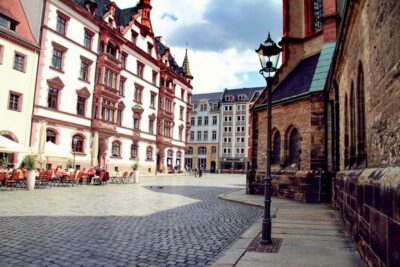
Leipzig: 1.5-Hour Historical Walking Tour in German
Read our review →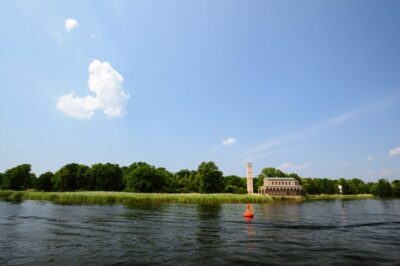
Berlin: 3-Hour World Heritage Cruise to Potsdam
Read our review →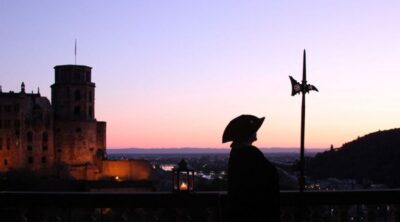
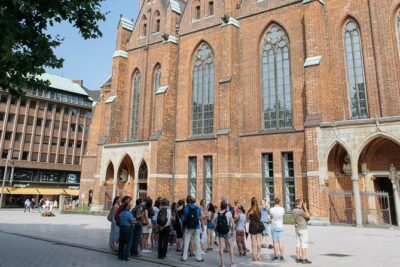

Berlin: History of the Third Reich Guided Walking Tour
Read our review →
Bamberg: Guided Beer History Tour with Optional Tasting
Read our review →Browse the lists this tour appears in