
Review · USA
2-Hour Gettysburg Battlefield Guided History Bus Tour with a National Park Guide
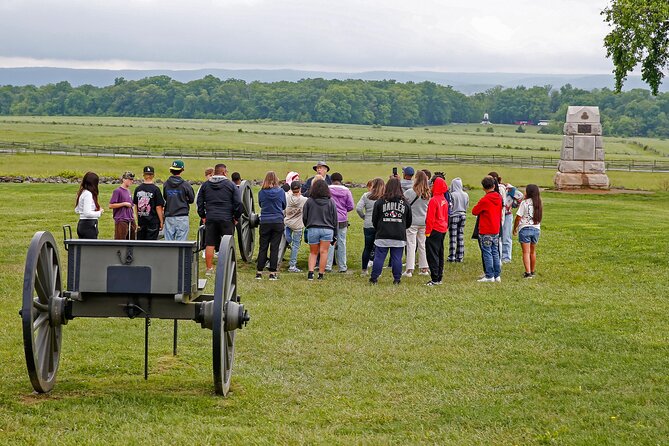
Gettysburg makes more sense when you see the hills, fields, roads, and rocky positions where the three-day battle unfolded. This two-hour bus tour connects those places in a clear sequence, from the Union and Confederate movements to the famous final attack at Pickett’s Charge.
I like the comfort of the air-conditioned coach, especially in hot summer weather or on a cold winter day. I also like the chance to step off the bus at selected stops, including Devil’s Den and viewpoints near Little Round Top, instead of watching the entire battlefield through glass.
The main consideration is the amount of information packed into two hours. Guides such as John, Christina, Christine, and Paul have been praised for strong storytelling, but one visitor found the narration too dense and the microphone too loud. If you want a slow, in-depth study of every monument, you’ll need more time afterward.
Key points to know before you book
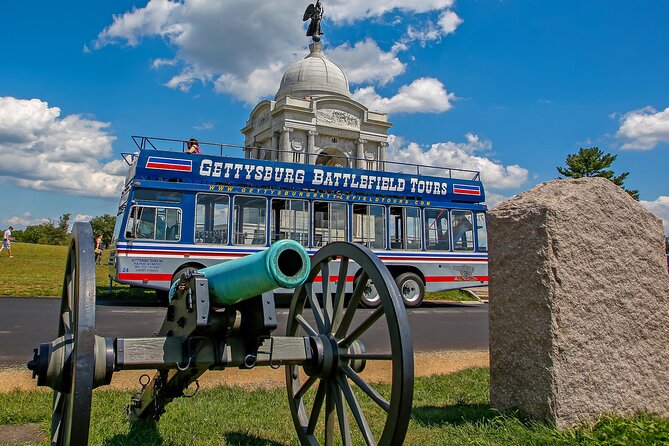
- The tour begins and ends at 778 Baltimore Street, at the Gettysburg Tour Center.
- You travel by air-conditioned coach, a sensible way to cover the widely spread battlefield.
- The story follows the three-day battle, helping you understand what happened and why each position mattered.
- You may get off at important sites, including Devil’s Den and viewpoints around Little Round Top.
- The group can include up to 40 people, so expect a shared tour rather than a private guide.
- The $43 price includes the guide, transportation, and battlefield tour, but not hotel pickup or drop-off.
Seeing Gettysburg as a connected battle, not a collection of monuments
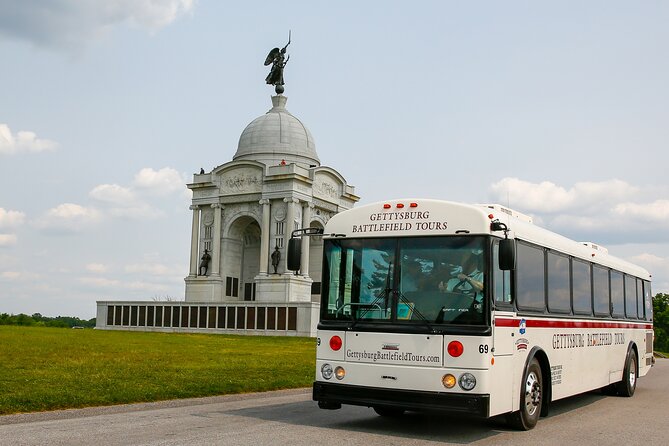
Gettysburg National Military Park covers a large area. Walking between the main sites is not practical for a short visit, and driving yourself can leave you focused on roads and parking rather than the battle itself.
This tour solves that problem in a simple way. You ride from one important position to the next while the guide explains how the action moved across the fields. The hills and open ground become part of the story. Instead of hearing only that a regiment fought at a certain place, you can see the slope it climbed, the distance between opposing forces, and the ground commanders were trying to hold.
The battle was the Union victory that stopped Robert E. Lee’s second invasion of the North. It is often called the High Water Mark of the Rebellion, and it became one of the best-known turning points of the American Civil War. Gettysburg also gave Abraham Lincoln the setting for his Gettysburg Address.
You do not need to arrive as a Civil War expert. The guide’s job is to provide the order and context that can be hard to assemble on your own. Several guides, including Paul, have been praised for telling the events chronologically, which is especially helpful here. Gettysburg involved three days of movement, confusion, attacks, retreats, and changing positions. A good sequence keeps the story from becoming a jumble of names and dates.
More Battlefield and Military History Tours in the USA:
- Guided Savannah Civil War History Walking Tour
★ 5.0 · 492 reviews - Ghost Tour: History and Haunts – Family Friendly – Best in Gettysburg
★ 4.5 · 378 reviews - Civil War History Tour – The Battle of Franklin, Tennessee
★ 4.9 · 85 reviews
What the two-hour coach ride is like
The bus departs from the Gettysburg Tour Center at 778 Baltimore Street and returns there at the end. You should plan to reach the entrance before departure, since the meeting point is in town rather than at a hotel or a battlefield monument.
The coach is air-conditioned, and the large windows provide views of the fields and monuments. That matters because the battlefield is spread out, and some of the best lessons come from seeing the distance between two locations. The coach also gives you a break from walking, which can be useful in strong heat, cold weather, or rain.
The tour has a maximum of 40 people. That is not an intimate small-group outing, but it is still a manageable size for a coach tour. The actual feel will depend on how full your departure is. One visitor described a bus that was about 80 percent full and comfortable rather than cramped.
A driver and a separate guide may share the work. The driver handles the roads and battlefield turns, while the guide concentrates on the narration. Guides named John, Christina, Christine, and Paul have received especially warm comments for their clear explanations, humor, and ability to make the events easier to follow. Your guide is not guaranteed to be one of those people, but the tour is built around live interpretation rather than a recorded soundtrack.
The microphone deserves a practical note. Most comments describe the guides as clear and easy to understand, but one person found the volume piercing. If the sound seems too loud, say so early and politely. A small adjustment can make two hours much more pleasant.
Devil’s Den and the rough ground below Little Round Top
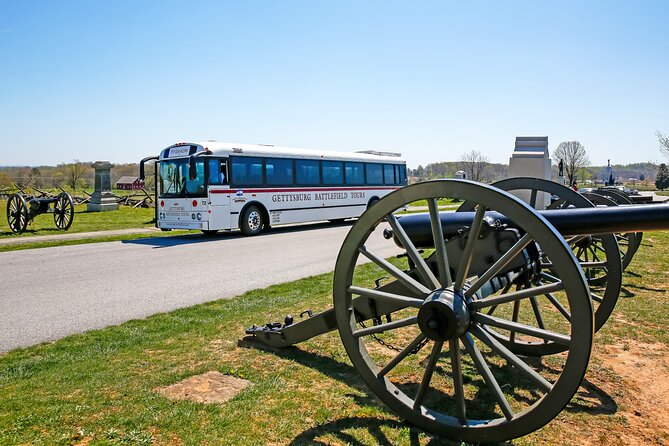
Devil’s Den is one of the most memorable places on the route. It is a natural rock formation below Little Round Top, and you may have the chance to get off the coach and explore the rocks.
This stop helps you understand how physical terrain shaped the fighting. Rocks, boulders, slopes, and patches of cover were not simply scenery. They affected where soldiers could move, where they could hide, and how commanders viewed the ground.
Devil’s Den is also one of the more family-friendly places on the tour because the rock formations are easy to recognize and visually different from the broad fields elsewhere. Still, you should dress for the weather and follow any instructions given at the stop. The tour operates in all weather conditions, and outdoor footing can feel different in rain, snow, or icy temperatures.
You should not expect a long hike at every stop. The schedule covers a large area in roughly two hours, so the time outside the bus is limited. That is useful for seeing more of the park, but it means you will not have time to study every rock or monument at leisure.
Little Round Top and the value of seeing the elevation
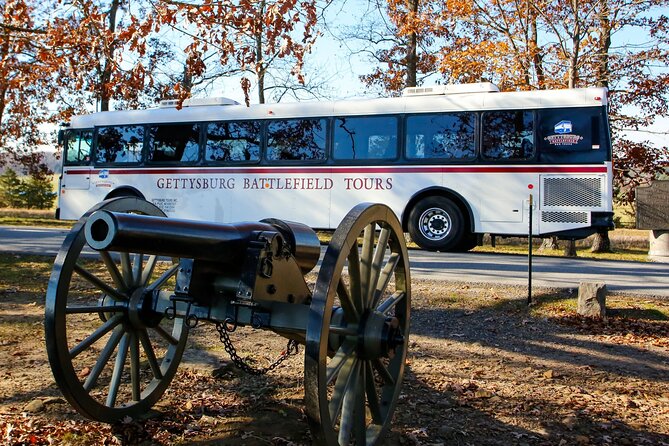
Little Round Top gives you a strong view of the ground below. From higher ground, you can see why hills and ridges mattered so much during the battle. The position offered a commanding view, and the guide can explain how the shape of the land affected movement and defense.
This is one of the places where a coach tour earns its price. You are not merely told that the Union and Confederate forces fought over high ground. You can look across the open space and understand the challenge of crossing it.
The view also gives you a break from the close detail of individual monuments. Gettysburg can sometimes feel like a long list of statues, plaques, and unit names. A wider view restores the scale of the battle and helps you connect several locations at once.
The exact stop pattern can vary. The route notes that the guide may stop at selected scenic locations, so you should not treat every location as a guaranteed extended visit. The main value is the guide’s explanation combined with the changing views from the bus and the short stops outside.
More National Park Trips in the USA:
- Branson: Top of the Rock Ozarks Heritage Preserve
★ 4.7 · 690 reviews
Pickett’s Charge and the open fields of the final attack
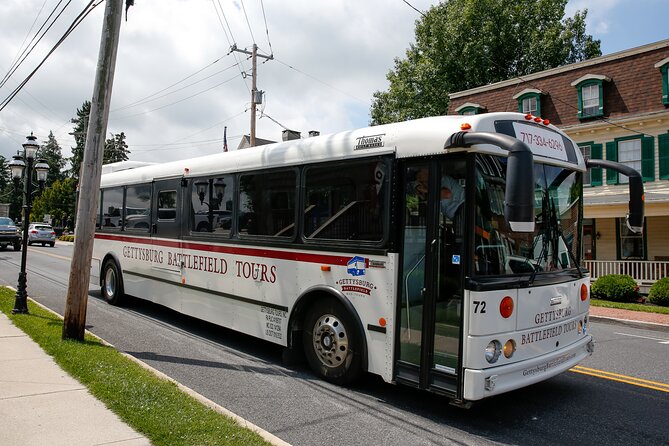
The fields associated with Pickett’s Charge provide one of the tour’s most important visual lessons. You can stand and look across the open ground between the two armies, then consider what it meant for soldiers to advance across that space under fire.
This is where the battlefield’s size becomes emotionally clear. A map can show arrows and troop lines, but standing at the edge of the field gives you a better sense of distance, exposure, and uncertainty. The guide explains the action while you look at the same ground that commanders studied in 1863.
The subject is difficult. Gettysburg was the bloodiest battle of the Civil War, with enormous losses over three days. The tour presents military events, but it also points toward the human cost: families were broken, the town suffered, and recovery took years.
I appreciate that the experience can lead beyond tactics. One guide may focus on troop movement, another on individuals or local effects, but the best part of the tour is the connection between both. You learn what happened on the field and why the result mattered to the country.
Why the guide matters more than the bus
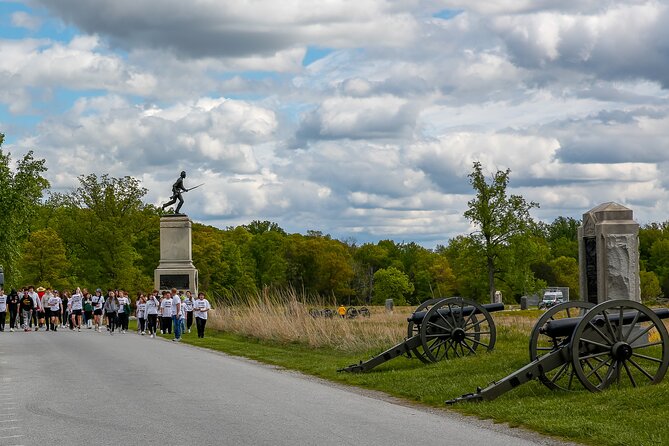
The coach is useful, but the guide determines how much you take away. Gettysburg has too many names, dates, units, and commanders to absorb without a clear explanation. A strong guide turns those details into a story with a beginning, middle, and end.
Paul has been praised for a chronological presentation that covers the main points without losing the thread. Christina and Christine have also been described as lively and clear, while John has been praised for answering questions and explaining how and why events unfolded. Those details matter because the best battlefield tour does more than recite facts.
You should expect a history lesson, not a comedy show or a quiet scenic ride. Some guides add light jokes, but the subject remains serious. If you enjoy military history, you will likely appreciate the amount of detail. If you prefer only a broad overview, the information may feel heavy at times.
A useful approach is to listen for three things: where each force was positioned, what each commander was trying to achieve, and how the terrain helped or hurt that plan. That framework makes the narration easier to follow, even when many names are introduced.
Is $43 a fair price?

At $43 per person, this is a reasonable first introduction to Gettysburg. The price includes transportation by air-conditioned coach, a driver, a live guide, and the battlefield tour. You are paying for access to a large area without having to navigate it yourself, plus the explanation that ties the sites together.
The value is strongest if this is your first visit. You can see major parts of the battlefield and learn what deserves a closer look later. The tour also saves you from spending your first hours trying to understand a confusing road network and a long list of monuments.
The value is lower if you already know Gettysburg well or want to spend a long time at specific family monuments. The tour moves on a schedule, and you will not control how long you stay at Devil’s Den, Little Round Top, or another viewpoint. A private guide or a self-guided return visit would give you more control, but likely at a higher total cost.
I see this as a strong opening activity rather than a complete Gettysburg visit. Several visitors have used the tour to learn where to return afterward, including one person who located a relative’s monument after receiving help with the battlefield layout. That is a smart way to use the experience: take the broad tour first, then revisit the places that matter most to you.
The best seasons and what to bring
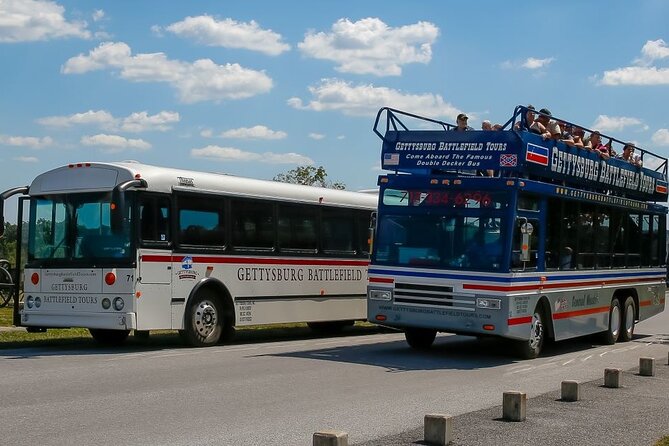
The tour runs in all weather conditions, so your clothing matters. Bring layers, comfortable shoes, and protection from rain or strong sun. Even though much of the tour takes place on the coach, you may step outside at several sites.
Winter can be a pleasant time for this activity if you prefer fewer crowds and a warm bus. December and January visits have been described as comfortable and less busy, with good room on the coach. The tradeoff is colder weather at outdoor stops and potentially less forgiving conditions underfoot.
October can also work well, with cooler air and fewer crowds than the busiest summer period. Summer gives you longer daylight and greener views, but the heat makes the air-conditioning more valuable.
A small bottle of water and a snack are sensible. One visitor specifically noted bringing both on the bus. They are simple comforts during a two-hour outing, especially if your day includes more sightseeing before or after the tour.
Who should take this Gettysburg tour?
I would recommend it to first-time visitors, families, couples, and anyone who wants a clear introduction without walking the entire park. It also suits people who have studied the Civil War but want to see the ground in person.
The tour works well for visitors with limited time in Gettysburg. Two hours gives you a solid overview without using the entire day. It also suits people who prefer listening to a live guide rather than reading signs or managing an audio tour.
History fans should enjoy the access to sites such as Devil’s Den, Little Round Top, and Pickett’s Charge. The guide’s explanations add value for anyone interested in military decisions, troop movement, or the relationship between terrain and battle plans.
You may want another plan if you need a private experience, quiet reflection at each monument, or a highly specialized focus on one regiment or commander. You should also allow extra time if you want to walk around a stop in detail. This is a guided overview, not a full-day field study.
The experience is offered in English. Service animals are allowed, and most people can participate, but the supplied information does not provide detailed accessibility specifications for every stop. If you have particular mobility needs, confirm the current arrangements before booking.
Booking, meeting point, and cancellation details
Your mobile ticket is confirmed at booking in most cases. If you book within two days of the departure date, confirmation may arrive within 48 hours and remains subject to availability.
The meeting point is the Gettysburg Tour Center, 778 Baltimore Street, Gettysburg, Pennsylvania. Hotel pickup and drop-off are not included, and the tour returns to the same meeting point.
Free cancellation is available up to 24 hours before the scheduled start time for a full refund. Changes or cancellations made less than 24 hours in advance are not accepted for a refund. If poor weather causes the operator to cancel, you are offered another date or a full refund.
Should you book the two-hour battlefield tour?
Book it if you want a well-organized first look at Gettysburg, especially if you are unsure how the battlefield fits together. The coach covers more ground than you could comfortably walk in two hours, and the guide gives meaning to the hills, rocks, roads, and open fields.
I would book early during busy periods, since the activity is often reserved about 20 days ahead. Choose a season that matches your weather tolerance, bring a drink and layers, and arrive ready for a serious history lesson.
Skip it only if you already know the park well and want complete control over every stop. For most first-time visitors, $43 is a fair price for a comfortable introduction, clear battlefield context, and a useful plan for what to explore next.
FAQ
Where does the Gettysburg battlefield bus tour begin?
The tour begins at the Gettysburg Tour Center, 778 Baltimore Street, Gettysburg, Pennsylvania.
Where does the tour end?
The activity ends back at the same meeting point on Baltimore Street.
How long is the tour?
The tour lasts approximately two hours.
What transportation is provided?
You travel by an air-conditioned coach bus. A driver and guide are included.
What sites can I expect to see?
The route includes important Gettysburg battlefield areas such as Devil’s Den, Little Round Top, and the location associated with Pickett’s Charge. The guide may stop at selected scenic locations.
Is a guide included?
Yes. The price includes a driver and a live English-speaking guide who explains the three-day Battle of Gettysburg.
Is hotel pickup included?
No. Hotel pickup and drop-off are not included. You must meet the group at the Gettysburg Tour Center.
Can I cancel for a refund?
Yes. You can cancel at least 24 hours before the experience start time for a full refund. Cancellations made less than 24 hours before departure are not refunded.
What happens if bad weather cancels the tour?
If the operator cancels because of poor weather, you are offered a different date or a full refund. The tour operates in all weather conditions, so you should dress appropriately.
More Two-Hour Tours in the USA
- 2 Hour LoDo Historic Walking Tour in Denver
★ 5.0 · 1,106 reviews - Boston: 2-Hour Historic Walking Tour
★ 4.7 · 88 reviews - Kyoto Gion: 2-Hour Geisha Culture & History Walking Tour
★ 5.0 · 1,186 reviews - 2-Hour Historical Walking Tour from Dublin
★ 5.0 · 875 reviews
Latest history tours reviewed in the USA
- Franklin: Ghost Tour in Historic Franklin★ 4.8 · 65 reviews
- Fort Worth: Stockyards History Tour Pub Crawl★ 4.8 · 39 reviews
- Downtown Flagstaff Haunted History Walking Tour★ 4.7 · 46 reviews
- New York City: Flatiron Food, History, and Architecture Tour★ 4.8 · 43 reviews
- Fairbanks: Gold Dredge 8 Historic Train Tour★ 4.7 · 219 reviews
- Fairbanks: Private Mush on the Historic Yukon Quest Trail★ 5.0 · 30 reviews
- Charleston:Evening Haunted History Horse-Drawn Carriage Tour★ 4.7 · 38 reviews
- Philadelphia: Valley Forge National Historical Park Tour★ 4.9 · 39 reviews
USA History Tours, compared.

New York City: American Museum of Natural History Ticket
Read our review →
History and Hauntings of Salem Guided Walking Tour
Read our review →
Charleston’s Old South Carriage Historic Horse & Carriage Tour
Read our review →

Big Island in a Day: Volcanoes Waterfalls Sightseeing and History
Read our review →
Boston: Freedom Trail History Small Group Walking Tour
Read our review →
Historic Charleston Guided Sightseeing Walking Tour
Read our review →
Charleston Horse-Drawn Carriage Tour: Explore Historic Charleston
Read our review →Browse the lists this tour appears in