
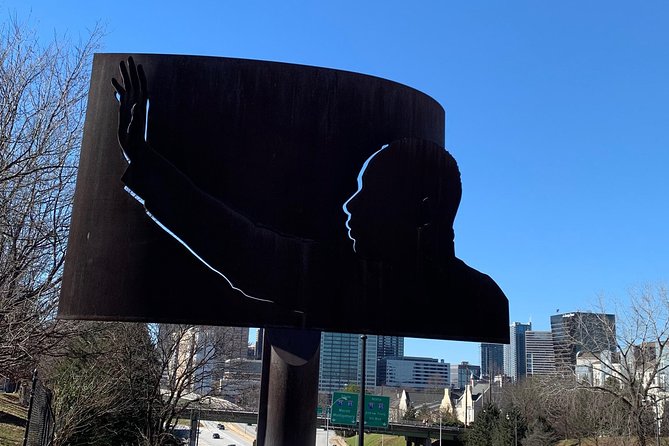
Review · ATLANTA
Martin Luther King Jr. History Walking Tour
Atlanta’s Civil Rights story feels most powerful in Sweet Auburn, where Martin Luther King Jr. was born, preached, worked, and is remembered. This tour connects the famous names and landmarks with the smaller details: offices, churches, family places, mentors, speeches, and the people who helped shape the movement.
I like the small group limit of 14, which gives your guide room to answer questions, and I like the mix of major sights with less obvious stops such as Prince Hall Grand Lodge. The main consideration is simple: you will walk about 1.5 miles, stand for long periods, and deal with Atlanta’s heat or rain. Comfortable shoes and water matter.
Key points to know before you book

- Sweet Auburn is the classroom: Nearly the entire tour unfolds in the neighborhood where Dr. King’s family, church, work, and public life came together.
- The guides bring strong storytelling skills: Zoe, Joy, Jay, Jessica, Nic, Kristen, Kristin, and Kirsty have all led tours praised for clear explanations, humor, energy, and personal touches.
- You see major Civil Rights landmarks: The route includes Ebenezer Baptist Church, the King Center, the National Historical Park, Jackson Street Bridge, and the International Civil Rights Walk of Fame.
- Prince Hall Grand Lodge adds useful context: You see the exterior of the building connected with Dr. King, Congressman John Lewis, and a historic Madam C. J. Walker beauty salon.
- The experience is more than a photo stop: Guides connect Dr. King’s public work with Coretta Scott King, his family, mentors, fellow leaders, and the wider movement.
- The $40 price buys interpretation, not transportation: You pay for about two and a half hours with a guide. Getting to Atlanta and the meeting point is up to you.
Why Sweet Auburn makes this tour worthwhile
You can visit Atlanta’s Martin Luther King Jr. sites on your own, but the geography alone will not explain how the pieces fit together. The value here is the thread tying church life, family life, political organizing, public speaking, and the Civil Rights movement into one walk.
The route stays in Sweet Auburn, a neighborhood that carries much of Atlanta’s Black history. Instead of spending the morning crossing the city, you move through a concentrated group of places connected to Dr. King and other leaders.
That focus also gives the tour a clear rhythm. You move between formal memorial spaces and ordinary city streets. A church exterior, an old lodge, a bridge view, and a national historic site each tell a different part of the story.
The strongest guides use this setting well. Joy has been praised for adding personal details about Dr. King, Coretta Scott King, and the King family. Zoe is known for an energetic style and well-timed pacing. Jay combines humor with clear explanations, while Jessica uses strong storytelling and answers questions in depth. Nic is especially good at keeping the group moving and engaged.
The guide can make or break a history walk, and this experience has a broad bench of capable hosts. You may be assigned Zoe, Joy, Jay, Jessica, Nic, Kristen, Kristin, Kirsty, or another guide, so do not book on the assumption that one particular person will lead your departure unless the operator confirms it.
More History Walking Tours in the USA
- History and Hauntings of Salem Guided Walking Tour
★ 5.0 · 14,564 reviews - Boston: Freedom Trail History Small Group Walking Tour
★ 5.0 · 6,450 reviews - Historic Charleston Guided Sightseeing Walking Tour
★ 5.0 · 6,216 reviews
Starting at the Martin Luther King Jr. National Historical Park
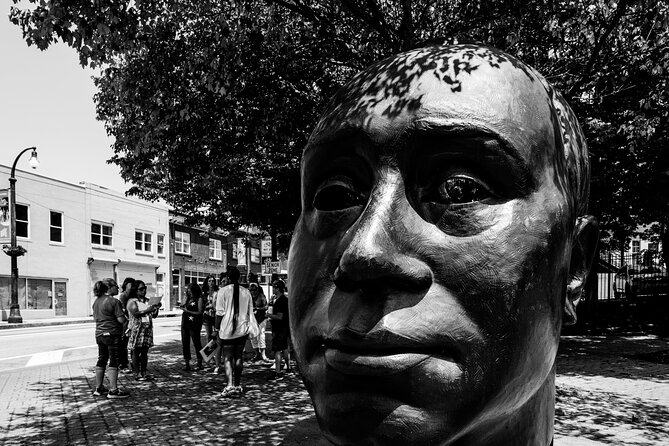
The tour begins and ends at 450 Auburn Avenue NE, at the Martin Luther King Jr. National Historical Site. This is a practical starting point because you get an overview of the site before walking through the surrounding neighborhood.
The National Historical Park portion includes about 25 minutes with admission included. The tour then uses the nearby streets to add context and detail. Since National Park buildings can close at any time because of staffing shortages, you should treat interior access as a possibility rather than a guarantee.
That point matters. The route is still useful if a building closes, but the experience may shift toward outdoor interpretation and neighborhood landmarks. Ask your guide what is open on the day of your visit.
The site itself gives you a strong foundation. You are not just looking at a memorial and taking a picture. You are introduced to the places connected with Dr. King’s life and work, then given a wider explanation of Atlanta’s role in the Civil Rights movement.
Ebenezer Baptist Church and the power of place
Historic Ebenezer Baptist Church is one of the most important stops, even though this experience includes the exterior only. Dr. King and his father preached here, and the church remains central to the story of his public life.
The exterior visit has a built-in limit. You will not tour the inside of the historic Heritage Sanctuary as part of this experience. Still, standing outside the church while your guide explains its role gives the building weight that a quick solo photo stop may miss.
This is one place where a good guide’s delivery matters. Several guides use stories, questions, and excerpts from Dr. King’s speeches to connect the physical setting with his voice and ideas. Hearing his words at a related site can make the stop feel less like a museum label and more like a moment of public memory.
Do not expect a full church visit. If entering the sanctuary is your main goal, you will need to make separate plans.
Prince Hall Grand Lodge and Atlanta’s wider network
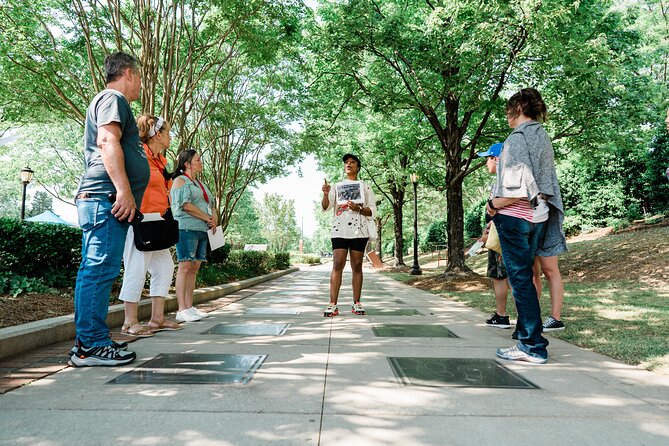
The exterior of Prince Hall Grand Lodge is an especially useful stop because it broadens the story beyond the best-known landmarks. The building was connected with offices used by Dr. King and Congressman John Lewis. You also see the location of a historic Madam C. J. Walker beauty salon.
This is the kind of stop I appreciate on a walking tour. Ebenezer Baptist Church and the King Center are famous, but a building such as Prince Hall Grand Lodge helps explain the network of people, institutions, businesses, and meeting places that supported the movement.
You will not go inside this building on the tour. The value comes from the explanation outside, so stay close and listen. The stop can pass quickly if you are focused only on taking photographs.
Same old streets, another chapter:
- New York City: American Museum of Natural History Ticket
★ 4.5 · 15,447 reviews - Charleston’s Old South Carriage Historic Horse & Carriage Tour
★ 5.0 · 10,023 reviews - Beneath The Streets Underground History Tour
★ 4.5 · 8,006 reviews - Big Island in a Day: Volcanoes Waterfalls Sightseeing and History
★ 5.0 · 6,569 reviews
Jackson Street Bridge gives you Atlanta in one frame

The walk includes about 10 minutes at Jackson Street Bridge, one of Atlanta’s best-known city views. This is a welcome change of pace after the denser historical stops.
The bridge gives you time to look outward and see the modern city connected to the older neighborhood. It is also a natural place for photographs. The stop is brief, so have your phone ready before you arrive.
The bridge is not a major historical site in the same way as Ebenezer Baptist Church or the National Historical Park. Its value is visual. It gives you a memorable view and a pause in the walking route, while your guide keeps the broader story in view.
The King Center and the final part of the walk

The King Center is included as part of the route, with about 10 minutes noted for the stop. Its stated hours are 10 a.m. to 5 p.m., seven days a week.
The King Center adds an important memorial and educational layer to the tour. The route connects Dr. King’s work with Coretta Scott King and the King family, rather than treating his story as the work of one person alone.
Guide-led storytelling can add emotional force here. One guide used excerpts from Dr. King’s speeches at key points, while also discussing his clothing and suitcase from his final day, his Nobel Peace Prize, his family, and his final resting place with Coretta Scott King. Exact access and timing can vary, so ask your guide what you will see that day.
The tour does not include the Birth Home Tour, which is listed as closed until 2025. It also does not include entry inside the historic Ebenezer Baptist Church Heritage Sanctuary. Those exclusions are important if you are planning a full day around every King-related interior.
The International Civil Rights Walk of Fame
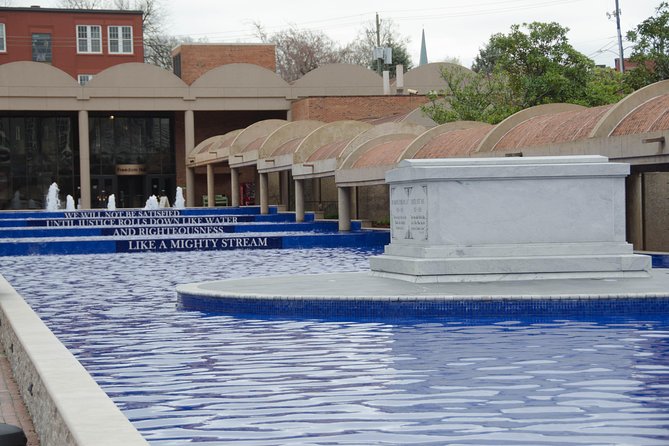
The International Civil Rights Walk of Fame is a short stop of about 10 minutes. You see shoe prints connected with prominent Civil Rights leaders introduced during the walk.
This works best as a closing reflection. By this point, you have heard about several people and organizations, so the names on the Walk of Fame carry more meaning than they might at the beginning of the morning.
It is not a long museum visit. Think of it as a concise outdoor memorial that reinforces the connections between leaders. Your guide’s explanations are what make this stop useful.
What the walking pace is really like
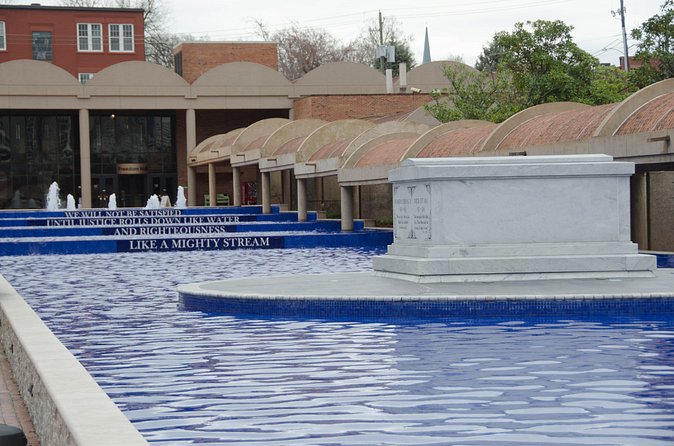
The tour lasts about two and a half hours and covers roughly 1.5 miles, with some small hills and several breaks. That is manageable for most people who are comfortable walking and standing, but it is not a seated sightseeing tour.
Atlanta heat can change the experience. One guide has been noted for finding shady places during hot weather, and another included a short break with cold water. Those details may vary by guide and day, so carry your own water and dress for the forecast.
The tour operates rain or shine, although poor weather can lead to cancellation and a choice of another date or a full refund. Wear shoes with good support, charge your phone, and bring weather protection. The route is not recommended if you have difficulty walking or standing for long periods.
The group maximum is 14. That is small enough for a more personal conversation, but it is still a group walk, not a private tour. If you want to ask questions, do so as you go rather than waiting until the final stop.
What you get for $40
At $40 per person, this is a fair price for a focused two-and-a-half-hour history tour, especially if you want interpretation rather than a self-guided checklist. Admission is included for the listed stops, and the guide provides the context that links them together.
The price does not include transport to or from the meeting point. You need to arrange your own way to 450 Auburn Avenue NE, though the site is near public transportation.
The value is strongest for first-time visitors to Atlanta, people who want a clear introduction to the Civil Rights movement, and local residents who have seen the landmarks but never heard the fuller story. If you already know Sweet Auburn well and prefer to explore at your own pace, you may find the fixed route less necessary.
A 2.5-hour tour also costs you a good part of a morning or afternoon. In return, you get a compact overview rather than spending time navigating between sites. Since the tour is often booked about 11 days ahead, reserve early if your Atlanta dates are fixed.
The guide makes the history accessible
The most praised part of this experience is the human delivery. The guides are repeatedly described as energetic, conversational, humorous, and deeply familiar with the subject.
That does not mean the tone is light all the time. The story includes violence, loss, injustice, sacrifice, and Dr. King’s assassination. The best moments balance gravity with warmth, showing Dr. King and Coretta Scott King as people within a family and a community, not only as distant public figures.
You can expect questions to be welcomed. The tour works especially well for families, solo visitors, educators, and anyone who wants more than dates and names. Children who can manage the walking may appreciate the stories, but the subject matter is serious and may need some preparation.
Service animals are allowed, and most people can participate. The operator offers the tour in English and provides a mobile ticket.
Who should book this Atlanta walk?
Book it if you want:
- A focused introduction to Dr. King and Atlanta’s role in the Civil Rights movement
- A small group rather than a large coach tour
- A guide who can explain how the landmarks connect
- A mix of famous sites and less familiar places
- A walking route with time for questions and photographs
- A meaningful activity for a first Atlanta visit or a return trip
Think twice if you want:
- A fully indoor experience
- A church sanctuary visit
- The Birth Home Tour
- Transportation from your hotel
- A short, low-walking activity
- Guaranteed entry to every National Park building
The experience is non-refundable if you cancel or request a change. If the operator cancels because of weather or because the minimum group size is not met, you are offered another date or experience, or a full refund. Plan carefully before booking.
Should you book the Martin Luther King Jr. History Walking Tour?
Yes, if you can handle the walking and want Atlanta’s Civil Rights story explained by a strong guide. The $40 price is reasonable for the time, small group size, and concentrated route.
Book this tour for the connections: the church, the lodge, the park, the bridge, the memorials, the leaders, and the family story. Just keep your expectations clear. You are buying an outdoor walking experience, not a full tour of every interior site. Wear comfortable shoes, bring water, allow two and a half hours, and arrive ready to listen.
FAQ
How long does the Martin Luther King Jr. History Walking Tour last?
The tour lasts approximately 2 hours and 30 minutes.
Where does the tour begin?
It begins at 450 Auburn Avenue NE, Atlanta, Georgia 30312, at the Martin Luther King Jr. National Historical Site.
Where does the tour end?
The tour ends back at the meeting point.
How much walking is involved?
The route requires about 1.5 miles of walking and includes some small hills. You should also expect to stand for extended periods.
Is the tour suitable for people with limited mobility?
The tour is not recommended for people who cannot walk and stand for long periods. Most other participants can take part.
What landmarks are included?
The route includes the exterior of Historic Ebenezer Baptist Church, the Martin Luther King Jr. National Historical Park, Prince Hall Grand Lodge, Jackson Street Bridge, Sweet Auburn, the King Center, and the International Civil Rights Walk of Fame.
Can I go inside Ebenezer Baptist Church?
No. The experience includes the exterior of the historic church only, not the inside of the Heritage Sanctuary.
Is the Birth Home Tour included?
No. The Birth Home Tour is not included and is listed as closed until 2025. Check current access separately before your visit.
Is transportation provided?
No. You are responsible for getting to and from the meeting point. The area is near public transportation.
What happens if the weather is bad?
The tour operates rain or shine, but it can be canceled because of poor weather. If that happens, you are offered another date or a full refund.
Latest history tours reviewed in the USA
- Franklin: Ghost Tour in Historic Franklin★ 4.8 · 65 reviews
- Fort Worth: Stockyards History Tour Pub Crawl★ 4.8 · 39 reviews
- Downtown Flagstaff Haunted History Walking Tour★ 4.7 · 46 reviews
- New York City: Flatiron Food, History, and Architecture Tour★ 4.8 · 43 reviews
- Fairbanks: Gold Dredge 8 Historic Train Tour★ 4.7 · 219 reviews
- Fairbanks: Private Mush on the Historic Yukon Quest Trail★ 5.0 · 30 reviews
- Charleston:Evening Haunted History Horse-Drawn Carriage Tour★ 4.7 · 38 reviews
- Philadelphia: Valley Forge National Historical Park Tour★ 4.9 · 39 reviews
Atlanta History Tours, compared.

Atlanta’s Black History and Civil Rights Tour
Read our review →
3-Hour Atlanta Beltline Food, Street Art and History Tour
Read our review →

Atlanta: Martin Luther King Historical Park Walking Tour
Read our review →Browse the lists this tour appears in