
Review · BUCHAREST
Bucharest: 3-Hour Dark History Tour with a Local
Bucharest’s darker stories are not locked away in a museum. They sit in cemeteries filled with elaborate tombs, on streets marked by revolution, and in the old city spaces where brothels and political prisons once shaped daily life. This three-hour walk connects those places with a local English-speaking guide, often someone like Alex, Elena, Andra, Vlad, or Irina.
I like the visit to Bellu Cemetery, where funerary art, tragic romances, folklore, and local personalities make the past feel close at hand. I also like the way the tour links the 1989 Revolution with the everyday fear of Ceaușescu’s communist rule instead of treating them as isolated history lessons. The main drawback is simple: this is a long walking tour, with outdoor stops and metro travel, so cold weather and uncomfortable shoes can take the edge off it.
Key points to know before booking
- Bellu Cemetery is the heart of the tour: Expect ornate monuments, unusual stories, sad love tales, and unsettling local mysteries.
- The tour covers more than ghosts and crime: University Square and Revolution Square bring in the bloodshed of 1989 and the protests of the 1990s.
- You will hear about interwar Bucharest: The route touches on the old sex trade, famous prostitutes, and the remains of a former brothel.
- A grim 1970s case adds a crime-story thread: You learn about the serial killer nicknamed the Vampire of Bucharest.
- Guides make a major difference: Alex, Elena, Andra, Vlad, Irina, Bogi, and others are praised for storytelling, humor, personal insight, and attention to small details.
- Plan for real walking: Comfortable shoes, warm clothing in winter, and an interest in serious subjects will improve the experience.
Why Bucharest’s dark past makes a good walking tour
Many first visits to Bucharest focus on grand boulevards, old churches, cafés, and the broad story of Romania’s capital. Those sights matter, but they can leave you with a polished and incomplete picture. This tour moves into the harder chapters: death, political violence, sexual commerce, dictatorship, imprisonment, and public fear.
I like this approach because the subjects are tied to actual places. You are not simply listening to a lecture about communism. You are standing at squares where crowds gathered, walking among graves that reflect the city’s social history, and seeing parts of Bucharest that a standard sightseeing route may skip.
The tone is serious, but it is not presented as a horror show. The best guides use humor carefully, explain local customs, and make room for questions. Several guides also bring personal memories or family perspectives about life under communism. That human touch helps you understand how a political system affected food, work, speech, movement, and ordinary survival.
This is not the right choice for young children. Anyone under 16 cannot join, and some stories involve murder, torture, political executions, and sexual exploitation. You should also expect a fair amount of standing while the guide explains each site.
More Dark History and Haunted Tours in the world:
- Savannah History and Haunts Candlelit Ghost Walking Tour
★ 5.0 · 3,235 reviews - Stockholm: Ghost Walk and Historical Tour
★ 4.7 · 2,685 reviews - New Orleans Small-Group Haunted History Carriage Tour
★ 4.5 · 2,289 reviews
Bellu Cemetery: tombs, romance, and unsettling stories
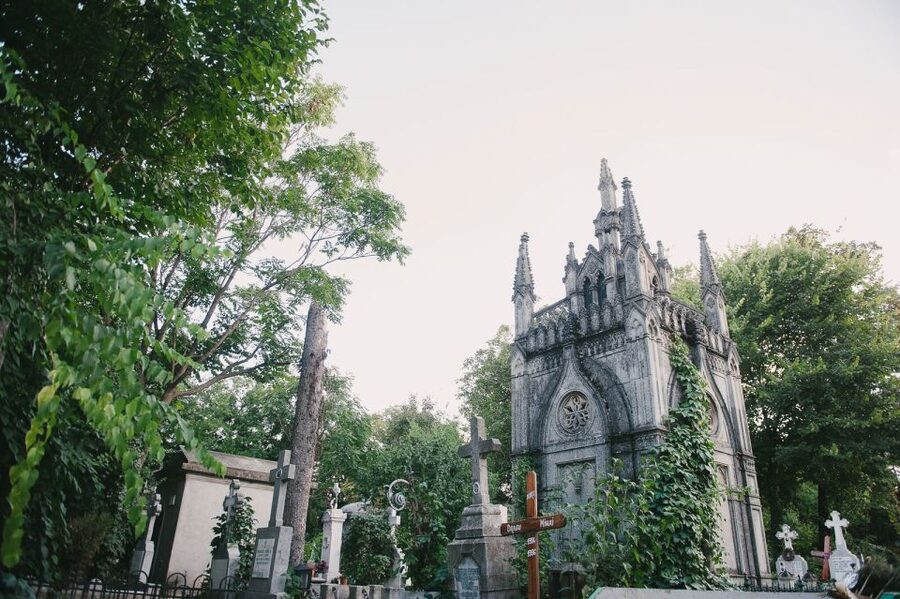
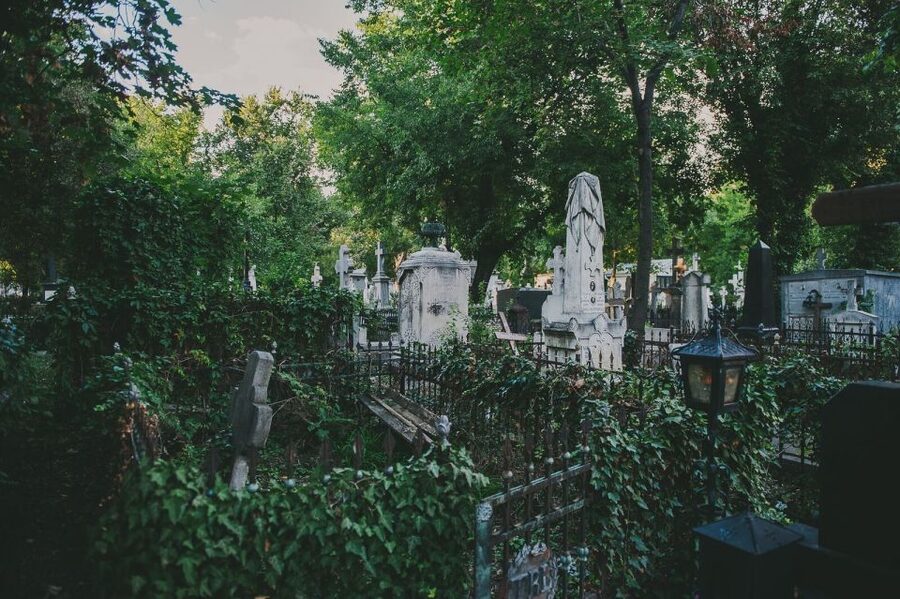
The tour begins near a street lined with no fewer than six cemeteries. These include the Cemetery of the Victims of the 1989 Revolution, the Jewish Cemetery, the Cemetery of the Russian Soldiers, and the old Bellu Cemetery, which is the main cemetery visit.
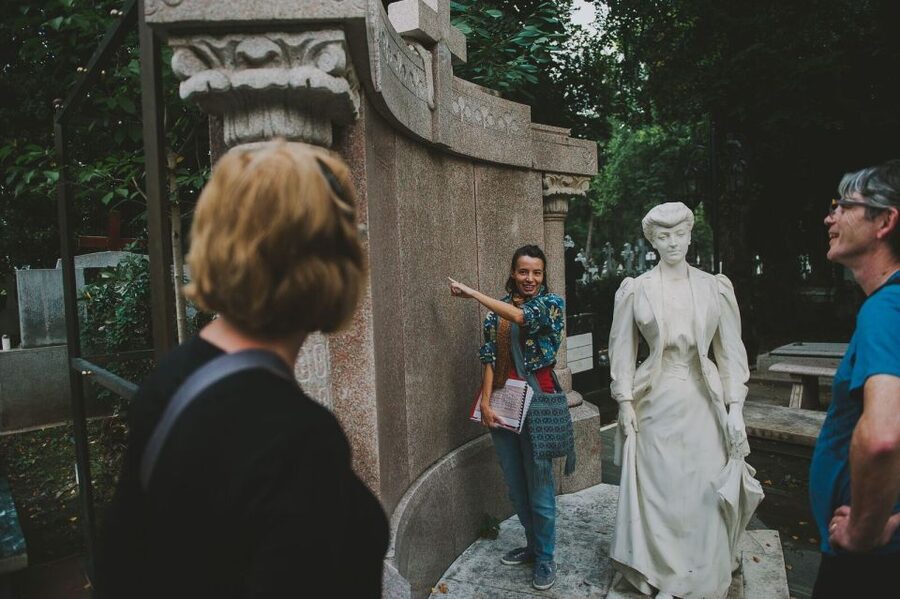
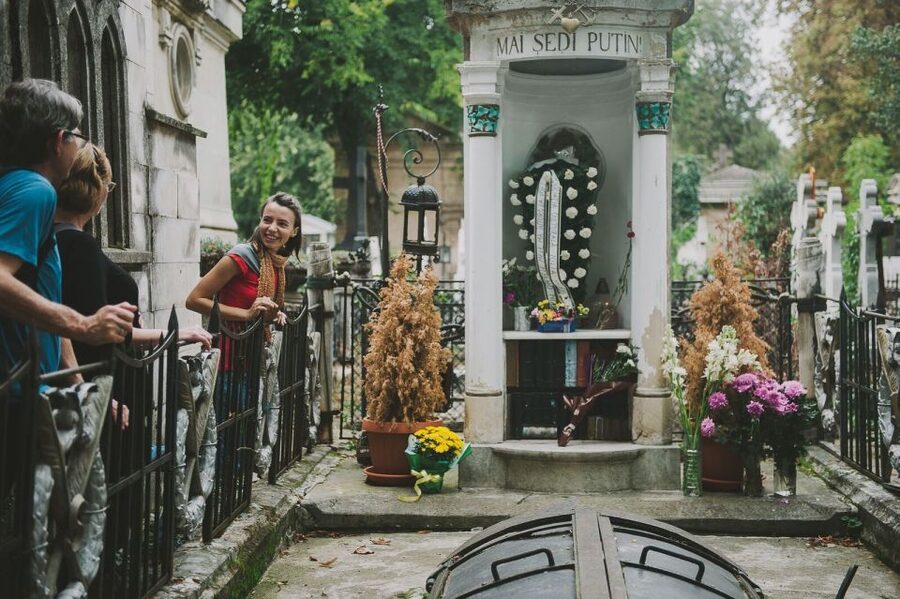
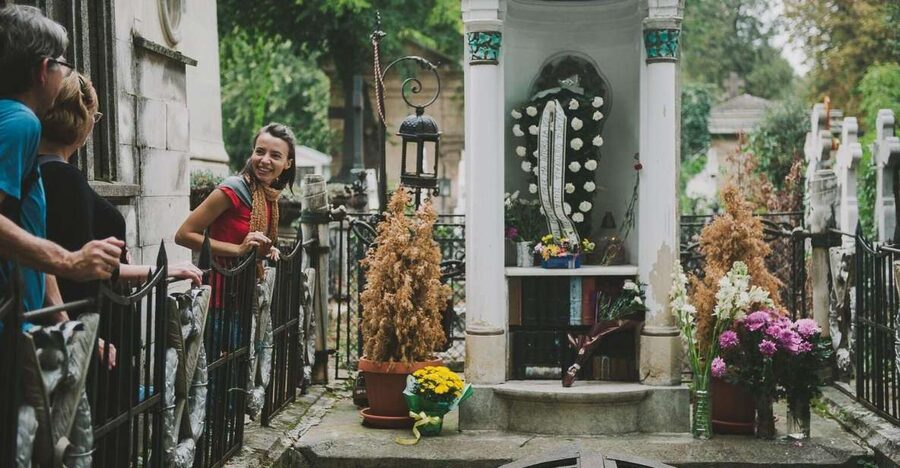
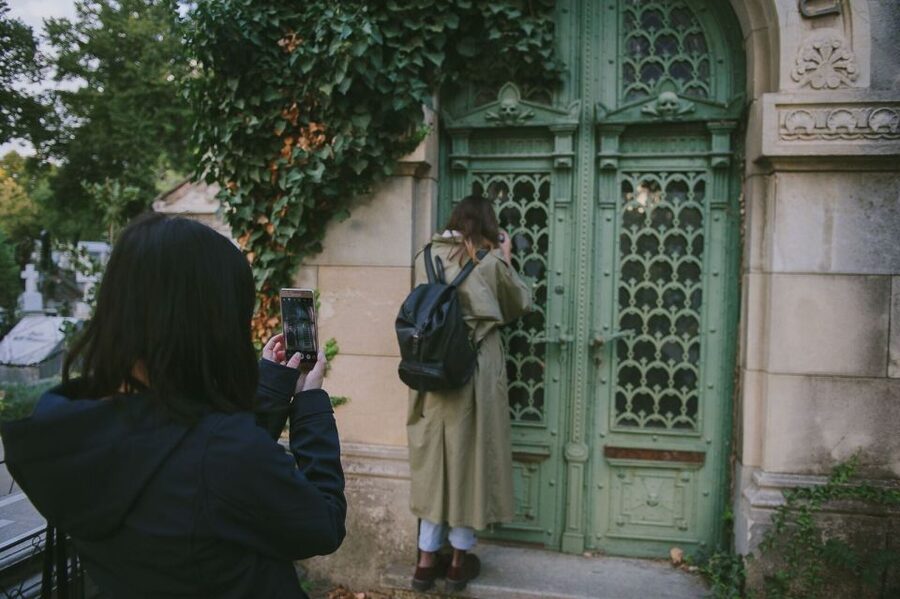
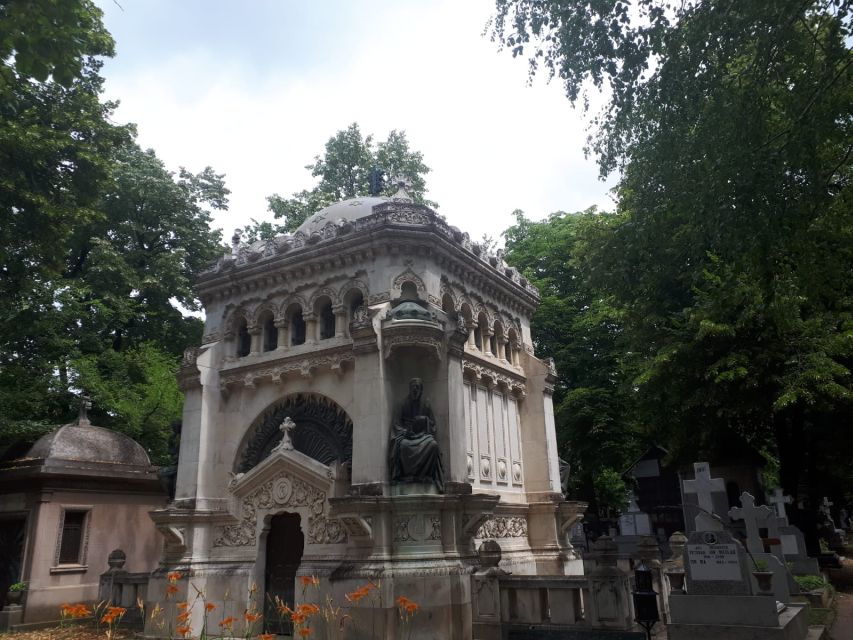
Bellu is more than a graveyard. It is a national historical monument and an outdoor display of funerary architecture. Tombs and memorials reflect wealth, family pride, grief, religious belief, and changing ideas about death. The setting gives the guide room to tell stories at a human scale, often focusing on individuals rather than only kings, generals, and political leaders.
You may hear sad love stories, family tragedies, folklore, and sinister mysteries. This variety keeps the stop from feeling like a parade of names and dates. The guide points out details in the monuments and explains why certain graves matter to Bucharest.
The cemetery also has a quieter, less formal side. Guides such as Elena are especially fond of the cats and dogs living around the grounds, and several tours have included time with these animals. That is not the core of the experience, but it adds a local, unscripted moment to an otherwise heavy stop.
Give Bellu plenty of attention. It is often the part that lingers longest, partly because the architecture is striking and partly because the stories connect private sorrow with the wider life of the city. The drawback is that cemeteries can be difficult places for anyone uncomfortable with death or mourning. The tour treats the site with respect, but the subject matter is unavoidable.
University Square and the bloodshed of 1989
From the cemetery area, the route uses Bucharest’s metro, with tickets included, to connect the outlying stops with the city center. The change of scene is useful. You move from memorials and tombs into the public spaces where political history unfolded in front of large crowds.
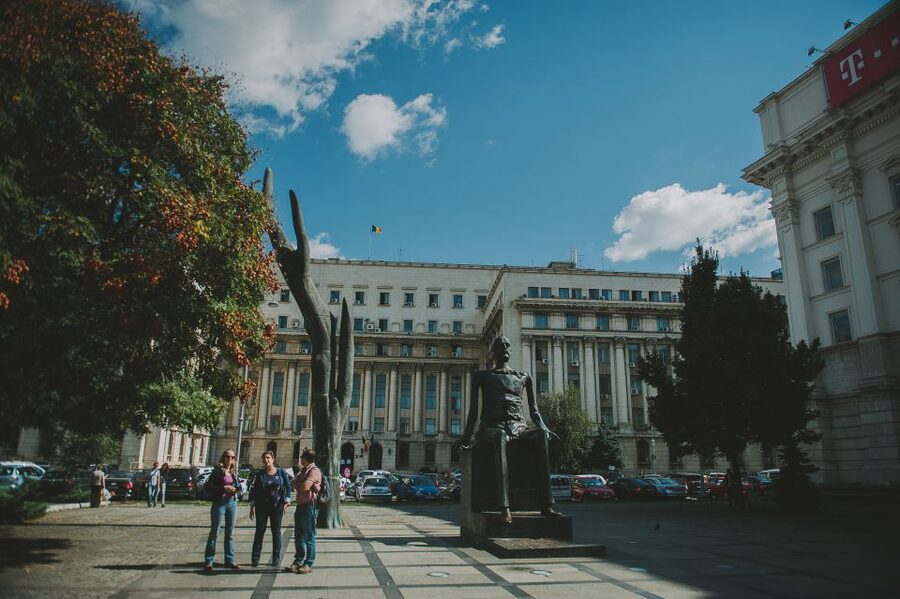
University Square is one of Bucharest’s most important meeting points. It played a major role during the 1989 Revolution against Ceaușescu and later during anticommunist student protests in the 1990s. The tour explains how these events turned a familiar urban square into a place of fear, resistance, and bloodshed.
This part is valuable because it helps you see that the end of communism was not a clean, quiet transition. People faced gunfire, confusion, false reports, and political struggles after Ceaușescu fell. The students’ protests that followed also show that dissatisfaction did not end with the dictatorship.
A good guide slows down here and points to small visual clues. Alex has been praised for noticing street art, bullet holes, local plants, and other details that are easy to walk past. Those observations make the square feel less like a textbook illustration and more like a real place with layers of memory.
Expect some standing in exposed city spaces. In winter, the cold can become a real issue because the tour pauses while you listen. Bring a warm coat, hat, and gloves if temperatures are low.
Little Paris, old brothels, and the city’s sex trade
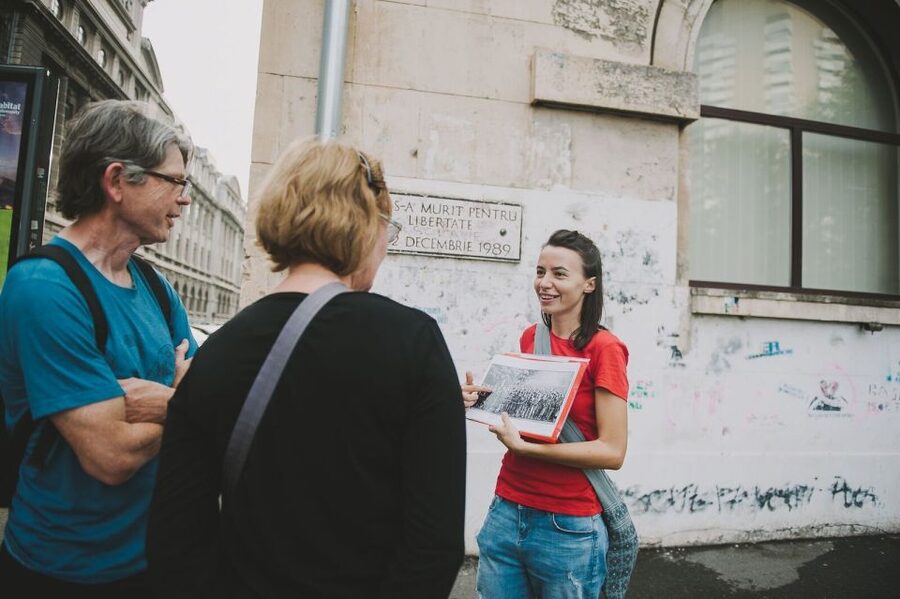
The tour then shifts back to Bucharest’s interwar period, when the capital was often called Little Paris. This section gives you a look at the city’s more sophisticated and complicated social life, including the practice of sex work and the famous prostitutes associated with the era.
You will glimpse what remains of a former interwar brothel and hear how the sex trade fit into the city’s urban culture. The point is not to romanticize the period. Instead, the guide uses the subject to show the contrast between elegant public images of Bucharest and the private businesses, class divisions, and social rules operating behind them.
I appreciate this stop because it widens the idea of dark history. Darkness does not only mean prisons and murder. It can also mean exploitation, double standards, hidden commerce, and the gap between a city’s respectable image and how people actually lived.
This is one of the less conventional parts of the walk, and it may appeal to you if you want Bucharest beyond its usual landmarks. It is also a section where a thoughtful guide matters. The subject needs context, not just colorful gossip. The guides praised most highly, including Andra and Elena, are good at mixing local stories with broader social explanation.
More Three-Hour Tours in the world:
- Berlin: 3-Hour World Heritage Cruise to Potsdam
★ 4.5 · 1,569 reviews - Edinburgh: 3-Hour Historical Walking Tour in Italian
★ 4.7 · 734 reviews - 3-Hour Porto Jewish Heritage Walking Tour with Local Guide
★ 4.5 · 396 reviews - 3-Hour Atlanta Beltline Food, Street Art and History Tour
★ 5.0 · 345 reviews
The Vampire of Bucharest and a 1970s crime story
The interwar section also leads into a later and much darker urban tale: the serial killer nicknamed the Vampire of Bucharest, who terrorized the city at the beginning of the 1970s.
This story adds a true-crime thread to the tour, but it does not replace the political history. You learn how fear can spread through a city and how a notorious criminal becomes part of local memory. The nickname also connects to Romania’s long association with vampire folklore, while the actual subject is a modern crime in Bucharest.
If you book this tour mainly for spooky entertainment, keep your expectations in check. The experience is not a theatrical ghost walk with actors or staged scares. The emphasis is on real places, local storytelling, and the way crime fits into the city’s social history.
I like the balance here. The serial-killer story gives the walk a sharp jolt, but it sits beside architecture, revolution, and communist history. You come away with a broader picture of Bucharest rather than a collection of sensational tales.
Revolution Square and Ceaușescu’s machinery of fear
The final major stop is Revolution Square, the place where the 1989 Revolution began in Bucharest. This is where the tour turns most directly to dictatorship, state violence, and the systems used to silence opposition.
You will hear about communist prisons, labor camps, and torture methods. The guide also explains the role of the Securitate, Romania’s feared secret police, and the daily hardships people endured under Ceaușescu. The subject is not only what happened to famous dissidents. It is also how ordinary people learned to watch what they said, manage shortages, and live with suspicion.
This section gives the earlier cemetery and square visits a stronger frame. The graves are not just monuments to the dead. University Square is not merely a city landmark. Revolution Square is not simply a place where a famous regime ended. Together, the sites show how political decisions reached into homes, workplaces, schools, and personal relationships.
Several guides have been praised for explaining difficult ideas in plain language and answering questions without rushing. Vlad, in particular, is described as adding personal insight into life under Romanian communism. That kind of perspective can make an unfamiliar political system easier to understand, though exact stories and emphasis will depend on the guide assigned to your group.
The tour ends with a traditional Romanian street snack. Water and small refreshments have also been provided on some outings, but the official inclusion is a traditional snack, not a full meal. Plan to buy any extra food and drinks yourself.
Guides, group size, and the walking pace
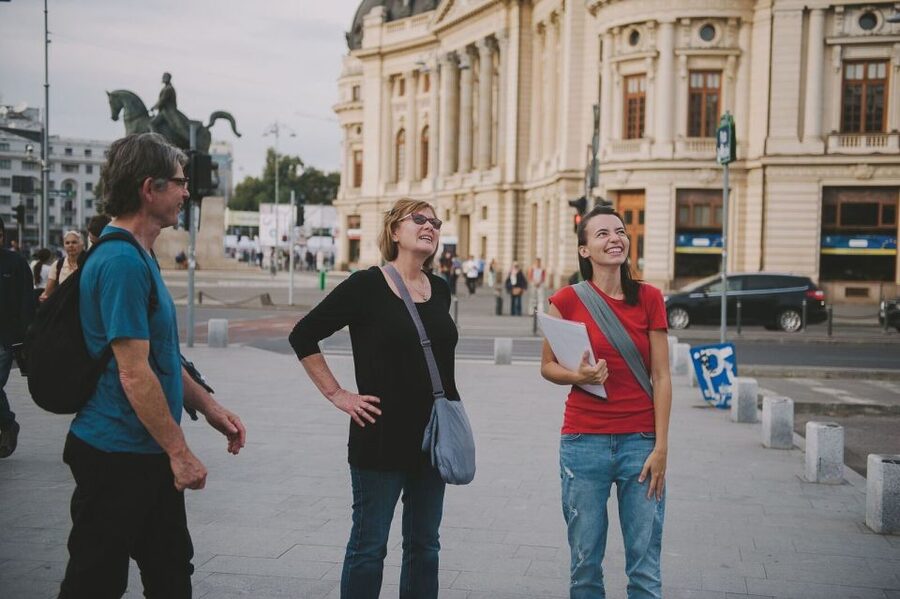
The group is limited to 12 people, which is a useful size for a cemetery walk and city discussion. You can usually hear the guide without the feel of a large coach excursion, and there is more room for questions and personal conversation.
The guide roster includes Alex, Elena, Andra, Vlad, Irina, Bogi, and others. Their styles vary, but the strongest qualities are clear: good storytelling, strong command of Romanian history and architecture, humor, and a willingness to tailor the discussion to your interests.
Elena is often praised for making people feel welcome and for adding cultural details, food suggestions, and personal observations. Alex is noted for his energy, photos, architecture knowledge, and eye for tiny details. Andra is described as witty and clear, while Vlad is especially strong on recent history and personal accounts of communism. These names are useful to know, but you cannot assume which guide will lead your departure.
The three-hour duration is well judged for the material. You cover a lot, but the route does not try to visit every dark site in Bucharest. The tradeoff is that the tour can feel full, especially when the guide is answering questions or adding extra stories.
Wear shoes suitable for several hours on foot. You will use public transport between parts of the route, and metro tickets are included, but this is still a walking tour with outdoor pauses rather than a ride-based sightseeing trip.
Is $55 a fair price?
At $55 per person, the tour costs more than a basic free walking tour, but the comparison is not quite fair. You are paying for a small group, an English-speaking local guide, metro tickets, a structured route outside the usual center, cemetery access as part of the visit, and a traditional snack.
The strongest value comes from the interpretation. Bellu Cemetery and Revolution Square can be visited independently, but you would miss much of the connection between the monuments, the revolution, communist repression, local folklore, and the city’s social history. The guide turns separate places into one story.
The value is also higher if you want a specialist angle. This is not the tour I would choose for a first look at Bucharest’s main churches and grand buildings. I would choose it after, or alongside, a standard city walk, especially if you are curious about the 1989 Revolution, Ceaușescu, crime stories, cemeteries, or the less polished side of the capital.
The flexible booking terms help if your plans are still moving. You can reserve and pay later, and cancellation is allowed up to 24 hours before the tour for a full refund.
Who should book this Bucharest dark history tour?
I would recommend it to adults and older teenagers who enjoy serious history, local stories, unusual architecture, and walking routes away from the standard sights. It is especially useful early in a Bucharest visit because the guide can help you understand later places you see on your own.
You should book it if you want:
- A local explanation of the 1989 Revolution
- A closer look at communist repression and daily fear
- Cemetery art, folklore, and stories about real people
- Interwar Bucharest and the old sex trade
- A true-crime thread without a staged haunted-house format
- A small group with time for questions
I would skip it if you want a relaxed café stroll, dislike cemeteries, or prefer light entertainment. The subject matter is heavy, and the walking can be tiring. Cold weather also matters more than you might expect because the most interesting explanations happen outdoors.
Should you book it?
Book this tour if you want Bucharest explained through its wounds as well as its architecture. The cemetery, revolution sites, communist history, interwar stories, and 1970s crime case create a route with real variety.
For the best experience, wear comfortable shoes, dress warmly in winter, and arrive ready to listen rather than simply collect photos. At $55, it is a good buy for a small-group history walk led by a lively local guide, especially if you want the city’s complicated past brought into focus.
FAQ
How long is the Bucharest Dark History Tour?
The tour lasts three hours.
What language is the tour conducted in?
The tour is conducted in English by a live local guide.
Where does the tour meet?
It meets at the main entrance of the Ion Luca Caragiale National Theatre, at Bulevardul Nicolae Bălcescu 2, Bucharest.
Which cemetery does the tour visit?
The tour visits the historic Bellu Cemetery, a national historical monument known for its funerary architecture and stories.
How many cemeteries are located near the opening area?
The opening area is on a street accommodating at least six cemeteries, including Bellu Cemetery, the Cemetery of the Victims of the 1989 Revolution, the Jewish Cemetery, and the Cemetery of the Russian Soldiers.
Does the tour use public transportation?
Yes. Metro tickets are included, and the route uses the Bucharest metro between parts of the experience.
Is food included?
A traditional Romanian street snack is included. Additional food and drinks are not included.
Are children allowed to join?
No. People under 16 are not permitted to join the tour.
What should I bring?
Bring comfortable shoes. Warm clothing is also strongly advisable in cold weather because much of the tour takes place outdoors.
How large is the group?
The maximum group size is 12 people.
Can I cancel the tour for a refund?
Yes. You can cancel up to 24 hours in advance for a full refund. You can also reserve now and pay later.
Latest history tours reviewed in the world
- From Athens: Ancient Olympia Full-Day Private Tour★ 4.8 · 22 reviews
- From Athens: Explore Ancient Corinth & Charming Nafplion★ 4.6 · 102 reviews
- From Athens: Explore Ancient Greece 4-Day Tour★ 4.7 · 73 reviews
- From Albufeira: Wine Tasting & Historic Silves Tour★ 4.9 · 421 reviews
- From Albufeira: Historical Algarve Region Tour★ 4.7 · 585 reviews
- From Alexandria: Full-Day Guided Tour of Historical Sights★ 4.5 · 54 reviews
- Franklin: Ghost Tour in Historic Franklin★ 4.8 · 65 reviews
- Freiburg: Exciting City Tour with sightseeing and history★ 4.3 · 103 reviews
Bucharest History Tours, compared.

Bucharest: Communism and History Guided City Walking Tour
Read our review →
Bucharest: Small Group History, Art & Secrets Tour
Read our review →
Bucharest: Sweet Delights History and Desserts Walking Tour
Read our review →Browse the lists this tour appears in