
Review · AMSTERDAM
Amsterdam: Luxury Canal Cruise with Historic VR Experience
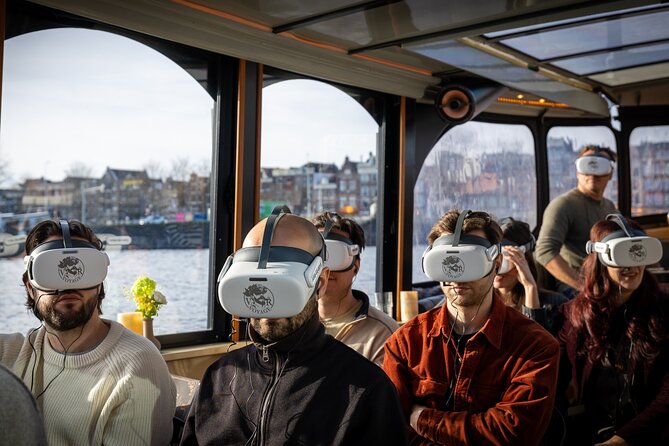
Amsterdam’s canals become a time machine on this 75-minute cruise. At seven points along the route, you put on a VR headset and see the same area as it looked 400 years ago, when Amsterdam was a major trading power. The scenes cover elite homes, warehouses, shipyards, the harbor, and the city wall.
I like the comfortable enclosed boat, especially for a cold or wet day, and I like the way the live canal views and historic animation work together. You do not spend the whole tour staring at a screen. Most of the time, the headset is off and you are watching present-day Amsterdam while listening to the audio.
The main drawback is language balance. The audiotour is offered in Dutch or English, and some English audio has been criticized for sound quality. The host may also explain too much in English for a Dutch-speaking group, so the experience is not equally smooth for everyone.
Key things to know before booking
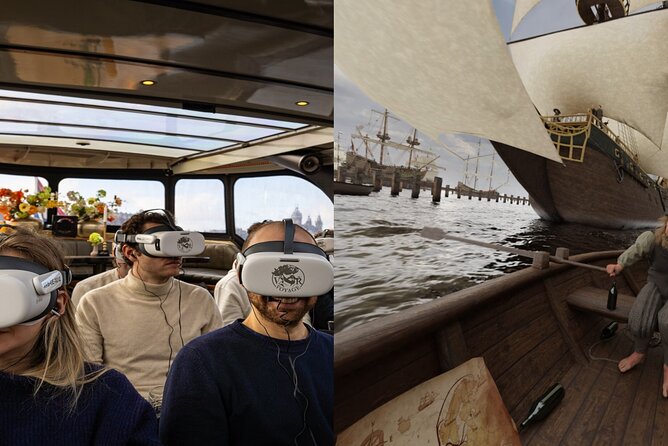
- Seven VR scenes show Amsterdam 400 years ago, including the harbor, shipyard, warehouses, and five-meter city wall.
- The VR portion lasts about 15 minutes, while the full enclosed-boat cruise lasts 75 minutes.
- You keep the headset off for the audiotour, so you can enjoy the modern canal scenery for most of the trip.
- One drink is included, but additional drinks and food cost extra.
- English and Dutch are available, with more languages planned but not currently confirmed.
- The boat is wheelchair accessible, but the experience is not suitable for children under 8 or people over 80.
A canal cruise with a history lesson built in
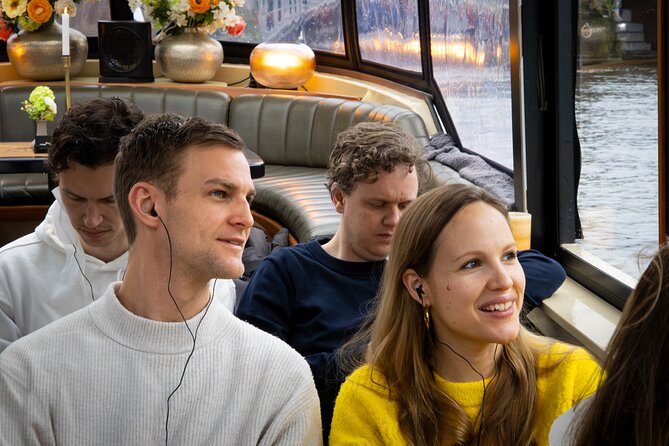
Classic Amsterdam canal cruises give you a useful first look at the city. You pass narrow canal houses, bridges, busy streets, and old waterfront districts while an audio recording explains what you are seeing.
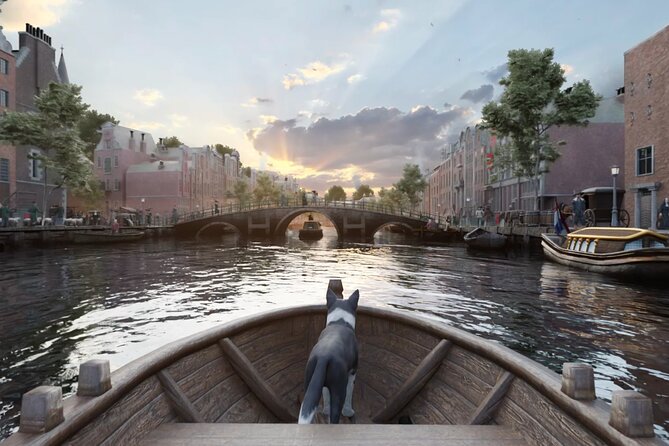
This cruise adds another layer. Instead of only hearing about Amsterdam’s past, you see a computer-generated reconstruction placed over the present-day setting. The idea is simple but effective: look at the city around you, then put on the headset and compare it with the same place during the 17th century.
That comparison matters. Amsterdam’s Golden Age is often reduced to famous paintings, wealthy merchants, and pretty canal houses. Here, the story also includes the systems that made the city powerful: trade, warehouses, shipping, military shipbuilding, and expanding defenses.
The tour uses seven short animations, totaling about 15 minutes. That is enough time to make the past feel present without turning the whole cruise into a long headset session. I consider that a smart balance. A longer VR program could become tiring, especially on a moving boat.
More History Tours in Amsterdam:
- Amsterdam Food and Cultural Tour with Tastings
★ 5.0 · 4,315 reviews - Amsterdam: Historic City Centre Canal Cruise
★ 4.3 · 659 reviews - Amsterdam: Haunted History and Ghost Walking Tour
★ 4.5 · 488 reviews
Boarding beside Lido Bar & Kitchen
You meet at the jetty next to Lido Bar & Kitchen. A tour guide checks you in before you board. Since the meeting point is a jetty rather than a large indoor attraction, give yourself enough time to find the waterfront and identify the correct boat.
The vessel is described as a luxury enclosed canal boat. That is important in Amsterdam, where weather can change quickly and a chilly wind can make an open boat uncomfortable. An enclosed cabin also lets you hear the audio more clearly and keeps the VR equipment in a controlled setting.
The boat is wheelchair accessible, which makes this a useful option for visitors who cannot easily manage a more basic canal boat. The supplied information does not explain every detail of boarding or the restroom setup, so you should check directly if you need specific mobility arrangements.
Once aboard, you receive one drink. Food and extra drinks are not included. The included beverage is a small but welcome touch, particularly because the cruise lasts more than an hour.
The first part: modern Amsterdam from the water
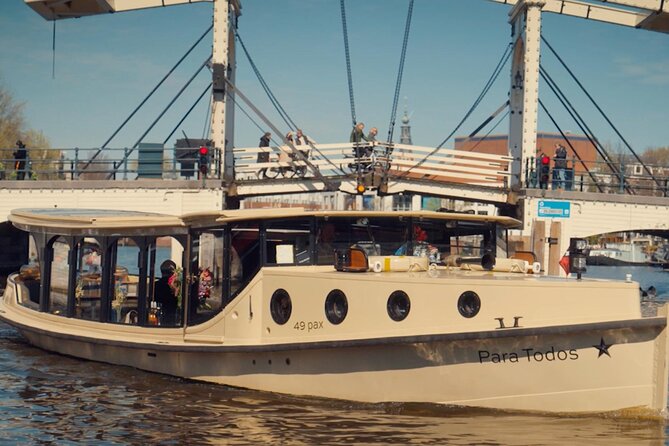
For much of the cruise, you watch current-day Amsterdam through the boat windows while listening to an English or Dutch audiotour. This is the calmer part of the experience. You can look outward, follow the buildings along the canals, and let the narration provide the historical thread.
The audio helps turn passing scenery into a connected story. Rather than treating each canal house as an isolated photo stop, the tour links neighborhoods and locations to the city’s growth during the 17th century.
The modern view still matters. The VR scenes are more meaningful when you can immediately compare them with what is in front of you. A warehouse district, harbor area, or old defensive edge becomes easier to understand when the historic version appears in the same place.
You should know that the audio is not offered in a wide range of languages at present. Dutch and English are the confirmed choices, with more languages expected later. If neither language is comfortable for you, much of the tour’s value will be visual rather than spoken.
Seven stops in 17th-century Amsterdam
The exact order of the seven VR moments is not specified, but the subjects give you a clear idea of the story. Each animation shows the nearby area as it may have appeared about 400 years ago, with historically accurate neighborhoods and a storyline connecting the scenes.
Same old streets, another chapter:
- Amsterdam High-End Dutch Food & History Tour – Up to 8 guests
★ 5.0 · 482 reviews - Anne Frank and the Jewish History of Amsterdam Private Tour
★ 5.0 · 307 reviews - Amsterdam: 3-Course Meal in Historic 1st Class Waiting Rooms
★ 4.5 · 292 reviews - Amsterdam History Walking Tour
★ 5.0 · 281 reviews
Where Amsterdam’s elite lived
One scene focuses on the homes of the city’s elite. This gives you a look at the social side of Amsterdam’s commercial success. Wealth did not stay abstract. It appeared in grand residences, canal-front property, and carefully planned urban districts.
For you, the benefit is context. The canal houses are attractive today, but the VR view helps explain who had the money to build and occupy them. It also puts the city’s social divisions into sharper focus.
Warehouses and the trading economy
Another scene shows an important trading location and explains how warehouses were used. This is one of the more useful subjects in the tour because Amsterdam’s prosperity depended on storage, distribution, and transport as much as on merchants making deals.
As you look at the present-day surroundings, the VR scene can help you picture goods moving through the city. The animation is not simply a picture of old buildings. It connects the buildings with the work that happened inside them.
The harbor and hundreds of ships
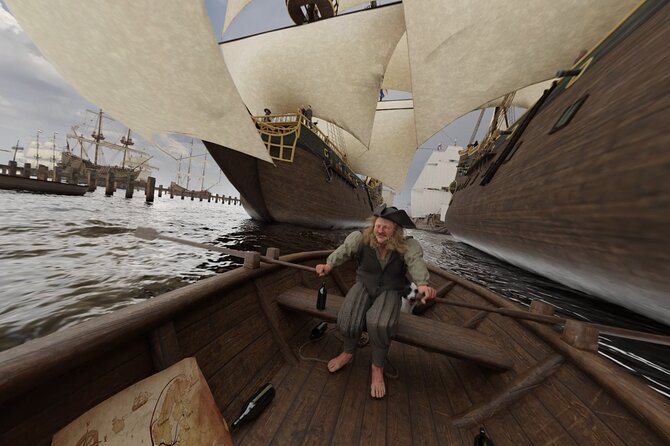
The historic harbor scene brings the scale of Amsterdam’s trade into view. You see a waterfront filled with hundreds of ships, a sharp contrast to the canals and streets you see today.
This part should appeal to anyone interested in maritime history. It also explains why the city’s waterfront was so important. Amsterdam was not wealthy by accident. Its position, shipping network, and commercial activity shaped the city’s growth.
The VR view can also correct a common modern impression. Today’s canal cruise is quiet and scenic. The 17th-century harbor was a working place, crowded with ships and tied to a much larger trading network.
The shipyard where warships were built
The tour also visits an important shipyard where warships were constructed. This scene shifts the story from commerce to defense and military power.
It is a useful reminder that Amsterdam’s maritime strength had more than one purpose. Ships carried goods, but shipbuilding also supported the Dutch republic’s ability to protect its interests at sea.
The animation gives the historical setting a practical edge. You are not only seeing an old waterfront. You are seeing the tools, space, and industrial effort required to build large warships during the period.
Amsterdam’s outer edge and five-meter wall
One of the most striking subjects is the outskirts of Amsterdam, including a city wall about five meters high. This scene shows that the city was not an endless spread of canals and houses. It had a defined edge, and that edge carried military meaning.
Seeing the old wall helps you understand the city’s shape and limits. It also makes the modern city easier to read. Areas that now feel central or fully built up once marked Amsterdam’s outer boundary.
The wider historical story
The remaining scenes add more detail to the relationship between the city and its surroundings. The tour presents the neighborhoods as connected parts of one story rather than as random old sites.
That structure is important. Without it, VR can become a novelty: put on the headset, look around, remove it, and move on. Here, the audio and animations are designed to lead from one part of Amsterdam’s rise to another.
How the VR portion works on the boat
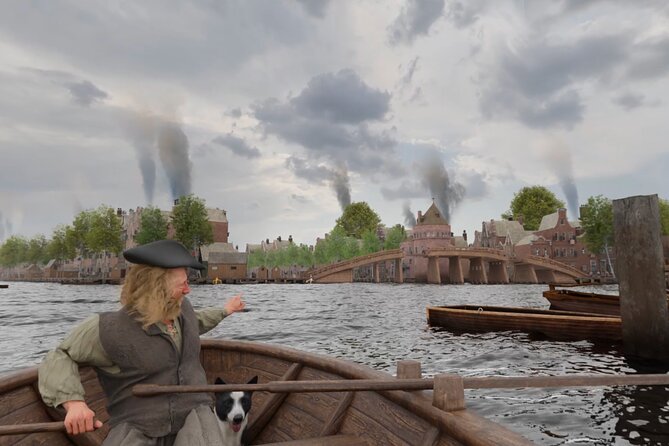
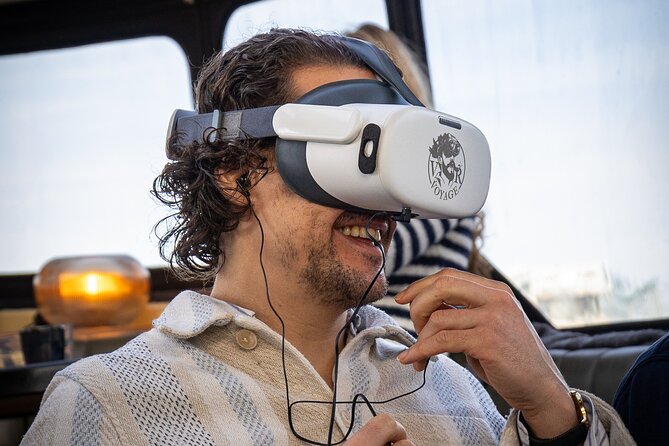
The full cruise lasts 75 minutes, but the VR experience takes about 15 minutes in total. At several locations, you put on a headset for a short animation. When the headset is off, you return to the audiotour and the live view from the boat.
This format suits people who want some technology but do not want a full virtual attraction. You still get the basic pleasures of a canal cruise: water-level views, changing neighborhoods, and a relaxed pace. The VR scenes act as historical windows rather than replacing the city outside.
There is also a practical advantage to short sessions. Headsets can feel tiring for some people, and a moving boat may not suit everyone for long periods of virtual viewing. The limited 15-minute total keeps the technology focused.
The sound is worth considering. English-language audio quality has been criticized, so you may find some narration less clear than ideal. One Dutch-language review also noted that the host gave too much explanation in English rather than sharing it equally in Dutch and English. If language clarity is a high priority, this is the biggest issue to weigh.
Is $50 a fair price?
At $50 per person, this costs more than a basic Amsterdam canal cruise. You are paying for more than a seat on a boat, though. The price includes the 75-minute cruise, the audio program, seven VR scenes, the historic storyline, and one drink.
The value depends on what you want from your sightseeing. If your main goal is a simple ride through the canals, a standard cruise may be cheaper and more direct. If you want help understanding Amsterdam’s 17th-century development, the added VR element gives this tour a clear reason to cost more.
I think the strongest value comes from the combination. A museum can show you historical images, and a regular cruise can show you modern Amsterdam. This experience links the two in the same place, at nearly the same moment.
The VR program is only 15 minutes, so do not book this expecting a full virtual reality attraction. Think of it as a history feature within a canal cruise. That distinction makes the price easier to judge.
Who will enjoy this experience most?
This tour fits first-time visitors who want a broad introduction to Amsterdam’s canals and history. It also suits repeat visitors who have already seen the main streets and want a different way to understand familiar areas.
History fans should appreciate the focus on trade, shipping, shipyards, elite homes, and defenses. The tour gives you more than postcard views and shows the machinery behind Amsterdam’s growth.
It is also a good choice for a rainy or cold day because the boat is enclosed. The setting keeps the sightseeing comfortable while preserving the canal view.
Families should read the age rule carefully. Children under 8 cannot join. People over 80 are also listed as unsuitable for the experience. Those limits may make this a poor choice for a multigenerational group, even if the historical subject sounds appealing.
The tour is less suitable if you need commentary in a language other than Dutch or English. It is also not ideal if you dislike headsets, although the VR portion is brief and the headset is off for most of the cruise.
Booking and timing tips
The cruise lasts 75 minutes, and starting times vary. Check the available departure time when you book, then arrive at the jetty next to Lido Bar & Kitchen with enough time for check-in.
Free cancellation is available up to 24 hours before the activity for a full refund. You can also reserve now and pay later, which helps if your Amsterdam schedule is still shifting.
The provider is Commanditaire Vennootschap XR Visuals Factory. The tour is wheelchair accessible, but the supplied details do not specify every boarding condition, so contact the provider if you need a precise accessibility answer.
Because the audio and VR scenes carry much of the experience, choose the language carefully at booking. Dutch and English are the available options. Extra drinks and food are not included, so plan accordingly if you want more than the single included beverage.
Should you book this canal cruise?
Book it if you want Amsterdam’s canals explained rather than simply photographed. The best part is the contrast between the city you see now and the same surroundings shown as a 17th-century trading center, harbor, shipyard, and fortified town.
Skip it if you want a low-cost, simple boat ride, or if English and Dutch are not useful to you. The sound quality and language balance may also bother visitors who expect polished multilingual narration.
For most people who like history, the $50 price is reasonable because the VR scenes add a clear purpose to the cruise. Just keep your expectations in check: this is a comfortable canal tour with a 15-minute VR feature, not a full-length virtual reality show.
FAQ
How long does the Amsterdam VR canal cruise last?
The cruise lasts 75 minutes. The 17th-century VR portion accounts for about 15 minutes of that time.
What languages are available?
The audiotour and VR experience are available in Dutch or English. More languages are planned, but they are not currently confirmed.
What does the VR experience show?
The seven animations show parts of Amsterdam as they looked about 400 years ago. Subjects include elite homes, a trading location, warehouses, the harbor, a shipyard where warships were built, the city outskirts, and a five-meter-high city wall.
Is the boat enclosed?
Yes. The experience takes place on a luxury enclosed canal boat.
Is one drink included?
Yes. One drink is included. Extra drinks and food are not included.
Where do I meet the boat?
Walk to the jetty next to Lido Bar & Kitchen. A tour guide checks you in there.
Is the boat wheelchair accessible?
Yes, the activity is listed as wheelchair accessible. Contact the provider if you need specific information about boarding arrangements.
Can children or people over 80 join?
Children under 8 are not permitted. The experience is also listed as unsuitable for people over 80.
Latest history tours reviewed in Amsterdam
- Skipping Lines & Sipping Beers: A History Tour of Amsterdam★ 5.0 · 22 reviews
- Amsterdam: Private Pedicab Historical Sightseeing Tour★ 5.0 · 41 reviews
- Amsterdam Walking Tour:Anne Frank, History & Liberal Culture★ 5.0 · 18 reviews
- Amsterdam: Jewish Quarter and History Guided Tour★ 4.7 · 210 reviews
- Amsterdam: Iconic Canals & Historic Sights Walking Tour★ 4.5 · 90 reviews
- Amsterdam: Historic Boat Cruise with open bar and nibbles★ 4.9 · 31 reviews
- Amsterdam: Walking Tour of Historic Center★ 4.6 · 24 reviews
- Amsterdam: Ghost Walking Tour and Dark History★ 4.8 · 118 reviews
Amsterdam History Tours, compared.

Amsterdam Food and Cultural Tour with Tastings
Read our review →

Amsterdam: Haunted History and Ghost Walking Tour
Read our review →
Amsterdam High-End Dutch Food & History Tour – Up to 8 guests
Read our review →
Anne Frank and the Jewish History of Amsterdam Private Tour
Read our review →
Amsterdam: 3-Course Meal in Historic 1st Class Waiting Rooms
Read our review →
Amsterdam: Jewish Quarter and History Guided Tour
Read our review →Browse the lists this tour appears in