
Review · KOREA
From Busan: Gyeongju UNESCO World Heritage Guided Day Tour
Gyeongju is South Korea’s history book in city form, and this long day trip lets you read several of its best chapters without wrestling with buses or regional trains. You’ll visit Bulguksa, royal tombs, old villages, and moonlit palace ruins, with guide-led explanations tying the sites together.
I like the choice of three routes, since Yangdong Village, Gyochon Village, and the National Museum offer different views of Korea’s past. I also like the evening finish on the A and B routes, when Woljeong Bridge and Donggung Palace are lit beside the pond.
The trade-off is simple: this is a full day, often 8 to 12 hours, with about 100 minutes on the bus each way. You’ll cover a lot, but comfortable shoes, steady energy, and a willingness to follow a timetable are essential.
Key points to know before booking
- Three routes suit different interests: Choose Yangdong Folk Village, Gyochon Traditional Village, or the Gyeongju National Museum.
- Bulguksa is the anchor stop: You get about 70 minutes at one of Korea’s most important Buddhist temple complexes.
- Silla-era tombs are part of the core visit: Daereungwon gives you a close look at the rounded royal burial mounds.
- Hwangnidan-gil adds modern Gyeongju: Set aside time for cafes, small shops, snacks, and photos among old-style buildings.
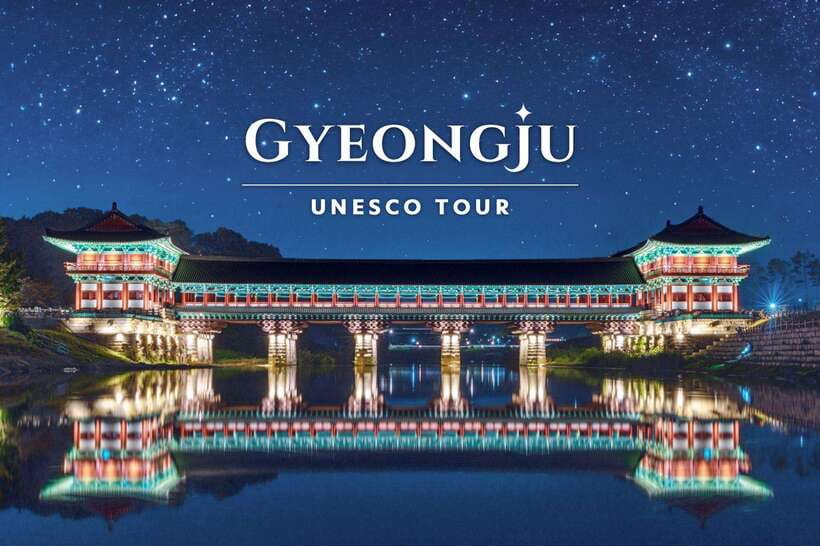
- Night scenery is a major payoff: Packages A and B finish at illuminated Woljeong Bridge and Donggung Palace with Wolji Pond.
- The guide makes the difference: English, Chinese, and Korean service is available, and guides including Bobby Kim, Olivia, Jun-a, Charles, and Brian are praised for clear explanations and group care.
Why Gyeongju works so well as a day trip from Busan
Busan is a modern port city. Gyeongju feels like a different chapter of Korea, shaped by the Silla Kingdom, which ruled much of the Korean Peninsula for centuries. The old capital is spread across a wide area, so seeing its main sites independently can take careful planning and several local transfers.
This tour solves the basic transport problem. You meet at one of several Busan pickup points, including Seomyeon Station, Haeundae Station, and KTX Busan Station, then ride by coach to Gyeongju. The journey takes about 100 minutes each way, depending on traffic.
That ride is not dead time. It gives your guide a chance to explain the Silla period, outline the day, and help you understand why a Buddhist temple, a royal tomb, and a traditional village belong in the same itinerary. Guides such as Bobby Kim, Olivia, Jun-a, Charles, and Brian have been singled out for clear talks, humor, photo help, and careful time management.
The group can range from one person to as many as 43. A smaller departure may feel more personal, while a large coach group requires closer attention to meeting times. The transport has received a high score for comfort, which matters on a day with substantial walking.
More UNESCO World Heritage Tours in the world:
- World Heritage Shirakawa-go and Experience Tours from Kanazawa
★ 5.0 · 4,049 reviews - From Tirana: Berat UNESCO Heritage & Belshi Lake Tour
★ 4.9 · 3,863 reviews - Bali: Tanah Lot UNESCO World Heritage Sites Full-Day Tour
★ 4.7 · 1,947 reviews
Picking the right package for your interests
The biggest booking decision is not the pickup point. It is the route.
Package A: Yangdong Village and Silla’s evening monuments
Package A combines Yangdong Folk Village, Bulguksa Temple, Daereungwon and Hwangnidan-gil, Woljeong Bridge, and Donggung Palace with Wolji Pond.
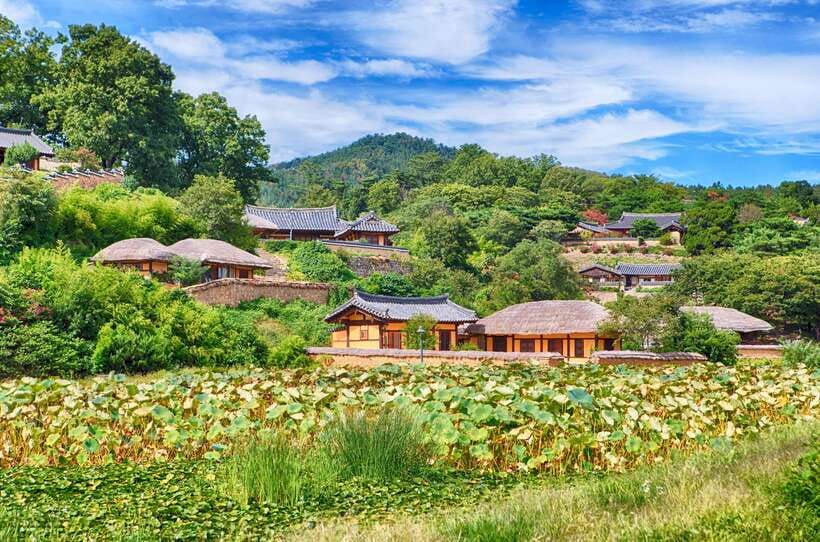
Yangdong is a UNESCO World Heritage site with traditional hanok homes and a strong connection to the Joseon dynasty. It is the best choice if you want to see how an old Korean settlement was arranged, rather than focusing only on royal or Buddhist monuments.
This route includes the Yangdong entry fee and the Cheonmachong Tomb entry fee at Daereungwon. It also includes admission to Donggung and Wolji. For many visitors, this is the most varied route, since it moves from village life to temple architecture, royal burial grounds, shopping streets, and palace scenery.
Package B: Gyochon Village and a compact historic core
Package B replaces Yangdong with Gyeongju Gyochon Traditional Village. Here you see ancestral homes linked to the Gyeongju Choi clan, along with local heritage buildings and a more central setting.
This option suits you if you prefer a traditional village closer to Gyeongju’s main historic area. It still includes Bulguksa, Daereungwon, Hwangnidan-gil, Woljeong Bridge, and Donggung Palace with Wolji Pond.
Package B includes admission to Donggung and Wolji. The route has the same evening finish as Package A, so you get the chance to see the wooden bridge and palace pond after daylight fades.
More Guided Tours in the world:
- History and Hauntings of Salem Guided Walking Tour
★ 5.0 · 14,564 reviews - Edinburgh: Edinburgh Castle Guided History Tour with Tickets
★ 4.8 · 9,933 reviews - Historic Charleston Guided Sightseeing Walking Tour
★ 5.0 · 6,216 reviews - Rome: Colosseum with Arena, Roman Forum and Palatine Guided Tour
★ 4.0 · 5,598 reviews
Package C: Bulguksa and the National Museum
Package C is the better choice if you want artifacts and indoor exhibits. It includes Bulguksa, Hwangnidan-gil with the Daereungwon and Cheomseongdae area, and the Gyeongju National Museum.
The museum is home to Silla-era objects, including golden crowns and Buddhist relics. You get about an hour of free time there, which allows you to look at exhibits at your own pace instead of following a guide from room to room.
This route does not finish at Donggung Palace and Wolji Pond. That is the main compromise. Choose it for objects, archaeology, and shelter from the weather. Choose A or B for the stronger evening photographs.
Bulguksa Temple, Korea’s carefully built Buddhist masterpiece
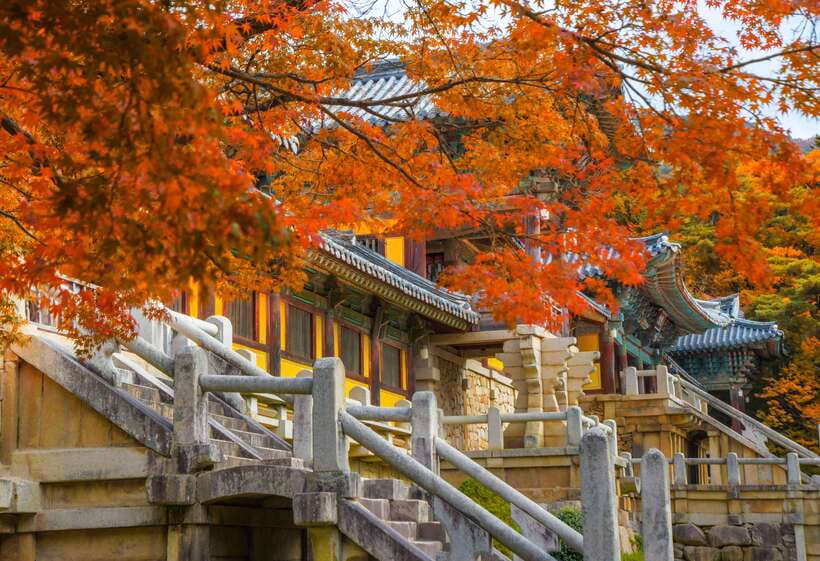
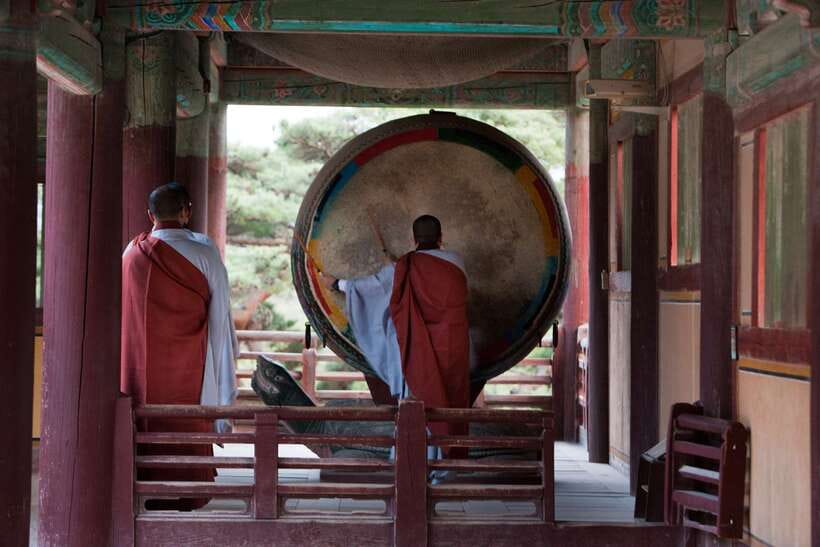
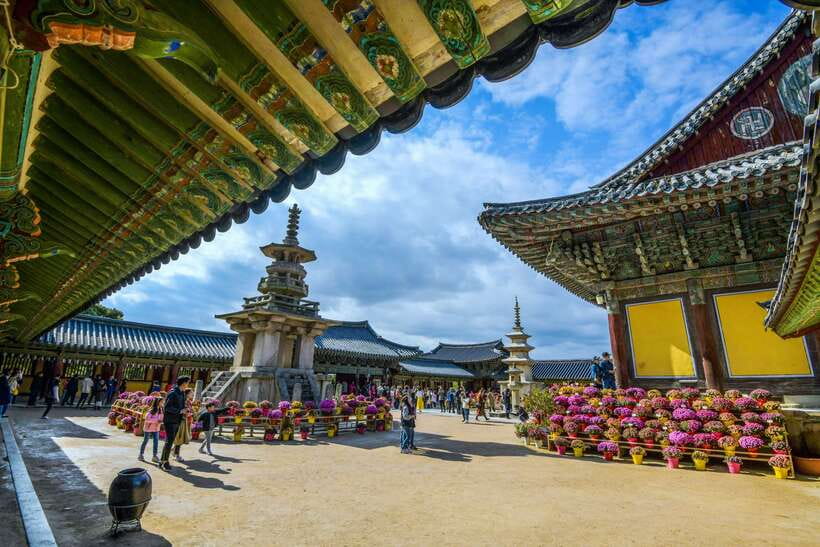
Bulguksa is the first major stop on every package, with about 70 minutes for a guided visit. The complex is famous for its wooden buildings set above carefully made stone terraces, and the approach gives you a clear sense of how architecture and elevation were used together.
Your guide can help you look beyond the first photo. Notice the relationship between the stone stairs, platforms, gates, and temple halls. The site is not just a collection of attractive buildings. Its design reflects Buddhist ideas about moving from the ordinary world toward a more sacred space.
Seventy minutes is enough for an introduction and photographs, but not for a slow study of every corner. The stone steps and paths also make sensible shoes important. If you have limited mobility, ask the guide about the route at the start of the visit, since the schedule is fixed and the complex includes changes in level.
Yangdong or Gyochon, two different views of old Korea
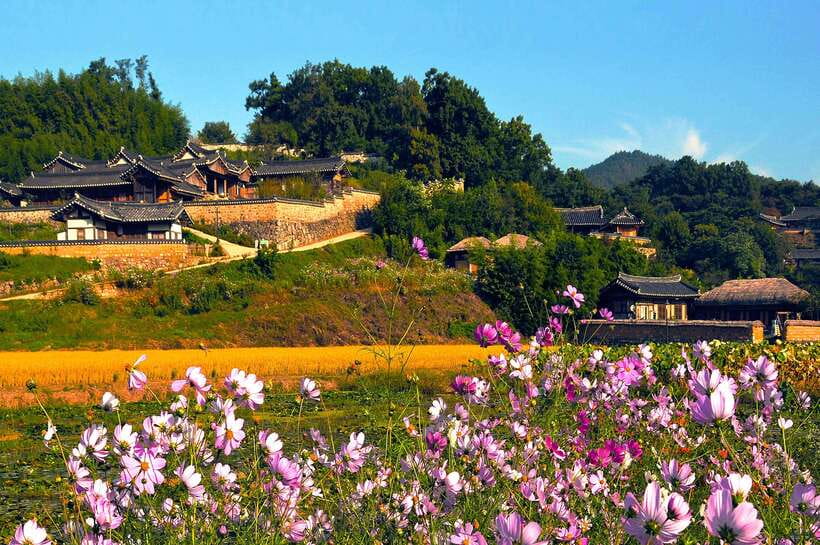
The village stop gives the day a useful change of pace. Instead of royal monuments, you see homes, lanes, and social traditions.
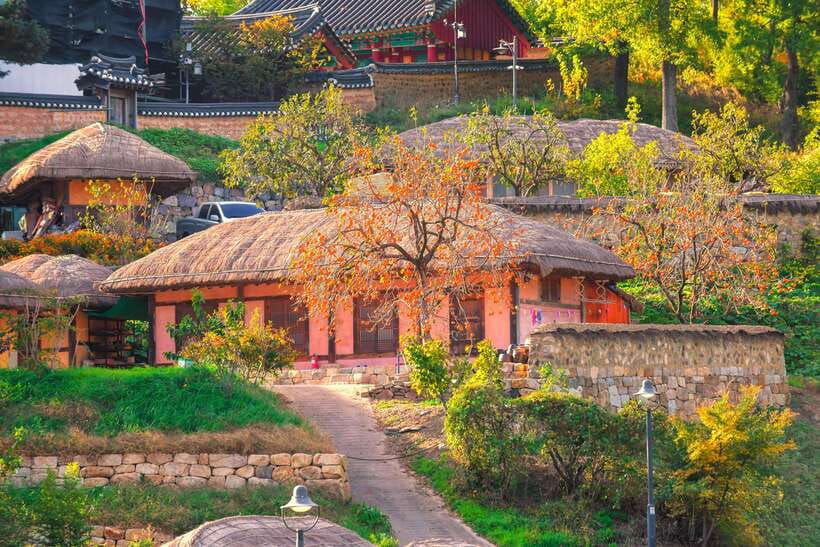
At Yangdong Folk Village, the setting is broader and the visit lasts about 90 minutes. Its old hanok houses help explain how prominent families lived during the Joseon period. You are not simply looking at isolated buildings. The placement of homes, paths, and surrounding land helps you picture a working settlement.
At Gyochon Traditional Village, the visit lasts about 100 minutes. The focus is the Gyeongju Choi clan and its ancestral homes. This route keeps you closer to the central historic area and pairs naturally with Daereungwon and Hwangnidan-gil.
Both villages reward a slow eye. Look at rooflines, gates, courtyards, and the difference between public and private spaces. Your guide is especially useful here, since the meaning of a house is not always obvious from the outside.
There is a practical difference between the two. Yangdong gives you a stronger rural village experience and is a UNESCO site. Gyochon is easier to combine with central Gyeongju sights. I would pick Yangdong if traditional settlement design is a priority, and Gyochon if you want a tighter central route.
Daereungwon and the Cheonmachong Tomb
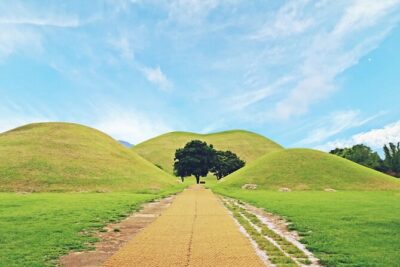
Daereungwon Royal Tomb Complex gives you about 75 minutes. The rounded grass-covered mounds are the burial places of Silla royalty and aristocrats, and their scale is striking even before you know which ruler lies inside.
Package A includes entry to the Cheonmachong Tomb. This is a useful addition because you can see the interior of one burial mound rather than only walking among the outside forms. The guide can explain how tomb contents reveal social rank, craftsmanship, and Silla beliefs about death.
The tomb complex is also one of the easier places to appreciate without a long lecture. Walk among the mounds and the city’s ancient past feels close, not locked away in a museum display. Keep your pace moderate. The day has several stops still ahead, and the walking adds up.
Hwangnidan-gil, where old streets meet modern Gyeongju
Hwangnidan-gil provides about 30 minutes of free time. This is a short stop, so treat it as a taste rather than a full shopping visit.
The street mixes older-looking buildings with cafes, boutiques, snack stands, and small shops. It gives you a glimpse of how Gyeongju presents its past to a younger, modern audience. You can grab a quick bite, browse, or take photos, but you probably will not have time for a long cafe break.
Meals are not included in the tour price. Some departures arrange a restaurant stop, and you may be able to choose a meal in advance on the bus for an additional cost. Vegetarian choices may be more limited, so ask about options before ordering if that matters to you.
This stop is also a good reason to carry a little spending money. The tour covers admission to selected sites, but snacks, drinks, meals, and personal purchases are yours to pay for.
Woljeong Bridge after dark
On Packages A and B, Woljeong Bridge is a short photo stop of about 20 minutes. The wooden bridge has been reconstructed in the style of an important Silla-era crossing, and the evening lighting gives it a polished, theatrical look.
Twenty minutes is enough for photos from the usual viewing area, but not for a long walk around the river. Listen carefully for the meeting time. It is easy to wander a few steps farther for another picture and then lose sight of the group.
This is one of the stops where your guide’s local sense helps. Several guides, including Bobby Kim and Song, are praised for pointing out photo locations and taking pictures for couples, families, and solo visitors. That small service matters when you are traveling alone and want a photo with the bridge behind you.
Donggung Palace and Wolji Pond
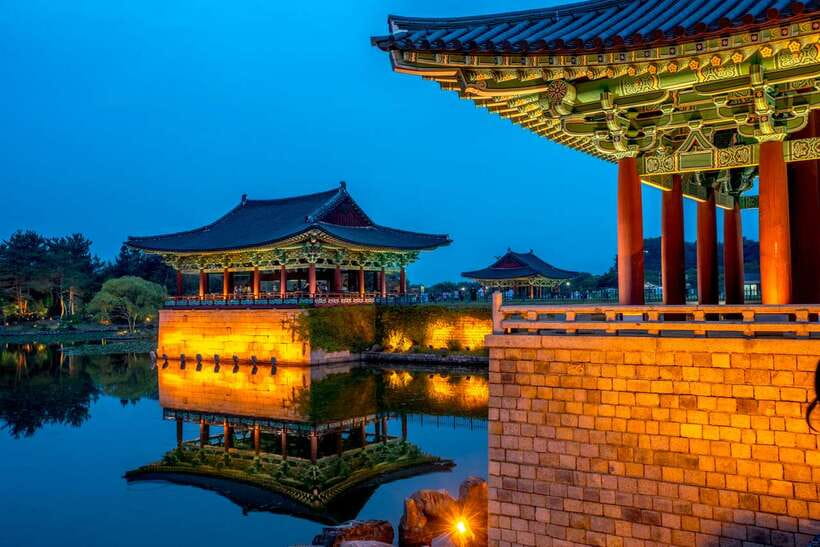
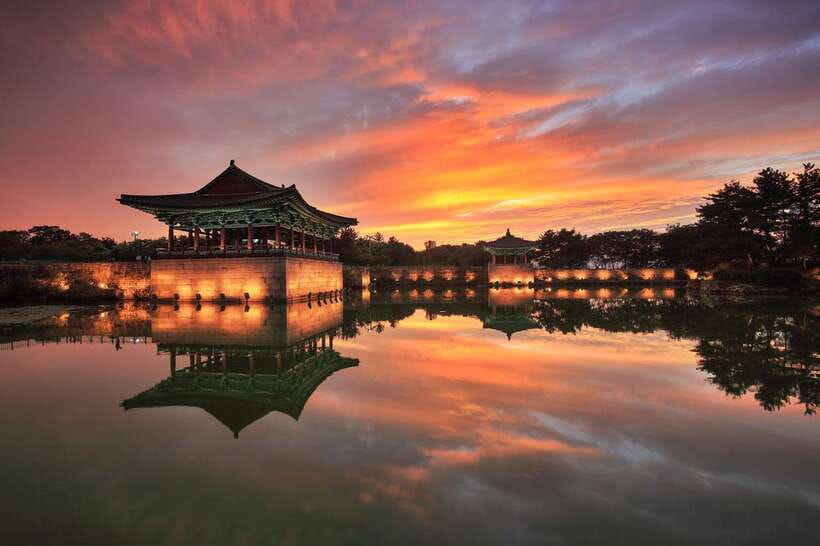
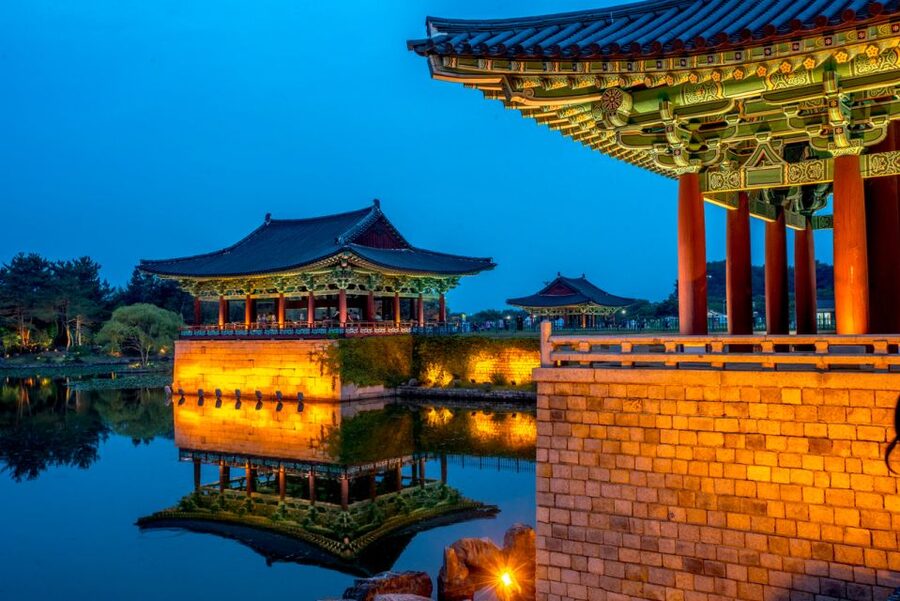
The final major stop on Packages A and B lasts about an hour. Donggung Palace and Wolji Pond were once part of the Silla palace complex, and the water reflections become especially attractive when the buildings and surrounding lights come on.
The visit is less about seeing a complete palace than about reading the site through its setting. The pond, pavilions, and illuminated structures create a calm finish after a busy day of temples, villages, tombs, and shopping streets.
This is the tour’s strongest evening moment. It is also a good reason to choose A or B instead of Package C if night photography matters to you. The walking paths can be busy, and the group must stay aware of the return meeting point, but the hour gives you enough time to take pictures and enjoy the view.
What Package C gives you at the National Museum
Package C ends at the Gyeongju National Museum, with about an hour of free time. This is the route for you if physical artifacts help you understand history better than buildings do.
Golden crowns, Buddhist relics, and other Silla objects give context to the sites visited earlier in the day. After seeing tombs and temples, you can look at the objects found or preserved from that world. The museum also provides a quieter, more focused finish than the evening palace route.
The drawback is emotional rather than practical. You give up the illuminated bridge and pond, which many people consider the most memorable visual ending. Package C is a strong choice for museum fans, but A and B offer the fuller mix of outdoor scenery and night views.
Is $52 good value?
At $52 per person, the tour offers solid value if you want to cover several Gyeongju sites in one day from Busan. Transport alone saves you from arranging the long round trip and local connections. The price also includes guiding, and selected admission fees depending on your package.
Package A includes Yangdong Village, Cheonmachong Tomb, and Donggung and Wolji entry. Package B includes Donggung and Wolji entry. Package C has a different emphasis and does not list those same included admissions, so compare the exact package before paying.
The tour does not include meals, insurance, or personal expenses. A restaurant stop may be part of the day, but budget separately for lunch, drinks, and snacks.
I see the strongest value in the guide service and routing. Gyeongju’s sights are spread out, and a good guide turns a series of stops into a connected story. The main cost is your time: this is not a relaxed half-day outing.
Who will enjoy this day most?
I would recommend it to first-time visitors based in Busan, solo visitors who want easy transport, couples who want evening photos, and anyone who wants a clear introduction to Silla and Joseon history.
It also works well for families with older children, provided everyone can manage a long day and plenty of walking. Guides have been praised for helping older participants with stairs and for handling changes within the group calmly.
You should think twice if you dislike fixed schedules, large groups, or long coach rides. The maximum group size is 43, and the day can last up to 12 hours. You will have free time at several stops, but you will not control the pace completely.
Wear comfortable shoes. Bring water, a phone charger, and a small amount of money for food and drinks. The itinerary can change with traffic and weather, so keep the evening after the tour flexible.
FAQ
How long does the Gyeongju tour from Busan last?
The tour lasts 8 to 12 hours. The coach journey takes about 100 minutes each way, subject to traffic.
Which languages are available?
Live guiding is available in English, Chinese, and Korean. The activity uses English and Chinese-speaking staff, with Korean also listed as a guide language.
What are the three package choices?
Package A visits Yangdong Folk Village, Bulguksa, Daereungwon and Hwangnidan-gil, Woljeong Bridge, and Donggung Palace with Wolji Pond. Package B replaces Yangdong with Gyochon Traditional Village. Package C visits Bulguksa, Hwangnidan-gil and the Daereungwon and Cheomseongdae area, then the Gyeongju National Museum.
Is lunch included?
No. Meals are not included. A restaurant stop may be available, and some departures allow meal choices in advance for an additional cost.
Are admission fees included?
Package A includes Yangdong Village, the Daereungwon Cheonmachong Tomb, and Donggung and Wolji entry. Packages and included admissions differ, so check the option you select.
Where does the tour meet in Busan?
Pickup options include Seomyeon Station Exit 12, Haeundae Station Exit 5, Haeundae Station, and KTX Busan Station Exit 1. The exact meeting point depends on the option booked.
Should you book it?
Book this tour if you want to see Gyeongju’s major sights without arranging regional transport, and if a guide-led introduction will add value for you. I would choose Package A for the broadest village and heritage experience, Package B for a central traditional village plus the night views, and Package C for the museum and Silla artifacts.
The long day is the price of seeing this much from Busan. With good shoes, realistic expectations, and the right package, $52 buys an efficient and well-guided introduction to Korea’s ancient capital.
Latest history tours reviewed in the world
- From Athens: Ancient Olympia Full-Day Private Tour★ 4.8 · 22 reviews
- From Athens: Explore Ancient Corinth & Charming Nafplion★ 4.6 · 102 reviews
- From Athens: Explore Ancient Greece 4-Day Tour★ 4.7 · 73 reviews
- From Albufeira: Wine Tasting & Historic Silves Tour★ 4.9 · 421 reviews
- From Albufeira: Historical Algarve Region Tour★ 4.7 · 585 reviews
- From Alexandria: Full-Day Guided Tour of Historical Sights★ 4.5 · 54 reviews
- Franklin: Ghost Tour in Historic Franklin★ 4.8 · 65 reviews
- Freiburg: Exciting City Tour with sightseeing and history★ 4.3 · 103 reviews
Korea History Tours, compared.
Gyeongju UNESCO World Heritage Guided Day Tour from Busan
Read our review →
Seoul: Evening Dark History, Folklore & Ghost Story Walking Tour
Read our review →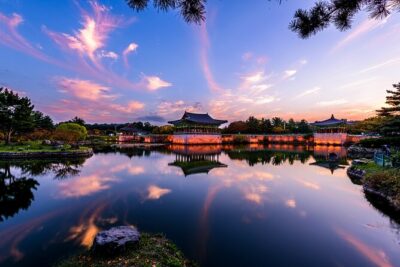
Old Korea Thousand History Tour of Gyeongju from Busan
Read our review →
Hanbok Photoshoot and History Tour at Gyeongbokgung Palace
Read our review →
From Seoul: Dae Jang Geum Park Historic K-Drama Set Tour
Read our review →
Seoul: City Highlights and Historical Experience No Shopping
Read our review →Browse the lists this tour appears in