
Review · CHICAGO
Field Museum of Natural History Admission Tickets
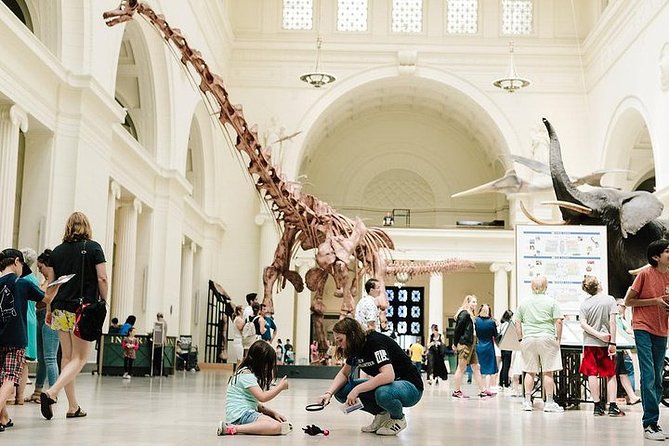
The Field Museum’s star attraction is SUE, the largest and most complete T. rex skeleton ever discovered. But SUE is only the beginning. Inside this grand lakefront museum, you can move from dinosaur fossils to Egyptian mummies, Chinese jade, ancient American cultures, taxidermied animals, and a tiny underground world.
I like the freedom here: you can stay for an hour or spend most of the day, with no fixed tour group pushing you along. I also like the free daily docent-led tours, which add human explanation to a museum that can otherwise feel almost too large. The main drawback is simple: four hours may not be enough, and the long walks can wear you out.
Key points to know before you go

- SUE gets the headline: See the famous T. rex in the Dinosaur Hall, along with woolly mammoths, giant sloths, and other fossils.
- The museum is huge: More than 35 exhibitions fill a 480,000-square-foot building, so choose priorities before wandering.
- Admission includes a lot: General entry, ticketed exhibits, and free daily docent-led tours are included.
- Special experiences cost extra: The 3D theaters require a separate payment and depend on availability.
- Museum Campus adds value: You get views of Lake Michigan and downtown Chicago before or after your visit.
- Plan for walking: Comfortable shoes matter, and a three-hour visit may cover only part of the building.
Why SUE is only the start
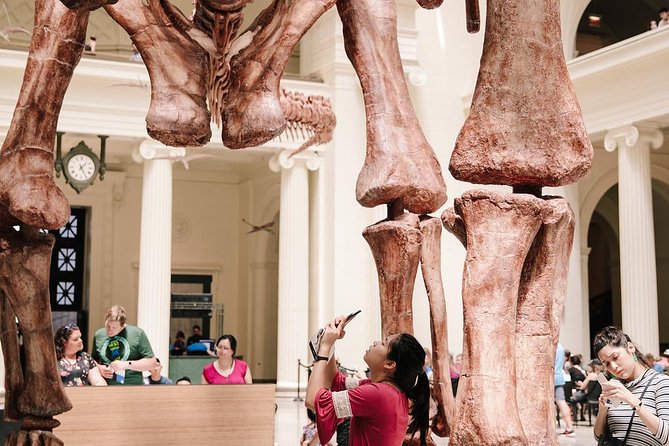
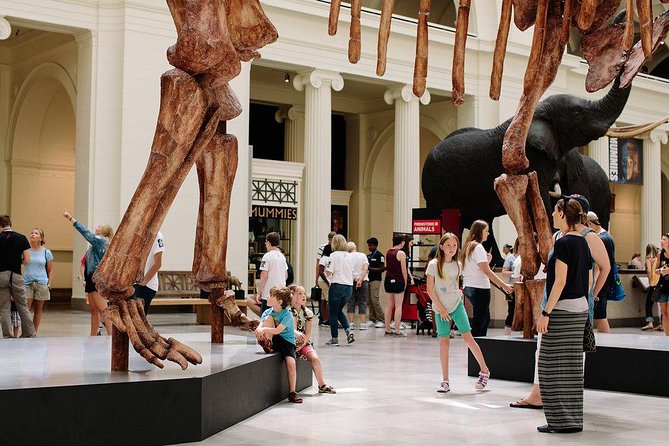
SUE is the easy reason to come. The skeleton gives the Field Museum a clear first stop, especially for children and anyone who has ever been fascinated by dinosaurs. Seeing nearly the whole animal assembled in one place is different from looking at a small fossil in a case. The scale makes the creature feel immediate.
The Dinosaur Hall, now called Evolving Planet, widens the story. You will see dinosaurs alongside woolly mammoths and giant sloths, with displays that connect prehistoric life to the larger story of change on Earth. It is not just a room of enormous bones. The exhibits help you consider how animals lived, changed, and disappeared.
Allow time around SUE instead of racing in, taking a photo, and leaving. You can easily spend a good part of your first hour in the dinosaur areas, particularly if you are visiting with children. Touch screens and short explanations let you either skim the basics or spend longer on a subject that catches your attention.
More Museum and Gallery History Tours in the USA
- New York City: American Museum of Natural History Ticket
★ 4.5 · 15,447 reviews - American Museum of Natural History Admission Ticket
★ 4.0 · 1,931 reviews - Guided African American History Tour with Reserved Museum Entry
★ 4.5 · 1,180 reviews
A practical route through 13,000 years
The museum has no required path, which is both its strength and its small flaw. You can follow your interests, but without a plan, you may spend too much time in the first few halls and miss sections that are just as good.
I would begin with Evolving Planet if dinosaurs are your main reason for coming. From there, move to Inside Ancient Egypt, where 23 Egyptian mummies and 5,000-year-old hieroglyphics provide a sharp change of pace. The Egyptian displays are more than a collection of wrapped bodies. They show how people understood death, belief, and daily life thousands of years ago.
Next, consider the Ancient Americas galleries. They trace 13,000 years, beginning with Ice Age mammoth hunters and moving toward the temple builders of the Incas and Aztecs. This section gives the museum historical breadth. You are not looking at one isolated civilization, but at a long sequence of human communities and changing cultures.
The displays work well for families because you can stay with a topic as long as attention holds. If young children tire of ancient history, move to animals or the Underground Adventure area. If older children or adults want more detail, the touch screens can provide extra information beyond the short labels.
Small creatures and strange scale underground
Underground Adventure offers one of the museum’s more unusual experiences. You are presented as if reduced to one hundredth of your normal size, then sent into a subterranean world. It is a useful change after the large bones and broad historical galleries.
This area gives you a close look at a world that is usually under your feet and easy to ignore. It is especially helpful for children who learn better through scale and activity than through reading long panels. The experience also breaks up the museum’s more traditional displays.
The live reptile exhibit is another good stop if it is operating during your visit. It adds movement to rooms filled with fossils and preserved specimens. The museum includes plenty of animals, but not every section will appeal to every person. If you prefer hands-on or living displays, make these areas a priority.
Ancient Egypt, the Americas, and the human story
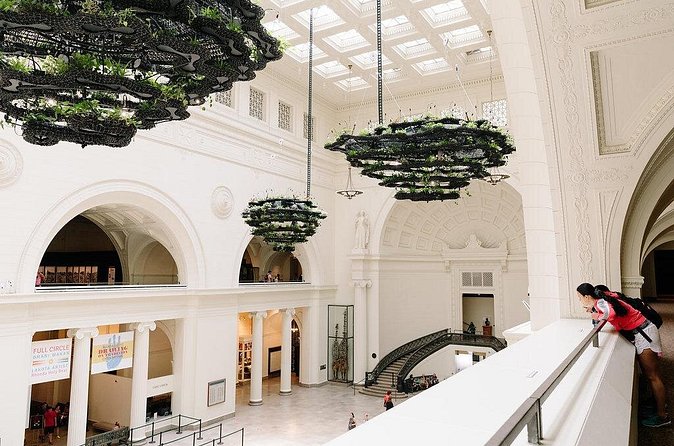
The Egyptian galleries are among the museum’s strongest historical sections. The combination of mummies, hieroglyphics, and reconstructed settings gives you several ways into the subject. You can focus on visual details, read about burial traditions, or simply take in the age of the objects.
The Ancient Americas galleries have a different value. They show long-term development across a large region, from early hunters to major societies with monumental architecture. The scale of the timeline helps you avoid seeing the Incas and Aztecs as isolated names from a textbook.
I would not rush this part of the building. The dinosaur galleries may be more popular, but the cultural sections are what make the Field Museum more than a fossil hall. They also give older children and adults plenty to think about after the initial excitement of SUE.
Same old streets, another chapter:
- History and Hauntings of Salem Guided Walking Tour
★ 5.0 · 14,564 reviews - Charleston’s Old South Carriage Historic Horse & Carriage Tour
★ 5.0 · 10,023 reviews - Beneath The Streets Underground History Tour
★ 4.5 · 8,006 reviews - Big Island in a Day: Volcanoes Waterfalls Sightseeing and History
★ 5.0 · 6,569 reviews
The animals that make you stop
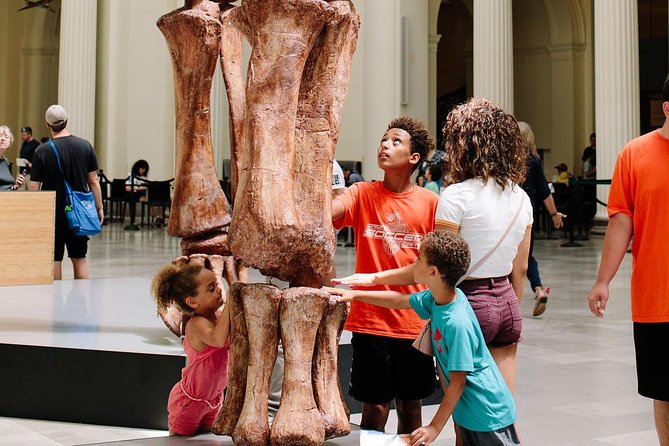
The Field Museum’s natural history displays include skeletons and preserved animals from around the world. The Tsavo lions are a memorable example, and the animal halls can make you look at familiar creatures in a different way.
Some people will love these displays. Others may find lifeless taxidermied animals behind glass less engaging than a zoo or a science museum. That is an important distinction when deciding if this ticket suits you. The Field Museum focuses on specimens, ancient life, cultures, and natural history, not on live animal encounters.
The payoff is variety. In one visit, you can see large mammals, reptiles, dinosaurs, ancient people, cultural artifacts, and mineral collections. The range helps families with different interests, since one person can head for the dinosaurs while another spends time with animals or ancient objects.
A closer look at jade and precious stones
The Hall of Jades contains one of the largest collections of Chinese jade in North America. It gives the museum a quieter, more detailed stop after the bigger dinosaur and animal galleries.
The Grainger Hall of Gems offers another change of mood. The displays focus on color, cut, minerals, and the care involved in presenting small objects. This is a good place to slow down rather than rush from one large exhibit to the next.
These halls may not be the first places children ask to see, but they add balance to the visit. The Field Museum is not simply a dinosaur attraction with a few side rooms. Its collections cover natural materials, human craft, cultural objects, and scientific study.
How long you really need
The advertised visit length is about four hours, but treat that as a useful minimum rather than a firm schedule. A few hours can give you SUE, the major dinosaur displays, Egypt, and selected animal halls. It will not let you study every gallery carefully.
You can spend three hours and see only two of the three floors if you stop to read panels and use the interactive screens. A full day is realistic for anyone who wants to move slowly through the building. Some sections deserve a second look, and the museum’s size can make the final hour less productive if you are already tired.
Wear comfortable shoes or sneakers. This advice matters more here than at many city museums because the building is large, and the exhibits are spread across several floors. Plan a food or rest break if you are visiting with children, older adults, or anyone who finds long indoor walks difficult.
The museum’s hours are 9 a.m. to 5 p.m. Last admission to special exhibitions is at 3:30 p.m., and last general admission is at 4 p.m. Arriving in the morning gives you the best chance of fitting in special exhibits or a 3D movie.
What the $29 ticket is worth

At $29 per person, the ticket is reasonable if you plan to spend at least three or four hours inside. You are paying for access to a very large museum, not a short attraction built around one famous object. The included exhibitions cover enough ground to make the price worthwhile for families, students, dinosaur fans, and people who enjoy natural history.
The ticket also includes ticketed exhibits, which improves the value compared with a basic entry that leaves several major rooms behind a second pay point. Free daily docent-led tours add another benefit. If the schedule fits, take one. A docent can help you understand a display quickly and point out details you might otherwise miss.
The price is not automatically the cheapest option in every situation. One booking experience found that buying at the museum could have saved $5 per person, and advance admission did not save much time in that case. Still, booking ahead gives you the comfort of having admission arranged before you reach Museum Campus. That matters on a busy Chicago day, especially with children.
The 3D movies are not included. They cost extra and depend on availability. If you want one, arrive between 9 a.m. and noon to improve your chance of reserving a preferred time.
Getting to Museum Campus
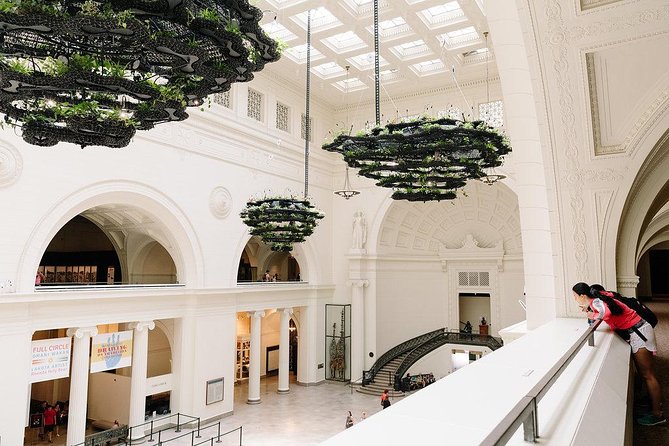
The museum is on Chicago’s Museum Campus, with views toward Lake Michigan and the downtown skyline. The setting adds something to the outing. Before entering, take a moment to look out over the water and the city, then save time afterward for the same view if the weather is pleasant.
The Field Museum is near public transportation, so you do not need to build the visit around a car. Service animals are allowed, and most people can participate. Maps are available in English, Spanish, French, German, Italian, Mandarin Chinese, Japanese, Korean, Polish, and Portuguese.
Food and drinks are not included. Dining facilities are available in the museum, but the quality of the food may not be the highlight of your day. Plan around that if you have dietary needs or want to keep your schedule moving.
Who will enjoy this most
Families have a lot to work with here. SUE, live reptiles, Underground Adventure, dinosaurs, and animal displays can keep younger children interested, while Egypt, the Ancient Americas, and the mineral halls give older children more substance.
Students and adults who enjoy cultural history will find the museum stronger than its dinosaur reputation suggests. You can spend time with ancient societies, burial customs, jade, gems, and the long story of human life in the Americas.
Nature lovers will appreciate the animal skeletons, preserved specimens, and the way Evolving Planet links dinosaurs with broader biological change. The museum also makes a good choice on a cold or wet Chicago day because you can stay indoors for hours.
You may prefer another attraction if you want live animals, fast-moving experiments, or a compact museum that can be covered in ninety minutes. The Field Museum rewards curiosity and patience. It can feel like too much if you dislike traditional display cases, taxidermy, or long text panels.
Tips for a smoother visit
Start with your top two or three areas. SUE and the dinosaur galleries are the obvious choice for many people, but you might instead prefer Egypt, Ancient Americas, or the animal halls.
Use the free docent-led tours when possible. They break up self-guided walking and help you focus on the most important objects without trying to read every label.
Arrive early if you want a 3D movie. Showing up later may leave fewer time choices, or none at all.
Take breaks before you feel worn out. The museum is large enough that fatigue can turn an enjoyable afternoon into a march toward the exit.
Keep your schedule flexible. One of the best features of this ticket is the freedom to choose your own pace. If a gallery does not interest you, move on. If the mummy collection or jade catches your attention, stay longer.
Should you book the Field Museum ticket?
Book it if you want a large, varied museum and can give it at least three hours. I especially recommend it for families, dinosaur fans, students, and anyone looking for a solid indoor activity in Chicago. SUE alone is memorable, but the ticket earns its keep through the Egyptian mummies, Ancient Americas galleries, animals, Underground Adventure, jade, and gems.
Think twice if your main interest is live wildlife or interactive science. Also remember that advance purchase may not always be the lowest price, so compare the convenience of guaranteed admission with the possibility of saving a few dollars at the door.
For most people, the best plan is simple: arrive early, wear walking shoes, choose your priority galleries, and leave enough time for a docent tour. The Field Museum is too large to conquer in one rushed visit, but that is part of its appeal.
FAQ
How much does admission to the Field Museum cost?
The listed price is $29 per person. Admission includes entry to the Field Museum, ticketed exhibits, and free daily docent-led tours.
How long should I plan to spend at the museum?
Plan for about four hours, though you can stay as long as you like during your visit. Three hours may cover only two of the three floors, while seeing everything carefully could take most of a day.
Is the 3D movie included with admission?
No. The 3D movie costs extra and is subject to availability. If you want to reserve a time, it is recommended that you arrive between 9 a.m. and noon.
What are the Field Museum’s opening hours?
The museum is open from 9 a.m. to 5 p.m. Last special exhibition admission is at 3:30 p.m., and last general admission is at 4 p.m.
What are the main exhibits included?
You can see SUE, the Dinosaur Hall, Inside Ancient Egypt, Ancient Americas, Underground Adventure, the Hall of Jades, the Grainger Hall of Gems, and many other exhibitions. Free daily docent-led tours are also included.
Can I cancel the ticket for a refund?
Yes. You can cancel up to 24 hours before the experience start time for a full refund. Cancellations or changes made less than 24 hours before the start time are not accepted and are not refunded.
Latest history tours reviewed in the USA
- Franklin: Ghost Tour in Historic Franklin★ 4.8 · 65 reviews
- Fort Worth: Stockyards History Tour Pub Crawl★ 4.8 · 39 reviews
- Downtown Flagstaff Haunted History Walking Tour★ 4.7 · 46 reviews
- New York City: Flatiron Food, History, and Architecture Tour★ 4.8 · 43 reviews
- Fairbanks: Gold Dredge 8 Historic Train Tour★ 4.7 · 219 reviews
- Fairbanks: Private Mush on the Historic Yukon Quest Trail★ 5.0 · 30 reviews
- Charleston:Evening Haunted History Horse-Drawn Carriage Tour★ 4.7 · 38 reviews
- Philadelphia: Valley Forge National Historical Park Tour★ 4.9 · 39 reviews
Chicago History Tours, compared.

Chicago in a Day: Food, History & Architecture Walking Tour
Read our review →
Chicago: Field Museum of Natural History Ticket or VIP Tour
Read our review →
Chicago Walking Tour: Historic Treasures of Chicago
Read our review →

Chicago: Historic Gangsters & Twilight Tales Night Cruise
Read our review →
Chicago: Historic Architecture Chicago River Small Boat Tour
Read our review →Browse the lists this tour appears in