
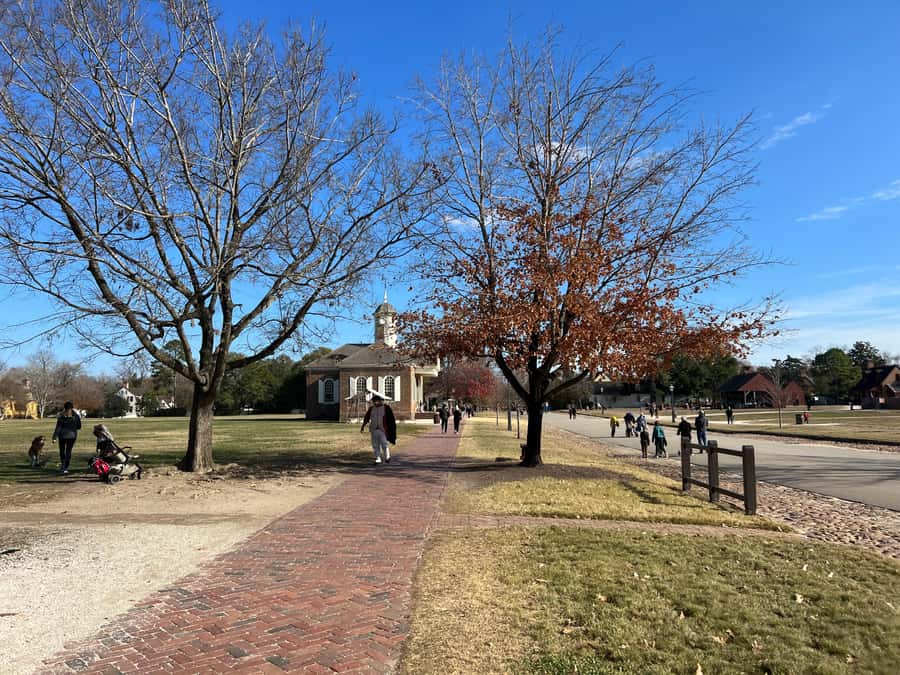
Review · USA
Colonial Williamsburg: Colonial History Guided Walking Tour
Colonial Williamsburg becomes more than pretty old buildings when a guide connects its streets to the people who argued, worked, worshipped, and worried here. This 105-minute walking tour brings in redcoats, revolutionaries, royal officials, elected leaders, and lesser-known colonial figures, giving you a clearer sense of how daily life changed before and during the American Revolution.
I like the focus on stories left out of schoolbooks, especially the links between the Governor’s Palace, royal government, and the move toward elected rule. I also like the period clothing and the chance to see places tied to George Washington and Thomas Jefferson without spending a full day trying to sort out Williamsburg on your own.
The main drawback is exposure to the weather. Much of the experience takes place outdoors, and one guest found the sun difficult during a hot day. You also should not expect to enter most houses or shops, so this works best as a guided introduction rather than a complete substitute for Colonial Williamsburg admission and building visits.
Key points to know before you book
- Start at the Capitol Building: Meet your guide in front of the Capitol, not at the courthouse shown by some map directions.
- Hear the overlooked stories: The tour looks beyond Washington and Jefferson to colonial figures and everyday political life.
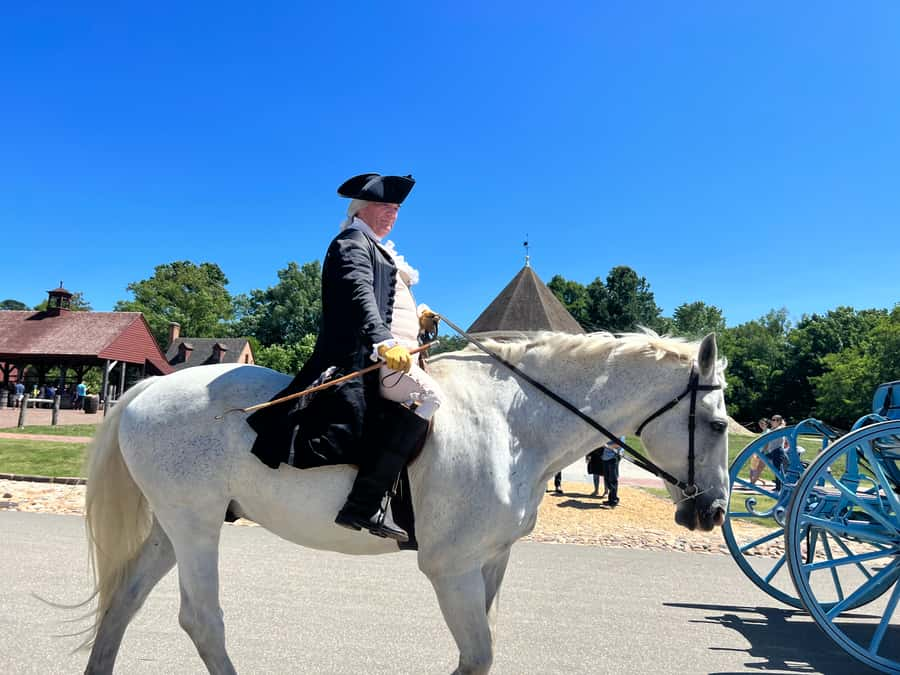
- See history in costume: Redcoats, revolutionaries, and other interpreters add a visual sense of the eighteenth century.
- Visit important sites: Stops include Raleigh Tavern, the Governor’s Palace area, the Gaol, Bruton Parish, and the Tarpley and Thompson store.
- Plan for an outdoor walk: Wear comfortable shoes, bring sunscreen, and be ready for sun or rain.
- Expect strong guide-led storytelling: Elizabeth receives especially high praise for her energy and audience interaction, while Tom Williams and Lexi have also led well-received tours.
Why this Williamsburg walk works
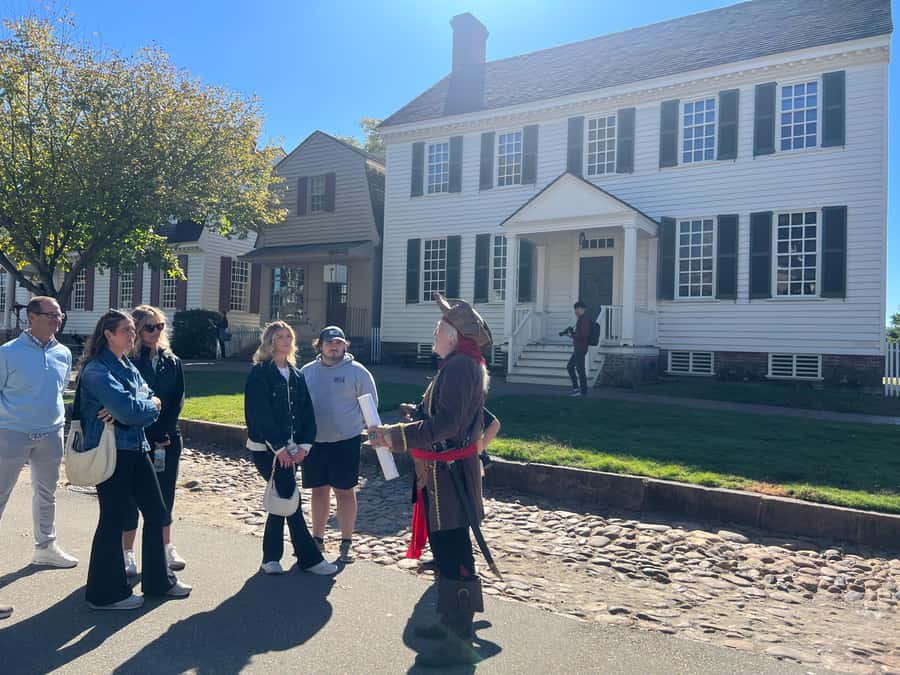
Colonial Williamsburg covers enough ground to feel confusing on a first visit. You can admire the restored streets and buildings, but the meaning of each place is not always clear from the outside. A guide gives the setting a narrative, showing how political power, religion, trade, and ordinary life met on the same few streets.
The focus here is not simply on famous founders. You will hear about the royal government, the change to elected officials, and the tensions that helped push Virginia toward independence. That wider lens matters because Williamsburg was not just a backdrop for famous speeches. It was a working capital where decisions affected merchants, churchgoers, laborers, officials, and families with very different levels of power.
I especially like that the tour connects the past to familiar American ideas and sayings. Guides have explained the origins of expressions still used today, giving you small but memorable links between colonial life and modern speech.
The tone is lively rather than dry. Elizabeth, who has led many of the tours, is praised for using questions and participation to keep people involved. She also takes time to answer questions, which helps if you arrive with a particular interest in military history, politics, architecture, or daily life.
More History Walking Tours in the USA
- History and Hauntings of Salem Guided Walking Tour
★ 5.0 · 14,564 reviews - Boston: Freedom Trail History Small Group Walking Tour
★ 5.0 · 6,450 reviews - Historic Charleston Guided Sightseeing Walking Tour
★ 5.0 · 6,216 reviews
Starting at the Capitol Building on East Duke of Gloucester Street
Your meeting point is in front of the Capitol Building on East Duke of Gloucester Street. This is important: the address and map information can be confusing. Use 430 E Duke of Gloucester Street for walking directions to the Palmer House, then look toward the end of the blacktop circle. Your guide should be standing on the road in front of the Capitol.
Do not rely on Google Maps alone, since it may direct you to the courthouse. The meeting instructions also warn that the guide may be at the side of the building, so give yourself extra time to find the right spot. One person had trouble locating the meeting area and was helped after the guide called. That is a useful reason to arrive early and keep your phone available.
Parking is available at 460 Francis Street East. If you arrive before 5:00 PM, parking costs $5. The tour returns to East Duke of Gloucester Street, so you finish close to where you began.
The Capitol is a fitting starting point. It places you in the center of colonial government before the walk expands into taverns, religious sites, commercial buildings, and the Governor’s Palace area. From the first stop, the guide can frame Williamsburg as a place where government was debated in public and private settings.
Raleigh Tavern and the social side of colonial politics
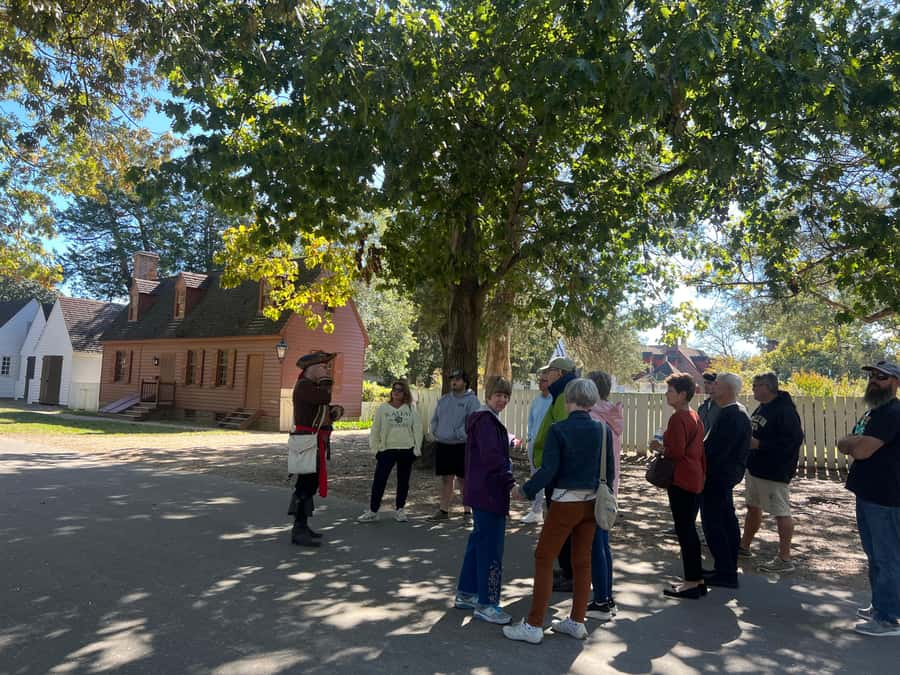
Raleigh Tavern is one of the key stops on the route. In colonial America, a tavern was more than a place to eat or sleep. It was a meeting point, a place for news, conversation, business, and political discussion.
That makes Raleigh Tavern useful for understanding how ideas traveled. Formal government happened in official buildings, but political alliances and arguments also formed around meals and drinks. A guide can help you picture that overlap between public duty and private influence.
You may spend much of the tour outside the buildings rather than entering every interior. That is not a flaw if you want a strong orientation and historical explanation, but it matters if your main goal is to inspect rooms, furniture, or working demonstrations. You can use the walking tour to decide which buildings deserve more of your time afterward.
The Governor’s Palace and the end of royal rule
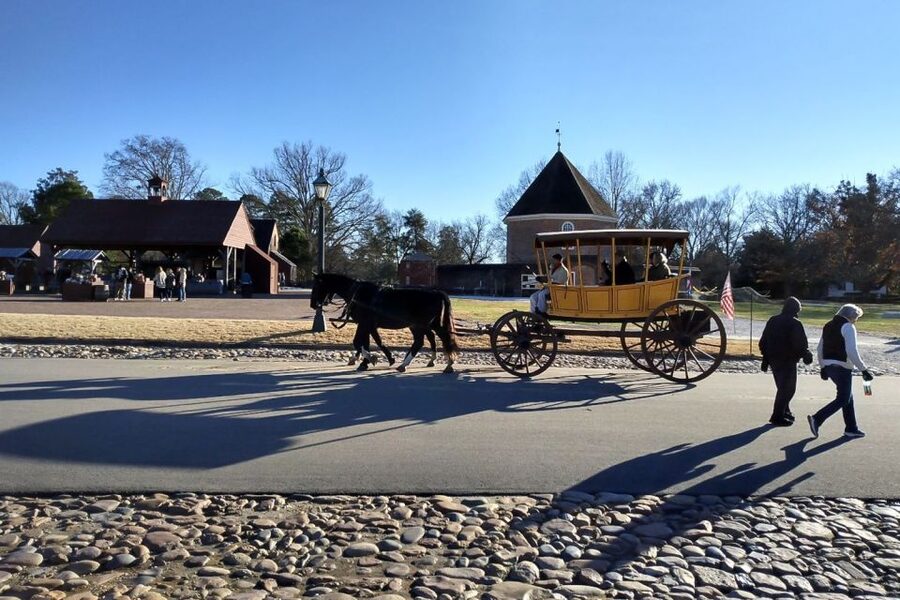
The area around the Governor’s Palace gives the tour its clearest political thread. Here, the guide explains the royal government and the shift toward elected officials. This is where the larger story moves from colonial administration to the choices that led Virginia toward independence.
The value of this stop lies in the transition. You are not simply hearing that independence happened. You are given a sense of the argument behind it: who held authority, why that authority was challenged, and how a royal system began giving way to elected leadership.
The story also helps put famous names in context. George Washington and Thomas Jefferson visited and used buildings in Williamsburg, but their actions make more sense when you understand the institutions around them. The tour keeps those familiar figures in the picture while adding people and viewpoints that are often pushed aside.
If you enjoy political history, this section may be the strongest part of the walk. If you prefer architecture or hands-on demonstrations, you may want to pair it with separate building visits.
More Colonial History Tours in the USA:
- Colonial History Tour in Williamsburg Virginia
★ 5.0 · 97 reviews - Vung Tau Essential: Beach, Christ Statue & Colonial Heritage
★ 5.0 · 284 reviews - Full-Day Ho Chi Minh City Tour with Colonial Heritage & Chinatown
★ 5.0 · 246 reviews - Colonial Zone: Historical Tour with a visit to the Columbus Lighthouse and Tres Ojos Park
★ 4.9 · 157 reviews
The Capitol, independence, and the return walk
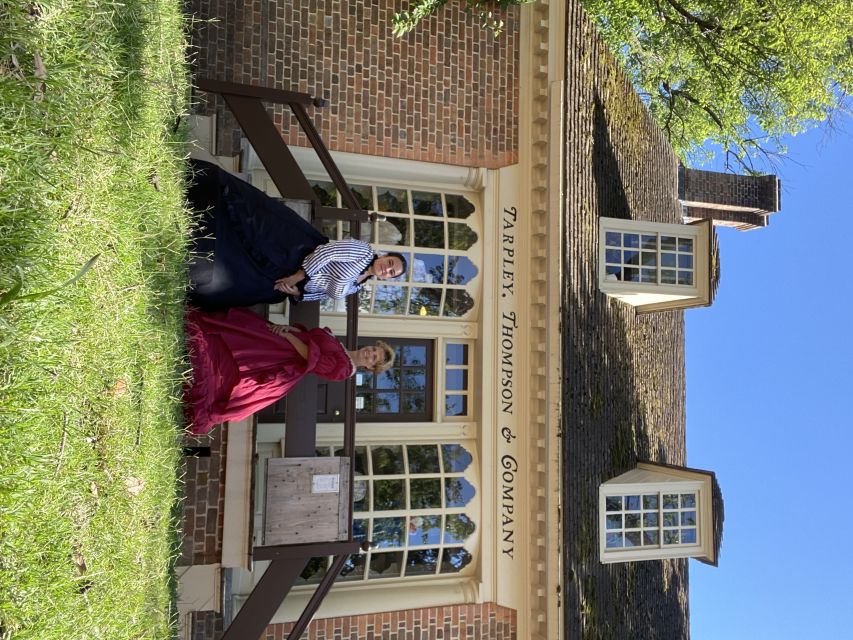
The tour returns to the Capitol Building after tracing the political and social setting around Williamsburg. That return gives the route a neat shape: you begin with government, walk through the places where people lived and argued, then come back to the center of public authority.
The history of declaring independence is handled as a human and political turning point, not just a date to memorize. The guide draws attention to the stakes of the decision and to the people affected by it. This is also where the earlier stops come together. Taverns, churches, shops, official buildings, and residences were all part of the same community.
The route includes scenic views along the way, but this is not primarily a sightseeing walk built around grand overlooks. The scenery is the historic street itself: preserved buildings, costumed interpreters, and the changing feel of each block.
Other sites that add detail
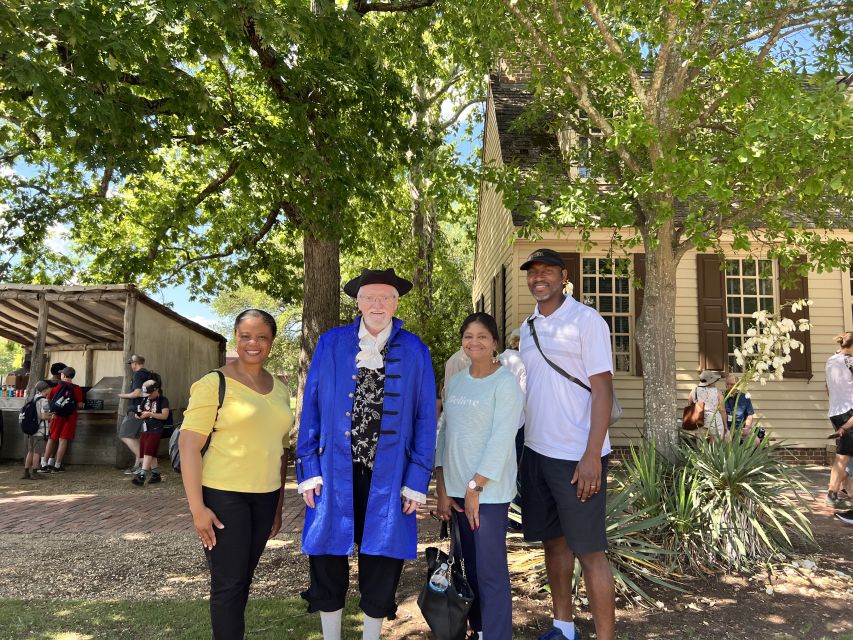
The Tarpley and Thompson store adds a commercial angle. Stores help explain how goods, money, and social class shaped colonial life. Instead of seeing Williamsburg only as a place of speeches and military conflict, you get a look at the business activity that supported the town.
The Gaol and Bruton Parish were also singled out as especially interesting stops. The Gaol brings in the legal and penal side of colonial society. Bruton Parish adds the religious and community dimension, showing that church life was not separate from public life.
You should ask your guide questions as you walk. Elizabeth is known for making space for questions and adapting to the group. That is useful here because the tour touches several subjects in a short time. A question about a building can lead into law, religion, class, or political power.
Costumes, redcoats, and the feel of the eighteenth century
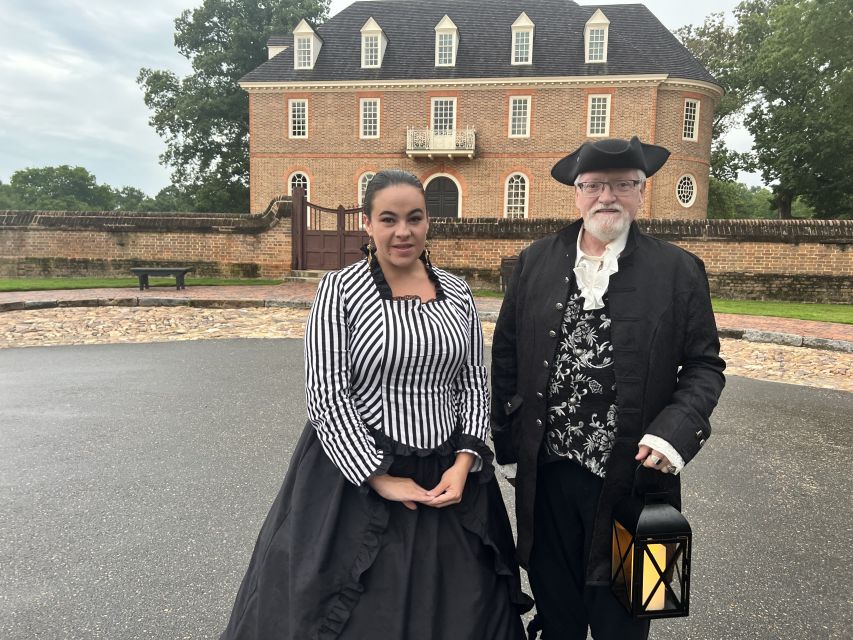
The costuming is not a small extra. Period clothing helps you read the streets as a living historical setting rather than a collection of restored facades. Redcoats and American revolutionaries appear in the scene, giving the political conflict a visible human form.
The costumes also help you notice social differences. Clothing can suggest occupation, status, and allegiance, even before the guide explains the details. You will not simply hear about colonial life in the past tense. You will see interpreters presenting parts of that world as you move through it.
Still, keep your expectations realistic. This is a guided walking tour with scenic views and historical interpretation, not a full performance at every stop. Its strength is the guide’s explanation and the way the setting supports it.
The guides make the difference
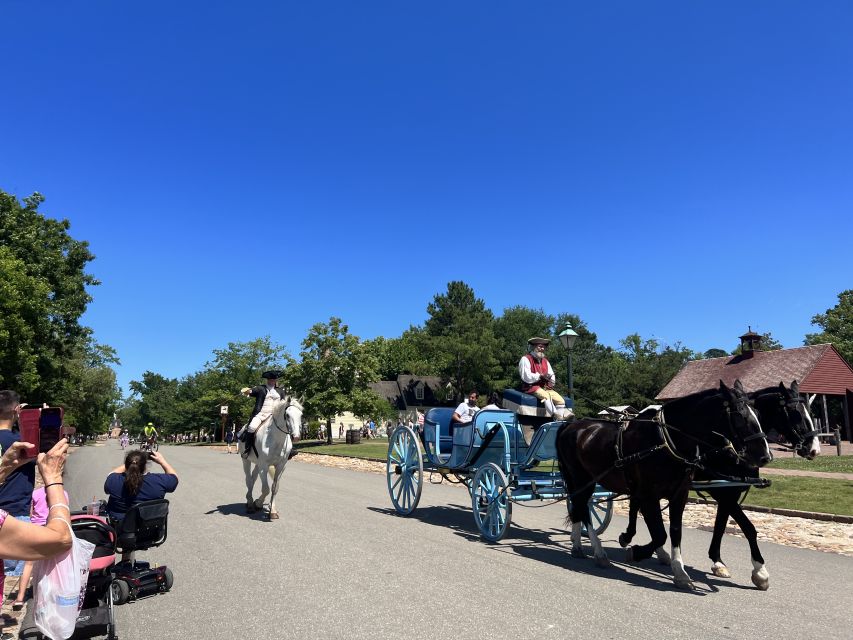
The strongest feature of this experience is the quality of its individual guides. Elizabeth is the name that comes up most often in the supplied feedback, and the praise is specific: she is energetic, funny, well prepared, and good at drawing people into the story. She has also adjusted the pace for people who had trouble walking, adding sitting breaks when needed.
That flexibility matters. A 105-minute walk can feel easy in cool weather and tiring in summer heat. Elizabeth has made the experience work for groups with different walking abilities, but you should still wear comfortable shoes and tell the guide if you need a slower pace or a pause.
Tom Williams has also led the tour, bringing detailed knowledge of the grounds and answering questions across a wide range of subjects. Lexi led one rainy tour successfully, showing that the walk can continue in poor weather, though you should dress for the forecast.
The guide changes the character of the tour, so your experience may vary slightly by departure. The shared pattern is a focus on clear explanation, personal stories, and audience questions rather than a rushed speech delivered at each building.
Heat, rain, and walking comfort
Bring sunscreen. Several tours have taken place in strong heat, and shade is not guaranteed at every stop. One useful improvement would be more regular pauses in shaded areas during hot weather, so plan your own water and sun protection even though they are not listed as included items.
Comfortable shoes are essential. The walk lasts nearly two hours and covers several historic areas before returning to the Capitol. The tour is wheelchair accessible, but the activity still involves moving between outdoor sites, so contact the provider if you need particular arrangements.
Rain does not automatically end the experience. A guide has led a tour through rainy conditions, but an umbrella or rain jacket will make the outing easier. The same applies to winter weather, when outdoor interpretation can feel colder than expected.
Is $25 a fair price?
At $25 per person, the tour offers good value if you want context and a clear route through Colonial Williamsburg. You get a personal English-speaking guide for 105 minutes, plus a focused explanation of the buildings and political story. That can save you time and help you choose which parts of the larger historic area to explore on your own.
The price is less compelling if you only want to enter historic buildings. The tour does not promise admission to most houses or shops, and parking is separate at $5 before 5:00 PM. Think of it as an orientation and storytelling experience, not an all-access ticket.
I would use it near the start of a Williamsburg visit. Afterward, you will have a better idea of which sites deserve a longer look. If you already know the town well and have studied its history, you may prefer spending the money on a more specialized visit.
You can cancel up to 24 hours ahead for a full refund, and the reserve-now, pay-later option keeps the booking flexible. These terms are useful if your schedule depends on weather.
Who should book this Colonial Williamsburg tour?
I would recommend it to first-time visitors who want a strong historical framework without committing to a full day of sightseeing. Families can also benefit, especially when children respond well to questions, costumed interpreters, and stories about real people rather than a list of dates.
It suits adults interested in the American Revolution, colonial government, religion, trade, and the less famous figures who shaped the town. The walk is also useful for anyone who finds historic districts hard to interpret without a guide.
You may want a different plan if you dislike outdoor walking, have very limited mobility, or mainly want interior access. The activity is wheelchair accessible, but it remains a walking tour, and hot or wet weather can affect comfort.
Should you book it?
Book this tour if you want Colonial Williamsburg explained as a working community, not just displayed as a set of old buildings. The best reasons are the political story around the Governor’s Palace, the social history of Raleigh Tavern, the visits to sites such as the Gaol and Bruton Parish, and guides such as Elizabeth who keep the pace conversational.
Skip it if you already have a detailed plan for every building and want only interior visits. For most first visits, though, $25 is a sensible way to get your bearings, hear stories beyond the usual founders, and make the rest of Williamsburg easier to understand.
FAQ
How long does the Colonial Williamsburg walking tour last?
The tour lasts 105 minutes, or about one hour and 45 minutes.
Where does the tour meet?
Meet your guide in front of the Capitol Building on East Duke of Gloucester Street. Look toward the end of the blacktop circle, where the guide should be standing on the road.
Can Google Maps be used to find the meeting point?
Use caution. The directions warn that Google Maps may lead you to the courthouse. Entering 430 E Duke of Gloucester Street can provide walking directions toward the Palmer House and the Capitol meeting area.
Where can I park?
Parking is available at 460 Francis Street East. Parking costs $5 if you arrive before 5:00 PM.
Is the tour wheelchair accessible?
Yes, the activity is listed as wheelchair accessible.
What language is the tour offered in?
The tour is conducted in English with a live guide.
What should I bring?
Bring comfortable shoes and sunscreen. Much of the experience takes place outdoors, so you should also plan for the day’s weather.
Can I cancel for a refund?
Yes. You can cancel up to 24 hours in advance for a full refund. You can also reserve now and pay later.
Latest history tours reviewed in the USA
- Franklin: Ghost Tour in Historic Franklin★ 4.8 · 65 reviews
- Fort Worth: Stockyards History Tour Pub Crawl★ 4.8 · 39 reviews
- Downtown Flagstaff Haunted History Walking Tour★ 4.7 · 46 reviews
- New York City: Flatiron Food, History, and Architecture Tour★ 4.8 · 43 reviews
- Fairbanks: Gold Dredge 8 Historic Train Tour★ 4.7 · 219 reviews
- Fairbanks: Private Mush on the Historic Yukon Quest Trail★ 5.0 · 30 reviews
- Charleston:Evening Haunted History Horse-Drawn Carriage Tour★ 4.7 · 38 reviews
- Philadelphia: Valley Forge National Historical Park Tour★ 4.9 · 39 reviews
USA History Tours, compared.

New York City: American Museum of Natural History Ticket
Read our review →
History and Hauntings of Salem Guided Walking Tour
Read our review →
Charleston’s Old South Carriage Historic Horse & Carriage Tour
Read our review →

Big Island in a Day: Volcanoes Waterfalls Sightseeing and History
Read our review →
Boston: Freedom Trail History Small Group Walking Tour
Read our review →
Historic Charleston Guided Sightseeing Walking Tour
Read our review →
Charleston Horse-Drawn Carriage Tour: Explore Historic Charleston
Read our review →Browse the lists this tour appears in