
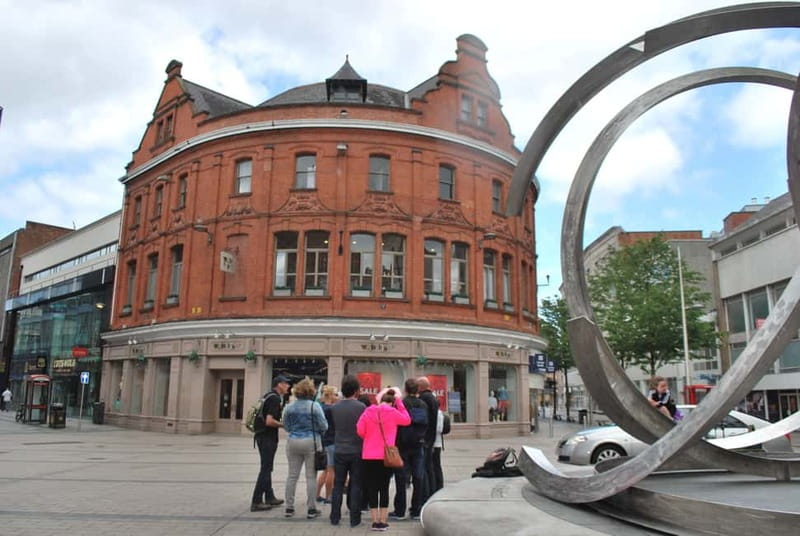
Review · UK
Belfast: A History of Terror Walking Tour
Belfast’s History of Terror Walking Tour uses the city centre as its classroom. Starting at City Hall, you walk to places touched by bombings, attacks, security measures, and remembrance. The point is not to gawk at old wounds. It is to understand how centuries of political and religious division led to The Troubles, and how ordinary people lived through them.
I like two things right away: local guides such as James, Mylie, Anne, and Steve explain both history and daily life, and the audio headsets make every word easy to catch. I also like the 1.5-mile route, which is flat and manageable. The main drawback is the subject itself. Stories of murder, fear, and grief can be heavy, and the tour is offered only in English, so you need a good level of English to follow the detail.
Key points to know before you book
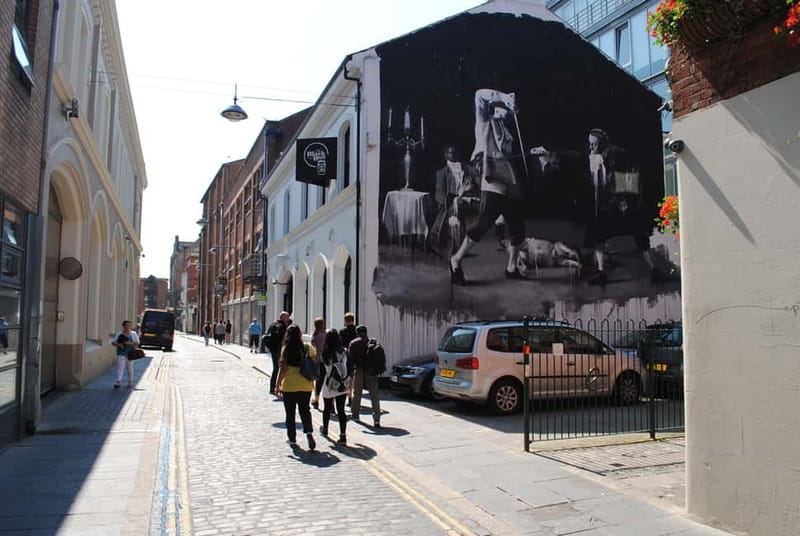
- City Hall is the starting point: Meet at the front gates in Donegall Square North, where the guide gives the historical frame for the walk.
- Ten city-centre stops: You visit sites linked with attacks, bombings, security cordons, memorials, and reflection.
- A balanced account of The Troubles: The tour covers civilians, the British Army, police, and paramilitary groups without reducing the conflict to one simple story.
- Personal Belfast insight: Guides who grew up during The Troubles, including Anne, Chris, Steve, and Jim, can explain what the period felt like in everyday life.
- A flat 1.5-mile route: There are no hills or steps, though comfortable shoes and weatherproof clothing still matter.
- A useful first Belfast activity: The tour gives you context for the city’s history before you explore Belfast’s other sights.
Why this Belfast walking tour matters
Many Belfast visitors arrive knowing only that The Troubles involved Catholics, Protestants, paramilitary groups, and the peace process. That outline is not enough. The conflict grew from centuries of political, religious, and social division, then reached a crisis in the late 1960s.
This tour helps you connect those pieces. You learn why Belfast became the centre of so much violence, how political decisions shaped ordinary streets, and why public places such as shops, offices, and city-centre roads became part of the story.
I appreciate the tour’s clear purpose. It does not treat violence as entertainment, and it does not push you toward a political answer. Instead, it asks you to understand several sides while keeping the human cost in view.
That balance matters in Belfast. A quick explanation can make The Troubles sound like a tidy dispute between two groups. The reality was more tangled. People had different identities, political beliefs, loyalties, fears, and ideas about the future. The guide’s task is to make this understandable without pretending it was simple.
More History Walking Tours in the UK
- A History of Terror – Belfast City Centre Walking Tour
★ 5.0 · 2,883 reviews - Edinburgh: Old Town History and Tales Walking Tour
★ 4.8 · 2,361 reviews - Old Town Walking Tour History and Tales in Edinburgh
★ 5.0 · 2,168 reviews
Beginning at Belfast City Hall
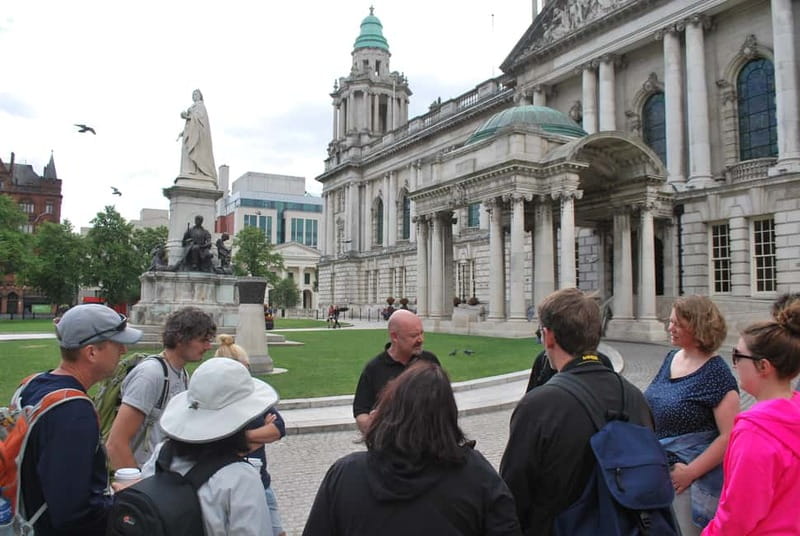
Meet at the front gates of Belfast City Hall in Donegall Square North. Look for the guide wearing a black DC Tours jacket or T-shirt. Arrive about ten minutes early, since the opening explanation sets up the rest of the walk.
City Hall works well as the first stop because it places Belfast’s modern story in a civic setting. The guide introduces the long chain of events that led to The Troubles, rather than starting with a single bomb or confrontation.
Expect an explanation of how Ireland became divided, how political and religious identities hardened, and why Belfast became especially vulnerable to conflict. The history stretches back about 800 years, but the guide has only 2.5 hours, so the account is compact and focused on what helps you understand the city in front of you.
The opening can feel like a lot of information. Stick with it. The later stops make more sense once you understand the background.
Walking through places shaped by bombings
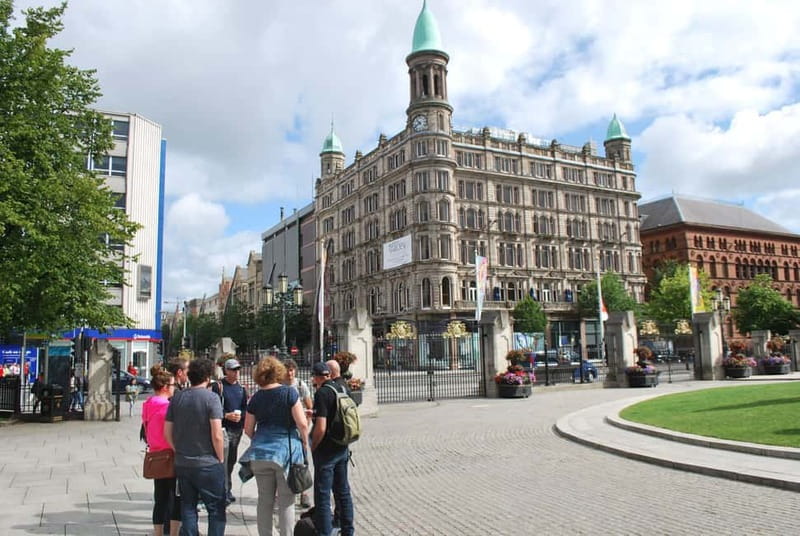
From City Hall, the route moves through the city centre to locations connected with major Troubles-era events. These are not presented as distant history. You are shown where attacks affected public life, businesses, workers, and people simply going about their day.
The power of this approach is its scale. Belfast’s conflict was not confined to a battlefield or a far-off border. It entered shopping streets, workplaces, transport routes, and familiar public spaces.
At each location, the guide explains what happened and why the place mattered. You may hear about the human impact, the disruption caused by violence, and the fear that followed repeated attacks. The details help you picture what daily life required during decades of unrest.
This part of the tour can be upsetting. The guide’s tone is generally careful and respectful, but the subject includes deaths and injuries. If you prefer light sightseeing, this is not the right activity. If you want a serious explanation of Belfast, these stops give the city’s streets a meaning you would not get by walking them alone.
Seeing where security changed daily life
The route also points out former security cordon locations. These details can seem less dramatic than a memorial or attack site, but they explain how the conflict changed the rhythm of everyday Belfast.
Security arrangements affected how people entered and moved through the city. Public spaces could feel controlled, watched, or suddenly closed. The tour helps you understand that The Troubles were not only a series of headline events. They also created habits of caution and uncertainty.
This is one reason the walking format works. You see the distances between places, the flow of the streets, and the ordinary surroundings that once carried extraordinary tension. You are not just memorizing dates. You are learning how violence altered the use of the city.
The route covers about 1.5 miles and is completely flat, with no hills or steps. That makes it accessible for many people who can manage a city walk, and the guide can be heard through audio headsets throughout the tour. The tour is listed as wheelchair accessible, but you should still dress for the weather and allow time to move with the group.
Same old streets, another chapter:
- London Small Group Tour of Historical Pubs
★ 5.0 · 10,422 reviews - Edinburgh: Edinburgh Castle Guided History Tour with Tickets
★ 4.8 · 9,933 reviews - Edinburgh: Whisky Tasting with History and Storytelling
★ 4.9 · 2,451 reviews - Soho Music & Historic Pubs Tour
★ 5.0 · 1,993 reviews
How the guides make difficult history understandable
The guide makes or breaks a history walk, and this tour depends heavily on strong storytelling. The named guides in the feedback include James, Mylie, Anne, Rory, Jim, Chris, Steve, Paul, Finn, Roisin, and Miles.
Their approaches differ, but the repeated strength is clear explanation. James is noted for making a complicated subject easy to follow and for checking that the group understood each stop. Mylie is praised for passion and empathy. Anne brings the perspective of someone born and raised in Belfast, while Chris and Steve draw on memories of growing up during The Troubles.
Personal experience can be useful here, provided it does not replace wider history. The best moments come when a guide connects an individual memory to the larger story. You begin to see how fear, normality, humour, sadness, and resilience could exist together.
The humour is measured, not forced. A good guide may use a light remark to give you breathing room, but the subject remains serious. James, Jim, and Chris are particularly noted for using humour at suitable moments while keeping the tone fair.
The audio headsets are a small but valuable touch. Groups stop in busy city streets, and a clear headset means you do not have to stand beside the guide or strain to hear. They are especially helpful if you have some hearing difficulty.
The Forgotten Troubles Memorial and the road to peace
The tour includes the Forgotten Troubles Memorial, a place for reflection and a reminder that the conflict’s effects did not end with the peace process. This stop shifts the focus from what happened to how people remember it.
You hear how peace was achieved and how Belfast has changed since the worst years of violence. Regeneration is part of the story, but the guide also explains that peace does not erase every political, social, or personal wound.
That balance is important. The tour offers an optimistic view of Belfast’s future without suggesting that every problem has been solved. The city has moved forward, but the legacy of The Troubles still shapes identity, memory, and public discussion.
For me, this is where the tour becomes more than a history lesson. You are asked to think about reconciliation, not just conflict. The final message is hopeful, but not sentimental.
What you will learn about everyday Belfast
The tour covers the main forces involved in The Troubles: political movements, paramilitary groups, the British Army, police, and civilians. You are not asked to admire or condemn a group without context. Instead, the guide explains how different forces operated and how their actions affected people outside the political and military leadership.
You will also hear about the coexistence of fear and routine. People still went to work, opened shops, met friends, and raised families. That does not make the violence less serious. It shows how communities adapt under pressure.
The personal stories are often the most memorable part. They place names and political labels beside real lives. A guide who grew up during the period can explain not only what happened, but how it felt to live with uncertainty.
You should leave with a better sense of why the conflict lasted so long and why its end required more than stopping violence. The peace process involved changing relationships, building trust, and accepting that different identities would continue to exist.
Price, timing, and practical value
At $35 per person, this is a fair price for a 2.5-hour guided walk with a local expert and audio headset. You are paying for interpretation rather than admission to a monument, so the value depends on how much context you want.
I think it is particularly good value early in your Belfast stay. Take it near the beginning, then visit other museums, memorials, or neighbourhoods with a clearer understanding of what you are seeing. It can also help you decide which parts of Belfast you want to explore further.
The pace is suitable for a longer walking tour, with regular stops rather than a nonstop march. The 1.5-mile distance is modest, but the amount of information is not. You may feel mentally tired even though the physical walk is easy.
Belfast weather is a real consideration. The tour runs in rain, so bring a waterproof jacket and wear warm clothing in winter. Comfortable shoes are enough for the flat route, but wet pavement and poor weather can still make the walk less pleasant.
Cancellation is free up to 24 hours before the start, and you can reserve now and pay later. Those terms are useful if your plans depend on changeable weather or uncertain transport.
Who should take the tour
This is best for adults and teenagers aged 12 or older who want more than landmarks and shopping streets. It suits you if you enjoy modern history, political context, personal stories, and thoughtful discussion.
It is also a strong choice for visitors who know little about Northern Ireland. The guide gives you enough background to follow the main issues without assuming you already understand Irish history.
Local people may find value here too. One person who grew up in Belfast still found the tour worthwhile because tourist activities can reveal parts of your own city that you have never examined closely.
The tour is not ideal for young children or anyone looking for a cheerful introduction to Belfast. It is also not suitable if you need a tour in another language. English is the only language offered, and the explanations are detailed.
Should you book Belfast’s History of Terror Walking Tour?
Yes, if you want to understand Belfast beyond its attractive centre and familiar headlines. The flat route, headsets, local guides, and careful storytelling make this a practical and serious introduction to The Troubles.
Book it early in your visit if you can. You will see the city differently afterward, and later sightseeing will have more meaning. Choose another activity if you want a light, purely scenic walk, or if difficult stories are not right for your trip.
The strongest reason to go is the combination of public places and personal memory. You walk through modern Belfast while learning how its streets carried fear, grief, resilience, and eventually hope.
FAQ
Where does the Belfast History of Terror Walking Tour start?
The tour starts at the front gates of Belfast City Hall on Donegall Square North, Belfast.
How long is the walking tour?
The tour lasts 2.5 hours.
How far do you walk?
The route is about 1.5 miles. Belfast city centre is flat, with no hills or steps on the route.
What language is the tour offered in?
The tour is offered in English only. A good standard of English is needed to follow the historical information fully.
Is the tour suitable for children?
The tour is not suitable for children under 12.
Is the tour wheelchair accessible?
Yes, the activity is listed as wheelchair accessible.
What should I bring?
Bring comfortable shoes and clothing suited to the weather. A waterproof jacket is recommended for rain, and warm clothes are advised in winter.
Can I cancel or pay later?
You can cancel up to 24 hours before the tour for a full refund. You can also reserve your place and pay later.
Latest history tours reviewed in the UK
- Falmouth: Vibrant Historical Walking Tour (award-winning)★ 4.9 · 75 reviews
- Edinburgh: Small-Group History of Whisky Tour with Tasting★ 4.8 · 138 reviews
- Edinburgh: Old Town History Walking Tour★ 4.9 · 528 reviews
- Edinburgh’s Dark History Walking Tour★ 4.9 · 55 reviews
- Edinburgh: Multi-Sensory Small-Group Historic Vaults Tour★ 4.6 · 596 reviews
- Edinburgh: Pubs and History Guided Walking Tour with Beer★ 4.8 · 254 reviews
- Edinburgh: History Lovers Old Town Walking Tour★ 4.9 · 56 reviews
- Edinburgh: Multi-Sensory Old Town Historical Walking Tour★ 4.6 · 290 reviews
UK History Tours, compared.
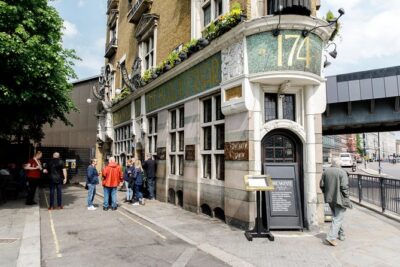
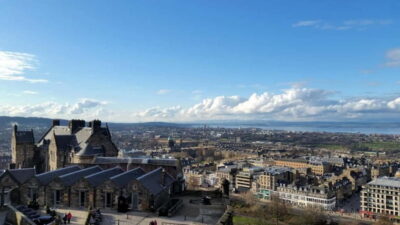
Edinburgh: Edinburgh Castle Guided History Tour with Tickets
Read our review →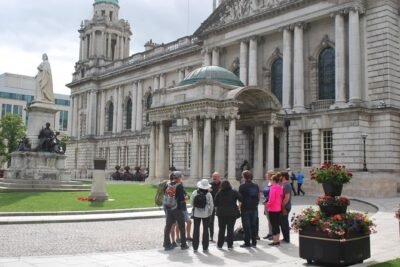
A History of Terror – Belfast City Centre Walking Tour
Read our review →
Edinburgh: Whisky Tasting with History and Storytelling
Read our review →
Edinburgh: Old Town History and Tales Walking Tour
Read our review →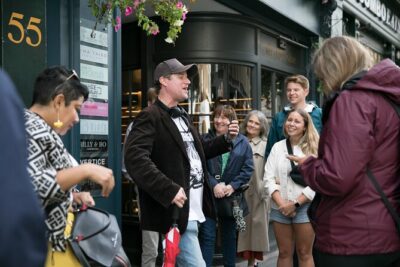
Edinburgh: Old Town and Underground Historical Tour
Read our review →
Shadows of York: Ghost Walk and Horrible History.
Read our review →Browse the lists this tour appears in