
Review · BOSTON
Beacon Hill Boston History + Photo Walking Tour (SMALL Group)
Beacon Hill is at its best when you slow down enough to notice the small things: a brass door knocker, a flower box, a gas lamp, or the history tucked behind an ordinary brick facade. This 90-minute photo walk with Saba Alhadi pairs those details with stories about the neighborhood’s past and present.
I like the small group of no more than 15 people, which gives you room to ask questions and stop for pictures. I also like the practical photo advice, especially the focus on angles, framing, and positioning rather than complicated camera settings. The main consideration is that this is a history walk with photo tips, not a technical photography class, and there are no restroom stops.
Key things to know before you book
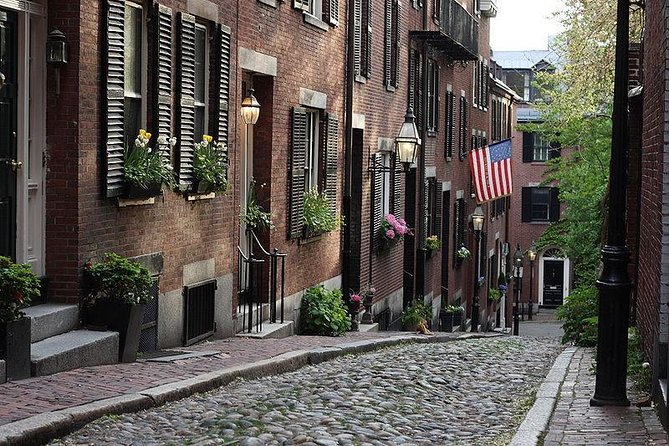
- Acorn Street is only one part of the walk: You’ll also see Louisburg Square, the Massachusetts State House, Boston Common, and the Public Garden area.
- Saba Alhadi leads the tour: Her approach blends neighborhood stories with casual photography instruction for phones and cameras.
- The photo advice is practical: Expect help with composition, angles, positioning, and finding details you might otherwise pass by.
- The pace is leisurely: You’ll have time to look, listen, ask questions, and take pictures instead of rushing from sight to sight.
- The route uses brick sidewalks and historic streets: Pay attention to your footing, especially around uneven patches and narrow lanes.
- The tour depends on good weather: If poor weather cancels the walk, you can choose another date or receive a full refund.
Why this Beacon Hill walk feels different
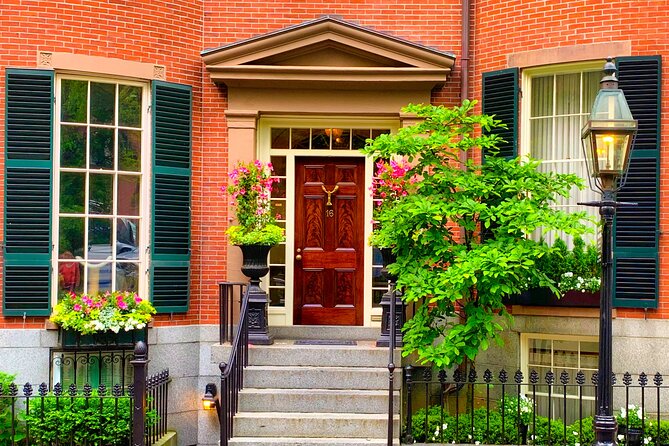
Many walks through Beacon Hill stay on the grandest streets and point out the most famous houses. This one takes a closer look at the details that make the neighborhood feel lived in, from unusual doors and knockers to window boxes, old photographs, and stories about ordinary residents.
Saba Alhadi has led tours in Boston for about 20 years. Her style is personal and conversational. She shares stories about people who lived in the neighborhood, explains how its social character changed, and points out corners that are easy to miss when you are simply walking toward Acorn Street.
That combination matters. You are not only collecting a few postcard views. You are learning why the brick sidewalks were preserved, how Acorn Street changed from working-class housing to one of Boston’s most sought-after addresses, and how Beacon Hill developed from pastureland into an exclusive residential district.
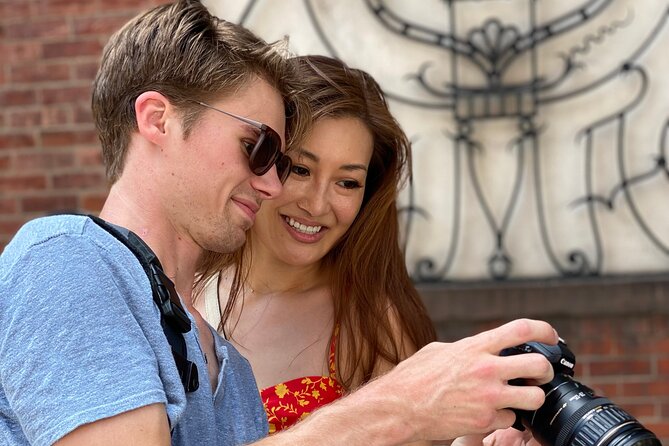
The photography side is deliberately accessible. You can bring a smartphone, a compact camera, or more serious equipment, but you should expect advice on composition rather than a formal lesson in shutter speed, aperture, or manual controls. Saba may suggest a different angle, a better position, or a way to use the lines of a street and doorway more effectively.
She can also take pictures of you or your group with your own phone. That is a useful touch for couples and families who want a record of the day without handing their device to a stranger on the street.
More History Walking Tours in Boston
- Boston: Freedom Trail History Small Group Walking Tour
★ 5.0 · 6,450 reviews - Boston: Freedom Trail History Small Group Walking Tour
★ 4.9 · 1,590 reviews - Boston Pizza Lovers Food and History Walking Food Tour
★ 4.5 · 1,082 reviews
Starting at 34 Beacon Street
The meeting point is at 34 Beacon Street, near the Massachusetts State House and Boston Common. You should arrive 10 minutes early. The tour ends on Charles Street, so you finish in a useful part of central Boston rather than returning to the starting point.
The first part of the walk introduces Beacon Hill as a neighborhood, not just a collection of pretty buildings. You’ll hear about the people and events connected with the area, along with the architectural features that make its streets so recognizable.
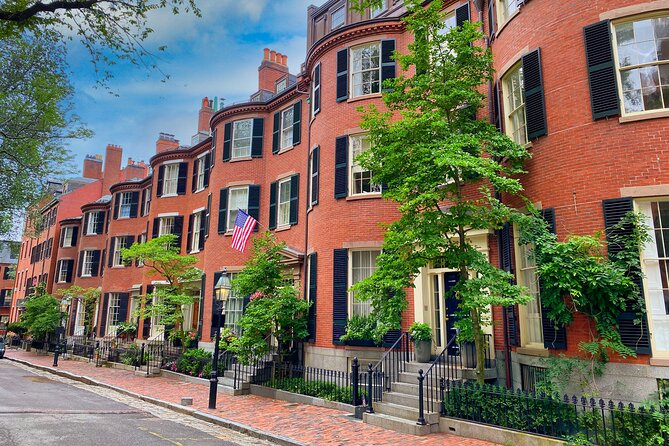
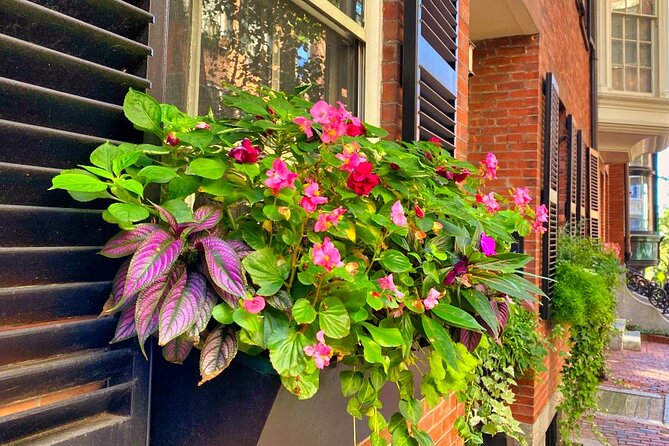
Look for the contrast between formal townhouses and smaller residential details. Brick fronts, ironwork, flower boxes, gas lamps, and distinctive entrances give the area much of its visual appeal. Saba also uses photographs and images of interiors to help explain houses and stories that you cannot see from the sidewalk.
That approach adds context without requiring access to private homes. On one unusual occasion, a homeowner welcomed the group inside a residence that had once been a horse stable. You should not expect that to happen on every walk, but it shows the kind of unexpected neighborhood moment that can make a small tour memorable.
The commentary also reaches beyond famous names. Stories connected with John Hancock, Louisa May Alcott, and Nathaniel Hawthorne are part of the neighborhood’s past, but the walk also covers less familiar subjects, including the first kindergarten in America and the first racially integrated elementary school in the area.
Acorn Street and Beacon Hill’s picture-perfect details
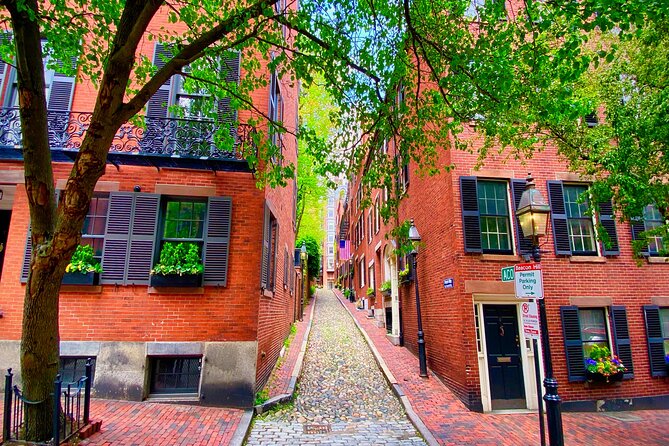
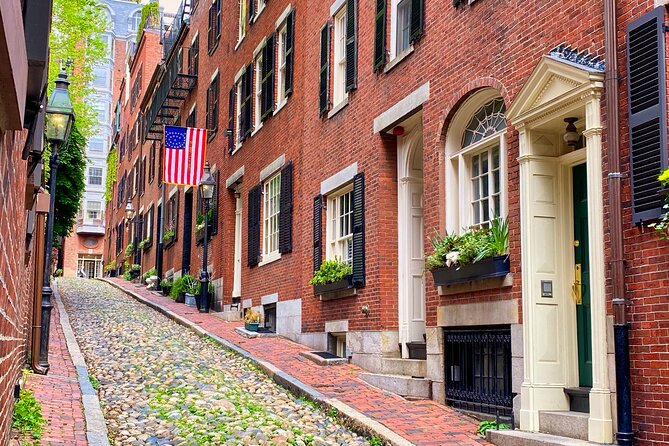
Acorn Street is the obvious photography stop. Its narrow cobblestone surface, gas-lit lanterns, brick row houses, and flower boxes make it one of Boston’s most photographed streets.
It is also a place where expectations matter. Acorn Street is short and residential, so the appeal comes from its atmosphere and details rather than from a long list of attractions. Your guide helps you look for stronger compositions instead of simply taking the same straight-on picture as everyone else.
You might work with the repeating pattern of the houses, the curve of the lane, the contrast between brick and greenery, or the shape of a doorway. These tips are simple, but they transfer well to other parts of Boston and to future trips.
The street can be busy with people stopping for pictures. A small group helps because you can move and pause more easily than you would with a large tour, though you should not expect complete privacy at such a popular location.
The walk also includes lesser-known corners of Beacon Hill. Saba points out architectural curiosities and small features that many people pass without a second look. This is where the tour’s photography theme earns its place. You are encouraged to stop, inspect, and frame the scene rather than hurry toward the next landmark.
Louisburg Square and Beacon Hill’s polished side
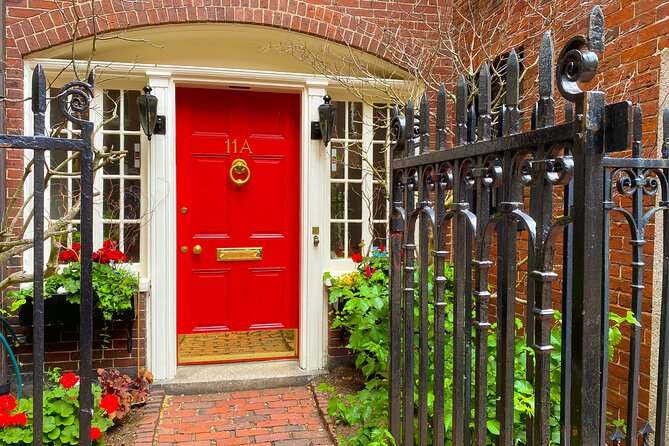
Louisburg Square offers a different mood from Acorn Street. Its elegant 19th-century townhouses have brick fronts, decorative ironwork, and grand entrances. Greek Revival and Federal-style influences help explain why the square feels more formal and imposing.
This is a good place to notice the difference between a street designed for everyday movement and a residential square designed to project status. Saba connects the architecture with the neighborhood’s rise as an exclusive address and discusses the people associated with Beacon Hill, both past and present.
Photography here is less about one famous view and more about structure. Doorways, iron railings, repeated windows, and the balance of the square give you several ways to frame a picture. If you bring a phone, the advice remains useful because it focuses on what you include in the image, not on a specific brand or camera system.
One point raised by the experience is the cost of Beacon Hill real estate. That context can help explain the neighborhood’s present character, but if you are mainly seeking political history or a long list of famous residents, you may find the tour’s emphasis too focused on architecture, local life, and visual details.
More History Walking Tours in the USA
- Boston History Tour: Scenic Walk Through Time & Landmarks
★ 5.0 · 627 reviews - Boston: 2-Hour Historic Walking Tour
★ 4.7 · 88 reviews - Boston: Historic Pubs Walking & Ferry, Food & Drink Tour
★ 4.9 · 56 reviews - Boston: Seafood Tasting & Historical Walking Tour
★ 5.0 · 28 reviews
Boston Common, the State House, and the Public Garden
The route includes Boston’s oldest public park, founded in 1630. Boston Common gives the walk a wider historical setting and helps place Beacon Hill within the growth of the city.
The Massachusetts State House follows as another important landmark. Built in 1795 on land once owned by John Hancock, the building adds a clear connection to Boston’s political past. The stop is brief, about five minutes, so expect an introduction and a chance for pictures rather than an interior tour.
The walk also reaches the public botanical garden founded in 1837, the Boston Public Garden. This is a pleasant counterpoint to the tight brick lanes of Beacon Hill. Depending on the season and weather, the garden’s plantings can offer different colors and textures for photographs.
The published timing lists about 1 hour 15 minutes for the main Beacon Hill portion, with short stops at Acorn Street and Louisburg Square. The full experience lasts about 1 hour 30 minutes. That is long enough to build a sense of place without taking up half a day.
What you will learn about Beacon Hill
The strongest historical material concerns change over time. Beacon Hill was not always the polished residential district you see today. The walk explains how pastureland became an exclusive neighborhood and how different groups shaped its buildings and streets.
You may hear about the first resident of Beacon Hill, the oldest house in the area, and residents connected with literature and politics. The stories also include Black history and the role of Black builders and residents in the neighborhood’s development.
Acorn Street receives useful historical context, including its earlier working-class character and its later transformation into a highly valued residential lane. An old image of the street helps make that change easier to understand than a string of dates would.
The brick sidewalks also have their own story. Their survival was not automatic. A preservation group and a 1947 protest helped protect the surfaces that now contribute so much to Beacon Hill’s appearance.
This is a good example of the walk’s overall method. Instead of treating the neighborhood as a frozen picture, Saba explains how its architecture, residents, prices, and public spaces changed. If you prefer a lecture packed with exact dates and long biographies, the commentary may feel light. If you like history tied to what is directly in front of you, the balance works well.
How much photography instruction should you expect?
You should book this experience for photo opportunities and easy-to-use composition tips, not for a full photography workshop.
The advice described throughout the experience includes:
- Finding a better angle on a doorway or street
- Using positioning to improve a picture
- Framing architectural details
- Spotting visual subjects that are easy to overlook
- Making stronger images with a phone or camera
- Taking group photos and portraits in attractive settings
Several types of equipment can work. The photo guidance is not limited to iPhones, and composition ideas apply to Android phones as well. Still, some specific phone functions may not transfer from one device to another, so you should expect general visual advice rather than a tutorial for your exact model.
The distinction is important. One person may leave wishing for more technical instruction, while another may appreciate the relaxed format. If you want to learn exposure settings, lens choice, or editing software, choose a dedicated photography workshop instead.
For most people, the advantage is that the photo tips make the sightseeing more active. You are not simply being told that Beacon Hill is attractive. You are shown how to decide what to photograph and how to make the image more interesting.
Pace, walking conditions, and weather
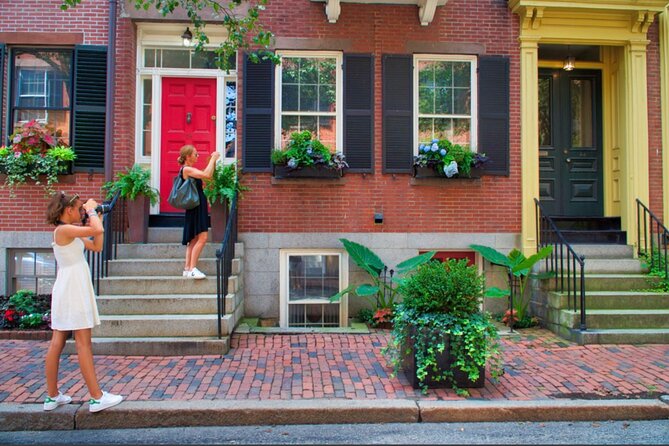
The walk is described as leisurely, but it still requires moderate physical fitness. Beacon Hill’s brick sidewalks are generally flat, though parts of the route can be uneven, and Acorn Street has cobblestones. Keep your attention on the ground while photographing.
There are no restroom stops, so plan ahead before meeting at 34 Beacon Street. Children must be accompanied by an adult, and service animals are allowed.
Weather makes a real difference. Beacon Hill has limited shade on some stretches, and a hot, humid day can make the brick and concrete streets tiring. A cooler day may be more comfortable, while a cloudy or rainy day can produce softer light but may reduce the pleasure of the walk.
The experience requires good weather. If the operator cancels because conditions are poor, you are offered another date or a full refund. You should also reconfirm at least 48 hours before the scheduled start by email or text, as requested by the operator.
Is $45 a fair price?
At $45 per person, the walk sits in a reasonable range for a small-group city tour. You are paying for about 90 minutes with a guide who combines local stories, architectural interpretation, photo advice, and help taking pictures.
The value is best if you would otherwise walk through Beacon Hill on your own and photograph only the most obvious streets. Saba’s local knowledge gives you a reason to pause at details and places you might miss, and the small group allows more time for questions than a large coach-style outing.
The price is less attractive if you want a long, formal history lecture or a serious camera course. The tour is compact and intentionally casual. Its value comes from the mix of storytelling and visual observation.
Free cancellation is available up to 24 hours before the start time for a full refund. Changes or cancellations made within 24 hours are not accepted for a refund, except when poor weather leads to an operator cancellation.
Who should book this photo walk?
I would recommend this walk to first-time Boston visitors who want an easy introduction to Beacon Hill, couples looking for attractive photographs, families with older children, and solo visitors who prefer a guided route through a residential neighborhood.
It also suits local residents who think they already know Beacon Hill but have not looked closely at its doors, old images, architecture, and social history. One experienced local photographer found new places to photograph, which suggests the route is not limited to beginners.
You may want a different tour if you have limited mobility on uneven surfaces, need regular restroom access, or want advanced camera instruction. You should also consider the forecast before booking, since much of the appeal comes from being outdoors among the streets and gardens.
Should you book the Beacon Hill History and Photo Walking Tour?
Book it if you want Beacon Hill explained through both stories and close observation. Saba Alhadi’s tour is strongest when she connects an architectural detail with the people, history, and changing fortunes behind it.
The best fit is someone who enjoys a relaxed pace, likes taking pictures, and wants more than a quick stop at Acorn Street. Bring a phone or camera, comfortable shoes, and realistic expectations about the photography instruction. You will come away with better photo ideas and a more layered sense of Beacon Hill, but not with a formal camera course.
FAQ
How long is the Beacon Hill photo walking tour?
The experience lasts approximately 1 hour and 30 minutes. The main Beacon Hill portion is listed at about 1 hour and 15 minutes, followed by short stops at Acorn Street and Louisburg Square.
How much does the tour cost?
The price is $45 per person.
Where does the tour start?
The meeting point is 34 Beacon Street, Boston, Massachusetts 02108.
Where does the tour end?
The tour ends on Charles Street.
What language is the tour offered in?
The tour is offered in English.
How large is the group?
The tour has a maximum of 15 people.
Is this a photography workshop?
No. It is a history walking tour with casual photography advice for people using a phone or camera. The instruction focuses on composition, angles, positioning, and finding good subjects rather than advanced camera settings.
Are Acorn Street and Louisburg Square included?
Yes. Acorn Street and Louisburg Square are both included as short stops during the walk.
Are restroom stops provided?
No. There are no restroom stops during the tour.
What happens if the weather is poor?
The experience requires good weather. If the operator cancels because of poor conditions, you can choose another date or receive a full refund.
More Small-Group History Tours in Boston
- Boston Freedom Trail History Pub Crawl Small-Group Tour
★ 5.0 · 996 reviews
Latest history tours reviewed in Boston
- Boston: Underground Railroad History Tour of Beacon Hill★ 4.9 · 38 reviews
- Boston: Ultimate Historic Food & Drink Tour★ 4.7 · 20 reviews
- Boston History & Highlights Tour: From Revolution to Today★ 4.8 · 178 reviews
- Boston: Seafood Tasting & Historical Walking Tour★ 5.0 · 28 reviews
- Boston: Historic Pubs Walking & Ferry, Food & Drink Tour★ 4.9 · 56 reviews
- Boston: Haunted Pub Crawl of Historic Pubs and Taverns★ 4.6 · 127 reviews
- Boston: History & Haunts Guided Ghost Tour★ 4.3 · 154 reviews
- Boston: 2-Hour Historic Walking Tour★ 4.7 · 88 reviews
Boston History Tours, compared.
Boston: Freedom Trail History Small Group Walking Tour
Read our review →
Tour of Historic Fenway Park, America’s Most Beloved Ballpark
Read our review →
Boston Food & History: Pizza, North End & Freedom Trail
Read our review →
City Cruises Boston Historic Sightseeing Harbor Cruise
Read our review →
Boston Pizza Lovers Food and History Walking Food Tour
Read our review →
Boston Freedom Trail History Pub Crawl Small-Group Tour
Read our review →
Boston History Tour: Scenic Walk Through Time & Landmarks
Read our review →
Boston History & Highlights Tour: From Revolution to Today
Read our review →Browse the lists this tour appears in