
Review · CAMBODIA
Banteay Srei and Grand Circuit Heritage Tour from Siem Reap
Banteay Srei is the star here. Its small sandstone buildings carry some of Cambodia’s finest carvings, and the drive there takes you beyond the busiest temple roads and through local villages. I like the way this tour pairs it with Pre Rup and the Grand Circuit temples, giving you different Khmer designs in one long day.
I also like the practical setup: hotel pickup, an air-conditioned vehicle, water, and cool towels. Guides such as Sak and Pi are praised for clear explanations, and Sak is also handy with a camera. The main drawback is the pace. You cover five temple sites in roughly eight hours, and the $24 fare does not include the $37 temple pass or your food.
Key points at a glance
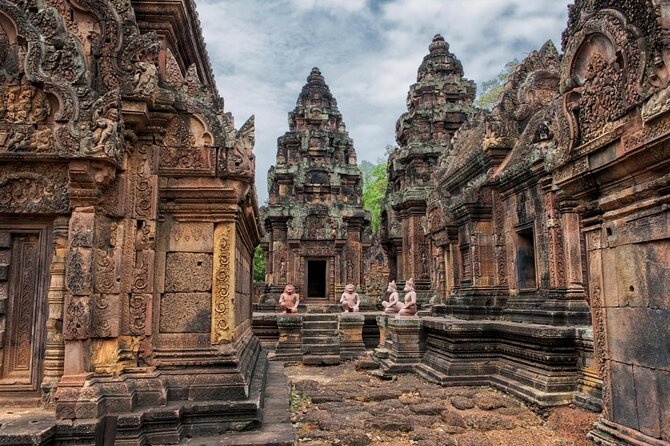
- Banteay Srei’s fine carvings: This smaller temple is the artistic highlight, with unusually detailed sandstone reliefs.
- Five very different temple stops: Pre Rup, Banteay Srei, Neak Pean, Preah Khan, and Phnom Bakheng give you a broad look at Angkor architecture.
- A useful second day at Angkor: This works best after you have seen the main Angkor Wat and Angkor Thom sights.
- Small-group transport: The vehicle holds no more than 15 people, with hotel pickup and air conditioning between sites.
- Helpful guide service: Sak, Pi, and other English-speaking guides are named in the feedback, with praise for history, photography, and group care.
- Sunset is weather dependent: Phnom Bakheng offers a high view toward Angkor Wat, but clouds can spoil the sunset colors.
The usual first day at Angkor focuses on the major names. This tour gives you a different kind of day. You spend less time at the huge central monuments and more time looking closely at carved stone, water features, long galleries, and the quieter edges of the temple area.
That makes it a good fit for your second day in Siem Reap. The route covers enough ground to feel substantial, but the temples are not all alike. Pre Rup is a brick-and-laterite mountain temple. Banteay Srei is a compact sandstone masterpiece. Neak Pean is reached across a long causeway to an artificial island. Preah Khan unfolds as a large, atmospheric complex. Phnom Bakheng finishes the day with a high viewpoint.
The tour starts at about 8:00 a.m. and lasts around eight hours. You spend much of the day in the vehicle, but the air conditioning matters in Cambodia’s heat. A group limit of 15 keeps the price low without creating the feel of a large coach outing.
Pre Rup is the first main stop, with about an hour and a half set aside for the visit. Built as the state temple of Khmer king Rajendravarman, it has the strong, tiered form that makes many Angkor temples easy to understand at a glance.
The name and shape suggest a symbolic mountain. You climb upward through the temple levels, looking across the surrounding countryside from the upper terraces. The design is more severe and geometric than the delicate work you will see later at Banteay Srei.
I like starting here because it gives you architectural context before the day becomes more detailed. You can see how the Khmer builders used height, symmetry, and multiple levels to create a sacred center. The drawback is that the exposed stone and stairs can feel demanding early in the day, especially in hot weather.
Wear shoes with a firm sole. The tour requires covered knees and shoulders, so dress for temple rules as well as heat. A light shirt and longer, breathable trousers or a long skirt are more useful than carrying a cover-up that you may need to put on at every stop.
The drive to Banteay Srei takes you away from the central Angkor circuit and through local villages. That change matters. The road experience is part of the appeal, since you see a more rural side of the area instead of moving only between the headline temples.
The temple itself is smaller than Angkor Wat, but that is exactly why it works so well. Its pinkish sandstone carries crisp scenes and ornamental details on a scale that rewards close attention. The carvings are the reason many people consider Banteay Srei the artistic high point of this route.
The schedule allows about three hours here, the longest stop of the day. That gives you time to examine doorways, lintels, pediments, and relief panels without treating the temple as a quick photo stop. An English-speaking guide can explain the religious stories and point out details that are easy to miss when you walk alone.
Sak receives especially strong praise for his temple explanations and for helping with photographs. If he leads your group, you can ask him to identify the best carved sections and to help find a sensible photo angle. Guide assignments can vary, though. Pi is also noted for answering questions and keeping the group involved.
Banteay Srei is not a place to rush through. Keep your camera away for a few minutes and look at the stone itself. Faces, figures, plants, and mythic scenes are packed into the decoration. The scale is intimate, so you notice the craft more readily than at a huge temple where the eye keeps wandering.
The long drive and three-hour stop create a tradeoff. If you want only the biggest monuments, this may feel like too much time spent reaching a smaller site. If you care about sculpture and want to see more than the central Angkor route, it is the most worthwhile part of the day.
After Banteay Srei, the route turns toward Neak Pean. The visit lasts about 40 minutes, so expect a shorter stop rather than a full temple exploration.
Neak Pean sits on an artificial island and has a Buddhist character. You reach it across a causeway, with water on either side. The setting gives your eyes a break from walls and stairways. Instead of climbing through a large structure, you walk toward a compact central temple surrounded by pools.
I find this stop useful because it changes the rhythm of the day. Pre Rup is vertical, Banteay Srei is carved and intimate, and Neak Pean is defined by water and open space. The shorter time also helps keep the full route moving.
Do not expect the same amount of time here as at Banteay Srei. The appeal is the approach and the setting, not a long list of rooms to inspect. If you are carrying heavy bags or wearing poor walking shoes, the causeway can make the stop less comfortable, so keep your footwear practical.
Preah Khan receives about an hour. It was commissioned by Jayavarman VII in honor of his father and offers a useful contrast with the more monumental Angkor Wat.
This is a substantial temple complex with corridors, courtyards, carved doorways, and long interior views. An hour is enough to get a strong sense of its layout, though not enough to examine every corner. Stay aware of the meeting point and time, since the group must continue to Phnom Bakheng later in the afternoon.
Preah Khan is valuable for showing how a major Khmer religious complex can feel less formal and more layered than Angkor Wat. You get a sense of passage through the building, moving from broad areas into narrower sections. The stonework and surviving structures make it a good place to listen to a guide explain how temple spaces were arranged and used.
This is also where the small-group format helps. With up to 15 people, you can generally hear the guide more easily than you would in a large coach group. Guides such as Sak and Pi are praised for explaining architectural periods and answering questions, so this stop can be more than a walk among ruins.
The final scheduled stop is Phnom Bakheng, with about an hour for the temple ruins and sunset view. From the hilltop, you can look across toward Angkor Wat in the distance.
The view is the main reason to finish here. On a clear evening, the late light can give the surrounding area a memorable end to the day. Clouds are a real factor, though. A cloudy sunset may still leave you with a good view toward Angkor Wat, but you should not book the tour solely for dramatic colors.
The timing also makes this stop less predictable than the others. Temple visits can run long, road conditions can affect the schedule, and the weather may not cooperate. Treat the sunset as a bonus rather than a guarantee.
You will need comfortable walking shoes for the day, and the climb or uneven surfaces may feel harder after several hours in the heat. Take advantage of the bottled water and cool towel provided by the tour, and use the air-conditioned vehicle as a chance to recover between stops.
At $24 per person, this is an inexpensive way to arrange a full day of transport and temple guiding. You are paying for an English-speaking guide, a climate-controlled vehicle, hotel pickup and drop-off, bottled water, and cool towels. For a route that reaches Banteay Srei and returns to Siem Reap, that is a practical package.
The important extra cost is the temple pass. The supplied price lists it at $37 per person, paid directly at the site. That brings the basic outing to about $61 per person before food or any other personal spending.
That total still compares well if you value convenience. You do not need to arrange several separate rides, negotiate transport for the countryside section, or work out how to connect the Grand Circuit temples on your own. The guide also gives the monuments context, which matters most at places such as Pre Rup, Neak Pean, and Preah Khan, where the structure can be harder to understand without explanation.
The value is weaker if you already have private transport and prefer to explore alone. A group schedule means you cannot linger indefinitely at one temple or leave another early. The tour is designed for coverage and ease, not a slow private study of one site.
Hotel pickup starts around 8:00 a.m., and the vehicle is air conditioned. That simple detail makes a large difference. You will be outside on hot stone and open paths, so cooling off during the drives helps you keep going through the final stop.
The group limit is 15 people. That is small enough for a guide to speak to the full group and large enough to keep the price down. It is not a private tour, so expect to move according to a shared timetable.
The day runs for about eight hours and includes five temple areas. Bring only what you need, since you will carry your belongings through several walking stops. Comfortable shoes are essential, and shoulders and knees must be covered at the temples.
The tour is aimed at people at least eight years old, and children must be accompanied by an adult. Most people can take part, but the combination of stairs, uneven ground, heat, and a full schedule should be considered before booking for a child or anyone who finds long walking days difficult.
The guide is important here because the temples do not all explain themselves. Sak is praised for detailed temple knowledge, engaging delivery, and help with photography. Pi is also singled out for answering questions and keeping the group interested. Mr. Black is praised as a safe, welcoming driver.
Guide assignments vary, and one piece of feedback raises a fair concern about a guide repeatedly asking for five-star ratings during the day and afterward. That behavior can make an otherwise good outing uncomfortable. I would judge the tour mainly by the temple access, transport, and guide service on the day, rather than assuming every guide will have the same style.
The overall score is 4.9 out of 5, with 99 percent recommending the experience. Those figures suggest strong consistency, but they do not remove the practical limits: the day is long, the pass costs extra, and sunset depends on weather.
I would choose this tour if you have already seen the main Angkor Wat and Angkor Thom sights, or if you want a second full day focused on architecture rather than repeating the biggest monuments.
It is especially suitable if you want:
- Banteay Srei’s detailed carvings
- A guide to explain Khmer temple design
- Air-conditioned transport from your Siem Reap hotel
- A small group rather than a large bus
- A mix of major and smaller temple sites
- A possible sunset view from Phnom Bakheng
I would think twice if your priority is a private pace, a guaranteed sunset, or a short morning outing. The route covers a lot, and the drive to Banteay Srei takes time. You should also budget the $37 temple pass and food on top of the tour price.
FAQ
More History Tours in the world:
- New York City: American Museum of Natural History Ticket
★ 4.5 · 15,447 reviews - History and Hauntings of Salem Guided Walking Tour
★ 5.0 · 14,564 reviews - Colosseum: Underground and Ancient Rome Tour
★ 4.7 · 12,691 reviews
What time does the tour start?
Pickup begins at about 8:00 a.m. from Siem Reap hotels.
How long does the experience last?
The tour lasts approximately eight hours, returning to Siem Reap in the late afternoon or after the final temple stop.
Which temples are included?
The route includes Pre Rup, Banteay Srei, Neak Pean, Preah Khan, and Phnom Bakheng. Some additional locations may be passed without a scheduled visit.
Same old streets, another chapter:
- Lisbon: History, Stories and Lifestyle Walking Tour
★ 4.8 · 10,902 reviews - London Small Group Tour of Historical Pubs
★ 5.0 · 10,422 reviews - Prague: Oldtown, Medieval Underground & Dungeon History Tour
★ 4.3 · 10,277 reviews - Charleston’s Old South Carriage Historic Horse & Carriage Tour
★ 5.0 · 10,023 reviews
Is the temple entrance pass included?
No. The temple pass must be paid directly at the site and is listed as $37 per person.
What is included in the tour price?
The price includes an English-speaking guide, air-conditioned vehicle transport, hotel pickup and drop-off, bottled water, and a cool towel.
How large is the group?
The tour has a maximum of 15 people.
Can I cancel for a refund?
You can cancel at least 24 hours before the start time for a full refund. Changes or cancellations made less than 24 hours in advance are not accepted for a refund. Poor weather or failure to reach the minimum number of participants may lead to a different date or a full refund.
Yes, if you want a well-priced second day at Angkor with strong variety. Banteay Srei supplies the fine detail, Preah Khan supplies scale, Neak Pean changes the setting, Pre Rup explains the temple mountain form, and Phnom Bakheng gives you a final high view.
Book it with realistic expectations. You are buying a full group day, not a private archaeological visit. Add the temple pass to the advertised price, wear sensible shoes, cover your knees and shoulders, and treat the sunset as a pleasant possibility. For the price, convenient transport, and range of temples, this is a sound choice for seeing more of Angkor without arranging the route yourself.
Latest history tours reviewed in the world
- From Athens: Ancient Olympia Full-Day Private Tour★ 4.8 · 22 reviews
- From Athens: Explore Ancient Corinth & Charming Nafplion★ 4.6 · 102 reviews
- From Athens: Explore Ancient Greece 4-Day Tour★ 4.7 · 73 reviews
- From Albufeira: Wine Tasting & Historic Silves Tour★ 4.9 · 421 reviews
- From Albufeira: Historical Algarve Region Tour★ 4.7 · 585 reviews
- From Alexandria: Full-Day Guided Tour of Historical Sights★ 4.5 · 54 reviews
- Franklin: Ghost Tour in Historic Franklin★ 4.8 · 65 reviews
- Freiburg: Exciting City Tour with sightseeing and history★ 4.3 · 103 reviews
Cambodia History Tours, compared.
Siem Reap: Banteay Srei and Grand Circuit Heritage Tour
Read our review →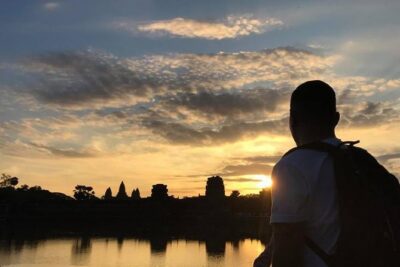
Browse the lists this tour appears in