Review · ATHENS
Athens:Acropolis – Historical Center Walking Tour in Spanish
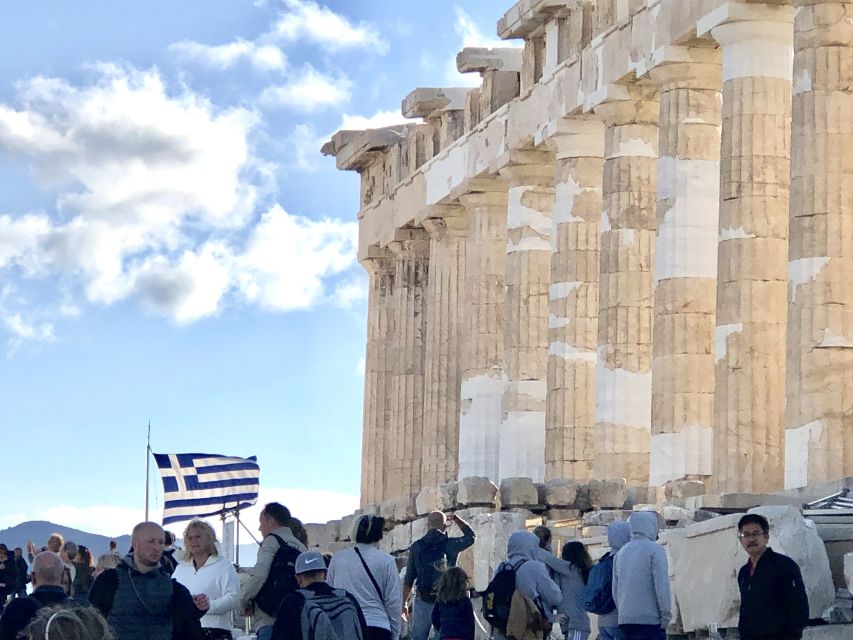
The heart of this tour is an early visit to the Acropolis, entering through the south slope rather than the main gate. That route takes you first to the Theater of Dionysus, then uphill through the Propylaea to the Parthenon, the Caryatids, and wide views over Athens. I like that the guide gives the ruins a story, from Athena’s contest with Poseidon to the purpose of the buildings around you.
I also like the well-chosen second half: a walk through Plaka, a look at the outside of the Ancient Agora, and stops at the Tower of the Winds and Athens Cathedral. Guides Efi and Andrea receive especially warm praise for clear Spanish, patience, humor, and useful Athens tips. The main drawback is simple but important: your Acropolis ticket is not included, and you need an 08:00 to 09:00 entry slot.
Key points
- The south-slope entrance begins with the Theater of Dionysus, avoiding the usual main approach and setting up the ancient story from the start.
- The Parthenon, Temple of Athena Nike, and Caryatids receive the main attention inside the Acropolis.
- Spanish-speaking guides Efi and Andrea are known for lively explanations, patience, and practical advice beyond the monuments.
- The tour continues into Plaka, with the Ancient Agora viewed from outside rather than entered.
- Four hours covers a lot of ground, so comfortable shoes and a reasonable level of mobility are essential.
- The $57 price excludes admission, making the tour most useful for visitors who want guided context rather than a ticket-only visit.
Starting at the Theater of Dionysus
This tour gets going early, which is the right choice for the Acropolis. The rock receives strong sun, the site can become crowded, and the uneven ancient paths are easier to manage before the day gathers speed.
You meet your Spanish-speaking guide at the lower gate of the Acropolis, a short walk from the Acropolis Museum. Look for a guide holding a sign with the office logo. There is no hotel pickup, so you need to make your own way to this central meeting point.
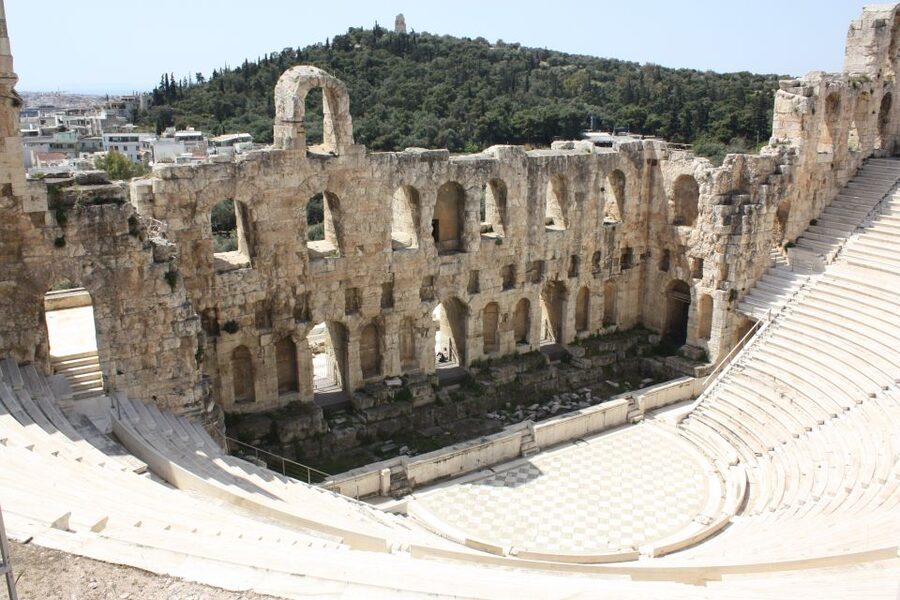
The group enters through the south slope. This is a useful detail, not just a different doorway. You begin near the Theater of Dionysus, often described as the oldest theater in the world, where ancient drama took shape beneath the Acropolis. It gives the opening part of the tour a human scale before you reach the grand monuments above.
Your guide places Athens in its mythic setting by explaining how Athena became the city’s patron after her contest with Poseidon. The tale is more than a colorful introduction. It helps you understand why the Acropolis was treated as a sacred center and why Athena’s name remains tied to the city.
The climb is not difficult for everyone, but it is still a climb over stone and worn surfaces. If you have mobility limits, this experience is not a good fit. Baby carriages and electric wheelchairs are not allowed.
More Ancient History Tours in Athens
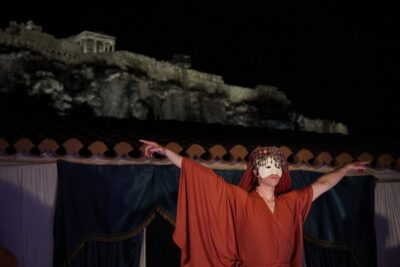
- Athens: Ancient Greek Theater Performance
★ 4.7 · 2,481 reviews - Historical Delphi One Day Tour with Arachova Stop & Expert Guide
★ 4.5 · 1,247 reviews - From Athens: Ancient Corinth Day Trip with Canal & VR Guide
★ 4.6 · 1,073 reviews
The Propylaea prepares you for the Parthenon
The Propylaea is the monumental gateway to the upper Acropolis. Your guide explains how its design controlled movement and could act as a funnel against attackers. Just as important, the gateway created a sense of ceremony for anyone approaching the sacred buildings.
From there, you see the Temple of Athena Nike, a small Ionic structure with an elegant profile. It is easy to hurry past because the Parthenon dominates the view, but this stop rewards attention. Its scale and fine detail show that the Acropolis was not built from one simple design. Several buildings, periods, and religious purposes meet on this hill.
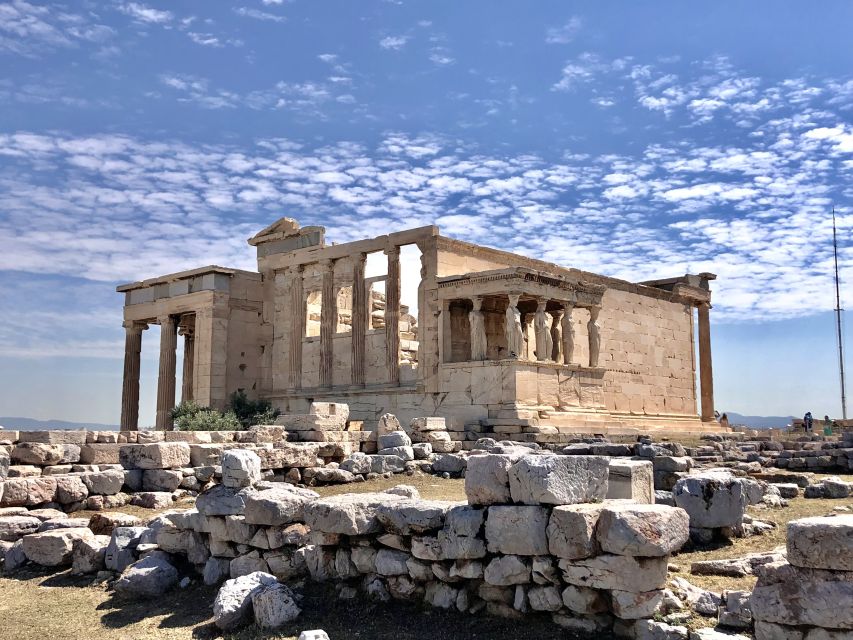
The Caryatids are another major stop. These sculpted female figures serve as columns on the Porch of the Caryatids, associated with the Erechtheion. The marble figures are among the most recognizable sights on the Acropolis, and a guide can explain how their form combines architecture and sculpture.
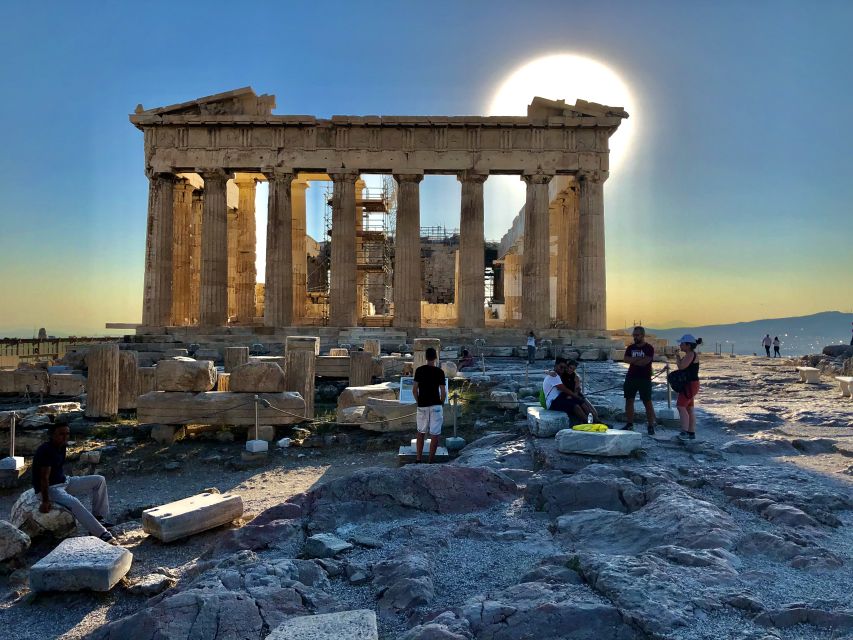
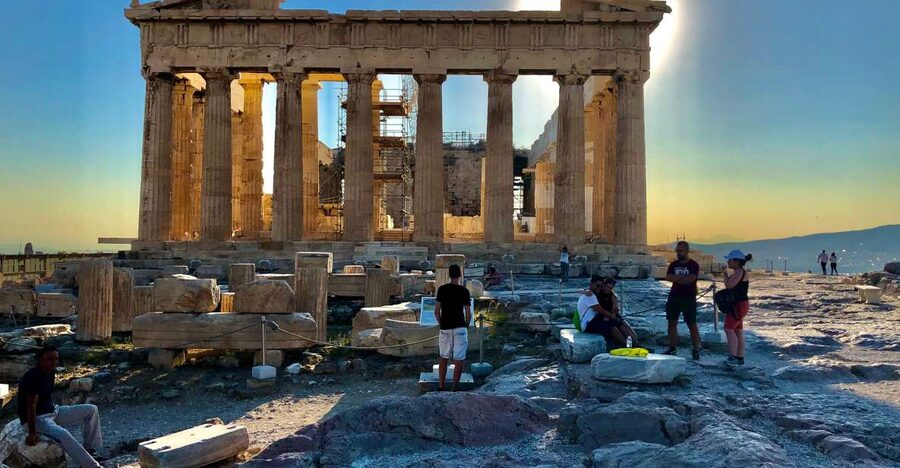
The route then brings you to the Parthenon. This is the point where a good guide earns the fee. The building is famous for its balance, but the tour asks you to look beyond the postcard view and consider why it was built 2,500 years ago, how it honored Athena, and how its design creates such a strong sense of harmony.
I would not expect a silent, museum-like visit. The Acropolis is an active outdoor monument with other groups nearby, and the stone surface can be rough. The best approach is to listen closely during the explanation, then take the short photo breaks provided by the guide.
The view from the Acropolis
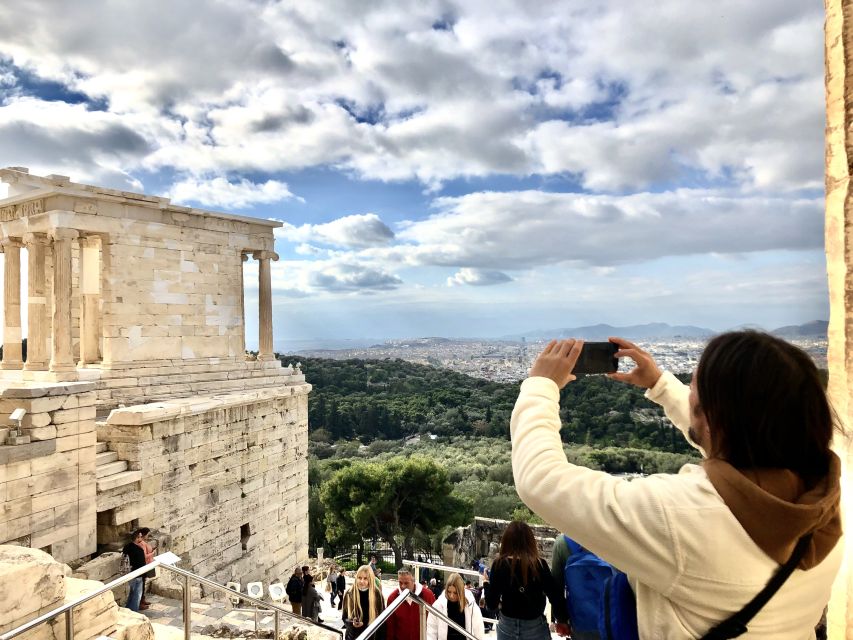
The upper Acropolis offers one of the clearest ways to understand Athens as a city built around ancient hills, temples, public buildings, and modern neighborhoods. From here, the guide points out Hadrian’s Arch and the Temple of Olympian Zeus, along with the Odeon of Herodes Atticus.
The Odeon still hosts the Athens Festival today, giving the ancient structure a living role rather than leaving it as a silent ruin. You also see the National Observatory, Lycabettus Hill, Philopappos Hill, and the Areopagus.
These names can blur together if you only hear them in passing, so I appreciate that the tour pauses for photographs. You have a chance to connect the guide’s words with the actual city below. The view is also a reminder that the Acropolis is not an isolated archaeological park. It remains part of Athens, surrounded by homes, streets, churches, and public life.
The guide’s style matters here. Efi is described as having 27 years of experience, with a warm and patient way of explaining the monuments. Andrea is also praised for clear storytelling and practical tips for the rest of a Greek trip. If either guide leads your visit, you can expect more than dates and names. You get explanations shaped for a Spanish-speaking audience.
One piece of feedback is useful for setting expectations: one person found the historical explanations a little long and wished for shorter, sharper presentations. That is a fair point. A four-hour tour has a lot to cover, and some people prefer a brisk overview. Others will welcome the extra context. If you enjoy detailed explanations, this is likely a strength. If you want to move quickly from photo to photo, the pace may feel slow at times.
Walking down into Plaka
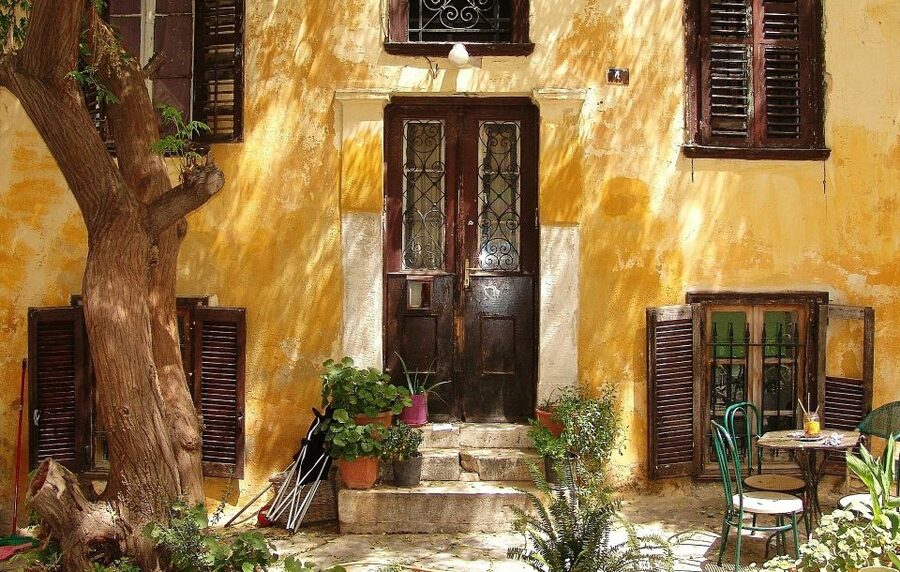
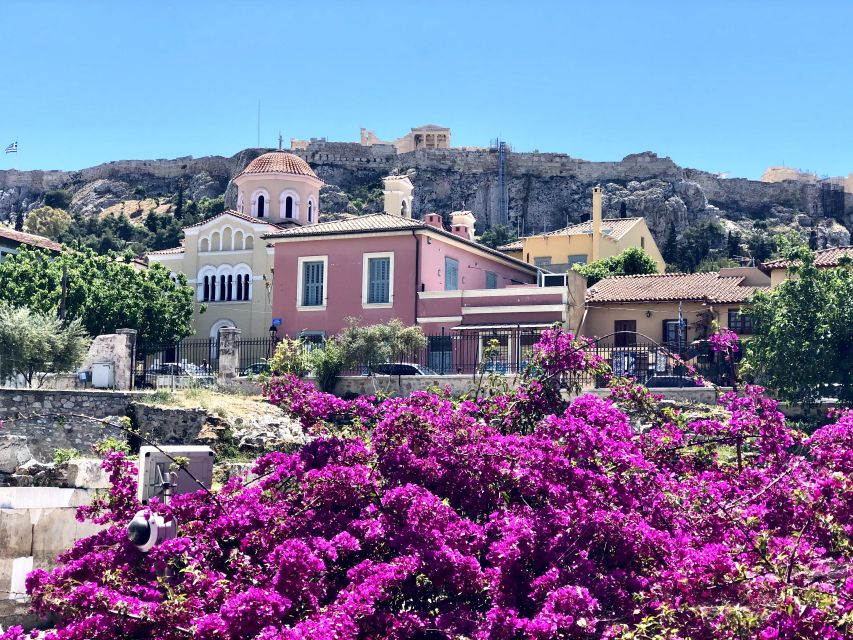
After the Acropolis, the tour shifts from monumental stone to the old center of Athens. Plaka is the city’s most picturesque and photogenic neighborhood, with narrow streets and a more intimate feel than the open summit above.
The change in mood is part of the appeal. You have spent the first half looking at temples and sacred buildings. In Plaka, you get a sense of how the historic center works at street level. The walk also gives your guide a chance to point out details that are easy to miss when you are focused only on the Acropolis.
The tour passes the Ancient Agora from the outside. This distinction matters. You do not enter the Agora as part of this four-hour experience, but you can learn why the area mattered as a place where Socrates, Plato, and Aristotle left their mark.
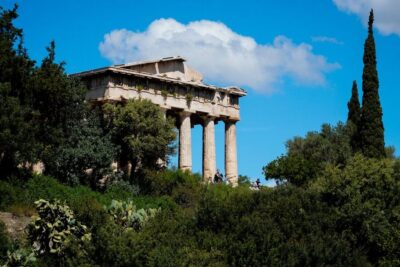
The best-preserved temple in Athens is associated with the Agora, and seeing it from outside provides useful orientation. If the Agora is high on your list, plan a separate visit or choose a tour that includes admission. Here, the purpose is to connect the Agora to the wider story of democratic, philosophical, and civic Athens without adding another full archaeological site to an already active morning.
More Ancient History Tours in Greece
- Acropolis, Parthenon & Athens Old City Heritage Walking Tour
★ 4.5 · 876 reviews - Private Biblical Tour Ancient Corinth & Isthmus Canal from Athens
★ 5.0 · 762 reviews - Athens: Ancient Corinth & Nafplio Full Day Trip with Swim
★ 4.8 · 531 reviews - Athens: Ancient Agora E-Ticket and Audio Tour
★ 3.9 · 413 reviews
The Tower of the Winds and Athens Cathedral
The final section visits the Tower of the Winds, considered the oldest meteorological observatory in the world. Its purpose makes it especially interesting because it links ancient architecture with practical daily concerns. The monument was not simply made to impress. It helped people think about time, weather, and direction.
The Tower is a good ending point for the classical part of the walk because it is smaller and more detailed than the Acropolis monuments. After the huge scale of the Parthenon, you can focus on a building designed for a specific function.
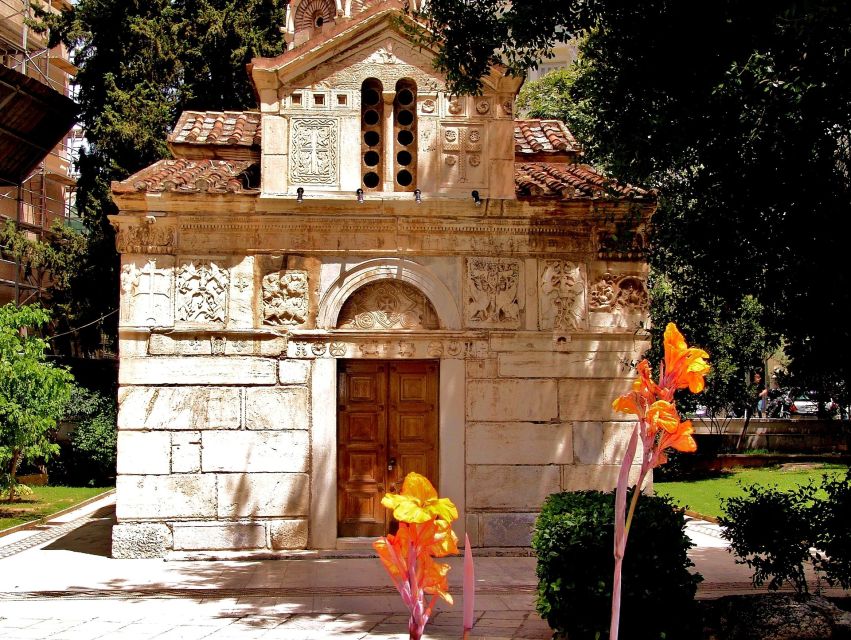
The tour then reaches the Mitropolis of Athens, or Athens Cathedral. The church is connected with the marriage of Queen Sofía and Juan Carlos, and it offers a chance to discuss the Orthodox religion that remains central to much of Greek public and private life.
This final stop broadens the tour beyond ancient Greece. You move from mythology and classical architecture to the religious traditions of modern Greece. That range is one of the tour’s best features. It does not treat Athens as a city frozen in the fifth century BC.
What $57 gets you, and what it does not
At $57 per person, this is a reasonable price for a four-hour guided walk if you want Spanish explanations and a clear route through the city’s main historic sights. The value comes from the licensed guide, the structure, the live interpretation, and the chance to ask questions along the way.
The price does not include the Acropolis entrance ticket. You must obtain an official ticket for the 08:00 to 09:00 time slot. After booking, the operator may contact you if you need help arranging the ticket at the official cost, but you should not assume admission is included in the advertised price.
This separate-ticket setup is the most important financial detail. Add the official admission cost to the $57 before comparing this tour with other options. Still, the arrangement may suit you if you already hold an Acropolis ticket or prefer to manage admission yourself.
Headphones are included, which matters on a busy archaeological site. They allow you to hear the guide while standing a little apart for photos or when other groups are nearby.
Food and drinks are not included. The tour lasts four hours, so eat before the start and bring water, especially in warm weather. Comfortable shoes are essential. This is a walking tour over slopes, stairs, and ancient stone surfaces, not a gentle stroll on level pavement.
Who will enjoy this Spanish tour most
I would recommend this experience first to a Spanish-speaking visitor coming to Athens for the first time. The Acropolis can feel confusing without context, and the guide’s stories help turn separate ruins into a connected place.
It also suits you if you want the major highlights without committing to a full-day archaeological program. In four hours, you see the core Acropolis monuments, get the main city views, walk through Plaka, learn about the Agora from outside, and finish with two distinctive central Athens landmarks.
The tour is a good match for people who value explanation over speed. Efi and Andrea are both praised for clear delivery, warmth, patience, and humor. Their ability to add practical Athens tips is useful if this is your first day in the city.
You should think twice if you dislike structured walking tours or prefer to explore every site independently. The schedule is set, the Agora is not entered, and some explanations may feel longer than you prefer.
It is also unsuitable for people with mobility impairments. The Acropolis approach and surface conditions require steady walking. Baby carriages and electric wheelchairs are not permitted.
Timing, meeting point, and cancellation
The tour starts early, with availability depending on the selected date and time. The required Acropolis entry slot is 08:00 to 09:00, so arrive with enough time to reach the lower gate near the Acropolis Museum.
The meeting point is at the lower Acropolis gate, a few meters from the museum. The guide holds a sign with the office logo. Because hotel pickup is not included, check your route before the morning of the tour.
You can cancel up to 24 hours in advance for a full refund. The reserve-now, pay-later option also gives you some flexibility while your Athens plans are still taking shape.
Should you book this Acropolis and Plaka tour?
Book it if you want the Acropolis explained in Spanish, prefer an early start, and like combining the essential ancient sights with a walk through Plaka. The south-slope entrance, Theater of Dionysus, city viewpoints, Tower of the Winds, and Athens Cathedral give the morning more range than a simple Parthenon visit.
Before paying, make sure you have included the separate Acropolis admission in your budget and can manage four hours of walking. If you need a very quick overview, the detailed commentary may test your patience. For a first visit, though, this is a strong choice, especially if Efi or Andrea is leading the group and you want both solid history and practical advice for the rest of your stay.
FAQ
Is the Acropolis entrance ticket included?
No. The tour price does not include admission. You need an Acropolis ticket for the 08:00 to 09:00 time slot. The operator may help arrange one at the official cost after booking.
Is the tour conducted in Spanish?
Yes. The experience includes a live licensed guide in Spanish.
Where does the tour meet?
The meeting point is at the lower gate of the Acropolis, a few meters from the Acropolis Museum. The guide holds a sign with the office logo.
How long does the tour last?
The tour lasts four hours.
Does the tour enter the Ancient Agora?
No. The itinerary passes outside the Ancient Agora and explains its importance, but entry is not included.
Is the tour suitable for people with mobility impairments?
No. The tour is not suitable for people with mobility impairments. Baby carriages and electric wheelchairs are also not allowed.
More History Walking Tours in Greece
- Corfu: History and Culture Walking Tour
★ 4.9 · 55 reviews
More History Walking Tours in Athens
- Athens: History of Rebellion Walking Tour
★ 5.0 · 110 reviews - Ancient Athens for Kids 4-Hour Private Walking Tour
★ 5.0 · 66 reviews - Private Athens Walk: Ruins, Markets & Local Stories
★ 5.0 · 41 reviews
Latest history tours reviewed in Athens
- From Athens: Ancient Olympia Full-Day Private Tour★ 4.8 · 22 reviews
- From Athens: Explore Ancient Corinth & Charming Nafplion★ 4.6 · 102 reviews
- From Athens: Explore Ancient Greece 4-Day Tour★ 4.7 · 73 reviews
- Athens: Women in Ancient Greece★ 5.0 · 98 reviews
- Athens: The History of Greek Mythology Private Tour★ 4.7 · 53 reviews
- Athens: Ancient Corinth & Nafplion Guided Premium Tour★ 4.7 · 237 reviews
- Athens: Roman Agora & Ancient Agora E-ticket & 2 Audio Tours★ 4.1 · 107 reviews
- Athens: Kotsanas Ancient Greek Technology Museum Guided Tour★ 5.0 · 29 reviews
Athens History Tours, compared.
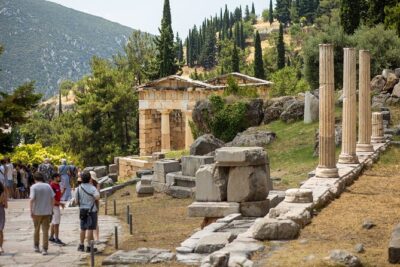
Historical Delphi One Day Tour with Arachova Stop & Expert Guide
Read our review →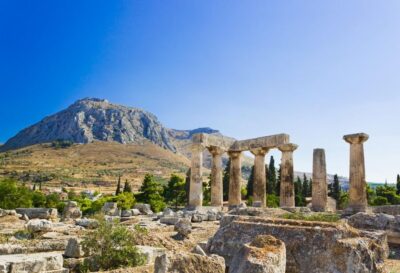
From Athens: Ancient Corinth Day Trip with Canal & VR Guide
Read our review →
Historic Athens: Small Group Electric Bike Tour
Read our review →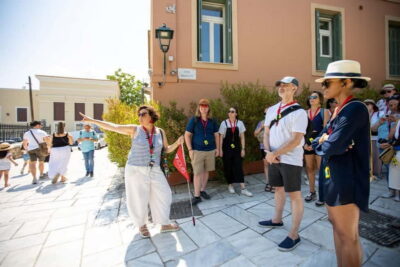
Acropolis, Parthenon & Athens Old City Heritage Walking Tour
Read our review →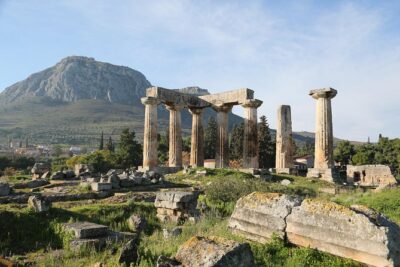
Private Biblical Tour Ancient Corinth & Isthmus Canal from Athens
Read our review →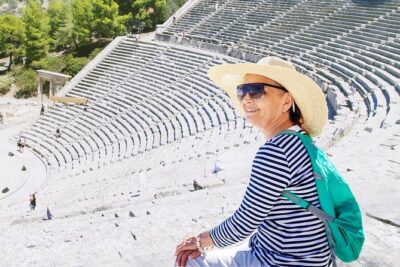
Athens: Ancient Corinth & Nafplio Full Day Trip with Swim
Read our review →