

Review · ATHENS
Athens: History of Rebellion Walking Tour
Athens’ ancient ruins get most of the attention, but this walking tour follows a different thread: the city’s long fight against occupation, fascism, police violence, and social injustice. Starting in Monastiraki, you move through Syntagma and Kolonaki before ending in Exarchia, the neighborhood most closely linked with present-day activism.
I like the clear link between places and events, especially the route from the former Ottoman-era city to modern protest ground. I also like the small-group format and Maelle’s discussion-led approach, which gives you room to ask questions rather than simply collect dates.
The main consideration is that this is a serious, political tour, not a light sightseeing stroll. You will walk and stand for about two and a half hours, and the subject matter includes repression, violence, fascism, and unresolved social conflicts.
Key points about the Athens History of Rebellion tour
- Ottoman rule to modern protest: Follow nearly 200 years of Greek resistance through central Athens.
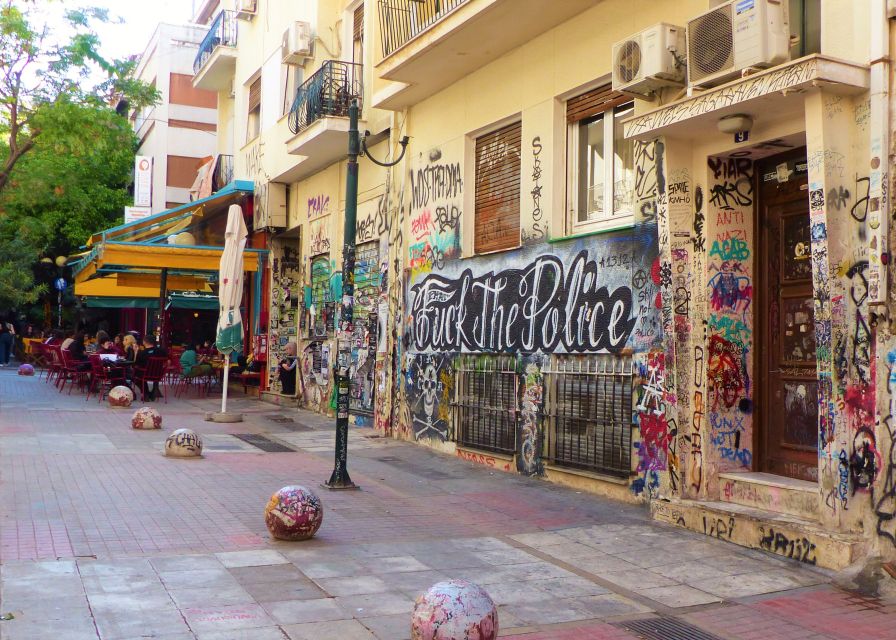
- Exarchia is the centerpiece: See how anarchists, refugees, artists, and the LGBT+ community connect with the area’s activist identity.
- Maelle leads the experience: Her style combines history, humor, personal insight, and open discussion.
- More than famous monuments: Syntagma Square, the Parliament, street art, and less-publicized sites carry much of the story.
- Best for curious walkers: You need comfortable shoes, water, and the ability to stand and walk for 2.5 hours.
- A useful first-day tour: The social and political context can help you read Athens differently for the rest of your stay.
Why this tour shows a different Athens
This is not a general city tour with a quick stop at every famous building. Its subject is resistance, and the route uses central Athens as a series of case studies.
You begin with the Greek struggle against Ottoman rule, then move through the birth of the modern Greek state and the mass movements that challenged fascism, violence, and oppression. The final section turns toward the present, with Exarchia as a living example of political organizing and social conflict.
I find this approach useful because it connects history with ordinary streets. You are not only hearing about people who resisted power in the past. You are also asked to consider how protest, community action, policing, gentrification, and political identity shape Athens now.
That makes the tour a good partner to a visit to the Acropolis or Ancient Agora. Ancient Athens explains one part of the city’s identity. This walk helps explain the modern Greek state and the tensions that still affect daily life.
More History Walking Tours in Athens
- Acropolis, Parthenon & Athens Old City Heritage Walking Tour
★ 4.5 · 876 reviews - Ancient Athens for Kids 4-Hour Private Walking Tour
★ 5.0 · 66 reviews - Private Athens Walk: Ruins, Markets & Local Stories
★ 5.0 · 41 reviews
Starting in Monastiraki with the Greek Revolution
Meet in Monastiraki Square, in front of Pantanassa Church. Look for a guide holding a sign marked Athens City of Rebellion.
Monastiraki is a useful starting point because it places you in one of Athens’ busiest public spaces before the tour shifts toward less obvious stories. The first guided section gives you a short introduction to the square and then turns back to the period when Athens was under Ottoman rule.
The focus here is the resistance that helped set the stage for the Greek Revolution about 200 years ago. You will hear about the people and movements that challenged Ottoman control and about the way those struggles became part of modern Greek identity.
The stop at Monastiraki is listed as brief, about five minutes. Do not expect a long architectural lecture or a museum-style presentation. The square works more as an opening chapter, setting up the question that follows you through the rest of the walk: who gets to control a city, and how do people push back?
From the Metropolitan Cathedral to Syntagma Square
From Monastiraki, the route passes the Metropolitan Church of Athens and continues toward Syntagma Square. The church is a pass-by stop rather than a full visit, so you will not be touring its interior as part of this experience.
Along the way, the guide adds lesser-known locations and short stops. Several are described simply as hidden or secret stops, which means the emphasis is on the story connected to the place rather than on a major named monument. These pauses give the walk a sense of discovery without turning it into a hunt for photo opportunities.
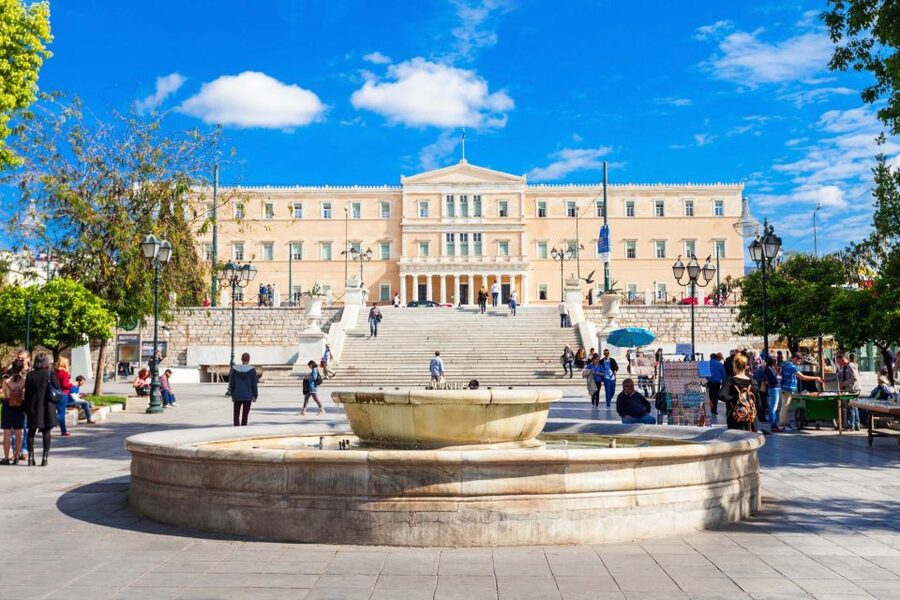
Syntagma Square is one of the key points on the route. It is the modern center of public protest in Athens, and the tour uses it to explain the role of mass movements in the country’s recent history.
You will also discuss individuals whose actions made them symbols of resistance. The goal is not only to list political events. Maelle’s style, based on the experience described by past participants, is to put events in order and then invite discussion about what they meant for Greek society.
That approach suits you if you like asking why an event mattered, not only when it happened. It may feel slower than a standard city walk, but the extra conversation is part of the value.
Reading Syntagma, Parliament, and the Tomb of the Unknown Soldier
The Hellenic Parliament and the Tomb of the Unknown Soldier give the tour a more formal setting. Here, the contrast between national symbols and popular protest becomes especially important.
The Parliament stop lasts about ten minutes, followed by a visit to the Tomb of the Unknown Soldier. These are places associated with the Greek state, military memory, and public ceremony. The guide places them alongside stories of people who challenged official power.
This is one of the tour’s strongest ideas. Athens is not presented as a collection of beautiful buildings with politics happening somewhere else. The square, Parliament, and memorial all become part of the city’s argument about freedom, authority, and citizenship.
You will want to pay attention rather than simply wait for a photo stop. The tour’s subject is modern history, and many of the events discussed are relatively recent. That can make the material feel more immediate, but it also means the conversation may touch on painful and contested issues.
More History Walking Tours in Greece
- Athens:Acropolis – Historical Center Walking Tour in Spanish
★ 5.0 · 32 reviews - Corfu: History and Culture Walking Tour
★ 4.9 · 55 reviews
Kolonaki and the Academy of Athens
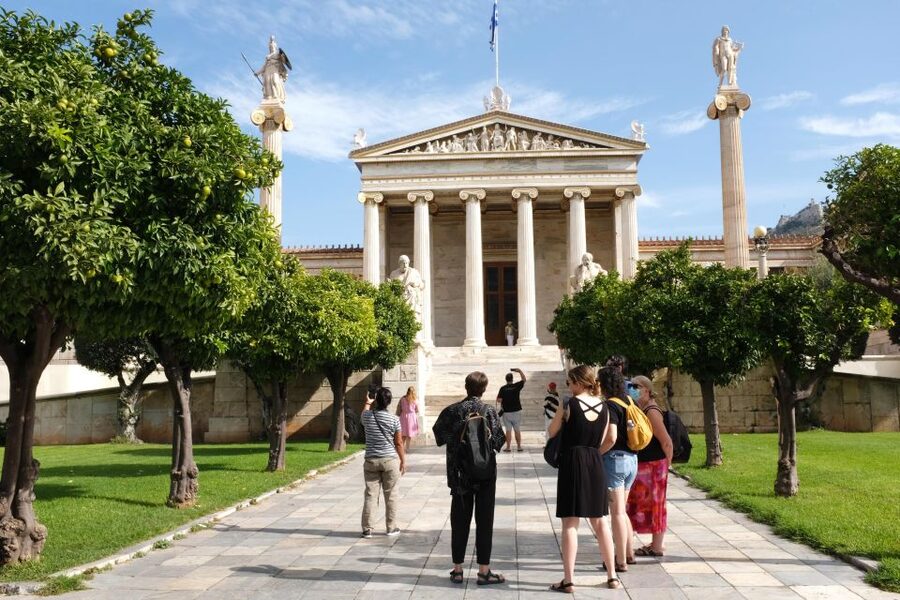
The route then passes through Kolonaki before reaching the Academy of Athens. Kolonaki is a pass-by stop, so it is not treated as a full neighborhood tour.
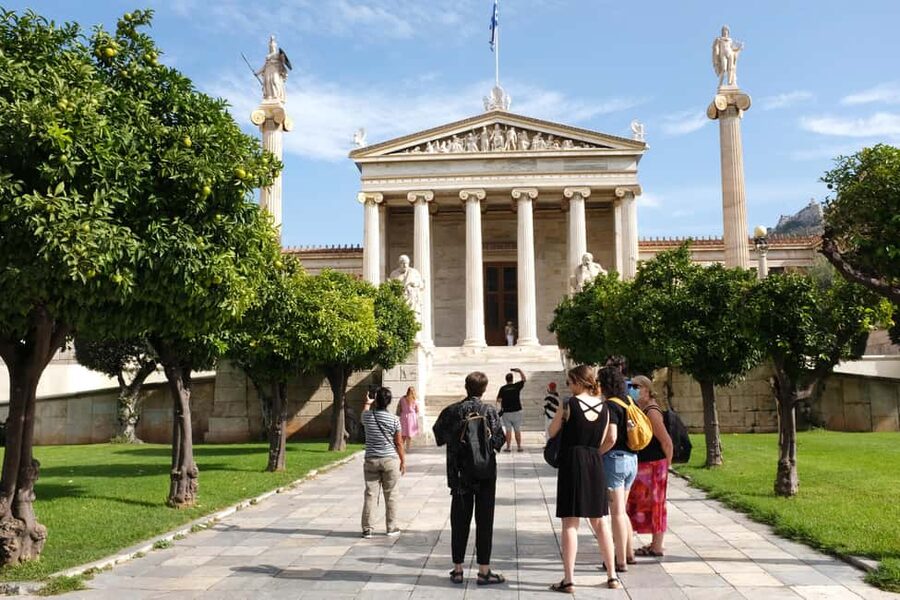
The Academy receives about ten minutes of guided sightseeing. Its grand setting offers another useful contrast with the earlier stops. Where Syntagma represents public action and protest, the Academy points toward formal education, national culture, and the institutions that help shape a country’s public story.
I like that the route does not stay in one political corner of Athens. Moving between Monastiraki, Syntagma, Kolonaki, and Exarchia lets you see how different parts of the city carry different social meanings.
The tour does not pretend that one viewpoint explains everything. It does, however, have a clear sympathy for resistance movements and social justice. One useful piece of advice from the experience itself is that this tour suits people who are open to those subjects. If you strongly prefer a politically neutral overview, a traditional Athens highlights tour may be a better fit.
Entering Exarchia, Athens’ activist neighborhood

Exarchia is the main event. The neighborhood is presented as a current center of resistance and activism, with links to anarchists, refugees, the LGBT+ community, and artists.
The point is not to treat Exarchia as an exotic exhibit. That matters. The area is a real community, and the tour aims to explain its political identity without turning local life into a spectacle.
Expect discussion of police repression, gentrification, collective action, and the effort to protect the neighborhood’s anarchist and community-based character. These subjects help explain why Exarchia has such a strong reputation in Athens and why opinions about it can be sharply divided.
Street art is also part of the experience. Maelle uses visual details, including work by the artist WD, to encourage questions about public space and political expression. You are not simply told what a wall means. You are asked to think about who made it, who sees it, and what it says about the neighborhood.
The Exarchia portion includes several stops of roughly five to ten minutes each, including Exarchion Square, where the walk finishes according to the route information. The meeting details also describe the activity as ending back at the meeting point, so confirm the exact return arrangement when you book. Either way, the tour’s final focus is Exarchia rather than a return to the ancient center.
Maelle’s guiding style and the value of a small group
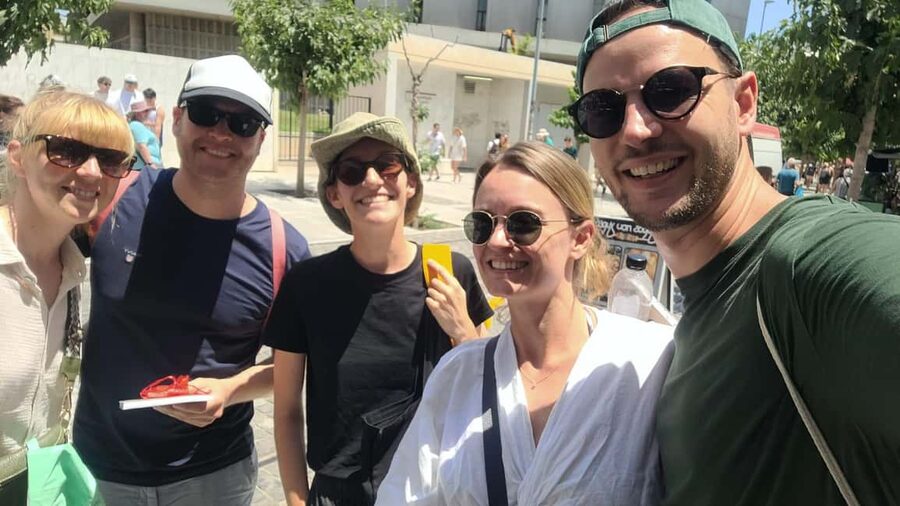
Maelle is the named guide associated with this experience. The strongest praise centers on her warmth, clarity, passion, humor, and ability to connect modern Greek history with present-day life.
That matters on a political tour. Dates and names are only useful if you can see how they connect. Maelle’s role is to put events into a clear order, explain difficult ideas in plain terms, and leave room for questions.
The format is available for private or small groups. A smaller group is especially helpful here because the tour invites conversation. You can ask about street art, Greek politics, community life, food, shopping, and places to visit after the walk.
Past participants also received personal suggestions for restaurants, sights, Athens neighborhoods, and Greek islands. These recommendations are a practical bonus, particularly if you take the walk early in your trip and still have time to use them.
The guide speaks English and French. If you have a question about the language of a particular departure, check availability before booking.
Price, pace, and practical value
At $44.04 per person, this costs more than a basic self-guided walk but less than many private sightseeing experiences. The value depends on what you want from Athens.
If you only want famous monuments, you can see many of them without paying for a guide. This tour earns its price through interpretation: the historical sequence, the links between sites, the discussion of Exarchia, and the chance to ask questions in a small group.
At two and a half hours, the length is long enough to build a coherent story without taking up your entire day. I would schedule it early in your Athens stay if modern history and local politics interest you. It can give you a useful frame for the rest of the city.
The pace involves walking and standing. Wear comfortable shoes, bring water, and use sunscreen and a hat in hot weather. The tour is not suitable for people with mobility impairments, so consider the route’s length and street conditions before reserving.
Free cancellation is available up to 24 hours before the tour for a full refund. You can also reserve now and pay later, which helps if your plans are still moving.
Who should book this walk?
I would recommend it to you if you enjoy history that continues into the present. It is especially well suited to people interested in political movements, social justice, street art, community organizing, and the less-publicized side of a city.
It is also a good choice for a repeat visitor who has already seen the Acropolis and wants a different way into Athens. Several people used the tour as a starting point for further reading and discussion, which is a sign that it offers more than a set of quick facts.
Families with older teenagers may find it worthwhile if everyone is comfortable with serious topics. The walk is not designed as a children’s attraction, and younger children may lose interest during the political sections.
You should think twice if you want a purely scenic route, a focus on ancient archaeology, or a politically detached introduction. The guide has a clear interest in resistance movements, and the tour asks you to consider the moral and social questions behind the events.
Should you book the Athens History of Rebellion tour?
Book it if you want to understand how modern Athens was shaped by occupation, revolution, fascism, protest, and ongoing struggles over public life. The strongest parts are the links between Syntagma’s national institutions and Exarchia’s activist community, along with Maelle’s ability to make difficult material clear and personal.
Skip it if you mainly want ancient monuments or a relaxed stroll with little discussion. For the right audience, though, $44.04 buys something many standard city tours miss: a way to see Athens as a living political city, not only an archaeological one.
FAQ
Where does the Athens History of Rebellion tour start?
The meeting point is Monastiraki Square, in front of Pantanassa Church. Your guide will hold a sign that says Athens City of Rebellion.
Where does the tour finish?
The route information lists Plateia Exarcheion as the finish. The meeting information also says the activity ends back at the meeting point, so confirm the exact end arrangement when booking.
How long does the walking tour last?
The tour lasts 2.5 hours.
What languages are available?
The tour is offered in English and French.
Who guides the tour?
Maelle is the named guide associated with the experience.
Is this a private tour or a group tour?
Private and small-group options are available.
What areas does the tour visit?
The route includes Monastiraki, Syntagma Square, the Hellenic Parliament, the Tomb of the Unknown Soldier, Kolonaki, the Academy of Athens, and Exarchia.
What should I bring?
Bring comfortable shoes, a sun hat, sunscreen, and water.
Is the tour suitable for people with mobility impairments?
No. The activity is not suitable for people with mobility impairments.
Latest history tours reviewed in Athens
- From Athens: Ancient Olympia Full-Day Private Tour★ 4.8 · 22 reviews
- From Athens: Explore Ancient Corinth & Charming Nafplion★ 4.6 · 102 reviews
- From Athens: Explore Ancient Greece 4-Day Tour★ 4.7 · 73 reviews
- Athens: Women in Ancient Greece★ 5.0 · 98 reviews
- Athens: The History of Greek Mythology Private Tour★ 4.7 · 53 reviews
- Athens: Ancient Corinth & Nafplion Guided Premium Tour★ 4.7 · 237 reviews
- Athens: Roman Agora & Ancient Agora E-ticket & 2 Audio Tours★ 4.1 · 107 reviews
- Athens: Kotsanas Ancient Greek Technology Museum Guided Tour★ 5.0 · 29 reviews
Athens History Tours, compared.
Historical Delphi One Day Tour with Arachova Stop & Expert Guide
Read our review →
From Athens: Ancient Corinth Day Trip with Canal & VR Guide
Read our review →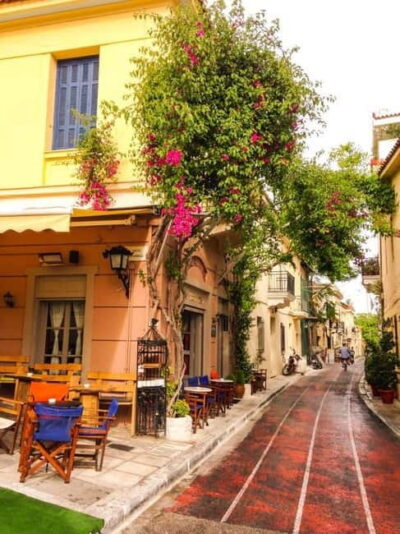
Historic Athens: Small Group Electric Bike Tour
Read our review →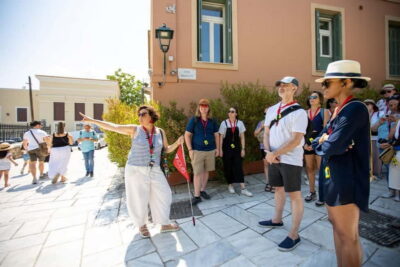
Acropolis, Parthenon & Athens Old City Heritage Walking Tour
Read our review →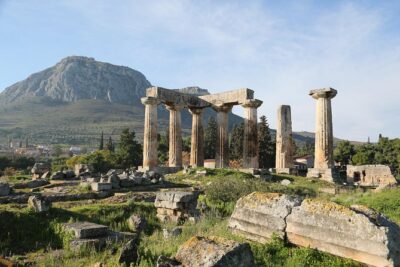
Private Biblical Tour Ancient Corinth & Isthmus Canal from Athens
Read our review →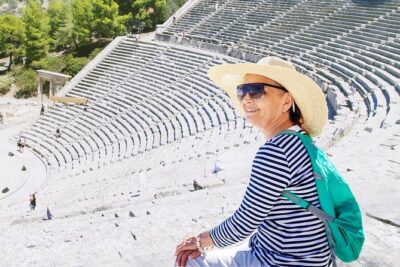
Athens: Ancient Corinth & Nafplio Full Day Trip with Swim
Read our review →
Browse the lists this tour appears in