
Review · PHILADELPHIA
Philadelphia: Valley Forge National Historical Park Tour
Valley Forge is more than a place to check off a Revolutionary War map. It is where you can picture an exhausted army trying to survive winter, disease, hunger, and uncertainty while George Washington worked to turn it into a disciplined fighting force. I like the small-group format, which keeps the visit personal, and I like that the ride from Philadelphia supplies the background before you reach the park.
The main drawback is time. Four and a half hours gives you a useful introduction, but Valley Forge is spread across a large national historical park, so you will not see every trail or linger at every stop. The tour runs rain or shine, and the outdoor portions will feel very different in July than in March.
Key points about this Valley Forge tour
- Small groups of up to 14: You travel from Philadelphia in a smaller vehicle rather than on a large sightseeing bus.
- A history lesson on the road: The guide explains the events leading to the 1777 to 1778 encampment before you begin exploring the park.
- Washington’s Headquarters: See the building where Washington directed the army during its difficult winter stay.
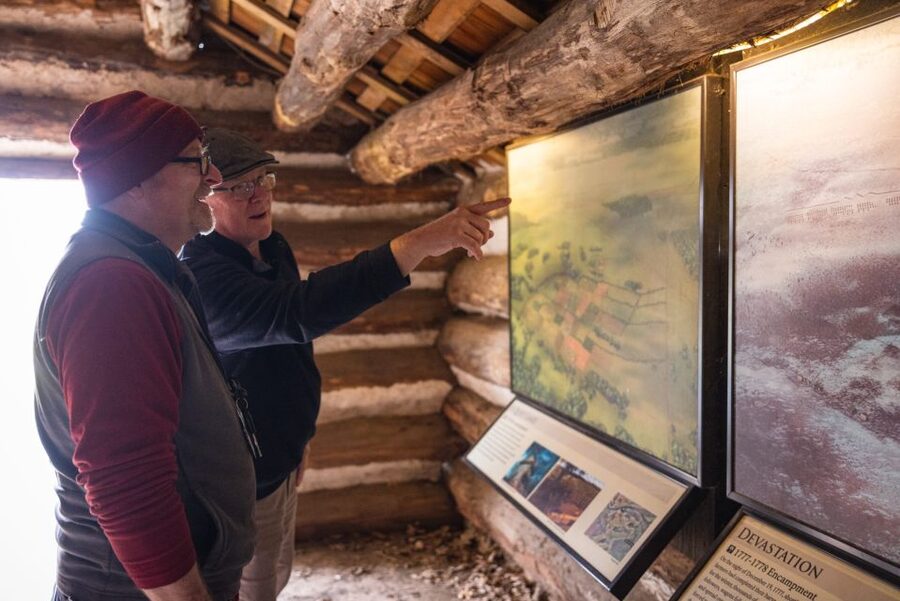
- Recreated soldiers’ huts: These give the encampment a human scale and help you understand how basic the soldiers’ living quarters were.
- A mix of famous and lesser-known sites: The route includes the National Memorial Arch, Varnum’s Quarters, the Commander in Chief’s Guard Huts, and more.
- Flexible booking: You can cancel up to 24 hours ahead for a full refund, and reserve now while paying later.
Why Valley Forge matters beyond the famous winter story
The usual picture of Valley Forge is simple: Washington’s army suffered through a bitter winter, then marched away stronger. The actual story is more useful than that short version. The encampment brought together an army that needed training, organization, supplies, and confidence as much as it needed food and shelter.
Your guide uses the drive from Philadelphia to set up that story. This is important because Valley Forge itself can otherwise feel like a series of green fields, roads, statues, and reconstructed buildings. With the military and political background in place, the sites begin to make sense.
The park also offers a change of pace from central Philadelphia. After the city’s museums, traffic, and tightly packed streets, you spend part of the day in open countryside along the Schuylkill River. I like that contrast. You get a substantial history lesson without spending the entire day indoors.
The strongest part of this experience is usually the guide’s storytelling. Marty, Tom, Dale, James, Owen, Rick, and Adam are among the guides praised for making the subject clear, conversational, and easy to follow. A former teacher and a history professor have both led this tour, so you may get anything from family-friendly explanations to a more detailed account of military planning and Revolutionary War politics.
The exact personality of the day depends on your guide, but the format encourages questions. That matters at a site where a good question can shift your attention from famous names to ordinary soldiers, officers, cooks, engineers, and guards.
More History Tours in the USA:
- New York City: American Museum of Natural History Ticket
★ 4.5 · 15,447 reviews - History and Hauntings of Salem Guided Walking Tour
★ 5.0 · 14,564 reviews - Charleston’s Old South Carriage Historic Horse & Carriage Tour
★ 5.0 · 10,023 reviews
Leaving Philadelphia from 12th and Arch Streets
The meeting point is at the southwest corner of 12th and Arch Streets. Look for the WeVenture Tours sign. This is near Reading Terminal Market, which makes it a practical starting point if you are already exploring central Philadelphia.
Roundtrip transportation is included, so you do not need to arrange a rental car or figure out the park’s roads yourself. That is a real benefit. Valley Forge is outside the city, and the return trip lets you relax rather than watch the clock or navigate.
The vehicle is suited to a small group, with a maximum of 14 people. In practice, the group may be divided into even smaller units. One account described groups of fewer than six traveling in midsize SUVs, though the exact arrangement can vary. Either way, this is a quieter setup than a full-size bus tour.
The drive also serves a purpose beyond transportation. Your guide talks through the early years of the Revolution and the events that led Washington’s army to Valley Forge. By the time you arrive, you should understand why the army was there and what Washington needed to accomplish.
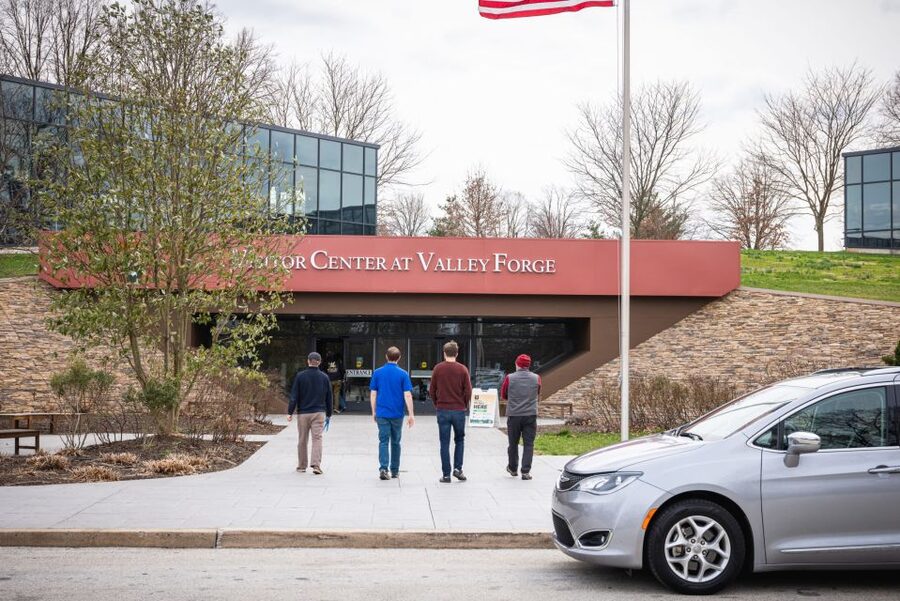
Valley Forge Visitor Center and the first look at camp life
The Visitor Center is an important opening stop. Historic objects and artifacts give you something concrete to connect with the wider story. Instead of beginning only with monuments and broad views, you start with evidence of the people who lived through the encampment.
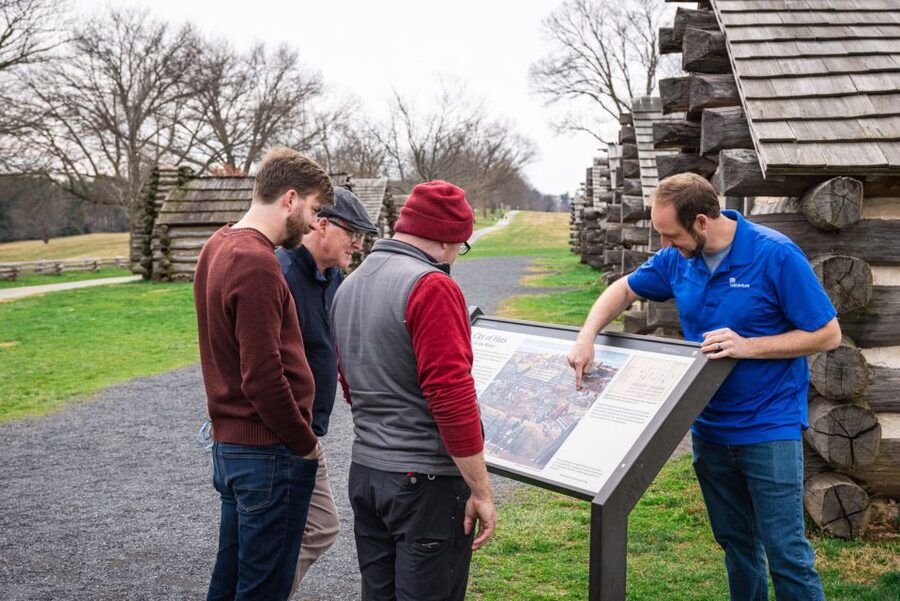
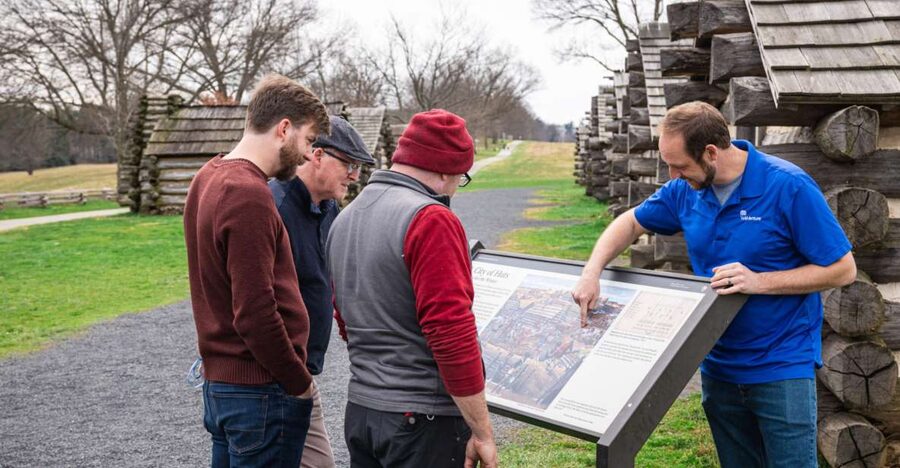
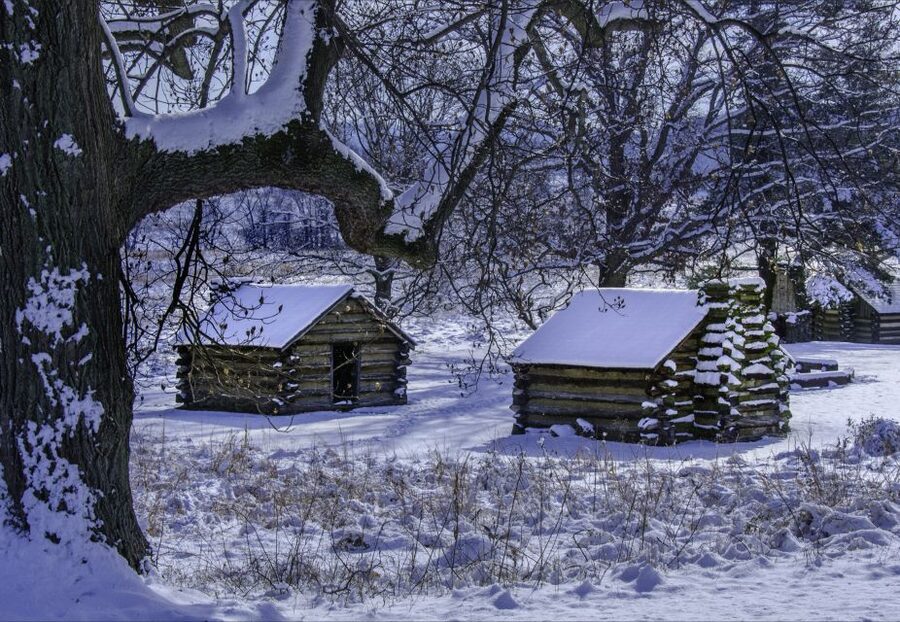
From here, the recreated soldiers’ cabins provide the clearest physical reminder of daily life. The huts are basic, and their plainness is the point. You can better understand the scale of the hardship when you see the cramped shelter rather than only hearing a number about cold weather or shortages.
Your guide may leave you at certain locations for a short time, then return with another explanation. This balance works well. You get room to look around, take photographs, and absorb the site without losing the thread of the story.
The Visitor Center and huts are also a good fit for families. Children may not follow every military detail, but the cabins give them something immediate to see. A guide who welcomes questions can make the subject less like a school lecture and more like a story about people facing a difficult problem.
Washington Memorial Chapel and the meaning of the park
Washington Memorial Chapel adds a different layer to the visit. The chapel is connected to the memory of Washington and the army, but it also changes the mood of the tour. After hearing about shortages, illness, military discipline, and uncertainty, a quiet memorial space gives you time to consider how the encampment has been remembered.
The tour includes a guided stop here, so you are not left to guess why it matters. Still, this is not the place for a long independent visit. The schedule needs to keep moving, and the total tour lasts 270 minutes.
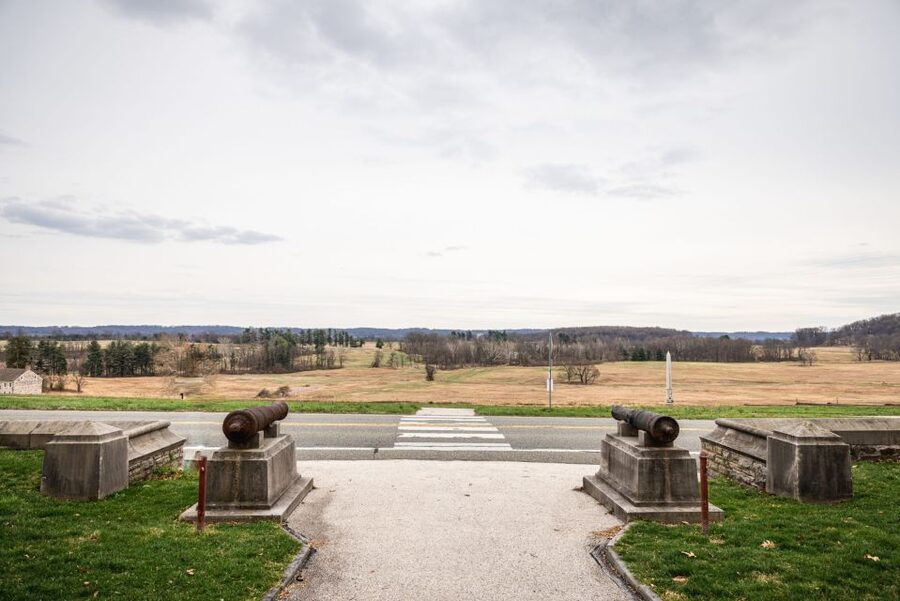
The National Memorial Arch is another major visual marker. It commemorates Washington and his army and gives you one of the park’s most recognizable sights. The scale of the arch contrasts with the small huts nearby. One represents public memory and national honor; the other helps you picture the ordinary conditions behind that memory.
You will likely have time to look, listen, and take photographs, but the tour is not designed as a slow architectural study. If the arch is especially important to you, use the guide’s stop wisely and ask questions while you are there.
Same old streets, another chapter:
- Beneath The Streets Underground History Tour
★ 4.5 · 8,006 reviews - Big Island in a Day: Volcanoes Waterfalls Sightseeing and History
★ 5.0 · 6,569 reviews - Boston: Freedom Trail History Small Group Walking Tour
★ 5.0 · 6,450 reviews - Historic Charleston Guided Sightseeing Walking Tour
★ 5.0 · 6,216 reviews
Washington’s Headquarters beside the Schuylkill River
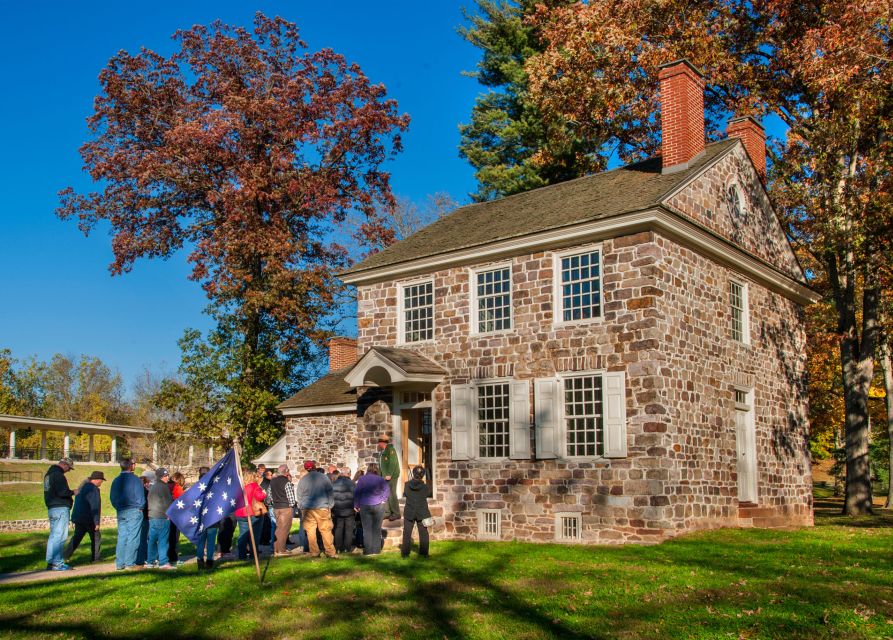
Washington’s Headquarters is one of the most meaningful stops because it connects the commander directly to the encampment. The building remains open to the public and sits along the Schuylkill River.
Here, the story shifts from general camp conditions to decisions made at the top. Washington had to manage military discipline, supply problems, relations with officers, and the difficult task of keeping the army together. Seeing the headquarters helps you understand that Valley Forge was not simply a place where troops waited out winter.
The setting beside the river adds to the visit. You are not looking at an isolated indoor display. You are seeing the headquarters in the same broad park environment that gives the tour much of its calm character.
This stop may appeal most to adults and history fans, but a good guide can connect it to the bigger question of leadership. Washington’s work here involved more than inspiring speeches. He had to build an effective army from people who were tired, poorly supplied, and under pressure.
General Wayne Statue and Philander Chase Knox Estate
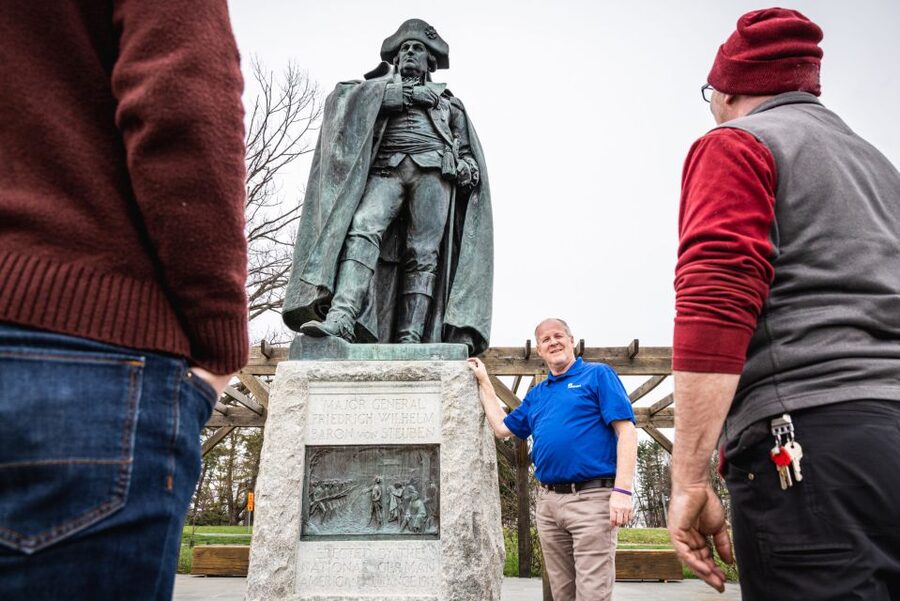
The General Wayne Statue brings another Revolutionary War figure into view. A guide can use this stop to explain how individual commanders fit into Washington’s larger effort. It also keeps the tour from becoming only a Washington biography.
The Philander Chase Knox Estate adds a later chapter to the park’s story. Valley Forge is not frozen entirely in the winter of 1777 to 1778. Its buildings and memorials also reflect the way later generations preserved, interpreted, and commemorated the site.
This variety is one of the tour’s strengths, though it can also feel like a lot of names in a short period. If you do not already know the major figures, keep asking for the simple connection: who was this person, what did they do, and why is this location here?
Guides such as James and Tom have been praised for explaining both the Revolution and the surrounding area in a clear way. That broader context helps when the park introduces names that are less familiar than Washington or Lafayette.
Varnum’s Quarters and the Commander in Chief’s Guard Huts
Varnum’s Quarters gives you another chance to think about how officers and soldiers occupied the encampment. The site helps separate the army into its various levels of command without losing sight of the people doing the daily work.
The Commander in Chief’s Guard Huts are especially useful for understanding the protection and organization surrounding Washington. These are not grand rooms or ceremonial spaces. They point to the routines required to protect a military headquarters and keep an army functioning.
For me, these smaller sites often carry more practical value than a famous monument. You can ask what the huts were for, who used them, and how their purpose differed from the soldiers’ cabins. Those questions turn a broad historical theme into something you can picture.
The tour also passes by the Muhlenberg Brigade and Artillery Park. Because these are pass-by locations, you should not expect the same amount of time as at the Visitor Center or headquarters. Still, they add useful geographic clues. You begin to understand that the encampment was a large, organized military community rather than a single cluster of huts.
What the 270-minute schedule feels like
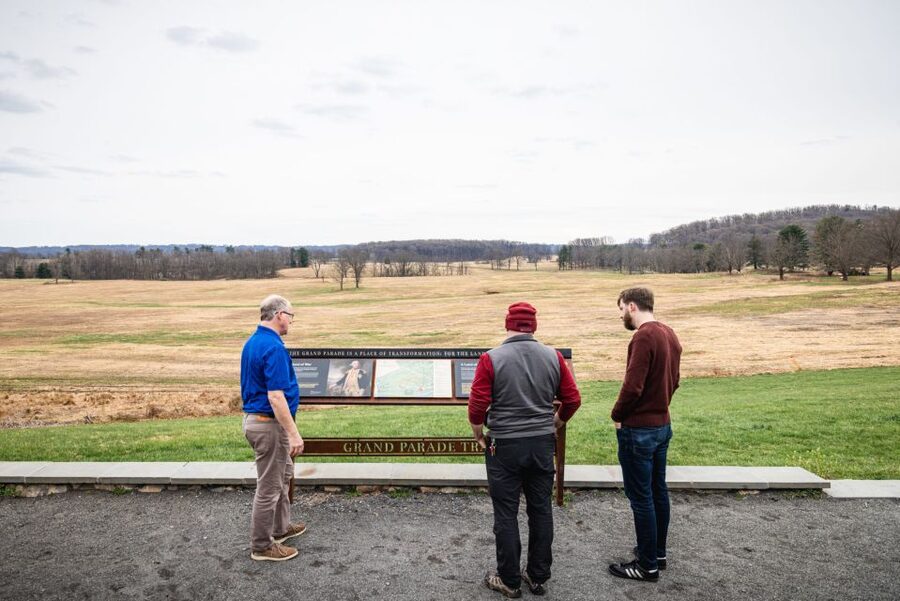
Four and a half hours is long enough for a serious introduction, yet short enough to fit into a Philadelphia itinerary. The timing includes the drive in both directions, guided stops, and time to look around. You will spend part of the day seated in the vehicle and part outside at historic locations.
That balance makes the tour accessible to people who want more than a quick photo stop but do not want a full-day history program. It also means you need to accept a little structure. You cannot set your own pace at every site, and some locations receive only a pass-by.
The experience is listed as wheelchair accessible. Since the tour runs rain or shine, plan your clothing for the forecast and be ready for outdoor time. The park’s peaceful feel is part of the appeal, but weather can affect how comfortable you are at the monuments and reconstructed huts.
There is no food or drink included. It is sensible to eat before departure or plan around the tour, since the schedule is designed around transportation and sightseeing rather than a meal break.
Is the $115 price fair?
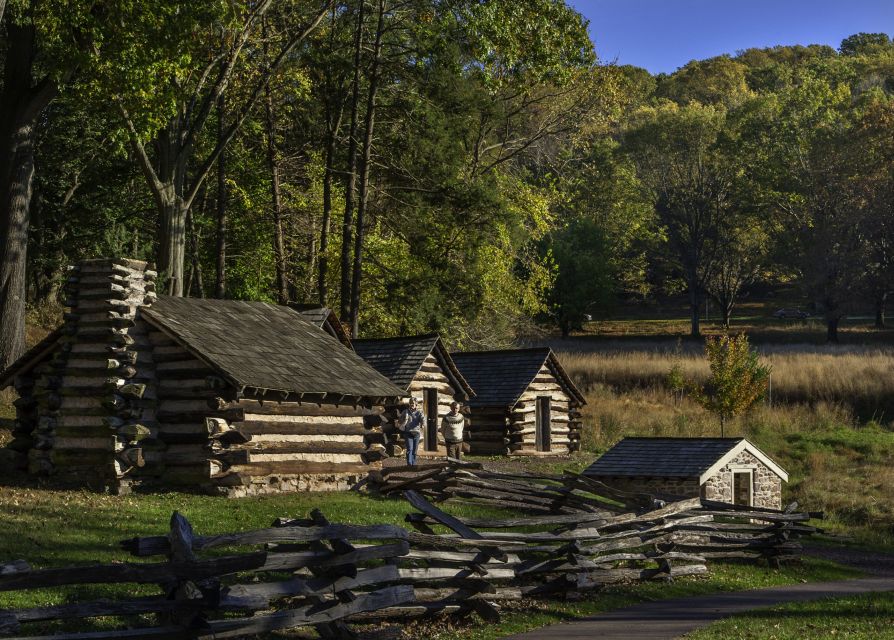
At $115 per person, this is not the cheapest way to see Valley Forge. You are paying for roundtrip transportation from Philadelphia, a live English-speaking guide, a small group, and a donation to Valley Forge National Historical Park.
The value is strongest if you do not have a car, want historical context, or prefer not to research the park before arriving. You also avoid the time and uncertainty of planning your own route between the Visitor Center, headquarters, arch, huts, chapel, and other sites.
Driving yourself could cost less if you are already renting a car and are happy using your own guidebook. But you would need to organize the visit, learn the background, and decide how the locations fit together. The guides are the main reason to pay the premium.
The consistently high score of 4.9 from 39 ratings and the transport rating of 93 percent suggest that the combination of guide and vehicle works well for most bookings. I would still choose this tour for the guide rather than for the vehicle alone. If you already know the Revolution in detail and want long, quiet walks, independent exploration may suit you better.
Who should book this Philadelphia day trip?
I would recommend it to first-time visitors to Philadelphia, families, couples, solo visitors, and anyone interested in the American Revolution who wants the setting explained clearly. It works particularly well if you have only a few days in the city and want to see Valley Forge without sacrificing an entire day.
Families should appreciate the smaller group and the ability to ask questions. A guide with a teaching background can adjust the level of detail, and the huts and artifacts give younger visitors something tangible to focus on.
History specialists may also enjoy the tour, especially if they get a guide such as Marty, Tom, Dale, James, or Owen who is happy to discuss lesser-known figures and military details. One guide even helped a visitor researching a book, which suggests that serious questions are welcome.
I would hesitate only if you dislike guided schedules, need extensive free time, or plan to explore every corner of the park on foot. The visit is selective by design. It gives you the main sites and a strong narrative, not a complete park survey.
Should you book the Valley Forge tour?
Book it if you want Valley Forge to make sense, not just appear on your camera roll. The combination of transportation, a small group, reconstructed huts, Washington’s Headquarters, and guide-led storytelling gives you a useful introduction to one of the Revolution’s most important encampments.
Skip it if you already have transportation, know the story well, and prefer to spend hours setting your own route. For most people coming from central Philadelphia, though, $115 is a reasonable price for a well-organized half-day outside the city, especially when a strong guide turns the park’s quiet spaces into a human story.
FAQ
Where does the Valley Forge tour meet?
Meet at the southwest corner of 12th and Arch Streets in Philadelphia. Look for the WeVenture Tours sign.
How long does the tour last?
The tour lasts 270 minutes, or four and a half hours, including the journey from Philadelphia and the return trip.
Is transportation from Philadelphia included?
Yes. Roundtrip transportation from Philadelphia is included in the tour price.
What language is the tour conducted in?
The live tour guide speaks English, and the activity is offered in English.
Is the tour wheelchair accessible?
Yes, the activity is listed as wheelchair accessible.
Does the tour include food or drinks?
No. Food and drinks are not included.
Can I cancel the tour for a refund?
Yes. You can cancel up to 24 hours in advance for a full refund. The tour also offers a reserve-now, pay-later option.
Latest history tours reviewed in the USA
- Franklin: Ghost Tour in Historic Franklin★ 4.8 · 65 reviews
- Fort Worth: Stockyards History Tour Pub Crawl★ 4.8 · 39 reviews
- Downtown Flagstaff Haunted History Walking Tour★ 4.7 · 46 reviews
- New York City: Flatiron Food, History, and Architecture Tour★ 4.8 · 43 reviews
- Fairbanks: Gold Dredge 8 Historic Train Tour★ 4.7 · 219 reviews
- Fairbanks: Private Mush on the Historic Yukon Quest Trail★ 5.0 · 30 reviews
- Charleston:Evening Haunted History Horse-Drawn Carriage Tour★ 4.7 · 38 reviews
- Door County Historic Cottage Row & Strawberry Islands Cruise★ 4.2 · 24 reviews
Philadelphia History Tours, compared.
Revolution and the Founders: History Tour of Philadelphia
Read our review →
Philadelphia Old City Historic Walking Tour with 10+ Top Sites
Read our review →
2.5 Hour Philadelphia History Tour with Washington War Tent Show
Read our review →Browse the lists this tour appears in