

Review · ST AUGUSTINE
Walking History Tour of St. Augustine’s Historic District
St. Augustine’s story is much bigger than Spanish forts and colonial streets. This nearly two-mile walk links an old cemetery, Flagler’s grand hotel, a recreated civic plaza, the Castillo de San Marcos, and the city gate, giving you a useful timeline from the city’s founding through the early 1900s. Guide Kevin Rose is known for lively storytelling, humor, and a willingness to answer questions.
I like the way this tour connects Spanish, British, American, and Gilded Age St. Augustine instead of treating the city as one old Spanish chapter. I also like the small group limit of 15, which makes it easier to hear the guide and ask about a detail that catches your eye. The main caution is timing: although the tour is sold as 90 minutes, it often runs two hours or more.
Key points to know
- A broad historical timeline: The walk covers St. Augustine from its early founding through Flagler’s late-19th-century makeover and the early 1900s.
- Nearly two miles on foot: Wear comfortable shoes and bring water. This is an active stroll, not a quick loop around one plaza.
- Kevin Rose leads with stories and humor: He encourages questions and may offer suggestions for restaurants and other sights.
- The Castillo is viewed from outside: The tour explains the fort’s importance, but admission to the national monument is not included.
- Small-group format: The maximum is 15 people, a useful size for conversation and clear explanations.
- Good value for history lovers: At $25, the cost is modest, especially if your tour runs beyond the advertised 90 minutes.
A two-mile introduction to St. Augustine
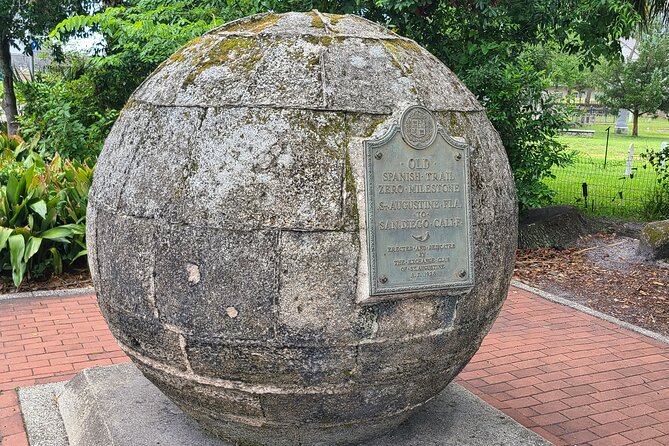
The best reason to take this walk early in your visit is orientation. You are not simply shown a few attractive buildings. You are given a framework for understanding why St. Augustine looks the way it does, and why its identity shifts from stop to stop.
The route begins at the St. Augustine and St. Johns County Visitor Information Center, at 10 S Castillo Drive. From there, it moves through the historic district on foot and returns to the same meeting point. That makes the logistics simple, especially if you are arriving by public transportation or want to leave your car parked.
The walk covers about 1.7 to two miles, depending on the exact route and how long the group spends at each stop. The advertised duration is about one hour and 30 minutes, but Kevin’s answers and stories often stretch the experience beyond two hours. I would not schedule a meal, timed attraction, or departure immediately afterward.
That longer running time can be a benefit if you enjoy history and questions. It can be a problem if you need the tour to end at a precise hour. Plan for the longer version, and you are less likely to feel rushed.
More History Walking Tours in the USA
- History and Hauntings of Salem Guided Walking Tour
★ 5.0 · 14,564 reviews - Boston: Freedom Trail History Small Group Walking Tour
★ 5.0 · 6,450 reviews - Historic Charleston Guided Sightseeing Walking Tour
★ 5.0 · 6,216 reviews
Tolomato Cemetery and the city’s older layers
The first stop is Tolomato Cemetery, described as the oldest cemetery in the city. The tour presents it as predating the arrival of the Spanish in 1562, which gives the site a useful reminder that St. Augustine’s story did not begin with one European arrival.
You spend about five minutes here, so this is an exterior look rather than a long cemetery visit. You also hear about the Love Tree, a local curiosity that comes with a playful warning to approach it at your own risk. That small detail helps set the tone: the tour takes its history seriously, but it is not a dry lecture.
The cemetery is valuable because it shifts your attention away from grand monuments. Burials, churches, and old walls show how a city remembers its people, not only its rulers and military events. If cemeteries are a major interest for you, five minutes will feel brief. Still, it works well as an opening stop before the route turns toward the city’s later architectural display.
Grace United Methodist Church and Flagler’s makeover
Grace United Methodist Church represents the Flagler era, the period when Henry Flagler helped reshape St. Augustine in the late 1800s. You spend roughly five minutes here, hearing how churches and other major buildings fit into his plan to remake the city as a fashionable winter destination.
This stop helps you avoid a common mistake: assuming St. Augustine’s best-known buildings all belong to the colonial period. Some of the city’s most striking structures reflect a later burst of money, tourism, and ambitious design.
You will not get a long interior visit here, and admission is not included. Think of Grace United Methodist Church as a concise architectural and historical marker on the route. Its main value is the transition it creates between the city’s earlier past and the grander, more theatrical age that followed.
Memorial Presbyterian Church and a difficult story
The next stop, Memorial Presbyterian Church, receives about 10 minutes. It is presented as one of the city’s most beautiful buildings, but the tour also explains the heartbreaking story connected with its creation.
That pairing matters. You are not only looking at decoration, proportion, or an impressive facade. You are hearing about the human loss and personal motives behind the building, which gives the architecture more weight.
The tour does not include admission tickets, so expect to view the church as part of the walking route rather than take a formal interior visit. Ten minutes is enough for an explanation and questions, though you may want to return later if the building catches your attention.
This is one place where Kevin’s storytelling style seems especially useful. The best city walks connect a structure to people, decisions, and consequences. They give you something to remember beyond the date a building was completed.
More Old Town and Historic Centre Walks in the USA
- Philadelphia Old City Historic Walking Tour with 10+ Top Sites
★ 5.0 · 2,020 reviews - Asheville Historic Downtown Guided Electric Bike Tour with Scenic Views
★ 5.0 · 1,234 reviews - Creepy Crawl Night-Time Haunted Pub Walking Tour of Savannah’s Historic District
★ 4.5 · 802 reviews - Savannah: Historic District Foodie Walking Tour
★ 4.8 · 613 reviews
Flagler College and the Ponce de Leon Hotel
Flagler College occupies the former Ponce de Leon hotel, a building that set a high bar for Gilded Age luxury in St. Augustine. You spend around five minutes here, learning how Henry Flagler’s project changed the city’s image and economy.
The stop gives you a sharp contrast with the Castillo. The fort reflects military power and long defense, while the Ponce de Leon hotel reflects display, tourism, wealth, and modern ambition. Seeing both within the same walk helps you understand why St. Augustine cannot be reduced to one period.
The tour is called Historic Tours of Flagler College in the stop description, but the supplied details do not promise a full interior tour or admission. Plan on an exterior explanation unless your booking information says otherwise. If you want to explore the college inside, treat that as a separate plan.
Five minutes may sound short for such a major building. That is true. The advantage is that the walk keeps moving and covers more of the city. The tradeoff is that architecture enthusiasts may want more time at Flagler College than this tour allows.
Plaza de la Constitución and two centuries of power
At Plaza de la Constitución, the guide discusses a civic center founded in 1599 by royal decree. The plaza includes the Government House, once the seat of power in Florida for nearly 250 years.
This is one of the stronger stops for understanding how authority worked in St. Augustine. The story is not limited to who founded the city. You hear about the governors who lived and worked here, what happened to them, and how the Government House was recreated in 1933 as part of a Works Progress Administration project.
The plaza stop lasts about 10 minutes and admission is free. It is also a good point to ask questions because the location ties together government, public space, and the city’s changing political eras.
I particularly like the fact that the tour addresses the 1933 recreation. Reconstructed or restored buildings can easily be mistaken for untouched survivors. Knowing when and why a structure was recreated gives you a more honest way to read the city.
The Castillo de San Marcos from the outside
The Castillo is the anchor of the route. A licensed fort guide explains the forts of St. Augustine, the construction of the Castillo, and its importance to the city and the nation. The fort portion lasts about 15 minutes and focuses on the exterior.
That distinction is important when you plan your day. Admission to the Castillo is not included, and this experience does not promise time inside the national monument. You will get context about the fort’s role, then you can decide if you want to buy admission and return for a separate visit.
The exterior discussion is still valuable. The Castillo is not just a photogenic stone structure. Its construction and endurance help explain why St. Augustine remained important, how defense shaped the city, and why the fort is central to the national story.
Fifteen minutes gives the guide enough time to cover the main points without turning the walking tour into a full fort visit. If military history is your main reason for coming, allow extra time afterward to explore the monument on your own.
Because this is the final major historical stop, its timing matters. A few people have needed to leave before the fort because the walk ran long. If you want the complete route, keep your schedule open for at least two hours, and preferably a little more.
The Old City Gate and the walk back
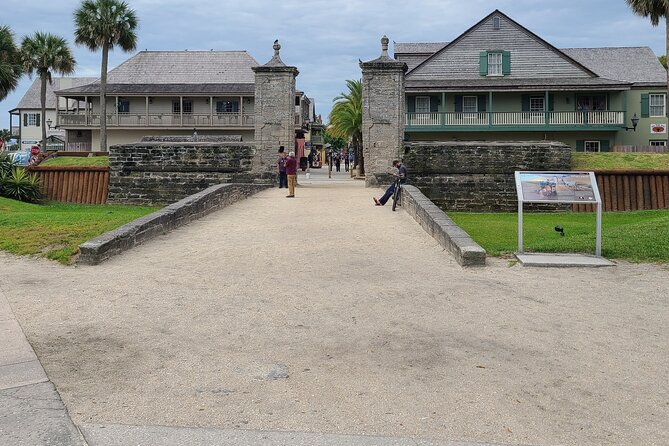
The route also includes the Old City Gate, described as the traditional entrance to St. Augustine since 1762. Here you hear about its construction and the effort that saved it from demolition.
This is a modest stop, about five minutes, but it completes the city’s physical story. A gate defines a boundary. It tells you where the town began, how people entered, and how easily old structures can be lost when a city modernizes.
The stop is listed through City Gate Spirits, though the historical focus is the gate itself. Admission is free. Afterward, the activity ends back at the Visitor Information Center, where you can continue exploring the district or return to your car and other plans.
Kevin Rose’s style and the small-group advantage
The guide matters a great deal on a history walk. Kevin Rose is repeatedly described as funny, welcoming, enthusiastic, and well informed about St. Augustine. He encourages questions, answers specific follow-ups, and has a talent for turning facts into stories.
That approach suits this route. St. Augustine has too many dates, names, buildings, and political changes for a simple memorized script to serve every group. A guide who can respond to questions makes the walk feel more personal and useful.
Kevin may also offer ideas for restaurants and other places to visit. That is helpful if you take the tour near the start of your stay, since you can use the advice for the rest of your time in town.
The group maximum is 15 people. That is small enough for a conversational feel, though the actual group size can vary. A smaller group also makes it easier to hear on busy streets and to stop for questions without holding up a large crowd.
The main style note is that Kevin can get carried away with the subject. If you want a tightly timed 90-minute tour, this may test your patience. If you enjoy asking questions and letting a good story run a little long, it is part of the appeal.
Is $25 a fair price?
At $25 per person, this is a reasonably priced introduction to the historic district. You get about two miles of guided walking, several major landmarks, a broad historical timeline, and a small-group setting.
The value is strongest if you want context before exploring on your own. A building can look impressive, but knowing whether it belongs to the colonial period, the Flagler era, or a later restoration changes how you see it. This tour gives you that basic map.
The price does not cover admission to the Castillo or other sites. That is not a flaw, but you should budget separately if you want to go inside the fort or revisit any building. The route is best viewed as a guided introduction, not an all-access ticket.
Since the walk often lasts longer than advertised, the cost can feel especially fair for someone who enjoys a generous amount of explanation. Just remember that extra time is not helpful if your day is packed with fixed reservations.
Who should take this walk?
I would choose this tour if you like history, architecture, local stories, and walking at a moderate pace. It suits couples, families, friends, and solo visitors who want to ask questions rather than listen to a distant voice from a motorized tour.
It is also a good fit if you want to learn about the Gilded Age as well as the Spanish period. That wider scope is one of the tour’s best features. You move from early burial grounds and military defense to churches, hotels, civic buildings, and the city’s later preservation story.
You should think twice if you have limited mobility, dislike walking close to two miles, or need a hard stop at 90 minutes. The activity calls for a moderate level of fitness. Comfortable shoes and bottled water are practical necessities, especially in warm weather.
The tour is offered in English, and service animals are allowed. It operates near public transportation, which makes the Visitor Information Center a useful starting point for visitors who do not want to drive.
Weather, cancellations, and planning advice
This is an outdoor walking activity, so weather can affect the schedule. If poor weather causes a cancellation, you are offered another date or a full refund. The tour also requires a minimum number of participants, with the same choice of another experience or a refund if that minimum is not met.
For your own cancellation, you receive a full refund when you cancel at least 24 hours before the start time. Cancellations or changes within 24 hours are not accepted for a refund.
I would check your email before leaving for St. Augustine, especially if rain is likely. The provider uses email and may also try the contact details supplied with the booking. Keeping your phone number and email current can prevent a missed weather notice.
Should you book the Walking History Tour?
Book it if you want a clear, entertaining introduction to St. Augustine and you have room in your schedule for a tour that may last two hours or longer. The combination of colonial history, the Flagler era, civic stories, and fort history gives you more range than a narrow Spanish-period walk.
At $25, it is a strong value for history-minded visitors, especially with a maximum of 15 people and a guide who welcomes questions. The biggest limitation is not quality but timing. The advertised 90 minutes is best treated as a minimum estimate.
Wear good shoes, bring water, and do not plan a tight appointment afterward. If you do that, Kevin Rose’s tour should give you a useful first map of St. Augustine, along with plenty of ideas for what to see next.
FAQ
Where does the Walking History Tour begin?
The tour begins at the St. Augustine and St. Johns County Visitor Information Center, 10 S Castillo Drive, St. Augustine, Florida 32084.
Where does the tour end?
The activity ends back at the same meeting point.
How long is the tour?
The stated duration is about one hour and 30 minutes. You should allow two hours or more because the tour often runs beyond the scheduled time.
How far do you walk?
The route covers nearly two miles, with the walk described as about 1.7 miles in one detailed description.
What language is the tour offered in?
The tour is offered in English.
Who guides the tour?
The listed guide associated with the experience is Kevin Rose. He leads the walk with historical explanations, stories, humor, and time for questions.
Is admission to the Castillo de San Marcos included?
No. The tour covers the exterior of the Castillo and explains its construction and importance, but admission is not included.
Is the Castillo visited inside?
The provided details describe a tour of the exterior of the Castillo. They do not promise an interior visit.
What should I bring?
Wear comfortable shoes, bring bottled water, and be prepared for nearly two miles of walking. A moderate level of physical fitness is recommended.
Can I cancel for a full refund?
Yes, if you cancel at least 24 hours before the experience begins. Cancellations or changes made within 24 hours are not accepted for a refund.
What happens if bad weather cancels the tour?
You are offered a different date or a full refund if the activity is canceled because of poor weather.
How large can the group be?
The maximum group size is 15 people.
Are service animals allowed?
Yes, service animals are allowed.
Is the tour near public transportation?
Yes. The meeting point is near public transportation.
Latest history tours reviewed in the USA
- Franklin: Ghost Tour in Historic Franklin★ 4.8 · 65 reviews
- Fort Worth: Stockyards History Tour Pub Crawl★ 4.8 · 39 reviews
- Downtown Flagstaff Haunted History Walking Tour★ 4.7 · 46 reviews
- New York City: Flatiron Food, History, and Architecture Tour★ 4.8 · 43 reviews
- Fairbanks: Gold Dredge 8 Historic Train Tour★ 4.7 · 219 reviews
- Fairbanks: Private Mush on the Historic Yukon Quest Trail★ 5.0 · 30 reviews
- Charleston:Evening Haunted History Horse-Drawn Carriage Tour★ 4.7 · 38 reviews
- Philadelphia: Valley Forge National Historical Park Tour★ 4.9 · 39 reviews
St Augustine History Tours, compared.

Private Guided Historic Electric Cart Tour of St. Augustine
Read our review →
Guided Historical Tour of St. Augustine Per Person
Read our review →
Ghost Tour of St. Augustine: The Original Haunted History Tour
Read our review →Browse the lists this tour appears in