
Review · SEOUL
Seoul: City Highlights and Historical Experience No Shopping
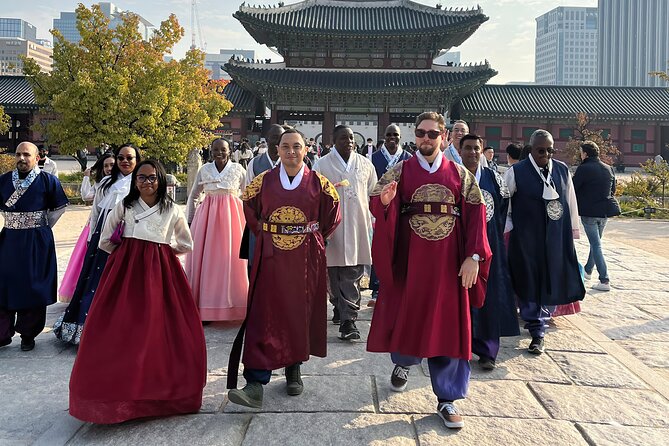
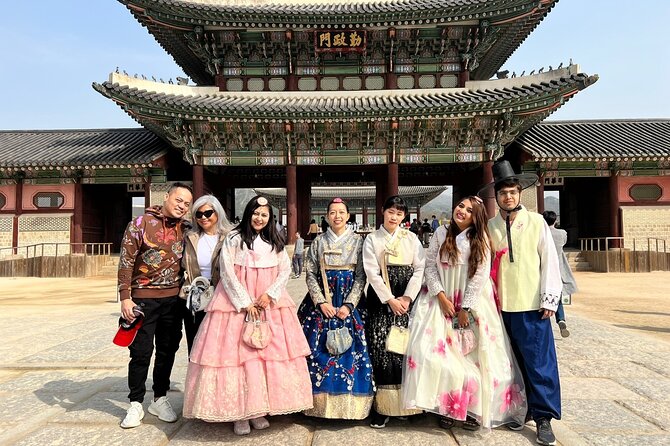
The most memorable part of this Seoul tour is the chance to walk through Gyeongbokgung Palace in hanbok, traditional Korean dress. You get the royal setting, grand gates, painted halls, and plenty of photo opportunities without spending a full day on a formal history tour.
I like the compact route and the finish in Insadong, where you can stop for lunch or continue exploring. I also like the small-group limit of 15, free admission, bottled water, and a local snack. The main caution is timing: hanbok fitting can cause long waits, and the walking pace may feel brisk if the group falls behind.
Key points to know before booking
- Hanbok changes the whole palace visit: Traditional clothing is optional, but it adds the most distinctive photo opportunities.
- The route covers several major sights: You visit Gyeongbokgung Palace, Bukchon Hanok Village, Baek In-je’s House, and the surrounding palace district.
- Expect a real walking tour: The itinerary lasts about four hours and requires moderate physical fitness.
- Guides often help with photos: Gina, Jade, Pearl, Sheen, Helena, and others are praised for guiding, photography, and practical Seoul tips.
- Hanbok fitting can affect the schedule: Some departures have involved nearly an hour of waiting before the palace portion began.
- Insadong is a useful ending point: The tour finishes near food, shops, and cultural sights, making it easy to continue your day.
Why this four-hour route works as a first look at Seoul
This tour gives you a quick introduction to Seoul’s old center, Jongno. In half a day, you move from the Joseon royal court to traditional homes and then finish near Insadong’s restaurants and cultural shops. It is a useful way to get your bearings early in a visit.
The route is especially suited to you if you want some history but do not want a full-day lecture or a large coach tour. The guide handles admissions, the route, and the basic logistics. You can focus on the buildings, photographs, and atmosphere.
At $49 per person, the price is reasonable if you choose the hanbok option and make use of the included entrance fees and guide. It is less compelling if your only goal is to see the palace quickly, since Gyeongbokgung and Bukchon can be visited independently. You are paying for direction, interpretation, outfit help, photos, and a planned route rather than transportation.
The tour has no private vehicle. You meet at Flash Coffee Gyeongbokgung branch on Sajik-ro and walk between the main sights. It ends in Insadong, not back at the starting point, so plan your day around that location.
More History Tours in the world:
- New York City: American Museum of Natural History Ticket
★ 4.5 · 15,447 reviews - History and Hauntings of Salem Guided Walking Tour
★ 5.0 · 14,564 reviews - Colosseum: Underground and Ancient Rome Tour
★ 4.7 · 12,691 reviews
Starting with hanbok near Gyeongbokgung
The first stop is a hanbok rental shop, listed as Star Hanbok. You spend about 30 minutes choosing and putting on the clothing if you select that option. The outfit is worn during the palace visit, which makes the setting feel more connected to Korea’s past and gives you photos that are far more distinctive than ordinary sightseeing snapshots.
The rental is described as premium and optional. Makeup service is not included. Hair and makeup have also caused confusion on some departures, so check exactly what your booking includes before arriving. If you do not want to dress up, confirm the no-hanbok arrangement in advance and ask how the group will be handled during the fitting period.
This is the part of the tour most likely to affect the schedule. A fitting that runs smoothly leaves plenty of time for the palace. A crowded shop or a group member who needs extra help can create a long wait. One departure reportedly began about an hour late because people were being fitted, and another ran far beyond four hours after delays at the rental shop and repeated waiting for slower members.
That does not make the hanbok option a bad idea. It means you should avoid scheduling a tight lunch reservation, museum visit, or airport transfer immediately afterward. Wear comfortable shoes, since traditional clothing does not remove the need to walk.
Gyeongbokgung Palace in royal dress
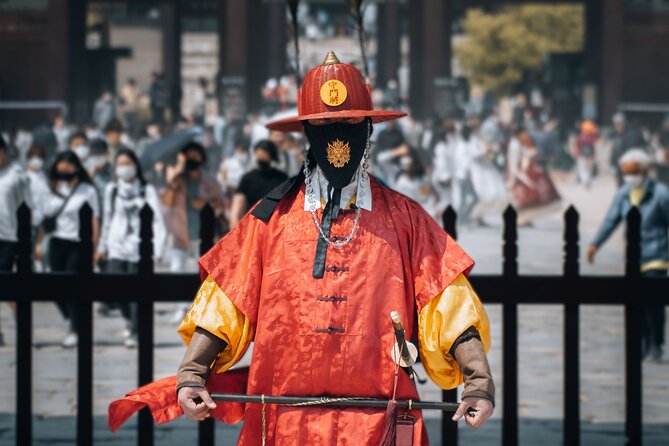
Gyeongbokgung is the centerpiece of the experience. The palace was the main royal complex of the Joseon Dynasty, and its courtyards, gates, painted wooden buildings, and open spaces give you a strong sense of Seoul’s royal past.
You spend about an hour and a half here. The guide explains the palace’s architecture and history, points out important areas, and helps the group move through the grounds. Several guides, including Gina, Jade, Sheen, and Pearl, have been praised for clear explanations and an ability to keep the tour moving.
The hanbok makes this stop more than a standard palace walk. You can pose beneath traditional roofs, near gates, and in the broad courtyards while wearing clothing inspired by the period. Guides often take photographs for the group, and Gina is particularly praised for finding good photo spots and helping people capture the moment.
The changing of the guard may also be part of the visit, depending on the timing. It has been a highlight for many people, but you should not treat it as guaranteed unless the departure schedule confirms it. Delays at the rental shop can also mean missing a ceremony.
The palace visit is not always a deep historical seminar. Some departures provide a strong explanation of Korean history, while others focus more on photos and movement through the grounds. If you want detailed architectural analysis or a long explanation of the Joseon court, a specialist palace tour may suit you better.
Weather matters here. The tour operates in rain or snow unless conditions make the route impossible. Hanbok can be uncomfortable in strong summer heat, and wet paths, wet shoes, and soaked clothing can make a rainy day difficult. The operator provides bottled water, but you should still dress for the forecast and bring rain protection.
The palace museum question
The tour description includes the National Palace Museum of Korea among the historical attractions, but the timed stop list focuses on the hanbok shop, Gyeongbokgung, Bukchon, and Baek In-je’s House. It does not assign a separate duration to the museum.
That distinction matters if the museum is a priority. Ask before booking whether your departure includes an actual museum visit or only the palace district. One detailed account described the museum portion as receiving little or no explanation, so you should not book this experience solely for museum interpretation.
The museum can be a useful addition to your own Seoul plans, especially if you want more context for royal objects, court life, and palace buildings. You may need to visit it separately if the walking route does not allow enough time.
Same old streets, another chapter:
- Lisbon: History, Stories and Lifestyle Walking Tour
★ 4.8 · 10,902 reviews - London Small Group Tour of Historical Pubs
★ 5.0 · 10,422 reviews - Prague: Oldtown, Medieval Underground & Dungeon History Tour
★ 4.3 · 10,277 reviews - Charleston’s Old South Carriage Historic Horse & Carriage Tour
★ 5.0 · 10,023 reviews
A snack break in Samcheong-dong
After the palace, the group heads toward Samcheong-dong and Bukchon. A small Korean-style snack is provided during a short break of about 10 minutes. The item changes with the season, with something cool in summer or warm in winter.
This is a modest feature, not a food tour. Think of it as a pause between walking sections rather than a meal. The snack gives you a taste of local food and a chance to rest, but you should still plan lunch after the tour.
The walk between sites is part of the experience. You see how the palace district shifts into streets lined with traditional homes, cafés, galleries, and small businesses. The route is more useful than a simple transfer because it shows the relationship between Seoul’s royal center and the older residential neighborhood nearby.
Bukchon Hanok Village and its quiet streets
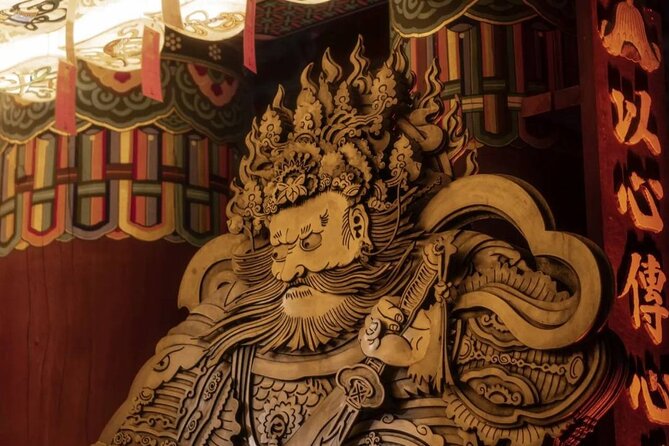
Bukchon Hanok Village is one of Seoul’s most recognizable old neighborhoods. Its hanok are traditional Korean homes with tiled roofs, wooden details, courtyards, and narrow lanes. Several streets have appeared in films and television dramas, so this is another strong location for photographs.
You spend about 50 minutes here. A photo guide helps the group find attractive viewpoints, and the main appeal is visual. The hilly streets and traditional houses create a very different setting from Gyeongbokgung’s formal courtyards.
Bukchon is also a living neighborhood, not an open-air museum. People live in these homes, and the group is asked to keep voices low. That is important. You can enjoy the architecture without treating residential doorways as photo props or blocking narrow lanes.
The walking can be demanding. One account notes that some members fell behind while the guide kept the group on schedule. If you have limited mobility, ask about the route before booking. The tour requires moderate fitness, and there is no private vehicle to shorten the walks.
You also need to accept that this is a quick introduction. Fifty minutes is enough for several streets and photographs, but not for a slow, detailed exploration of every corner of Bukchon. If you want to linger, return on your own after the tour.
Baek In-je’s House and modern hanok design
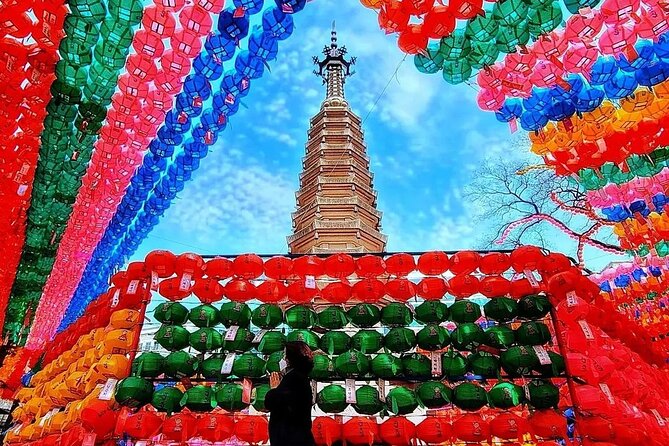
The final major stop is Baek In-je’s House in Gahoe-dong, within Bukchon. This hanok was built during the period of Japanese administration and shows a more modern form of traditional Korean house design.
You spend about 20 minutes here. The house gives you a change of scale after the broad palace grounds and crowded village lanes. Instead of seeing only street façades, you get a closer look at how a traditional home is arranged and adapted.
The short visit means you should expect an introduction rather than a full house study. Guides such as Gina have been praised for explaining this stop along with the palace and Bukchon. On other departures, the historical explanation has felt light, so your experience may depend heavily on the individual guide and the time available.
Finishing in Insadong
The route ends in Insadong, a convenient place to continue your day. The area is known for cultural shops, food, and traditional-themed streets. You can stop for lunch, browse on your own, or use the location as a base for more sightseeing.
Ending here is one of the tour’s practical strengths. You are not returned to the starting point, but Insadong gives you plenty of ways to continue. If you have a restaurant booking elsewhere, allow extra time for the final walk and any delays earlier in the route.
The tour is marketed as no-shopping. That makes it a better fit if you want a cultural sightseeing route rather than a trip built around retail stops. Insadong itself has shops, but the organized portion is focused on the palace district and historic neighborhoods.
The guide makes a real difference
Guide quality is important on this tour because the route moves quickly and the group has several stops. Gina receives especially strong praise for her history explanations, photos, local suggestions, and ability to keep people together. Jade is praised for patient communication and cultural background, while Pearl is described as warm, helpful, and well organized.
Sheen has been praised for explaining palace architecture, and Helena for looking after the group in difficult temperatures. Other named guides include Janice and Jane. The exact guide depends on your departure, so you cannot assume you will receive a particular person.
English ability and presentation style may vary. One person found the explanation difficult to follow, while another felt the tour concentrated too much on dressing up and photos. If history is your main reason for booking, ask focused questions as you go and make clear that you want context, not only pictures.
The group limit is 15, which is small enough for a guide to help with photographs and questions. It is not a private tour. People walk at different speeds, and delays can happen when someone needs assistance, stops for photos, or arranges a taxi.
Weather, walking, and timing
Four hours sounds short, but the route packs in a lot. You walk through palace grounds, neighborhood streets, and sloping lanes. Comfortable shoes matter more than stylish ones, especially if you choose hanbok.
Summer heat can be uncomfortable in traditional clothing. Winter can be cold, and rain makes both the clothing and the photography harder. The tour continues in ordinary bad weather, so check the forecast before you decide on the hanbok option.
Bring a phone with WhatsApp if possible. The operator sends detailed information and the guide’s contact one day before the tour through WhatsApp. If you do not use WhatsApp, the information goes by email, but communication with the guide may be harder.
The tour allows service animals and operates near public transportation. A mobile ticket is used, and confirmation arrives at booking. Free cancellation is available until 24 hours before the start time, but changes or cancellations inside that window are not accepted.
Who should book this Seoul tour
I would choose this experience if you want:
- A structured first morning in Seoul
- Traditional clothing and palace photographs
- A short introduction to Gyeongbokgung and Bukchon
- An English-speaking guide who can handle the route
- A small group rather than a large bus
- A convenient finish near Insadong food and culture
I would choose something else if you want a slow museum visit, detailed academic history, private transportation, or a guaranteed ceremony. Independent sightseeing may also be better if you dislike waiting for outfit changes or prefer to set your own pace.
Should you book it?
Book this tour if the hanbok experience is central to your Seoul plans and you want help combining it with Gyeongbokgung, Bukchon, and Baek In-je’s House. At $49, the included admissions, guide, snack, water, and four-hour route make it fair value, especially for a first visit.
Go in with realistic expectations. The strongest part is the blend of traditional dress, palace scenery, neighborhood streets, and guide-assisted photos. The weaker points are possible fitting delays, brisk walking, variable historical detail, and discomfort in poor weather.
For the best chance of a smooth outing, keep the rest of your day flexible, wear sensible shoes, confirm the hanbok arrangement, and tell the guide early that you want history as well as photographs.
FAQ
How long does the Seoul City Highlights tour last?
The tour lasts approximately four hours.
What sights are included?
The route includes Gyeongbokgung Palace, Bukchon Hanok Village, Baek In-je’s House, the surrounding Samcheong-dong area, and a hanbok rental stop. The tour description also refers to the National Palace Museum of Korea, but no separate museum duration is provided.
Is hanbok rental included?
Premium hanbok rental is listed as optional. If you select it, you change into traditional clothing before visiting Gyeongbokgung Palace. Makeup service is not included.
How large is the group?
The group has a maximum of 15 people.
Where does the tour end?
The tour ends in Insadong, in Seoul’s Jongno District. It does not return you to the starting point.
Can I cancel the tour?
You can cancel up to 24 hours before the experience start time for a full refund. Cancellations or changes made less than 24 hours before the start time are not accepted.
Latest history tours reviewed in the world
- From Athens: Ancient Olympia Full-Day Private Tour★ 4.8 · 22 reviews
- From Athens: Explore Ancient Corinth & Charming Nafplion★ 4.6 · 102 reviews
- From Athens: Explore Ancient Greece 4-Day Tour★ 4.7 · 73 reviews
- From Albufeira: Wine Tasting & Historic Silves Tour★ 4.9 · 421 reviews
- From Albufeira: Historical Algarve Region Tour★ 4.7 · 585 reviews
- From Alexandria: Full-Day Guided Tour of Historical Sights★ 4.5 · 54 reviews
- Freiburg: Exciting City Tour with sightseeing and history★ 4.3 · 103 reviews
- From Abu Dhabi: Grand Mosque, Royal Palace& Heritage Village★ 4.6 · 197 reviews
Seoul History Tours, compared.
Seoul: Evening Dark History, Folklore & Ghost Story Walking Tour
Read our review →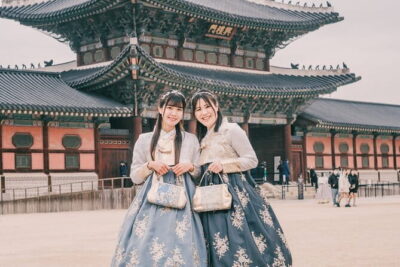
Hanbok Photoshoot and History Tour at Gyeongbokgung Palace
Read our review →
From Seoul: Dae Jang Geum Park Historic K-Drama Set Tour
Read our review →Browse the lists this tour appears in