
Review · PRAGUE
Prague: Communism History and Nuclear Bunker Guided Tour
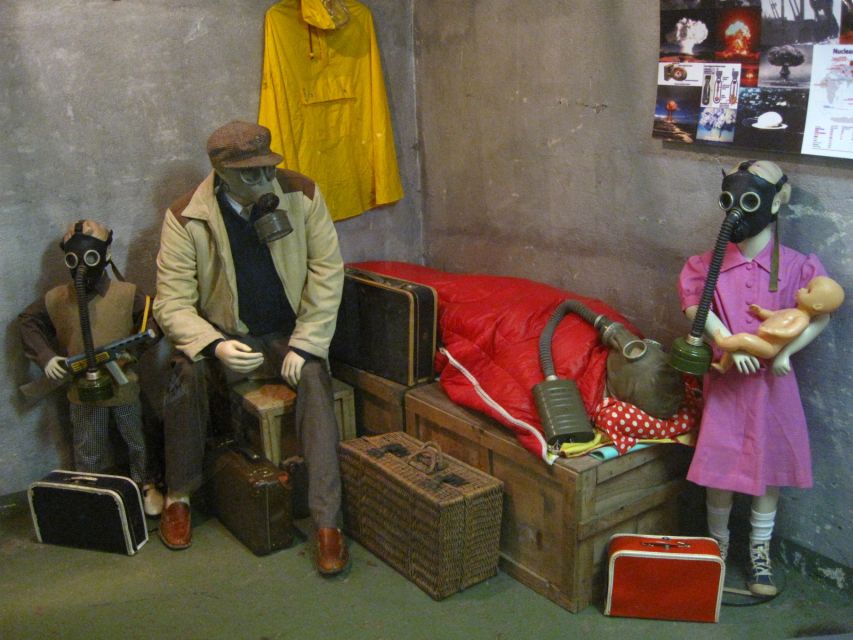
Prague’s 1950s nuclear bunker is the heart of this experience. Fifty feet underground, you’ll see the grim machinery of Cold War fear, genuine equipment, old photographs, and displays built around the threat of nuclear attack. The bunker was designed to hold up to 5,000 people, which gives the idea of civil defense a cold, concrete scale.
I like two things here. First, the tour connects big political events with ordinary life in Czechoslovakia, instead of treating communism as a list of dates. Second, guides such as Stan, Pavel, and Ladislav bring personal memories and humor to difficult material. The main drawback is practical: this is a serious walking tour with stairs, tram travel, and tight underground spaces, so it is not suitable for wheelchair users, strollers, people with mobility limits, or anyone with claustrophobia.
Key points before you book
- A real 1950s bunker: Go 50 feet underground into a facility planned for as many as 5,000 people.
- Personal stories matter: Guides may discuss growing up under communism, the fall of the regime, and the effect on ordinary Czech families.
- The city walk sets the scene: You’ll visit the Velvet Revolution Memorial, Národní Street, Wenceslas Square, and other central locations.
- A short tram ride is included: Public transport takes you from the center to the bunker and back.
- The museum adds physical evidence: Expect Cold War exhibits, photographs, equipment, and a gasmask workshop.
- Plan for stairs and dust: Wear comfortable shoes, and consider a face mask if you are sensitive to dust.
Why the bunker makes Prague’s Cold War past feel real
Prague has no shortage of grand churches, Gothic towers, and elegant squares. This tour takes you into a more uncomfortable part of the city’s past: the years when political loyalty could affect your education, work, travel, and freedom.
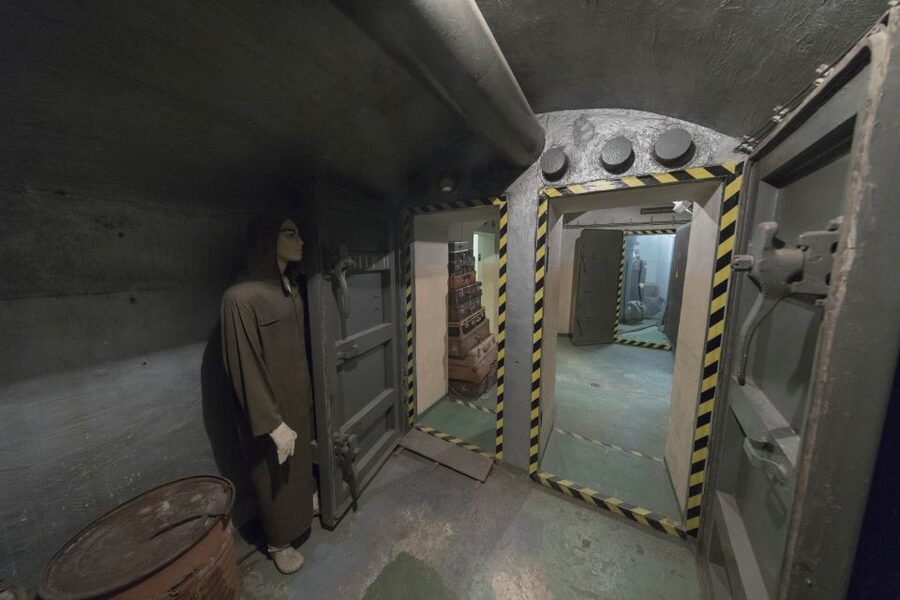
The bunker gives that past a physical shape. A lecture about nuclear anxiety can feel abstract. Standing underground among Cold War equipment, old displays, and heavy protective systems is different. You begin to understand how much planning went into the idea that ordinary people might need shelter from a nuclear strike.
The facility was built in the 1950s and designed to accommodate up to 5,000 people. That number is worth keeping in mind as you move through it. This was not a private hideout for a few officials. It was planned as a civilian refuge, built around the terrifying assumption that a nuclear attack was possible.
The museum section includes Cold War exhibitions, original or period equipment, photographs, and a gasmask workshop. The gasmask activity adds something hands-on to a subject that can otherwise feel distant. You are not simply looking at dates behind glass. You get a clearer sense of the drills, protective equipment, and fear that shaped daily life.
The displays are not polished like a major national museum. One visitor found that some of the exhibits looked tired and needed maintenance. That is fair criticism. The worn condition may fit the subject, but it also means you should come for the setting, artifacts, and guide rather than a high-tech museum presentation.
More Cold War and Communism Tours in the world:
- Prague Communism History and Nuclear Bunker Tour
★ 5.0 · 1,742 reviews - Bucharest: Communism and History Guided City Walking Tour
★ 4.9 · 918 reviews - Berlin: Cold War & Berlin Wall History Guided Bike Tour
★ 4.8 · 422 reviews
The opening walk through central Prague
The experience begins with a short guided walk in central Prague. The exact meeting point depends on the option you book, so check your confirmation carefully. There are no toilets at the starting point, and hotel pickup is not included.
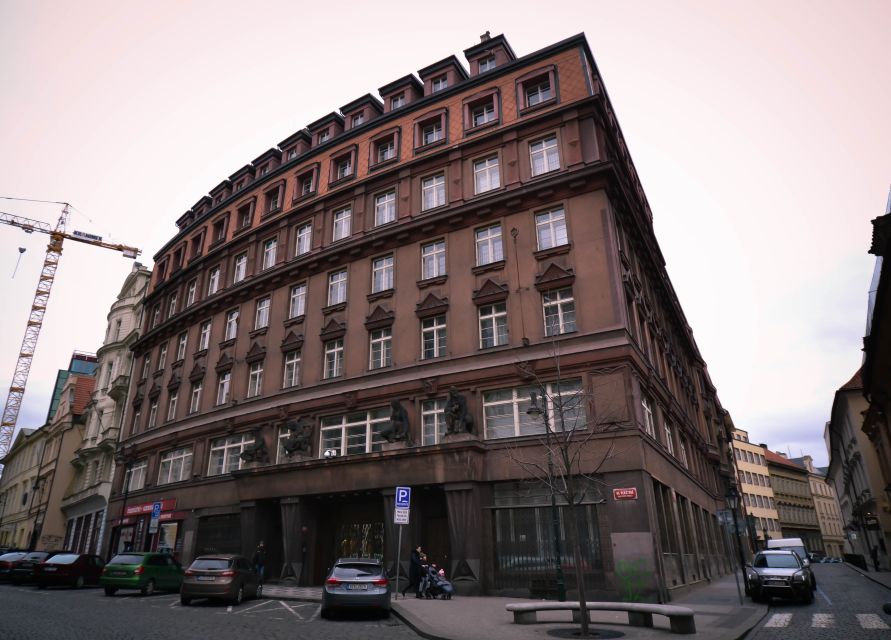
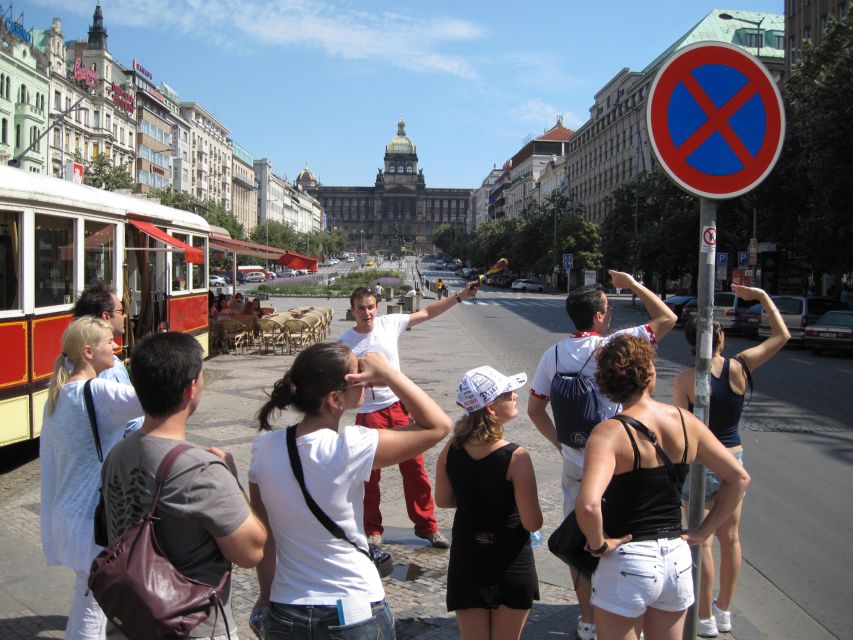
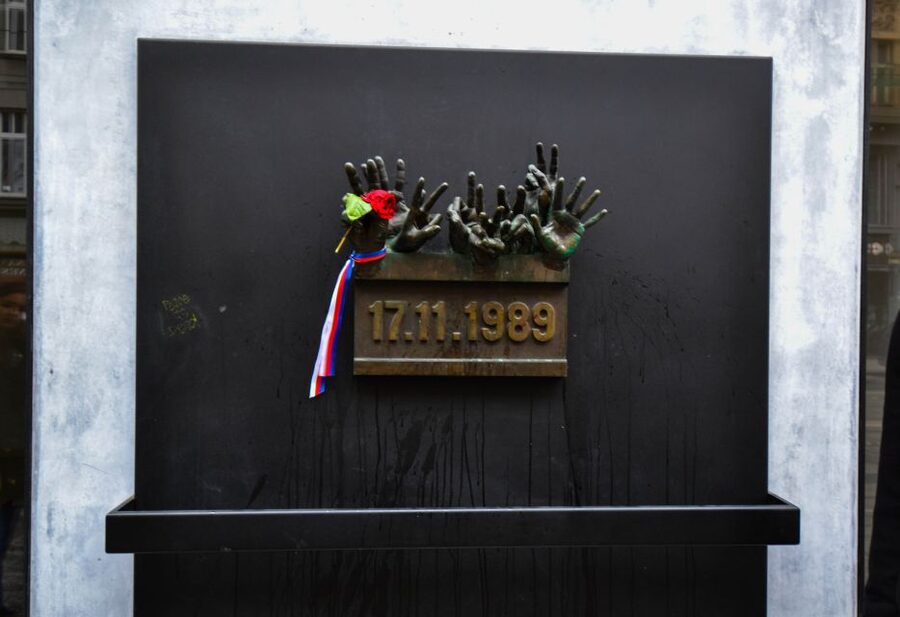
The early stops help connect the bunker to the city above it. You’ll visit the Velvet Revolution Memorial, spend time around Národní Street at number 110, and walk through Wenceslas Square. These places are important because the story is not only about military strategy or Soviet politics. It is also about public protest, state control, and the eventual collapse of communist rule.
The Velvet Revolution Memorial is especially useful as a starting point. The events of 1989 can seem tidy in hindsight: people protested, the government fell, and a new period began. A good guide slows that story down and explains how pressure built, how people lived with uncertainty, and why public courage mattered.
At Národní Street and Wenceslas Square, the tour places political change on ordinary city streets. These are not remote historical sites. They are part of modern Prague, filled with shops, offices, trams, and daily routines. That contrast helps you see how quickly a place can move from fear and confrontation back to normal life.
The walk also brings in darker subjects, including the former communist secret police, spies, political prisoners, dissidents, and refugees who tried to escape across the Cold War divide. These stories broaden the tour beyond a simple account of government policy. You hear how surveillance and suspicion affected real people.
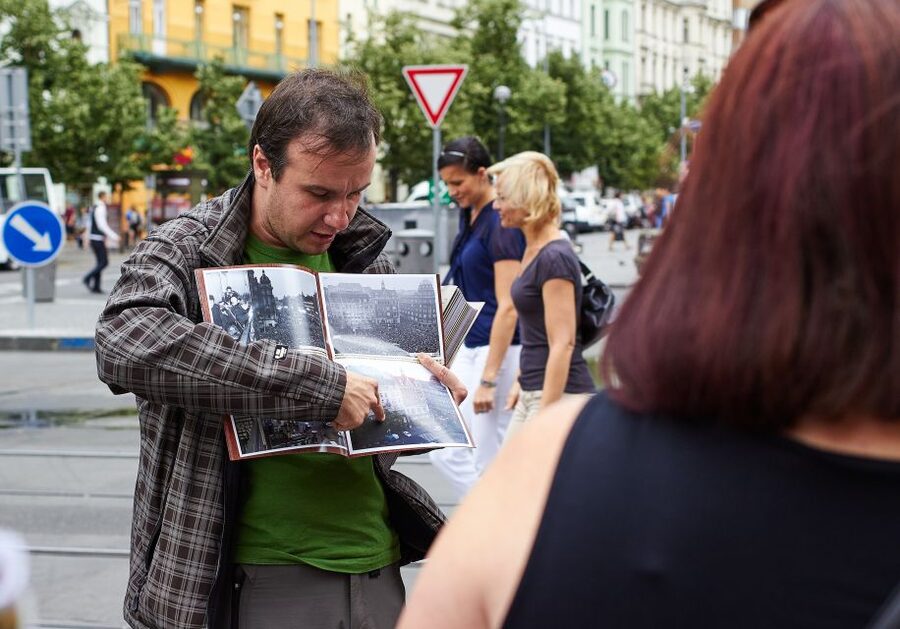
Your guide makes a big difference during this section. Guides such as Pavel have been praised for keeping groups together in busy areas and explaining locations in clear English. Ladislav, who lived through the communist era, has brought an eyewitness perspective to the period. Stan has also been noted for combining serious material with a lighter touch.
The humor is useful when handled well. This is grim material, and two and a half hours of unbroken solemnity would be hard to absorb. The better guides use humor to keep you engaged without making light of imprisonment, fear, or political violence.
A tram ride to the underground world
After the central walk, you take public transport to the bunker. The transfer is part of the experience, not just a way to fill a gap between sights. You leave the historic center and get a brief look at another side of Prague before entering the underground museum.
Allow around ten minutes for the transfer in each direction, though the full tour can vary by about ten to fifteen minutes depending on group size. The guide helps organize the group, but you still need to stay alert at tram stops and keep up with the walking pace.
The tram ride also gives the tour a useful rhythm. You start with public squares and political events, move through present-day Prague, and then enter a structure built for a possible future catastrophe. That shift from open streets to an underground shelter is one of the strongest parts of the experience.
This is not a private vehicle tour. Public transportation to and from the bunker is included, so you should be comfortable boarding a tram and walking between stops. Wear normal walking shoes rather than anything delicate or slippery.
Inside the bunker, 70 minutes below Prague
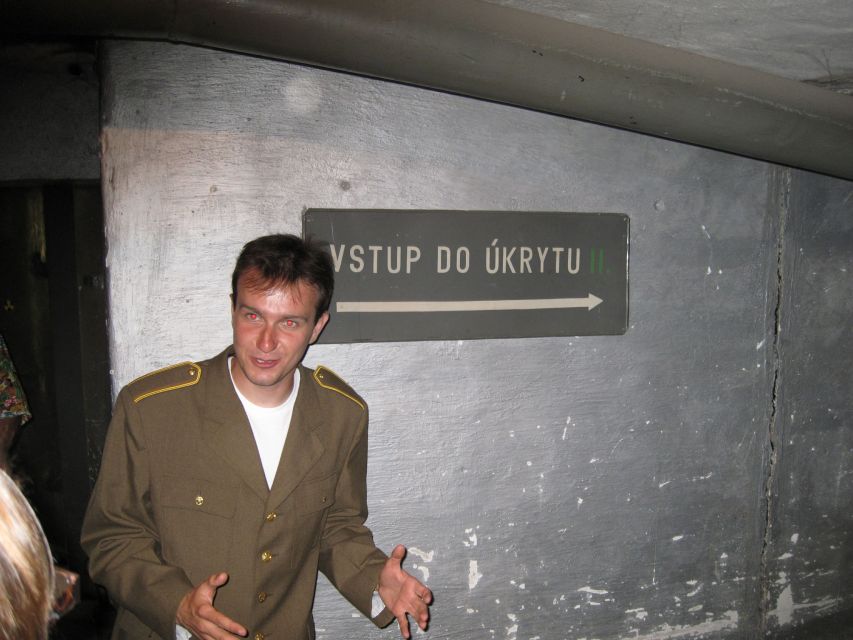
The bunker visit lasts about 70 minutes and is the longest single section of the tour. Here, the guide explains the facility, its intended use, and the Cold War setting that produced it.
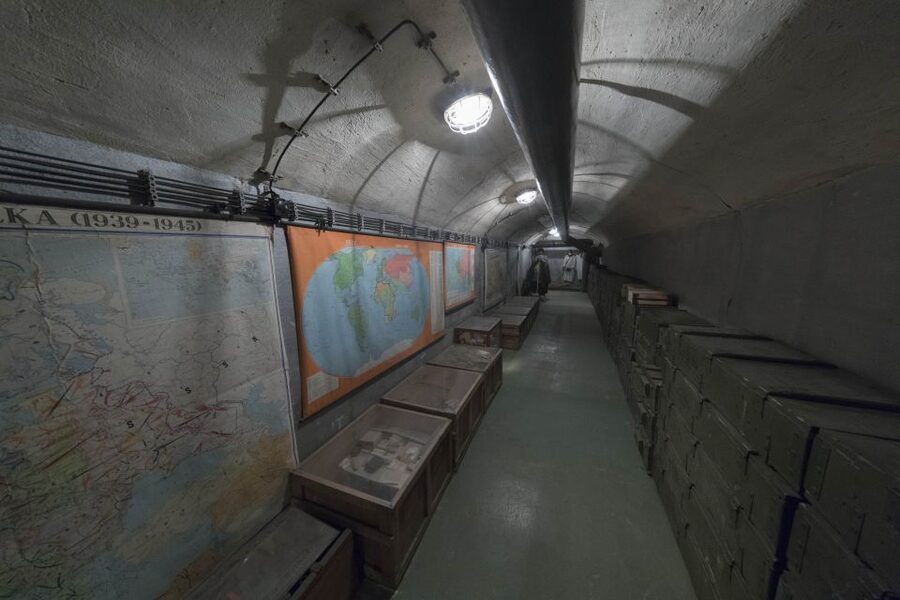
The bunker’s scale is the first thing to notice. A shelter for 5,000 people is far more than a basement with a few emergency supplies. It reflects the machinery of civil defense: rooms, equipment, protective measures, and plans for a disaster that leaders hoped to prevent but still prepared for.
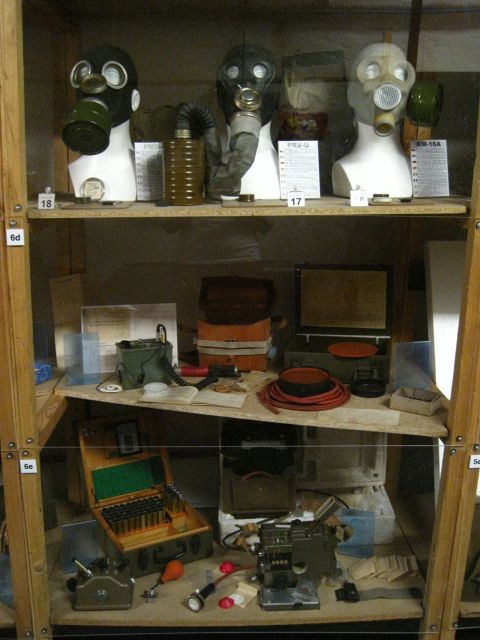
You’ll see Cold War displays and genuine equipment, along with photographs and artifacts linked to the era. The exhibits include material connected to nuclear fear, military preparation, and civilian protection. The guide adds context, explaining how these objects fit into everyday life and political culture.
One useful feature is the gasmask workshop. Gasmasks are instantly recognizable as Cold War symbols, but the workshop helps explain their practical role in emergency planning. It is also one of the more memorable parts for younger visitors who are old enough to handle the serious subject matter.
Photography is allowed, but video recording requires extra permission. Keep your camera ready for still images, but do not assume you can film the entire tour.
The underground setting is atmospheric, but it is not comfortable for everyone. The bunker can feel enclosed, and one visitor with respiratory allergies advised wearing a face mask because of dust. The structure was described as acceptable rather than dirty, but sensitive visitors should take the warning seriously.
There are stairs and walking throughout the experience. The tour is not suitable for wheelchair users, baby strollers, people with walking disabilities, or people with other mobility issues. It is also not recommended for anyone with claustrophobia or heart problems. Infants and very young children under school age are not allowed.
The bunker can be particularly effective if you have already visited Prague’s Museum of Communism. That museum provides a more conventional exhibition setting, while this tour takes you into the kind of place that was designed for the worst possible day. The two experiences would complement each other, but this tour gives you the stronger physical sense of Cold War anxiety.
More Guided Tours in the world:
- History and Hauntings of Salem Guided Walking Tour
★ 5.0 · 14,564 reviews - Edinburgh: Edinburgh Castle Guided History Tour with Tickets
★ 4.8 · 9,933 reviews - Historic Charleston Guided Sightseeing Walking Tour
★ 5.0 · 6,216 reviews - Rome: Colosseum with Arena, Roman Forum and Palatine Guided Tour
★ 4.0 · 5,598 reviews
The human story behind communist rule
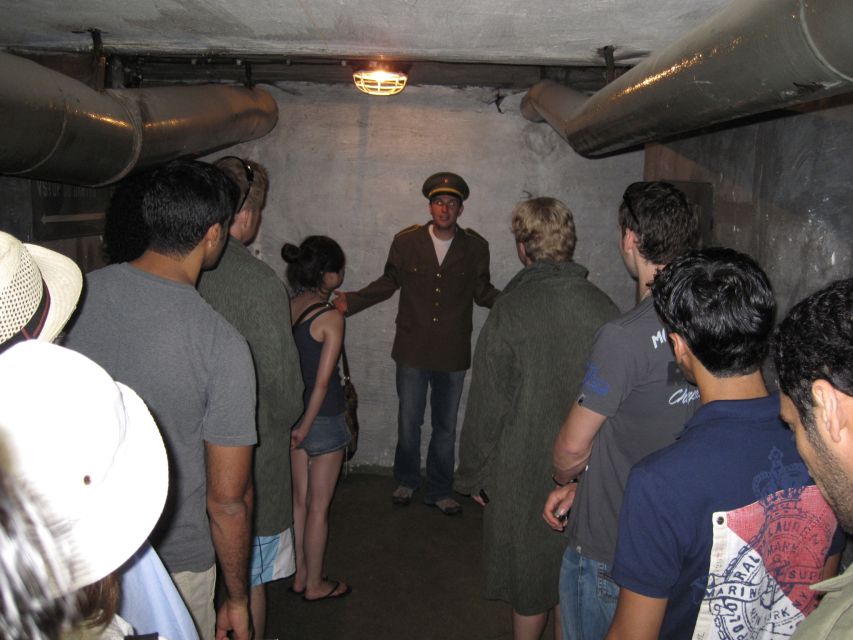
The most valuable part of the tour is the link between political history and personal experience. You are not only told that Czechoslovakia was under communist rule. You are shown what that could mean for a student, a worker, a family, or someone who wanted to leave the country.
A guide who grew up in Prague during the period can explain details that are difficult to get from a textbook. Several guides, including Ladislav and other members of the team, have personal memories of life under communism or of growing up during its final decades.
Those memories should not replace historical explanation, and the best tours use both. You need the wider setting: the postwar political order, Soviet influence, state security, censorship, and the events that led to the Velvet Revolution. You also need the human scale: what people feared, what they whispered about, and how they adapted.
The tour discusses spies, political prisoners, dissidents, refugees, and secret police activity. These subjects can be heavy, but they explain why public trust was damaged and why everyday caution became normal. The guide’s storytelling turns an unfamiliar political system into something easier to understand.
I especially value the way the tour handles ordinary life. You may know the basic facts of communism, but it is harder to picture how a system affected school, work, travel, speech, and family decisions. The personal stories help bridge that gap.
This is also why the guide’s style matters so much. A strong guide can make a difficult subject clear and keep the group involved. The team has been praised for good English, humor, direct answers, and a willingness to handle questions. The language choice is English or German, and you must be able to follow the selected language because translating during the tour is not allowed.
Time, price, and practical value
At $44 per person, this is a fair price if you want both a guided city walk and admission to a specialized museum. You are paying for about 150 minutes, live commentary, public transport to and from the bunker, and entry to the bunker exhibitions.
The value depends on what you want from Prague. If you only want famous architecture and scenic viewpoints, this is not the best use of an afternoon. If you want to understand the city’s 20th-century past, the combination is strong. You get central locations, transport beyond the historic core, an unusual underground site, and a guide who can explain the political background.
The experience is also more focused than a general city tour. Nearly every stop supports the same subject: communist rule, Cold War anxiety, resistance, and change. That focus makes the 150 minutes pass quickly, but it also means the tour may feel intense if you prefer a lighter sightseeing day.
The tour does not include food, drinks, hotel pickup, or drop-off. Bring what you need before starting, since there are no toilets at the meeting point. Online tickets can be bought up to 30 minutes before departure, but joining after the group has left is not guaranteed.
Free cancellation is available up to 24 hours before the tour for a full refund, and you can reserve now and pay later. Those policies are useful if your Prague schedule is still shifting, but the physical demands of the tour should be your first consideration.
Who should take this tour?
I would choose this tour if you enjoy modern European history, political stories, unusual museums, or guided walks that explain how a city changed. It is a good fit for adults and older school-age children who can handle serious subjects and a fair amount of walking.
You do not need to be a history specialist. The guide explains the setting from the ground up, and the stories make the subject accessible. The experience can be especially useful if you know little about Czechoslovakia under communist rule and want more than a quick museum visit.
I would not book it for a group looking for nightlife, easy sightseeing, or a relaxed afternoon. Bachelor and bachelorette parties, costumed groups, pets, smoking, alcohol, and drugs are not permitted. The tour requires respectful behavior because the subject includes oppression, imprisonment, and fear.
Be honest about your physical limits. You will walk through central Prague, use public transport, climb stairs, and spend time underground. The bunker is not suitable for people with claustrophobia, heart issues, mobility impairments, or a strong sensitivity to dust.
Should you book the Prague bunker tour?
Book it if you want to understand Prague through its recent past rather than only its beautiful old center. The bunker is the memorable anchor, but the guide’s personal stories are what give the visit its meaning.
I would especially recommend it with a guide such as Pavel, Stan, or Ladislav, whose clear delivery, humor, and firsthand perspective have made this tour effective for many different kinds of visitors. Just arrive in comfortable shoes, expect stairs and tram travel, and bring a face mask if dust bothers you.
Skip it if underground spaces make you anxious or if long walking tours are difficult. For everyone else, this is a focused, sobering, and useful way to see the political side of Prague.
FAQ
How long does the Prague Communism History and Nuclear Bunker Tour last?
The tour lasts about 150 minutes, or two and a half hours. The timing can vary by about 10 to 15 minutes depending on the group size.
What language is the tour offered in?
The live guided tour is available in English and German. You need to understand the language selected for your booking, and translating during the tour is not permitted.
Does the tour include transportation to the bunker?
Yes. Public transportation to and from the bunker is included in the price. The itinerary includes a tram transfer from central Prague.
What is included in the ticket price?
The price includes a live guide, public transportation to and from the bunker, and entry to the nuclear bunker museum and exhibitions.
Is the bunker suitable for wheelchair users or strollers?
No. The tour includes walking and stairs and is not suitable for wheelchair users, strollers, or people with mobility impairments.
Is the tour suitable for someone with claustrophobia?
No. The experience is not recommended for people with claustrophobia. It is also not suitable for people with heart issues or certain walking limitations.
Can I take photographs inside the bunker?
Yes, photography is allowed. Video recording requires extra permission.
Is hotel pickup included?
No. Hotel pickup and drop-off are not included. The meeting point can vary depending on the option booked, so check your booking details before setting out.
Latest history tours reviewed in the world
- From Athens: Ancient Olympia Full-Day Private Tour★ 4.8 · 22 reviews
- From Athens: Explore Ancient Corinth & Charming Nafplion★ 4.6 · 102 reviews
- From Athens: Explore Ancient Greece 4-Day Tour★ 4.7 · 73 reviews
- From Albufeira: Wine Tasting & Historic Silves Tour★ 4.9 · 421 reviews
- From Albufeira: Historical Algarve Region Tour★ 4.7 · 585 reviews
- From Alexandria: Full-Day Guided Tour of Historical Sights★ 4.5 · 54 reviews
- Franklin: Ghost Tour in Historic Franklin★ 4.8 · 65 reviews
- Freiburg: Exciting City Tour with sightseeing and history★ 4.3 · 103 reviews
Prague History Tours, compared.
Prague: Oldtown, Medieval Underground & Dungeon History Tour
Read our review →
Prague Old Town, Medieval Underground and Dungeon Historical Tour
Read our review →
Prague: Historic City Center Bus Tour with Top Sights
Read our review →
Prague Historic Pub Tour with Drinks Included
Read our review →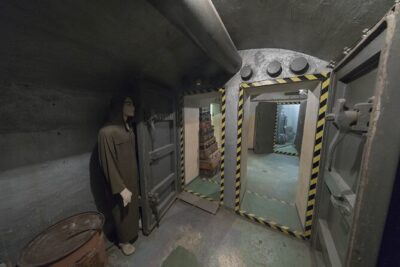
Prague Communism History and Nuclear Bunker Tour
Read our review →
Prague: Hop-on Hop-Off Historical Tram Ticket for Line 42
Read our review →
Prague: Top Sights and Historic Center Introduction Tour
Read our review →
Absinthe Tasting Prague: Historic Cellar Experience
Read our review →Browse the lists this tour appears in