
Review · TIRANA
“Tirana to Albania: Tracing a Historical Path Tour”
Tirana’s story is best read on foot, where an Ottoman mosque, a communist bunker, a former dictator’s residence, and a modern stadium can all appear within the same morning. This three-hour walk with Klejdi links those chapters in a clear route from the Orthodox Cathedral to the New Bazaar.
I like the way the tour balances famous sights with harder history, especially at Bunk’Art 2 and the Postbllok Memorial. I also like the practical route: you get your bearings early, then can return later to the places you want to explore more slowly.
The main consideration is pace. There are many stops, and several are photo stops or pass-by visits rather than long interior visits. At $37 per person, the price is fair for a live guide and a broad introduction, but you should not expect a full museum tour at every stop.
Key points at a glance
- A compact route through three eras: Ottoman Tirana, communist Albania, and the modern capital all appear within three hours.
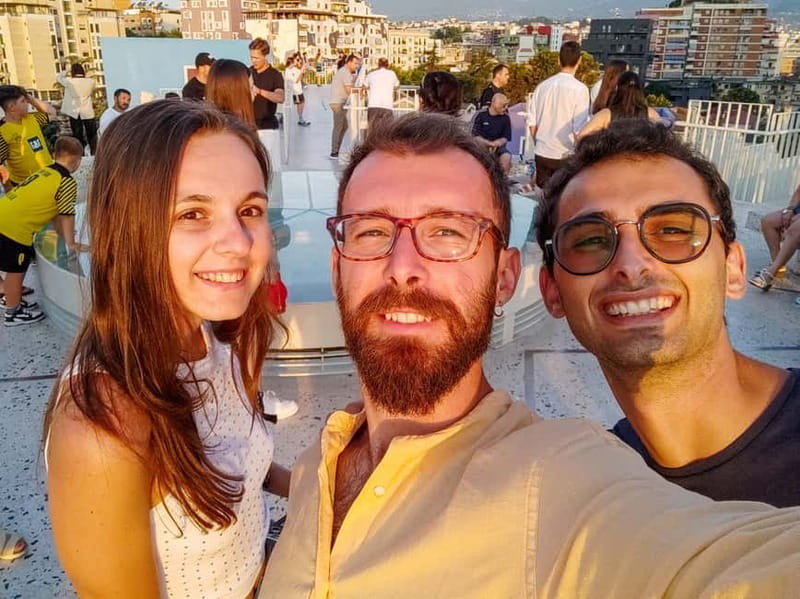
- Klejdi is the central strength: He guides in Albanian, English, French, or Italian and is praised for answering questions, adapting his explanations, and sometimes staying longer than planned.
- The hardest history is included: Bunk’Art 2, the former residence of Enver Hoxha, and the Postbllok Memorial give the walk real substance.
- Expect plenty of walking: Comfortable shoes and weather-appropriate clothing are essential.
- The finish is useful: Ending at the New Bazaar puts you near food, local shopping, and fresh produce.
- The tour suits first-time visitors: It gives you a city overview before you decide where to spend more time independently.
Starting at the Orthodox Cathedral
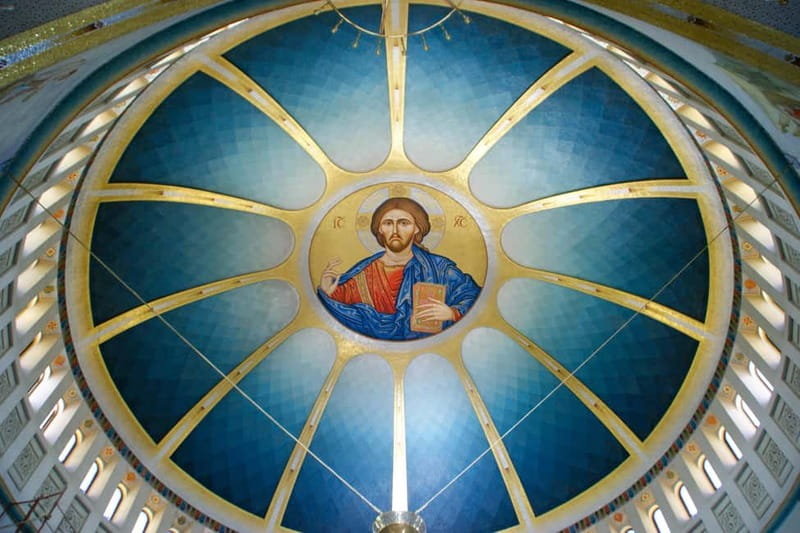
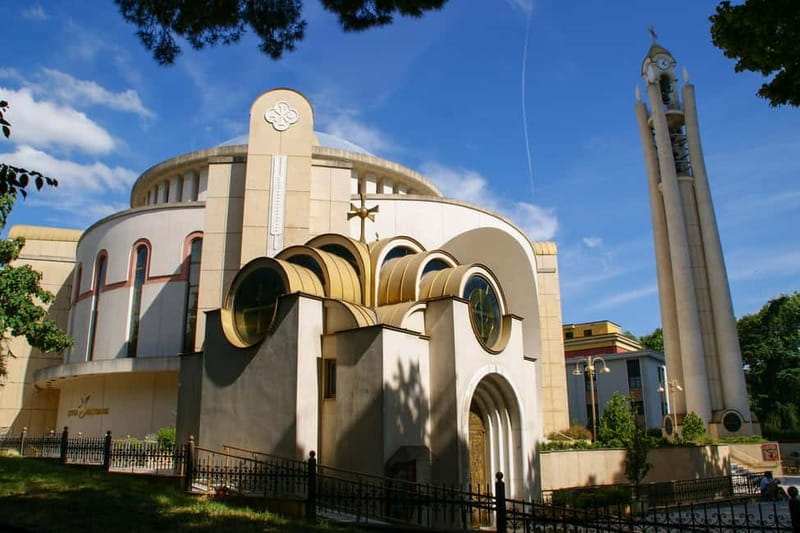
The meeting point is the entrance to Katedralja Ortodokse Ngjallja e Krishtit, also called the Resurrection of Christ Orthodox Cathedral. In poor weather, the meeting can take place inside. That is a sensible starting point because the cathedral itself provides an immediate introduction to Tirana’s religious and architectural mix.
You begin with a photo stop, a guided introduction, and some free time. The building is an important modern religious landmark, and its position near the center makes it easy to connect the city’s newer identity with the older civic core.
From here, you walk toward Skanderbeg Square. This opening section helps you get oriented without wasting time on transport. The whole experience is on foot, so you see how close many central sights actually are.
More History Tours in the world:
- New York City: American Museum of Natural History Ticket
★ 4.5 · 15,447 reviews - History and Hauntings of Salem Guided Walking Tour
★ 5.0 · 14,564 reviews - Colosseum: Underground and Ancient Rome Tour
★ 4.7 · 12,691 reviews
Reading Tirana from Skanderbeg Square
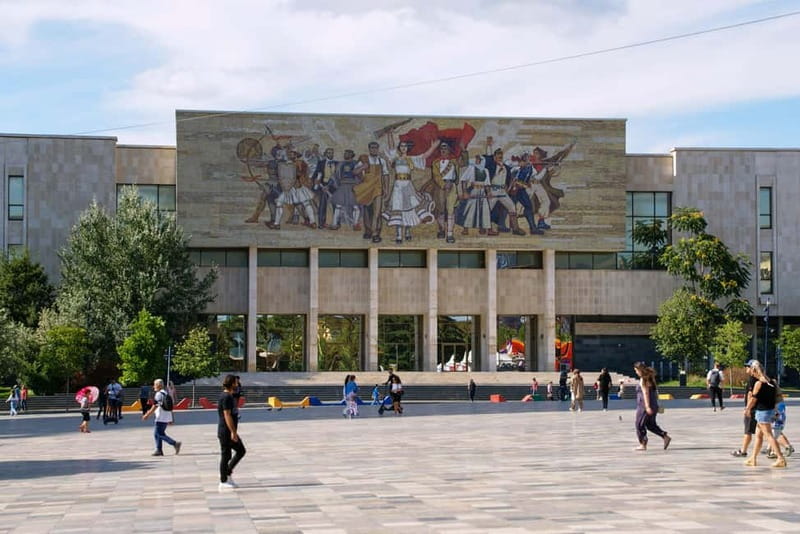
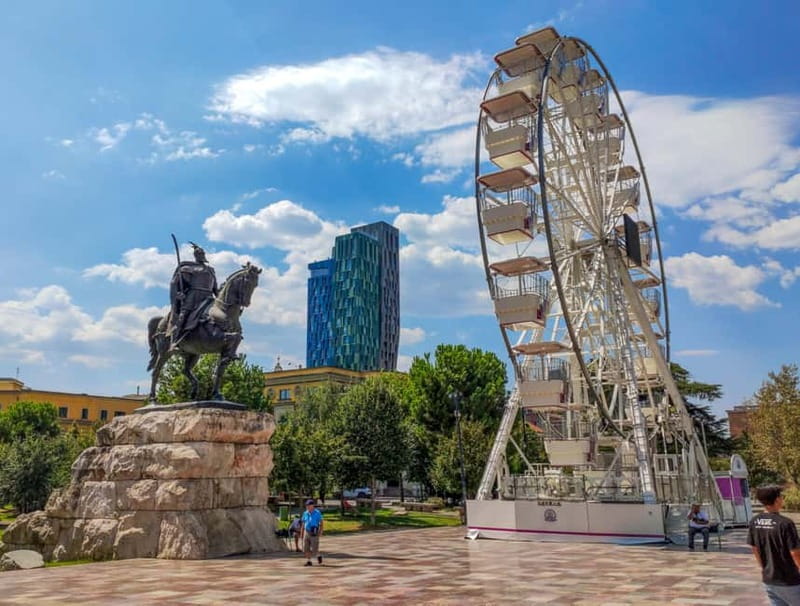
Skanderbeg Square is the city’s grand public stage. The equestrian statue of Skanderbeg, Albania’s national hero, gives the square its central symbol. Around it, you can see the National History Museum and the Palace of Culture, which houses cultural institutions and helps explain the square’s role as Tirana’s civic center.
Klejdi’s task here is not simply to name buildings. The value of a guide is in connecting the architecture to Albania’s changing political life. The square has been shaped by Ottoman influence, monarchy, Italian occupation, communist planning, and the post-communist period. You get a useful first lesson in how quickly Tirana’s public face has changed.
The National History Museum is included as a guided pass-by rather than a full museum visit. If you want to study Albania’s ancient, medieval, and modern collections, save that for another visit. The same is true of the Palace of Culture. The tour gives you context and a look from outside, not enough time for a detailed interior exploration.
Et’hem Bej Mosque and the Clock Tower
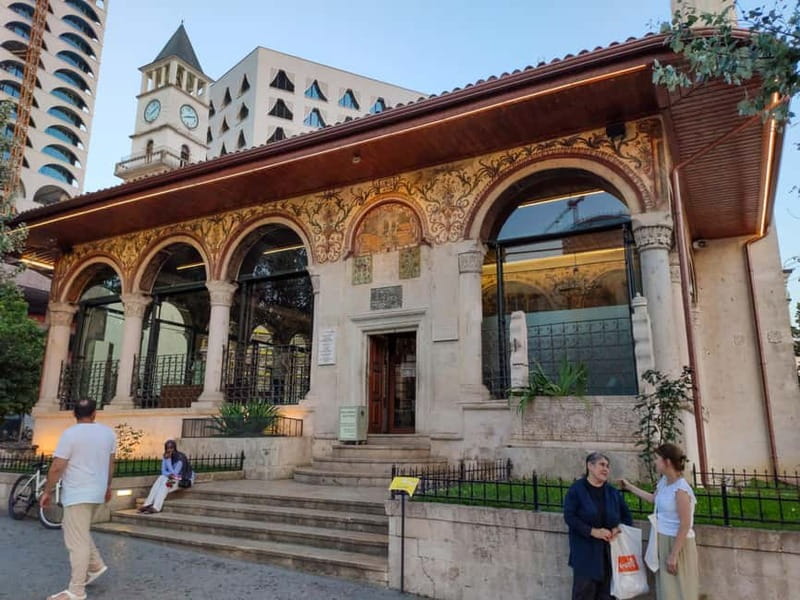
The Et’hem Bej Mosque is one of the most appealing stops on the route. Its Ottoman design and detailed frescoes offer a quieter contrast to the open square. The tour includes a visit, guided explanation, photo time, and free time, although the exact amount of time available will depend on the group and the day’s pace.
The mosque is especially useful for understanding that Tirana’s identity is not only communist and modern. Religious buildings survived periods when worship was restricted, and this small mosque remains closely tied to the city center.
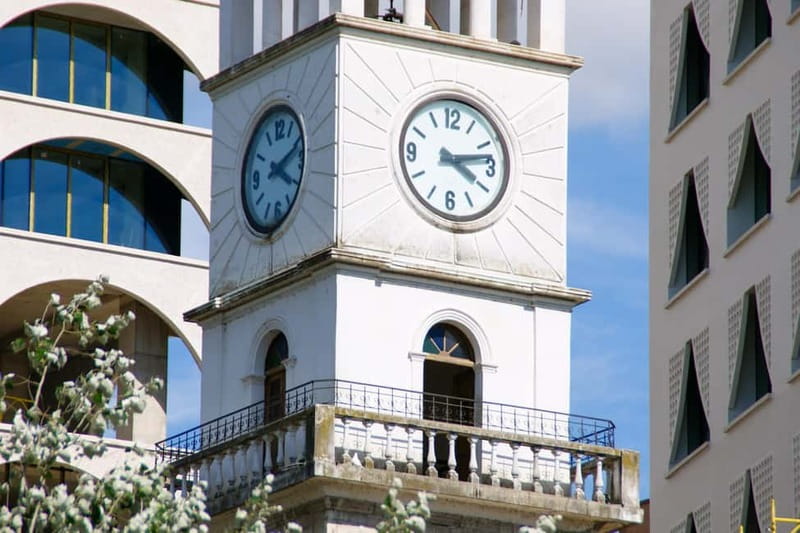
Beside it, the Clock Tower gives you one of Tirana’s recognizable visual markers. The description includes a climb for city views, but the detailed stop list presents it mainly as a photo and walk-by stop. Ask Klejdi at the start whether climbing is part of your particular departure. That small check matters if the tower view is a priority.
Bunk’Art 2 and Tirana’s communist past
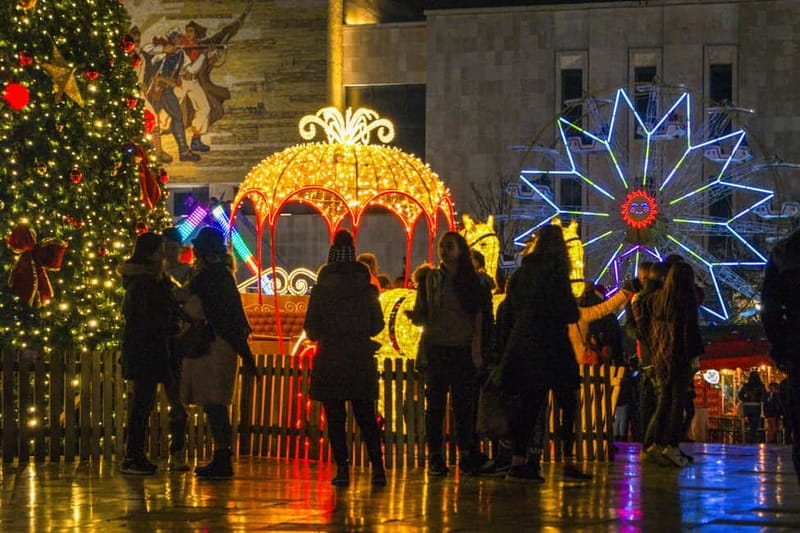
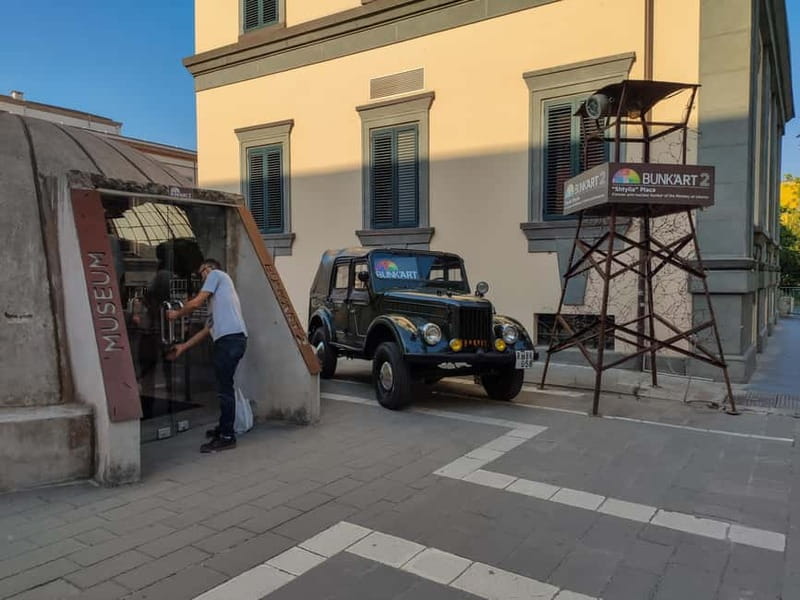
Bunk’Art 2 introduces the most serious part of the walk. Located in a former bunker, the museum examines political repression, secret police operations, life under communist rule, and the experiences of ordinary people during the dictatorship.
This is not a decorative stop. It gives the city’s monuments and wide avenues a more difficult meaning. Albania’s communist period shaped daily life, public speech, religion, travel, and political power. A guided explanation helps you place the museum in the wider story rather than treating it as a collection of grim displays.
The tour includes a photo stop and guided walk at Bunk’Art 2. You should not assume the three-hour route allows enough time for a full museum visit. If the interior exhibits are your main reason for booking, confirm how much time is planned, or return separately.
Same old streets, another chapter:
- Lisbon: History, Stories and Lifestyle Walking Tour
★ 4.8 · 10,902 reviews - London Small Group Tour of Historical Pubs
★ 5.0 · 10,422 reviews - Prague: Oldtown, Medieval Underground & Dungeon History Tour
★ 4.3 · 10,277 reviews - Charleston’s Old South Carriage Historic Horse & Carriage Tour
★ 5.0 · 10,023 reviews
Pedonalja, Tirana Castle, and Saint Paul Cathedral
After Bunk’Art 2, the route continues through Pedonalja, the pedestrian zone. This section gives you a feel for central Tirana as a social space rather than only as a collection of monuments. Walking is easier here than on busy roads, and the route moves through several important points without needing a vehicle.
Tirana Castle is listed as a visit with time for photos and shopping. This is a useful contrast to the formal scale of Skanderbeg Square. The castle area now functions as a place for food, small shops, and local browsing, so you may find it more practical than historically grand.
The stop at Saint Paul Cathedral adds another religious landmark to the day. It includes a visit, guided explanation, and free time. Together, the Orthodox Cathedral at the start, the Et’hem Bej Mosque, and Saint Paul Cathedral show a city where several religious traditions appear within a compact central area.
The Pyramid and Albania’s changing public memory
The Pyramid of Tirana is one of the city’s most striking buildings. It was originally connected with Enver Hoxha, Albania’s long-serving communist leader, and its later life reflects the country’s effort to deal with that past while creating new public uses.
You get a break and photo time here. The pyramid works well as a stop because its shape is instantly recognizable, but its real interest is political. It is not just an unusual building. It raises questions about what a society keeps, changes, or reuses after a dictatorship.
Since the stop is mainly for sightseeing, do not expect a long architectural tour. Use Klejdi’s explanation to understand the building, then take a few minutes to look at how it fits into the surrounding city.
Blloku and Enver Hoxha’s former residence
Blloku offers one of Tirana’s sharpest changes in mood. During communism, it was reserved for the political elite. Today, it is known for bars, restaurants, boutiques, and cafés. The contrast is the point: a restricted district has become one of the city’s most social areas.
The tour includes a break here for breakfast at a stylish café. The cost of food and coffee is not included, so bring money for your own order. Albanian coffee and fresh pastries make sense at this stage, especially if you have started early.
You also pass Enver Hoxha’s former residence. The house itself is less important as a sightseeing object than as a reminder of the separation between the ruling class and much of the population. The tour provides a brief guided look rather than a full interior visit.
Klejdi’s style appears particularly suited to this part of the walk. He is described as warm, attentive, and willing to spend time on questions. That matters in Blloku because its present-day cafés can otherwise hide what the neighborhood once represented.
Postbllok Memorial and Mother Teresa Square

The Postbllok Memorial is a compact but forceful reminder of authoritarian rule. It reflects on political imprisonment and repression through physical objects and public symbols. You do not need a long stop for it to make an impression, especially after visiting or discussing Bunk’Art 2.
The route then heads to Mother Teresa Square, where you see the Polytechnic University and the Palace of Congresses. The architecture here reflects several periods, including fascist-era planning and later modernist design. It is a good place to notice how political systems leave their mark not only through statues and museums, but also through the shape of public spaces.
The stop includes photos, a visit, and a guided walk. It is another example of the tour’s broad coverage. You see a lot, but you will need a separate visit if you want to enter the university or Palace of Congresses in detail.
The stadium and Namazgah Mosque
Arena Kombëtare, also called Air Albania Stadium, is Tirana’s national stadium. It serves sports, concerts, and dining, giving this part of the route a very current feel. After so much discussion of past governments and old monuments, the stadium shows the capital presenting a newer public image.
Nearby, the Namazgah Mosque, or Grand Mosque of Tirana, is another major religious landmark. The tour includes a photo stop, visit, guided explanation, and walk. The description notes that it will be a major spiritual and cultural center once completed, so the exact appearance and access may depend on the date of your visit.
This portion is useful for comparing the city’s older religious buildings with a much larger modern project. It also reinforces a theme that runs through the walk: Tirana is still deciding how to express its identity.
Sulejman Pasha Square and the Kapllan Pasha Tomb
Sulejman Pasha Square connects the route to Tirana’s Ottoman heritage. The area is historically significant, and the tour includes a guided visit and walk.
Nearby, the Kapllan Pasha Tomb is one of the few remaining Ottoman structures in the city. It is not a huge monument, and that is part of its value. In a capital that has been repeatedly rebuilt, a surviving fragment can tell you more than a polished modern reconstruction.
This stop rewards attention. The tomb may not take long to see, but it helps explain why Tirana cannot be understood only through its communist buildings and new cafés.
Finishing at the New Bazaar
The tour ends at New Bazaar, or Pazari i Ri. This is a practical finish, not just a symbolic one. The market area offers fresh produce, local shopping, souvenirs, and traditional restaurants.
Lunch is not included, but the location gives you a natural place to eat after the walk. You can choose a traditional restaurant or continue browsing the market. Since the tour ends here rather than returning to the cathedral, think about your plans for the rest of the day before you start.
The New Bazaar also makes the tour feel connected to ordinary city life. You finish among food stalls, shops, and local activity rather than at a formal monument.
What $37 buys you in three hours
At $37 per person, the main purchase is not admission to a long list of attractions. It is the guide’s structure, language ability, historical explanation, and help in connecting separate parts of Tirana.
Klejdi guides in Albanian, English, French, and Italian. French-speaking visitors have particularly valued being able to ask detailed questions in French, while Italian-speaking participants have praised his polite, attentive approach. He has also contacted people before the meeting to check if they needed anything, and he is known for sometimes spending longer than the scheduled three hours. Extra time should not be treated as guaranteed, but his flexible style is a clear advantage.
The price is strongest for a first day in Tirana. You cover the central square, major religious buildings, communist sites, Blloku, and the market. You then know where to return for a full museum visit, a longer meal, or more independent exploring.
The tradeoff is that the route is ambitious. You may pass several sites quickly, and breakfast and lunch cost extra. If you prefer one museum explored slowly, this is not the right format. If you want a clear first look at the city, it is good value.
Who should book this walking tour
I would choose this tour if you are visiting Tirana for the first time, have only a short stay, or want historical context before exploring alone. It also suits families with older children and teenagers who can handle three hours of walking and are curious about life under communism.
The tour works well for French and Italian speakers because multilingual guiding is available. It is also wheelchair accessible, though you should still ask about access at individual sites if a particular interior visit matters to you.
Wear comfortable shoes. Bring clothing suited to the weather, especially because much of the experience takes place outdoors. A morning departure gives you the chance to use the New Bazaar for lunch, while an evening start may suit the walk’s atmospheric city-center sections, but check available start times before booking.
FAQ
Where does the tour begin?
The meeting point is at the entrance of the Resurrection of Christ Orthodox Cathedral, Katedralja Ortodokse Ngjallja e Krishtit. If the weather is poor, the meeting can take place inside.
Where does the tour finish?
The tour finishes at New Bazaar, also called Pazari i Ri.
How long does the tour last?
The walking tour lasts three hours.
What is included in the price?
The price includes a live guide and the walking tour.
Are food and drinks included?
No. Personal expenses are not included. The route includes a breakfast stop in Blloku and finishes near restaurants at New Bazaar, but you pay for your own food and drinks.
What languages are available?
The tour is available in Albanian, English, French, and Italian.
Is the tour wheelchair accessible?
Yes, the activity is listed as wheelchair accessible.
What should I bring?
Bring comfortable shoes and clothing suitable for the weather.
Should you book it?
Book this tour if you want Tirana explained rather than simply photographed. The best parts are the links between places: the mosque beside the Clock Tower, the bunker and memorials connected to communist rule, Blloku’s change from elite enclosure to café district, and the market finish.
Choose it with realistic expectations. You will see many places, but you will not spend a long time inside every museum or monument. At $37, with Klejdi’s multilingual guidance and strong record of thoughtful explanations, it is a useful first-day orientation for most visitors. Afterward, you can return to Bunk’Art 2, the National History Museum, or any other stop that deserves more time.
Latest history tours reviewed in the world
- From Athens: Ancient Olympia Full-Day Private Tour★ 4.8 · 22 reviews
- From Athens: Explore Ancient Corinth & Charming Nafplion★ 4.6 · 102 reviews
- From Athens: Explore Ancient Greece 4-Day Tour★ 4.7 · 73 reviews
- From Albufeira: Wine Tasting & Historic Silves Tour★ 4.9 · 421 reviews
- From Albufeira: Historical Algarve Region Tour★ 4.7 · 585 reviews
- From Alexandria: Full-Day Guided Tour of Historical Sights★ 4.5 · 54 reviews
- Franklin: Ghost Tour in Historic Franklin★ 4.8 · 65 reviews
- Freiburg: Exciting City Tour with sightseeing and history★ 4.3 · 103 reviews
Tirana History Tours, compared.
From Tirana: Durres History Trip with Beach or Promenade
Read our review →
Guided tour in Tirana – discoveries, history, culture (in FRENCH)
Read our review →
From Tirana: Durres city & Golem beach, Sun & History Day Trip
Read our review →
Tirana Walking Tour: History, Culture &Gems by a Passionate Guide
Read our review →Browse the lists this tour appears in