
Review · NASHVILLE
Nashville Unveiled: The History, Music, and Hacks Tour!
Nashville Unveiled gets right to the point: it introduces you to the city’s music core on foot, from the Ryman Auditorium and Tootsies Orchid Lounge to Lower Broadway and the John Seigenthaler Pedestrian Bridge. A musician guide such as Cody or Paul supplies the stories, plays music during the walk, and helps you see more than neon signs and crowded bars.
I like two things here. First, the route mixes music with architecture, local history, sports, and river views, so Nashville feels like more than a row of honky-tonks. Second, the guides give practical advice on where to eat, drink, and hear music after the tour. It is a smart way to get your bearings on day one.
The main consideration is time. Nine stops in about 90 minutes means most places receive a short introduction, not a long visit. One person also felt the pace could seem rushed and the price high for the length, so this works best as an orientation walk rather than a full museum or venue tour.
Key points to know before you book
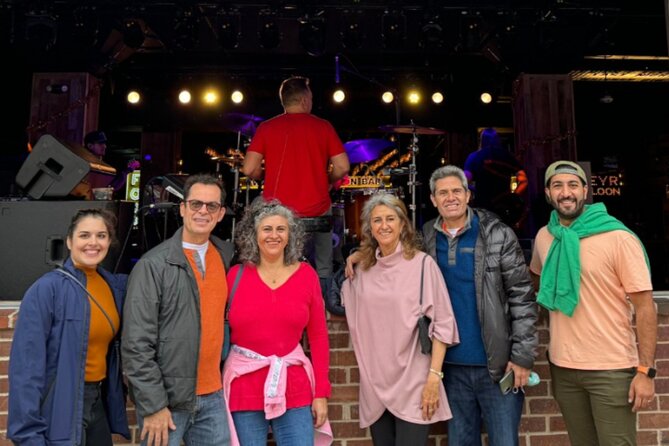
- Musician-led city introduction: Cody and Paul are named guides praised for their energy, humor, local knowledge, and ability to answer questions.
- Nine downtown stops: The route covers the Ryman Auditorium, Tootsies, churches, Printer’s Alley, the riverfront, Broadway, and two major arenas.
- Small maximum group: The tour is limited to 18 people, though the actual group can be smaller.
- Useful first-day advice: Guides offer suggestions for food, drinks, music, and other places to visit after the walk.
- Easy, steady walking: The pace is described as slow and manageable for a range of ages, with travel time between stops included.
- Low-cost, but short: At $24.99 per person, it is inexpensive for a guided city introduction, though paid admission to individual attractions is not included.
Why this 90-minute walk works best at the start of your Nashville visit
Nashville can be confusing at first. The central streets are compact, yet each block has a different feel. One corner may hold an old church, the next a neon-lit honky-tonk, and a few minutes later you are looking across the Cumberland River toward Nissan Stadium.
This tour gives you a basic map of that downtown core without asking you to commit half a day. You meet at the Grand Lodge of Tennessee Free and Accepted Masons at 100 7th Avenue North, then return to that same point at the end.
I would book it early in your stay. You get a quick sense of where the major music venues sit, how Lower Broadway connects with the river, and where Printer’s Alley fits into the downtown grid. The advice from Cody and Paul can then help shape the rest of your visit.
The tour is offered in English and uses a mobile ticket. The group limit is 18 people, which should make it easier to hear the guide than on a large coach excursion. One guide used a microphone, a useful touch when city noise rises around Broadway.
More History Tours in the USA:
- New York City: American Museum of Natural History Ticket
★ 4.5 · 15,447 reviews - History and Hauntings of Salem Guided Walking Tour
★ 5.0 · 14,564 reviews - Charleston’s Old South Carriage Historic Horse & Carriage Tour
★ 5.0 · 10,023 reviews
The Ryman Auditorium: Nashville’s most important musical address
The first stop is the Ryman Auditorium, often called the Mother Church of Country Music. Its red brick exterior dates to 1892, giving you an immediate sense that Nashville’s music story did not begin with modern recording studios or tourist bars.
The building is especially memorable for its wooden pews, stained glass, and carefully preserved auditorium. The tour description allows about five minutes here, with free admission listed for the stop. That means you should think of it as a guided introduction to the building rather than a full independent visit inside.
The Ryman matters because it links several eras of Nashville performance. The Grand Ole Opry once used the auditorium, and major performers have continued to appear there. Your guide can connect the building to the broader city story, which is more useful than simply taking a photograph outside.
If you want a detailed look at the auditorium, plan separate time for it. This walk gives you context and a clear reason to return, but its short schedule cannot replace an extended venue visit.
Tootsies Orchid Lounge and the working honky-tonk tradition
From the Ryman, the route moves toward Tootsies Orchid Lounge, one of the best-known bars on Lower Broadway. Its purple exterior is hard to miss, and its place in country music lore makes it a natural stop for anyone curious about Nashville’s performance culture.
The walls are associated with photographs and memorabilia, while the rooms carry the sound of live music. The stop is free to view from the route, but admission is not included, so you should expect any food, drinks, or other purchases to be your responsibility.
I like this part of the walk because the guide can explain why Tootsies matters beyond its famous color. The venue is tied to performers such as Willie Nelson and Patsy Cline, and it helps explain how Nashville’s honky-tonks function as part of the city’s music system.
Still, five minutes is enough only for an introduction. If you want to hear a full set or look closely at the memorabilia, return later and give yourself more time. Your guide’s suggestions can help you decide which nearby venues fit your taste.
Downtown Presbyterian Church and Nashville’s architectural side
The church stop adds welcome variety. The route identifies the building as Downtown Presbyterian Church, while the description refers to First Presbyterian Church. Either way, the point is to pause for Nashville’s religious and architectural past rather than focus only on music venues.
Look for pointed arches, ornate stonework, and tall spires. The building provides a visual break from signs, bars, and traffic. It also reminds you that downtown Nashville developed as a civic and religious center as well as an entertainment district.
Admission is not included, and the stop lasts about five minutes. You should not expect a long interior visit or a formal architectural lecture. Instead, the guide gives you enough background to notice details you might otherwise walk past.
This is one of the reasons I prefer the route to a straight honky-tonk crawl. It gives you several different ways to understand the city, even within a tight schedule.
Same old streets, another chapter:
- Beneath The Streets Underground History Tour
★ 4.5 · 8,006 reviews - Big Island in a Day: Volcanoes Waterfalls Sightseeing and History
★ 5.0 · 6,569 reviews - Boston: Freedom Trail History Small Group Walking Tour
★ 5.0 · 6,450 reviews - Historic Charleston Guided Sightseeing Walking Tour
★ 5.0 · 6,216 reviews
Printer’s Alley, where old publishing streets became nightlife
Printer’s Alley began with newspapers and publishing businesses, then changed into an entertainment area. The route takes you along its narrow streets, where older buildings now hold clubs, bars, and restaurants.
The alley is a good place to hear how Nashville changes over time. The buildings and signs point backward, while the nightlife pulls you into the present. Murals, historic signs, and music from nearby venues add plenty to notice during a short walk.
The stop is free, and the tour does not require you to buy anything. That matters because Printer’s Alley can tempt you to stop for a drink or a show. You can simply absorb the setting, then decide later where you want to spend money.
As with Tootsies, this is a brief introduction. The route gives you orientation and background, but it does not leave time to explore every club. If nightlife is your main goal, treat the tour as a scouting trip.
Riverfront Park and the Cumberland River
Riverfront Park changes the mood. After the close streets of downtown, you reach open space beside the Cumberland River. The park provides views toward the city and Nissan Stadium, along with a chance to slow down for a moment.
This stop helps explain Nashville’s physical setting. The river is not just scenery. It has shaped the city’s movement, commerce, recreation, and relationship with the east bank.
The listed stop lasts about five minutes, so do not expect a long riverside break. You will have time for a quick look and photographs, but the tour keeps moving. That brisk format is useful if you want broad coverage, less so if you prefer quiet sightseeing.
I appreciate the contrast. A good city walk needs moments that are not all information and noise, and the riverfront provides one.
The John Seigenthaler Pedestrian Bridge for the best broad view
The John Seigenthaler Pedestrian Bridge is one of the route’s strongest photo stops. From the bridge, you can look along the Cumberland River, across the downtown skyline, and toward Nissan Stadium on the east bank.
The bridge also gives you a clearer sense of Nashville’s layout. From street level, the city can feel like a collection of separate venues. From above the river, the pieces connect: downtown, the water, the stadium, and the neighborhoods beyond.
The pathway is broad, and the five-minute crossing is not presented as a demanding hike. Still, you are outdoors, so weather matters. The tour requires good weather, and winter conditions can be unpleasant. One group joined just after a major ice storm, with temperatures in the mid-20s Fahrenheit. Their guide, Paul, kept the group moving and shared plenty of information, but cold weather will still affect your comfort.
Wear suitable shoes and check the forecast. The tour can be canceled for poor weather, with a different date or a full refund offered.
Lower Broadway: music, neon, and a useful reality check
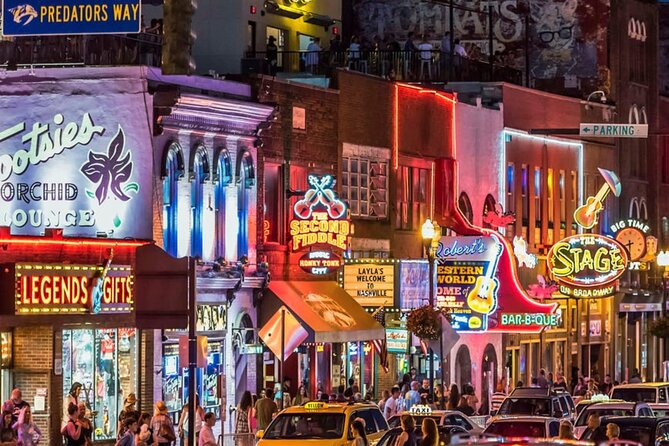
Lower Broadway is the loud center of the Nashville experience. Live music spills from honky-tonks, neon signs compete for attention, and places such as Tootsies Orchid Lounge, Robert’s Western World, and The Stage line the street.
This is the section most first-time visitors picture before arriving. The tour helps you understand where the famous venues are and how close they sit to one another. Your guide can also point you toward places for later food, drinks, and music.
The honest warning is that Lower Broadway is not a quiet or subtle place. It can be crowded and noisy, especially around popular venues and busy times. If you want traditional music in a calm setting, ask your guide for advice rather than assuming every bar will suit you.
The stop itself is free and lasts about five minutes. That is enough to introduce the street, not enough to sample its nightlife. I would return after the tour, once you know which doors interest you.
Nissan Stadium and Bridgestone Arena
The final arena stops show another side of Nashville. Nissan Stadium, home to major sports and entertainment events, sits across the river and makes a strong visual impression from the bridge and riverfront. The route also brings you by Bridgestone Arena, a downtown venue used for hockey, concerts, and live performances.
Neither stop is a stadium tour. Admission is not included, and the schedule gives each place about five minutes. You get a look at how Nashville supports large-scale events alongside its smaller clubs.
Bridgestone Arena also helps place Lower Broadway in a wider entertainment district. Nashville is not only about country bars. The city hosts sports, concerts, and major productions, and these venues make that clear.
There is a minor naming inconsistency in the supplied route, which refers to Nissan Arena in one description even though the landmark is Nissan Stadium. The useful takeaway is simple: you will see the large stadium on the east side of the river and Bridgestone Arena downtown.
What the guides add to the walk
The guide can make or break a short city tour. Here, Cody and Paul receive especially strong praise for energy, humor, clear speaking, and practical local suggestions. Cody is also described as a musician and an engaging speaker who can keep a large group moving while still answering questions.
Paul’s style appears particularly useful in poor weather. He kept a cold-weather group moving, but still shared background on music and Nashville history. Other guide feedback points to small details, stories about local places, and information presented in manageable portions.
One appealing feature is the music. A guide used a microphone and played music during the walk, which fits the setting better than a purely academic talk. You get facts, but you also get a sense of why Nashville sounds the way it does.
The guide can tailor the information to the group. If your party cares more about history, architecture, music, food, or famous performers, ask questions. The experience is short, so direct questions are the best way to get the advice most useful to you.
Is $24.99 a fair price?
At $24.99 per person, the tour is reasonably priced for a 90-minute guided orientation in central Nashville. You are paying for a local guide, a planned route, historical context, and suggestions that can save you time later.
The value depends on what you expect. If you want entry to the Ryman, a long visit inside Tootsies, or a detailed tour of the arenas, this price will not cover that. The route mainly gives you outside context and quick stops.
For a first visit, I think the price makes sense, especially if you take it early and use the advice for the rest of your trip. If you already know downtown well, the short duration may feel less worthwhile.
The average booking point is 18 days ahead, so popular dates may fill before your arrival. Free cancellation is available until 24 hours before the start time. Inside that window, changes and refunds are not accepted, except where the provider cancels for poor weather or because the minimum number of participants is not met.
Who should book Nashville Unveiled?
This tour suits first-time visitors, music fans, couples, families, and anyone who wants a basic downtown map before exploring alone. The slow walking pace makes it workable for many ages, and the maximum group size of 18 keeps it more personal than a large bus tour.
It is also a good choice if you like learning from a guide who can shift between stories, music, architecture, and practical tips. The fact that the guide may be Cody or Paul adds personality, but the exact guide can vary.
I would be less likely to recommend it to someone seeking a long, detailed history tour or extensive time inside attractions. The nine-stop route covers a lot, but each stop is short. You need to enjoy movement and quick introductions.
Service animals are allowed, public transportation is nearby, and most people can participate. The experience is in English, uses a mobile ticket, and returns to the starting point.
Should you book this Nashville walking tour?
Book it if this is your first Nashville visit and you want a useful musical orientation without spending half a day. The route covers the city’s essential downtown sights, while Cody and Paul bring humor, music, and local advice that a self-guided walk may miss.
Skip it if you want full admissions, long stops, or a quiet sightseeing experience. At $24.99, it is best understood as a lively introduction and planning tool. Take it near the start of your trip, listen closely to the food and music suggestions, then return to the places that deserve more time.
FAQ
How long does Nashville Unveiled last?
The tour lasts approximately 1 hour and 30 minutes, including travel time between stops.
How much does the tour cost?
The price is $24.99 per person.
Where does the tour begin?
It begins at the Grand Lodge of Tennessee Free and Accepted Masons, 100 7th Avenue North #4, Nashville, Tennessee 37203.
Where does the tour end?
The activity ends back at the meeting point.
What places does the tour visit?
Stops include the Ryman Auditorium, Tootsies Orchid Lounge, Downtown Presbyterian Church, Printer’s Alley, Riverfront Park, the John Seigenthaler Pedestrian Bridge, Lower Broadway, Nissan Stadium, and Bridgestone Arena.
Is admission to the attractions included?
Admission is not included for Tootsies Orchid Lounge, Downtown Presbyterian Church, Nissan Stadium, or Bridgestone Arena. The Ryman Auditorium and Printer’s Alley stops list free admission, while the route does not describe an extended attraction visit.
How many people can join the tour?
The tour has a maximum of 18 participants.
Can I cancel for a full refund?
Yes. You can cancel at least 24 hours before the local start time for a full refund. Cancellations or changes made less than 24 hours before the tour are not refunded or accepted. If poor weather or an insufficient minimum group causes the tour to be canceled, you will be offered another date or experience, or a full refund.
Latest history tours reviewed in the USA
- Franklin: Ghost Tour in Historic Franklin★ 4.8 · 65 reviews
- Fort Worth: Stockyards History Tour Pub Crawl★ 4.8 · 39 reviews
- Downtown Flagstaff Haunted History Walking Tour★ 4.7 · 46 reviews
- New York City: Flatiron Food, History, and Architecture Tour★ 4.8 · 43 reviews
- Fairbanks: Gold Dredge 8 Historic Train Tour★ 4.7 · 219 reviews
- Fairbanks: Private Mush on the Historic Yukon Quest Trail★ 5.0 · 30 reviews
- Charleston:Evening Haunted History Horse-Drawn Carriage Tour★ 4.7 · 38 reviews
- Philadelphia: Valley Forge National Historical Park Tour★ 4.9 · 39 reviews
Nashville History Tours, compared.
Journey to Jubilee Guided Tour at Belle Meade with Wine Tasting
Read our review →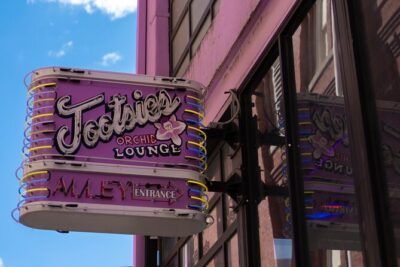

Nashville: Immersive E-Bike Tour of Music City’s History
Read our review →
Civil War History Tour – The Battle of Franklin, Tennessee
Read our review →
Browse the lists this tour appears in