
Review · WORLDWIDE
Buenos Aires: Historic Buenos Aires Landmarks & Icons Tour
Buenos Aires tells its story in public squares, grand government buildings, old convent walls, and monuments that still shape daily life. This 150-minute walking tour brings those pieces together around Plaza de Mayo, with stops at Casa Rosada, the Metropolitan Cathedral, Cabildo, and Manzana de las Luces.
I like the route for two reasons: it gives you a quick grounding in the city’s central landmarks, and guide Miguel adds personal touches, including an explanation of how to drink mate. The main drawback is the pace and amount of walking, especially in hot weather, and the tour is offered in Spanish.
Key points at a glance
- Casa Rosada and Plaza de Mayo: Begin with Argentina’s best-known civic square and its famous pink government building.
- Miguel’s local storytelling: Miguel is praised for clear explanations, flexibility, and adapting his language when needed.
- Historic buildings with different roles: See a former convent, an old post office palace, a cathedral, a colonial council building, and a former Jesuit complex.
- Museums included: Visit the Museo del Bicentenario and Cabildo rather than seeing every sight only from the pavement.
- A compact central route: The tour fits major sights into 150 minutes, making it useful early in your Buenos Aires stay.
- Spanish only: You need comfortable walking shoes, sun protection, water, and enough Spanish to follow a live explanation.
Starting at Plaza de Mayo
Meet your guide near the flagpole at Plaza de Mayo. This is a practical starting point because the square gathers several of the city’s most important buildings in one place.
The square is not simply a photo stop. It is one of Argentina’s key public spaces, surrounded by buildings tied to government, religion, finance, and national memory. Your guide uses the setting to explain how Buenos Aires developed and why this part of the city remains so important.
You begin with a short orientation before moving toward the surrounding landmarks. Since the tour is conducted in Spanish, this opening is also your chance to make sure you can follow the guide’s pace and explanations.
More History Tours in the world:
- New York City: American Museum of Natural History Ticket
★ 4.5 · 15,447 reviews - History and Hauntings of Salem Guided Walking Tour
★ 5.0 · 14,564 reviews - Colosseum: Underground and Ancient Rome Tour
★ 4.7 · 12,691 reviews
Casa Rosada and the political heart of Argentina
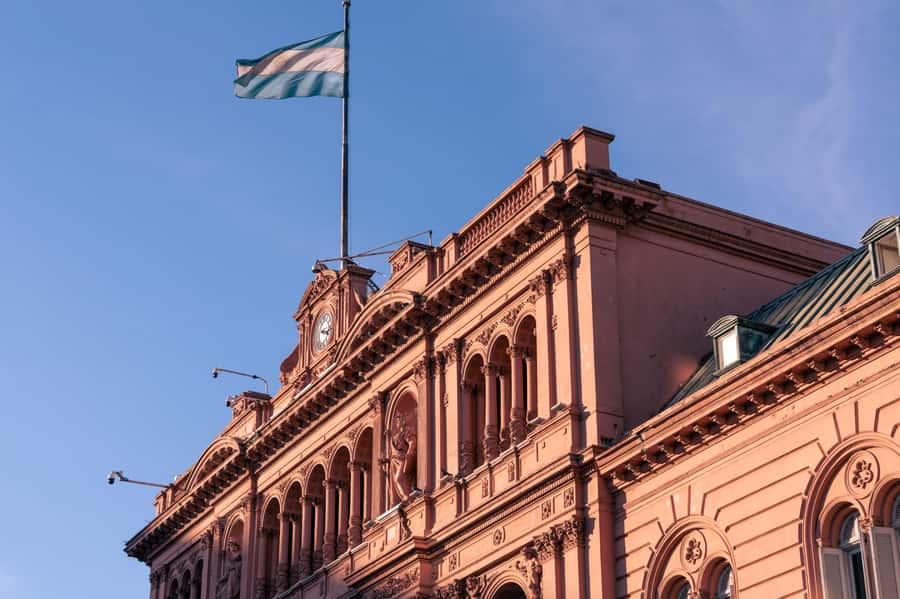
Casa Rosada is the first major landmark on the route. You have about 10 minutes here for photographs, guiding, and a look at the building from outside.
The pink façade is one of Buenos Aires’ most recognizable sights, but the useful part of the stop is the context. Casa Rosada is the seat of Argentina’s national executive power, so it gives the square a clear political focus. From here, you can connect the building to the surrounding institutions rather than treating it as an isolated landmark.
This stop is short. I would think of it as an introduction, not a full interior visit. You will have time to see the building, hear its place in the city’s story, and take photographs before continuing.
Garay Monument and the city’s second founding
Next comes the Monumento a Juan de Garay, with about 10 minutes for a guided explanation and photographs. The monument marks an important chapter in Buenos Aires’ beginnings.
The tour also connects this area with the site of the city’s second founding. That detail matters because Buenos Aires was founded more than once, and the second founding gave the city the lasting base from which it grew.
The location provides a useful view toward the historic center. You get a moment to look beyond individual façades and see how the main civic area fits together. It is a small stop, but it gives the route a stronger sense of place than a simple checklist of famous buildings.
The Museo del Bicentenario and Argentina’s past presidents
The Museo del Bicentenario is one of the more substantial stops, with about 20 minutes for a visit, guiding, and sightseeing. The museum holds objects connected with former presidents along with notable works of art.
I like this part of the tour because it gives you something more than exterior architecture. The buildings around Plaza de Mayo show power and ceremony, while the museum adds physical objects that help explain Argentina’s political past.
Twenty minutes is enough for an introduction, but not for a slow museum visit. You should expect your guide to point out selected pieces and explain their significance rather than give you time to study every display at length.
The museum also helps connect Casa Rosada with the wider story of the country. You are not only looking at where leaders worked. You are seeing reminders of the people and events that shaped Argentina’s national life.
Same old streets, another chapter:
- Lisbon: History, Stories and Lifestyle Walking Tour
★ 4.8 · 10,902 reviews - London Small Group Tour of Historical Pubs
★ 5.0 · 10,422 reviews - Prague: Oldtown, Medieval Underground & Dungeon History Tour
★ 4.3 · 10,277 reviews - Charleston’s Old South Carriage Historic Horse & Carriage Tour
★ 5.0 · 10,023 reviews
The Metropolitan Cathedral and its unexpected interior
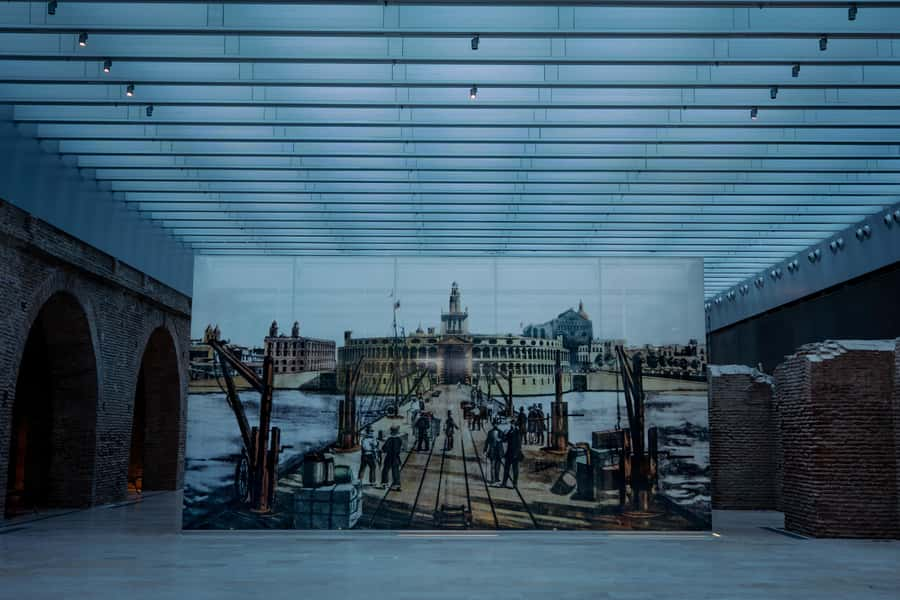
The Buenos Aires Metropolitan Cathedral receives about 20 minutes for a photo stop, visit, and guided explanation. Its position beside Plaza de Mayo makes it one of the easiest major sights to combine with Casa Rosada.
The cathedral is important both as a religious building and as part of the city’s civic center. The stop lets you shift from government and national politics to the religious institutions that have long shared this square.
I would allow your eyes a moment to adjust when you enter. The exterior and interior offer different impressions, and the guided explanation helps you notice details that can be missed during a quick independent visit.
Because this is a walking tour, the cathedral visit is not designed as a long, quiet church tour. Instead, it gives you a clear introduction to one of Buenos Aires’ central landmarks while keeping the route moving.
Cabildo, where colonial government took shape
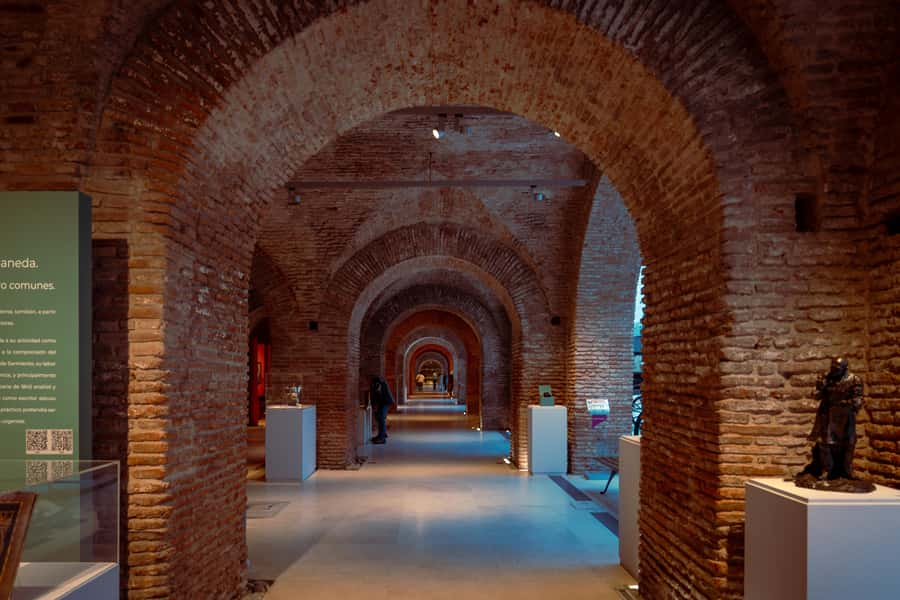
The Cabildo gets another 20-minute visit, with photographs and guiding included. This building preserves the story of the city and the nation, making it one of the most useful stops for understanding Buenos Aires before and during the formation of modern Argentina.
The Cabildo served as a center of colonial administration. Its museum now gives the building a historical role, allowing you to connect the architecture with the political changes that transformed the country.
I find this stop especially helpful after Casa Rosada. The two buildings represent different periods and forms of government, and seeing them in the same walk makes that shift easier to understand.
You should not expect an exhaustive museum visit in 20 minutes. The value is in the setting, the main historical points, and the chance to see one of the city’s oldest civic buildings with a guide who can explain why it matters.
Manzana de las Luces and the city beneath the surface
Manzana de las Luces is another 20-minute stop for photographs, a visit, and guided sightseeing. The name refers to a historic block associated with education, religion, and intellectual life.
The site includes buildings connected with the former Jesuit presence in Buenos Aires. It offers a different mood from the open space of Plaza de Mayo, with older walls and a more enclosed sense of the city’s past.
This is a good example of why a guided route can be more useful than wandering between postcard sights. On your own, you might pass the block and see only an old architectural complex. With Miguel’s explanation, you can place it within the city’s religious and educational development.
The stop also breaks up the sequence of government façades and large public buildings. You get a closer look at a historic block rather than only broad views across a square.
The Central Bank and the former San Ramón Nonato Convent
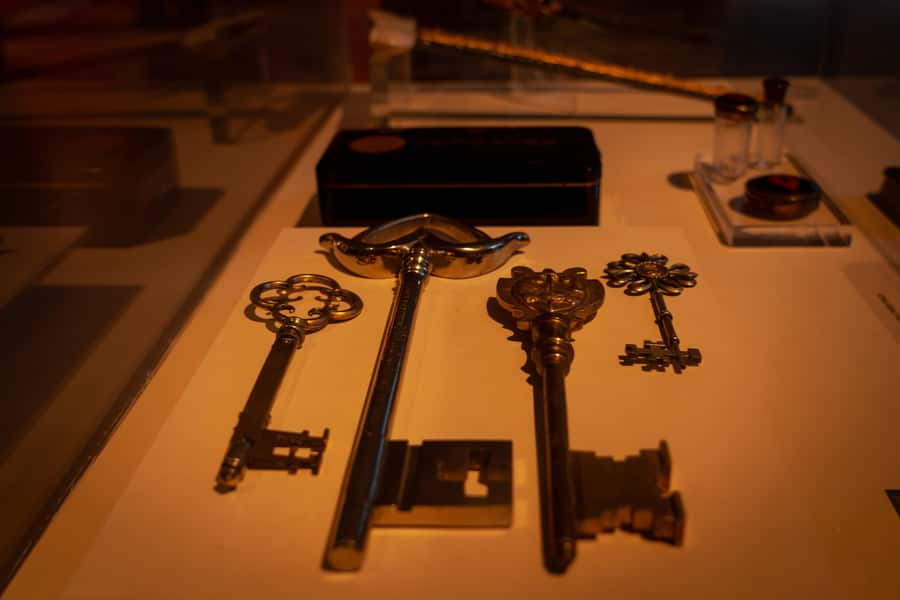
The broader tour route also introduces the Central Bank of the Argentine Republic, a building that once served as the San Ramón Nonato Convent. That earlier use gives the site an unusual layer: the same structure has been part of religious life and later became tied to national finance.
I like this kind of detail because it shows how Buenos Aires repeatedly assigns new roles to old buildings. The city’s past is not kept in one isolated museum. It remains visible in offices, banks, churches, and public institutions.
The Central Bank stop is part of the tour’s wider look at the historic center. The exact time at individual locations can vary within the 150-minute route, so you should expect a guided exterior explanation rather than a long interior visit unless your guide indicates otherwise.
The old post office palace and Garay’s monument
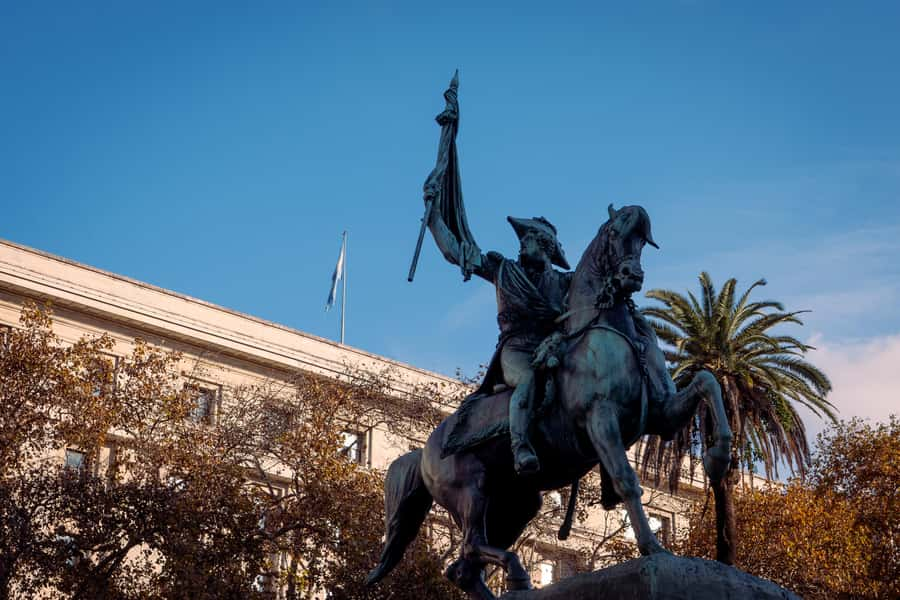
The tour also highlights the Cultural Center, housed in what was once a grand post office palace. This building represents the era when Buenos Aires was expanding its public institutions and giving them impressive architectural homes.
The location is linked with the city’s second founding and the Garay Monument, making these parts of the route fit together rather than feel like unrelated stops. You get a view over the historic center while your guide explains the connections between the buildings and the city’s beginnings.
This section should appeal to you if you like architecture with a practical past. The building was not created only as decoration. It served a major public function, and its later cultural role shows how central Buenos Aires continues to reuse important spaces.
Banks, ministries, customs, and the scale of the city
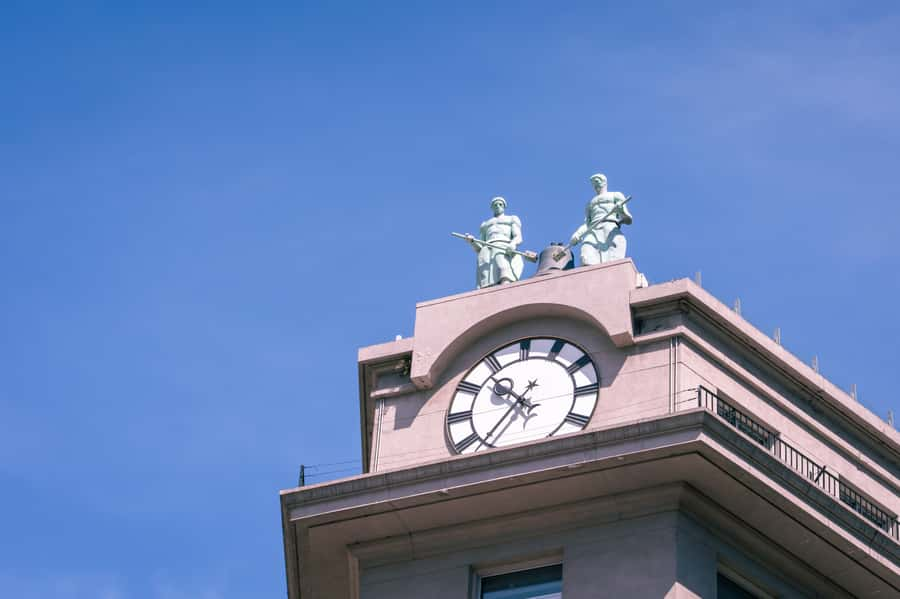
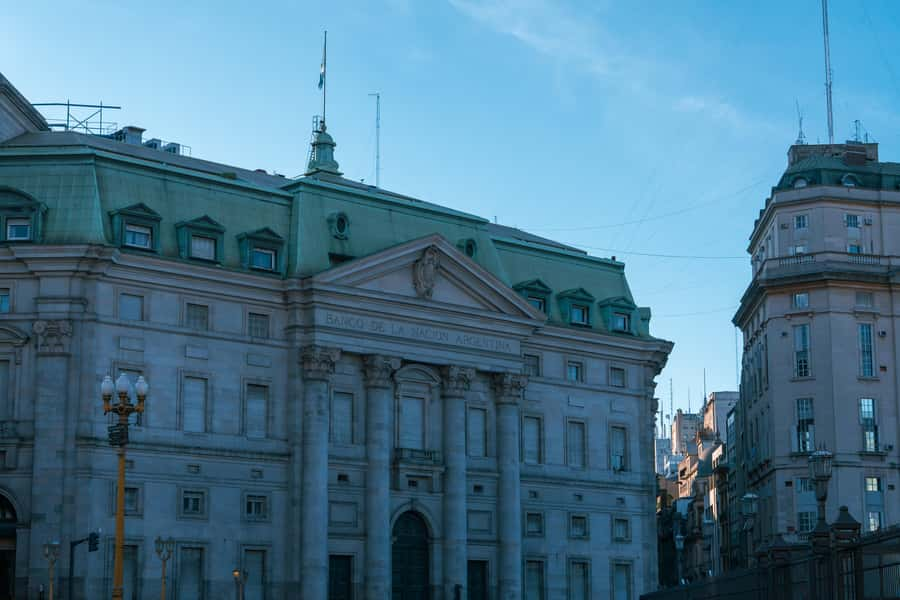
Along the route, you also see the Bank of the Argentine Nation, the Ministry of Defense, and the National Customs House. These buildings add scale to the experience.
The Bank of the Argentine Nation represents the financial side of the capital. The Ministry of Defense is notable for its vast size and views, while the National Customs House points to Buenos Aires’ long connection with trade and the port.
These stops are especially useful if you want to understand the center as a working district, not only a historic backdrop. Government, banking, customs, religion, and culture all sit close together here.
Not every building is a full interior visit. Some are best appreciated from outside, where your guide can explain their role and point out views or architectural features that you might otherwise overlook.
City Legislature and the Comic Strip Plaza
The route also includes the City Legislature, known for its mix of architectural styles and its tall clock. The building gives you another example of how Buenos Aires combines different periods and design ideas in one central area.
The variety here is part of the appeal. You are not walking through a single uniform historic district. You move between colonial remnants, formal civic buildings, financial institutions, and later cultural landmarks.
The tour concludes at the National Customs House and Comic Strip Plaza. Comic Strip Plaza adds a lighter note to a route filled with presidents, churches, banks, and government buildings.
That ending helps broaden your view of Buenos Aires. The city’s identity is not limited to official monuments. Popular art and comic characters also have a place in its public spaces.
What Miguel adds to the walk
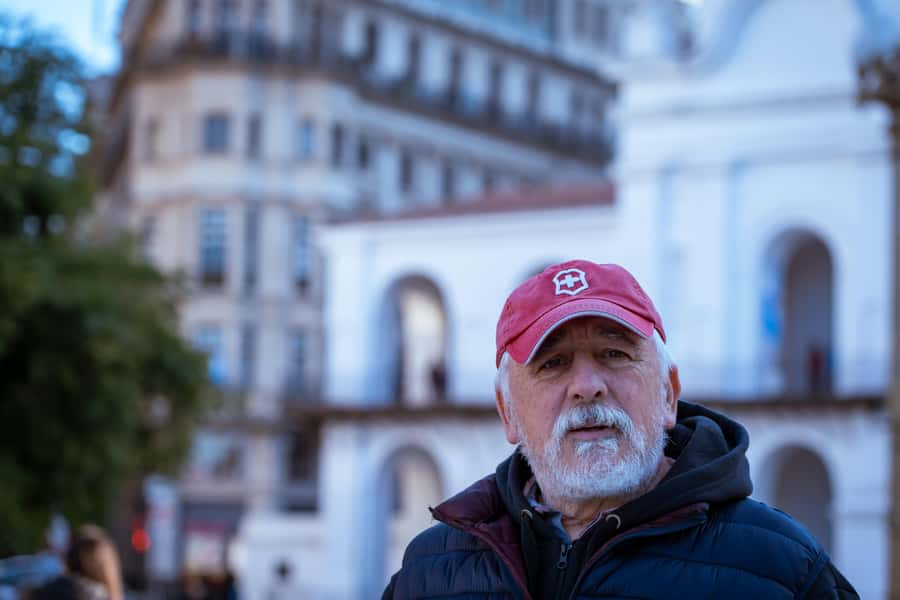
Miguel is the named guide associated with this experience, and his role is central to its value. His strongest qualities are clear explanations, warmth, and the ability to adjust the walk to the people in front of him.
He has been able to explain the city in English when a booking was made incorrectly in Spanish, and he has adjusted his Spanish so that a visitor with limited ability could follow along. You should not treat that as a guarantee of an English tour, since the advertised language is Spanish, but it suggests that asking a question early may help.
Miguel also brings local details into the route. One example is his demonstration of how to drink mate, Argentina’s traditional shared tea. That sort of moment gives the tour a human touch that a list of dates and building names cannot provide.
He is also described as flexible and attentive to questions. That matters during a history walk because you may want to pause over a building, ask about a political event, or clarify something you have noticed elsewhere in Buenos Aires.
Is $20 good value for 150 minutes?
At $20 per person, this is a strong-value way to get your bearings in central Buenos Aires. You are paying for a live guide over two and a half hours, several major landmarks, museum access at listed stops, and explanations that tie the buildings together.
The value is greatest if you are new to the city. A first visit can make Plaza de Mayo feel like a cluster of impressive façades. This tour gives you a framework, so later independent visits have more meaning.
The price does not include food, drinks, hotel pickup, or drop-off. You need to reach Plaza de Mayo yourself and manage your own refreshments, but the meeting point is central and the tour is built around walking rather than transport.
I would not choose this as your only museum experience in Buenos Aires. The museum stops are relatively brief, and the route covers a lot of ground. I would choose it as an orientation walk, then return later to any site that deserves more time.
Walking, weather, and who should book
Wear comfortable shoes. The route covers a significant amount of walking, with outdoor sections and repeated stops across the historic center.
Bring a hat, sunscreen, and water. Check the forecast before you go and dress for the conditions, since much of the experience takes place outside. On a hot day, the lack of included drinks becomes more noticeable.
This tour is not suitable for wheelchair users or people with mobility impairments. The walking distance, historic surfaces, and sequence of stops make it a poor match if you need step-free access or frequent seating.
I would recommend it to first-time visitors, history fans, architecture lovers, and anyone who wants a compact introduction before exploring Buenos Aires alone. It also suits you if you enjoy asking questions and prefer a guide who can add local stories to major sights.
The tour may be less suitable if you want a slow museum visit, a bilingual experience guaranteed in English, or a route with little walking. In those cases, you should choose a more specialized option.
Should you book this Buenos Aires landmarks tour?
I would book this tour if you have 150 minutes available near the start of your stay and want a clear introduction to the city’s political, religious, financial, and cultural center.
The strongest reasons are the low price, the number of major sights, and Miguel’s ability to make history personal. You get Casa Rosada, Plaza de Mayo, the Cathedral, Cabildo, Manzana de las Luces, and the Museo del Bicentenario, plus a wider look at banks, ministries, customs buildings, and public monuments.
Go prepared for Spanish, sun, and steady walking. If those conditions suit you, this is an efficient and good-value way to understand why central Buenos Aires feels less like a collection of monuments and more like a working record of Argentina’s past.
FAQ
Where does the tour meet?
Meet your guide near the flagpole at Plaza de Mayo.
How long does the tour last?
The tour lasts 150 minutes, or two and a half hours.
What language is the tour offered in?
The live tour guide speaks Spanish.
Which major landmarks are included?
The route includes Casa Rosada, Plaza de Mayo, the Monumento a Juan de Garay, Museo del Bicentenario, Buenos Aires Metropolitan Cathedral, Cabildo of Buenos Aires, and Manzana de las Luces.
Do you visit any museums?
Yes. The tour includes a visit to the Museo del Bicentenario and the Cabildo of Buenos Aires.
Is hotel pickup included?
No. Hotel pickup and drop-off are not included. You need to meet the guide at Plaza de Mayo.
Are food and drinks included?
No. Food and drinks are not included, so bring water, especially on hot days.
What should you bring?
Bring comfortable walking shoes, a hat, sunscreen, and water. Check the forecast and dress for outdoor conditions.
Is the tour suitable for wheelchair users?
No. The experience is not suitable for wheelchair users or people with mobility impairments.
Latest history tours reviewed in the world
- From Athens: Ancient Olympia Full-Day Private Tour★ 4.8 · 22 reviews
- From Athens: Explore Ancient Corinth & Charming Nafplion★ 4.6 · 102 reviews
- From Athens: Explore Ancient Greece 4-Day Tour★ 4.7 · 73 reviews
- From Albufeira: Wine Tasting & Historic Silves Tour★ 4.9 · 421 reviews
- From Albufeira: Historical Algarve Region Tour★ 4.7 · 585 reviews
- From Alexandria: Full-Day Guided Tour of Historical Sights★ 4.5 · 54 reviews
- Franklin: Ghost Tour in Historic Franklin★ 4.8 · 65 reviews
- Freiburg: Exciting City Tour with sightseeing and history★ 4.3 · 103 reviews