
Review · HOI AN
Hoi An Ancient Town Walking Tour with a Local
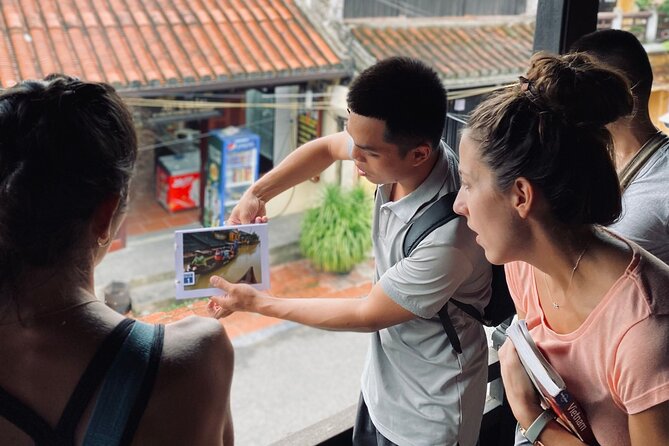
Hoi An is best understood on foot, one old doorway, wooden beam, and market stall at a time. This small-group walk links the town’s Japanese, Chinese, and Vietnamese influences, with guides such as Kun, Anh, Trang, and Minh bringing personal stories to the streets and buildings.
I like the small group of up to 10, which gives you room to ask questions, and the way the route mixes major sights with everyday food and local life. I also like the practical finish at the market, where you can ask what to eat and where to go next. The main catch is that the 120,000-dong heritage ticket is extra, and several stops may require it.
Key points to know before you book

- Japanese beginnings: Start with Hoi An’s timeline and the town’s links with Japan at the Japanese Culture Gallery.
- Six useful stops: The route covers historic buildings, a performance venue, and the central market in about three hours.
- Personal local guidance: Guides including Kun, Anh, Trang, June, Sanh, and Minh have led this experience, though your guide is assigned rather than chosen.
- Food at the finish: The market stop includes local tastings and tips about Hoi An food, with special herbal tea included.
- Good value at $9.89: The price is low for a guided introduction, but the UNESCO entrance ticket costs an additional 120,000 dong.
- Easy cancellation terms: You can cancel for a full refund up to 24 hours before the start, subject to weather and minimum-group requirements.
Why this walk is a smart first look at Hoi An
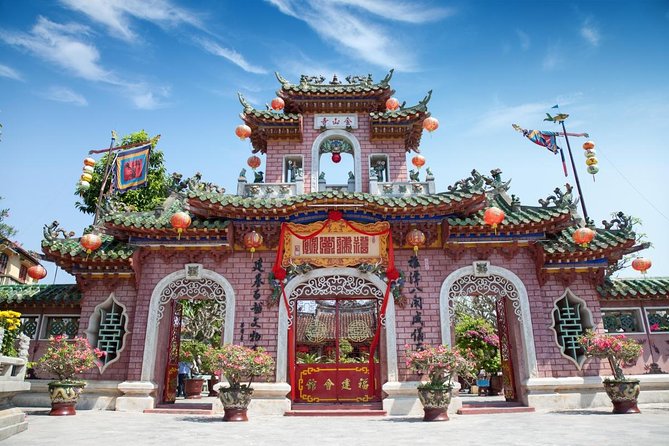
Hoi An can look simple at first: yellow walls, colored lanterns, narrow lanes, and souvenir shops. A local guide helps you read what is behind the paint. You learn why Japanese and Cantonese communities were present, how merchant families lived, and how the old quarter has been protected through difficult periods.
I like the route because it does not rely on one famous monument. You see the Japanese Covered Bridge, but you also enter an old merchant house, visit an assembly hall, pause at a cultural gallery, and finish where local food is sold. That range gives you a better sense of Hoi An than a quick photo stop at the bridge.
The tour lasts about three hours and is conducted on foot. The route begins at 125 Phan Chu Trinh and ends at Hoi An Market on Tran Phu Street, so you finish in a useful part of town rather than returning to the starting point.
The advertised price is $9.89 per person. That is strong value if you want an orientation before exploring on your own. You receive a guide, a small group setting, herbal tea, and tastings, but you must budget separately for the 120,000-dong Hoi An UNESCO entrance ticket. Admission is also listed as not included at the individual sights.
More Ancient History Tours in Vietnam
- Hoi An: Ancient Town Guided Walking Tour
★ 4.9 · 766 reviews - Marble Mountains – Hoi An Ancient Town Sunset Daily Ingroup Tour
★ 5.0 · 690 reviews - Hoi An Ancient Town – Walking Tour with Local Guide
★ 4.9 · 385 reviews
Starting with Japan at the Culture Gallery
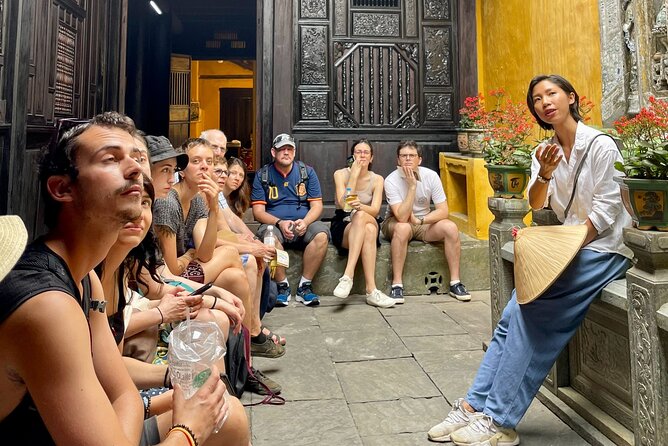
The first stop is the Japanese Culture Gallery, where the guide gives you a quick timeline of Hoi An. This opening matters because it explains how the town began, why it attracted outside communities, and why Japanese influence remains visible in its architecture and traditions.
Allow about 25 minutes here. The stop is not just a formal introduction. It gives you the background needed to understand the Japanese Covered Bridge a little later, instead of treating the bridge as an isolated photo opportunity.
Guides have different ways of telling the story. Kun has been praised for making the material lively and easy to follow, while Trang has been noted for clear English and useful recommendations at the end. Your guide may have a different style, but the format is designed to be conversational rather than a silent walk between monuments.
Admission is not included, so keep the heritage ticket in mind before you set out. If you want a fast overview of Hoi An’s past and its cultural connections, this is a useful first stop.
The Japanese Covered Bridge and its crowded postcard fame
The Japanese Covered Bridge is Hoi An’s best-known landmark and one of its most recognizable symbols. The tour gives you around 20 minutes here, enough time to look at the structure, hear about its Japanese architectural character, and understand its place in the town’s story.
The practical benefit of visiting with a guide is context. You can take the usual picture, but you also learn why the bridge matters to Hoi An and how it fits into the wider mix of Japanese, Chinese, and Vietnamese influences.
This is likely to be one of the busier points on the walk. Your time here is fairly short, so do not expect a long architectural study. If you want extended photo time, you may need to return independently after the tour.
The bridge is an essential stop, but it is not the whole experience. The older houses and assembly halls provide more room for explanation and often offer a quieter look at how the town functioned.
Cantonese Assembly Hall: color, design, and community life
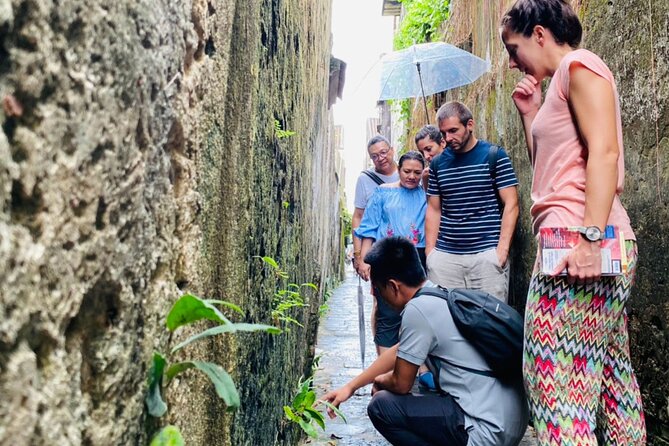
The Cantonese Assembly Hall is scheduled for about 25 minutes. Its decorated surfaces and strong visual details make it a good place to see how a Chinese community shaped Hoi An’s public and religious architecture.
The guide can help you notice details that are easy to miss when walking alone. You may hear about the hall’s Cantonese connections, its role in community life, and the way the building reflects the town’s trading past.
I value this stop because it adds balance to the Japanese focus at the beginning. Hoi An is not a single-culture museum. Its identity grew from contact between different communities, and the assembly hall makes that point in a direct, physical way.
Again, admission is not included in the tour price. The separate heritage ticket is important because several old-town buildings are tied to the town’s paid access system.
More History Walking Tours in Vietnam
- Explore Hanoi Old Quarter ’s Rich History and Culture By Walking
★ 4.5 · 72 reviews - Hoi An Ancient Town Walking Street Food Tours with Night Market
★ 4.5 · 50 reviews - Hoi An Ancient Town – Night Market Street Food Walking Tours
★ 4.5 · 22 reviews
Quan Thang Ancient House and the details of a merchant home
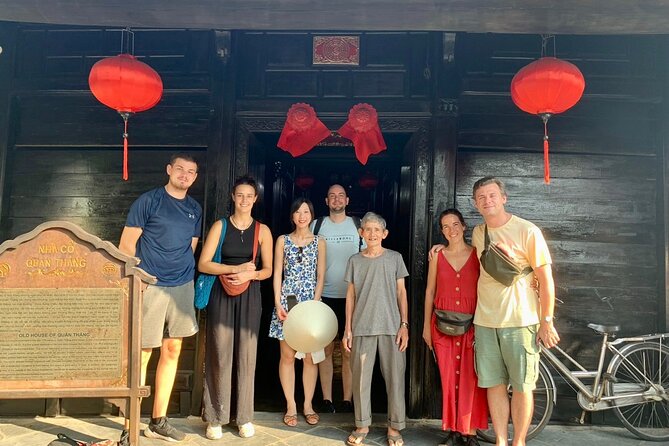
The Quan Thang Ancient House receives about 25 minutes, and this is one of the route’s most useful stops for understanding domestic life. You step into a preserved home associated with a prosperous merchant family rather than simply looking at a street facade.
Expect to see older architectural features and hear how the house worked as a living and business space. The value here comes from scale. The Japanese Covered Bridge tells you about Hoi An as a symbol, while the ancient house shows how people actually lived within the old quarter.
A particularly worthwhile part of the local guiding style is the attention to practical details. Anh has taken visitors through the back door of an old house to see a working kitchen and explained how one family home survived repeated floods across eight generations. That exact experience is not guaranteed on every departure, but it shows the kind of local detail this walk can provide.
The house also helps explain why preservation is not only about attractive walls. Hoi An’s old buildings have had to withstand weather, flooding, war, changing businesses, and the pressure of modern tourism.
Traditional performance and Hoi An’s living culture
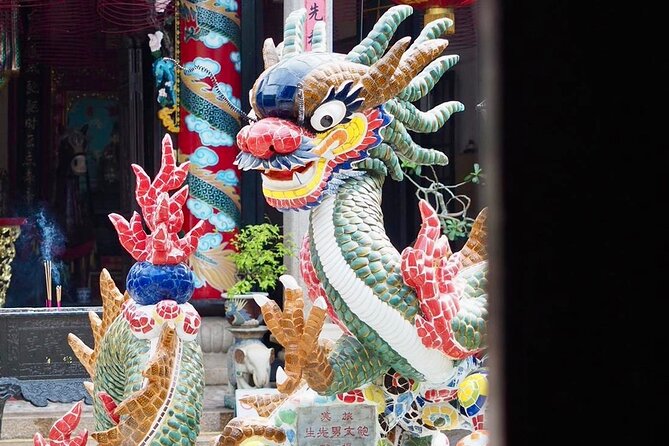
The Hoi An Traditional Art Performance Theatre is allotted about 35 minutes, making it one of the longer stops. Here, local artists present traditional music, dance, and theatrical work using traditional instruments.
This stop changes the rhythm of the walk. After architectural sites and historical explanation, you get a chance to watch a performance rather than simply listen to commentary. It gives you a sense of culture as something still practiced, not just something preserved behind a doorway.
The available details do not promise a particular show or performer, so it is best to treat this as an introduction rather than a full evening performance. Still, the inclusion is valuable, especially if you want more than buildings and photographs.
The timing also gives your feet a break. Three hours of walking is manageable for most people, but a seated cultural stop makes the route less tiring than a nonstop street walk.
Hoi An Market: the most useful finish
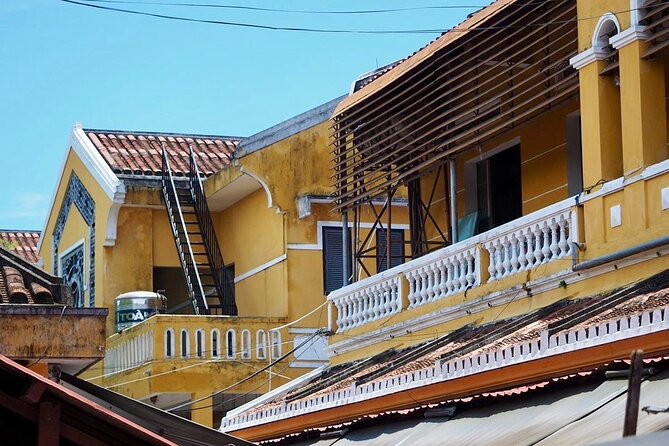
The tour ends at Hoi An Central Market after about 35 minutes there. This is where the experience becomes especially practical. You move from stall to stall, look at local foods and goods, and try selected delicacies rather than receiving only a list of dishes from a guide.
The market can be busy and sensory, but that is part of its appeal. It is a working place where food, shopping, and daily routines meet. You get a better feel for Hoi An by walking through the market than by staying only on the polished old-town lanes.
The guide also explains local food customs and shares tips about what to try. One theme mentioned during the stop is the local idea of why Hoi An people live long lives. Take that as cultural conversation, not medical advice, but it adds a human touch to the visit.
Herbal tea is included. The tastings are a nice bonus, though the information does not specify exactly which foods are served, so do not book this expecting a full meal. Plan to eat before or after if you want a substantial lunch or dinner.
The end point at 19 Tran Phu Street is convenient for continuing your own exploration. Guides have also offered restaurant, shop, and lantern boat suggestions, which can save you time later in your stay.
The guides make the difference
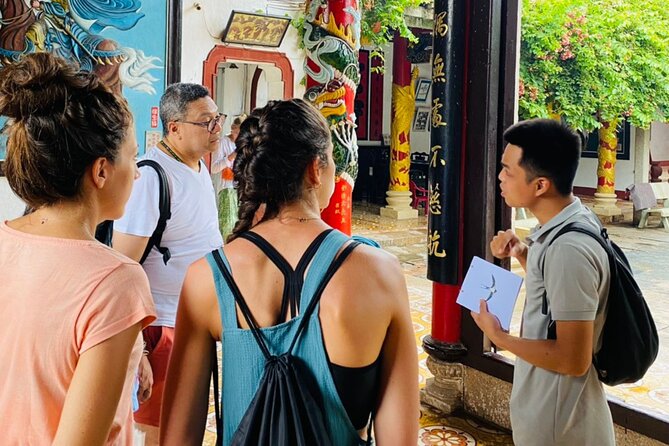
The strongest part of this activity is the guide. The route itself is solid, but the quality of the experience depends on how well the person leading it explains Hoi An and responds to questions.
Kun has been described as warm, encouraging, energetic, and good at keeping the walk moving. Anh has been praised for detailed explanations of architecture, culture, and daily life. Trang is noted for clear English and for giving useful restaurant and activity recommendations.
Other named guides include Nguyen, Karla, June, Sanh, and Minh. Their reported strengths include humor, friendliness, strong local knowledge, and a willingness to help with the rest of a trip. A last-minute booking once resulted in a private walk for one person with Sanh, but you should not assume every departure will be private.
The guide assignment is not presented as a choice at booking. If you have a strong preference for one person, ask the operator, Momo Travel, but expect availability to determine the result.
Group size, pace, and physical demands
The maximum group size is 10 people. That is small enough for a more personal walk and much easier to manage in narrow lanes than a large coach group. It also makes it more realistic to ask about food, architecture, or local customs without losing the guide’s attention.
The pace is described through guest experiences as leisurely but steady. You will be on your feet for about three hours, with time inside buildings and at the performance venue. Most people can take part, and service animals are allowed.
Wear shoes you can walk in and bring water, especially in hot or humid weather. The tour requires good weather, so a poor forecast can lead to a new date or a full refund. The supplied details do not specify hotel pickup, so plan to reach the Phan Chu Trinh starting point on your own.
Because the walk ends elsewhere, think of it as a one-way introduction to the old town. That is helpful if you want to continue toward the market, but less convenient if you need to return immediately to your starting area.
What the $9.89 price really gets you
At $9.89, this is priced as an affordable introduction rather than a private specialist tour. You get a local guide, the six-stop route, herbal tea, and food tastings. For a first afternoon in Hoi An, that is a useful package.
The extra 120,000-dong UNESCO entrance ticket changes the final cost. It is still reasonable, but you should not compare the advertised price with a completely free walk. The ticket supports access to the heritage sites included in the route, and several stops list admission as separate.
The best value comes from the explanations. You can walk past the bridge, assembly hall, and old houses without paying for a guide, but you may miss the connections between them. If you care about local history, architecture, and food, the added context is worth more than simply covering distance.
If you already know Hoi An well, the route may feel introductory. In that case, the market tasting and personal recommendations may be the main benefits.
Who should book this Hoi An walk
I would choose this tour for a first visit, especially if you want to get your bearings without spending half a day in a vehicle. It suits couples, solo visitors, families with older children, and anyone who prefers a short guided walk to a large group excursion.
It is also a good choice if you want a local voice. The strongest moments come from stories about homes, floods, food, family life, and the town’s mixed cultural roots. Those details are hard to gather from a map alone.
You may want something else if you dislike walking, want a private guide guaranteed, or prefer a tour centered mainly on food. This is a heritage walk with some tasting, not a dedicated cooking class or food crawl.
Book with realistic expectations about admission costs and guide assignment. You will get a broad introduction, not a scholarly examination of every building. The mix of sights makes it accessible and useful, but it also means no single stop receives a very long visit.
Should you book it?
Book this experience if you want an affordable first look at Hoi An with a local guide, a manageable group, and a route that covers more than the famous bridge. The combination of historic buildings, traditional performance, market food, and practical recommendations gives you a strong base for independent exploring afterward.
Skip it if you have only a short time and want to choose each stop yourself, or if you need a fully private itinerary. For most first-time visitors, though, the $9.89 price is compelling once you account for the extra heritage ticket. Start with the walk, then use the guide’s food and sightseeing tips to shape the rest of your time in Hoi An.
FAQ
How long does the Hoi An walking tour last?
The tour lasts approximately three hours.
How much does the tour cost?
The listed price is $9.89 per person.
Is the Hoi An UNESCO entrance ticket included?
No. The Hoi An UNESCO entrance ticket costs 120,000 Vietnamese dong per person and is not included.
What places are visited?
The route includes the Japanese Culture Gallery, Japanese Covered Bridge, Cantonese Assembly Hall, Quan Thang Ancient House, Hoi An Traditional Art Performance Theatre, and Hoi An Central Market.
Is food included?
Herbal tea and some food tastings are included. The experience is not described as a full meal.
How many people can join the tour?
The group can have a maximum of 10 participants.
Where does the tour start and finish?
It starts at 125 Phan Chu Trinh in Hoi An and ends at Hoi An Market, 19 Tran Phu Street.
Can I cancel for a refund?
Yes. You can cancel at least 24 hours before the start time for a full refund. Poor weather or failure to meet the minimum group size may also lead to a different date or a full refund.
Latest history tours reviewed in Vietnam
- Da Nang: Full-day My Son Sanctuary And Hoi An Heritage Tour★ 4.8 · 21 reviews
- Cu Chi Tunnels Guided Tour: Vietnam War History Half-Day★ 4.6 · 189 reviews
- Coffee, History, and Architecture of the French Quarter★ 4.9 · 71 reviews
- Boat Ride Phong Nha Cave & Vietnam’s Historic Command Cave★ 5.0 · 18 reviews
- 6 Hours Historical Tour in Cu Chi Tunnel with Free Snack★ 5.0 · 312 reviews
- Hanoi Full Day A Private Tour With Mix of History and Activities★ 5.0 · 51 reviews
- Private Cu Chi Tunnels Tour – Explore History & Off-the-path Local Sites★ 5.0 · 93 reviews
- Marble Mountain – Hoi An Ancient Town Sunset Private Tour★ 5.0 · 36 reviews
Hoi An History Tours, compared.


Hoi An Ancient Town – Walking Tour with Local Guide
Read our review →
Hoi An Night Market – Ancient Town street food tours by Night
Read our review →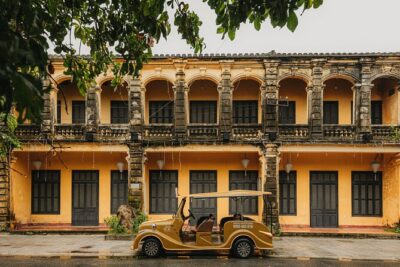
Browse the lists this tour appears in