

Review · HOI AN
Hoi An Ancient Town – Walking Tour with Local Guide
Hoi An reveals itself best on foot, one shaded lane and weathered yellow facade at a time. This small-group walk, limited to 10 people, takes you through the town’s major sights while a local guide explains what you are seeing, rather than leaving you to wander past old buildings without context. You’ll visit the Japanese Covered Bridge, assembly halls, heritage homes, museums, and the market in about two and a half hours.
I like the easy pace and the useful local advice. Guides such as Trung, Duy, Tom, and Tin are praised for clear English, humor, good stories, and practical recommendations for food, coffee, tailors, and later sightseeing. The included tea or local dessert is a pleasant finish. The main consideration is the extra 120,000 VND cash entrance ticket, and crowded periods such as Tet can make the old town harder to cross.
Why this Hoi An walk is worth your time
- A compact first look at the Old Town: Cover major heritage sights in 150 minutes without trying to plan the route yourself.
- A genuinely small group: With no more than 10 participants, it is easier to hear the guide and ask questions.
- Good indoor pauses: Temples, assembly halls, houses, museums, and performance spaces offer breaks from heat or rain.
- Local guidance beyond sightseeing: Get suggestions for Vietnamese food, cafes, tailor shops, and other Hoi An activities.
- A refreshing finish: The tour includes traditional tea, a local dessert, or a drink such as the herbal beverage served at Mot.
- Best booked early in your stay: The walk helps you understand the town before you return on your own for shopping, meals, and evening wandering.
Start at 95 Phan Chu Trinh and get your bearings

The meeting point is at 95 Phan Chu Trinh Street, in front of a tailor shop at the corner of the intersection. That is a useful starting point because the Old Town can feel confusing when you first arrive. The historic center is compact, but its narrow lanes, busy crossings, and many similar-looking yellow buildings can make a self-guided first walk feel like a pleasant blur.
I would schedule this tour near the beginning of your Hoi An stay. You will see enough of the central sights to understand the layout, then you can return to the places that caught your attention. Several people who had already wandered around on their own wished they had taken the guided walk first. That is the practical value here: you spend less time guessing what matters and more time noticing it.
The group size is capped at 10. That matters in Hoi An, where a large line of people can block a narrow lane or make a guide difficult to hear. The walking pace is described as manageable, and the guide keeps the group together, especially when the old town is crowded. Still, you should expect a continuous town walk, so comfortable clothes and sensible walking shoes are the right choice.
More Ancient History Tours in Vietnam
- Hoi An: Ancient Town Guided Walking Tour
★ 4.9 · 766 reviews - Marble Mountains – Hoi An Ancient Town Sunset Daily Ingroup Tour
★ 5.0 · 690 reviews - Hoi An Ancient Town Walking Tour with a Local
★ 5.0 · 517 reviews
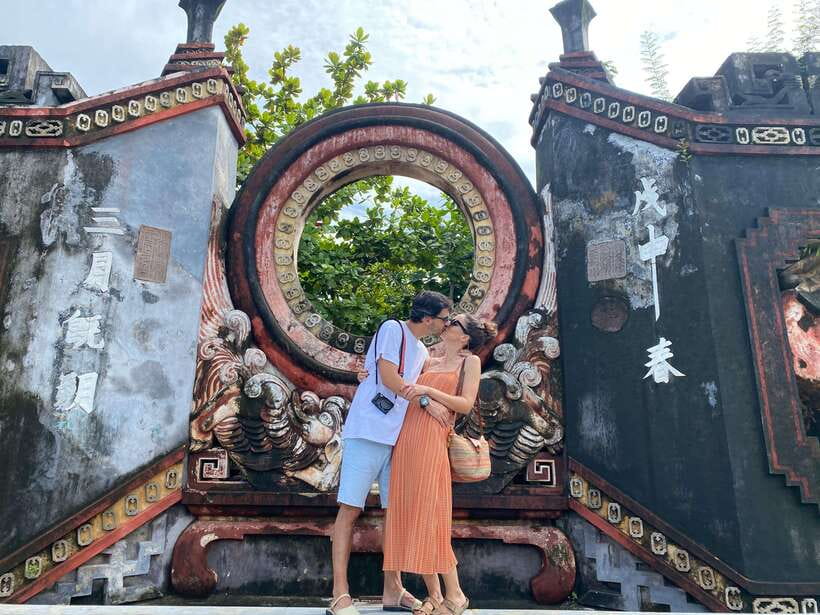
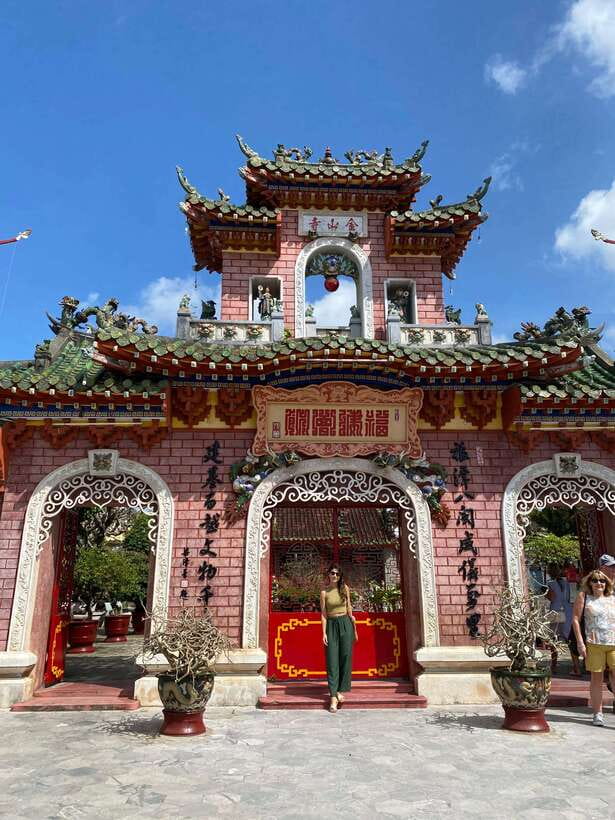
Ba Mu Temple gate: an early photo stop with local context
The first listed stop is the Ba Mu Temple gate. Its ornate entrance makes an immediate visual impression, but a guide adds the missing layer: why the gate matters, how it relates to local religious life, and how it fits into Hoi An’s older street plan.
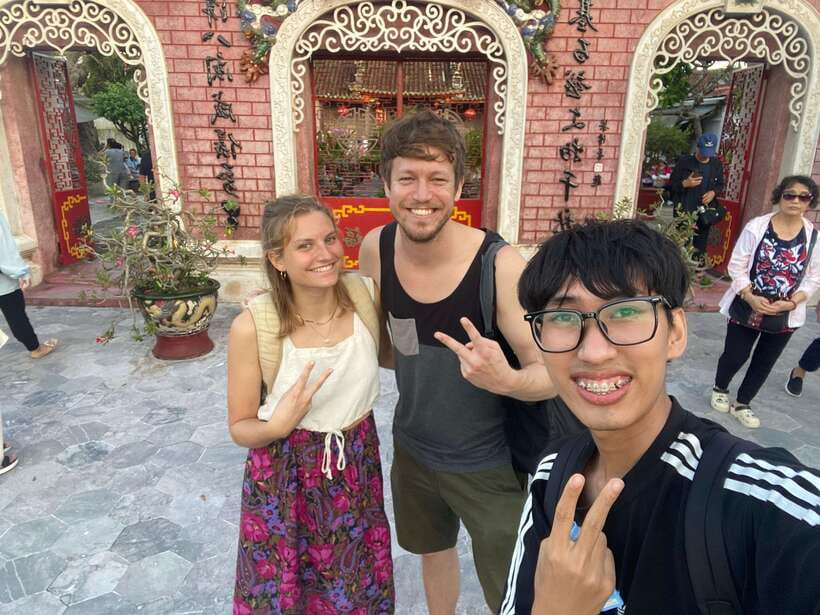
This is also the sort of stop that benefits from a small group. You have a better chance of hearing the explanation and getting a photo without the group spreading across the entrance. The guide may also help with photos, something several participants appreciated at landmarks.
Do not expect a long visit at every stop. The tour aims to give you a broad introduction rather than an extended study of one building. That is a strength if you have only one day in Hoi An. If you want a detailed architectural tour, you may later choose to revisit particular sites at your own pace.
Assembly halls and the Chinese communities of Hoi An
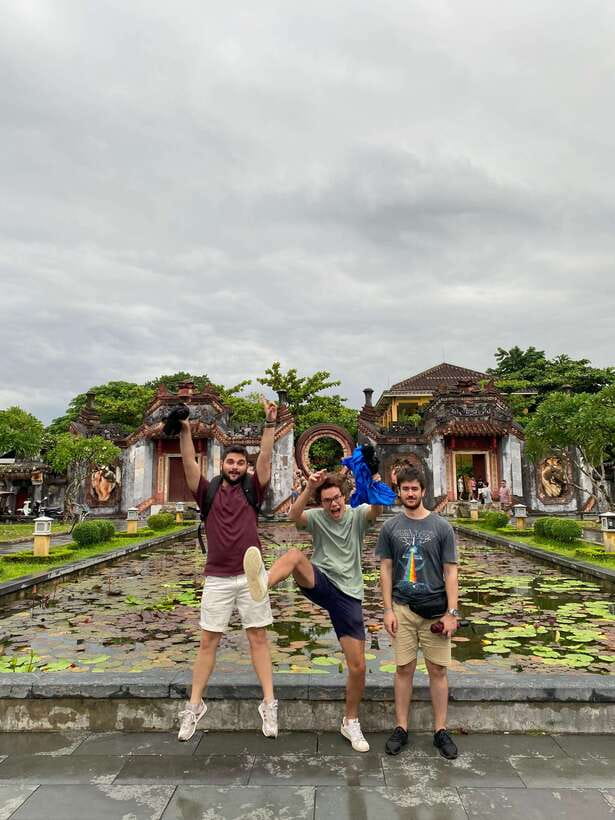
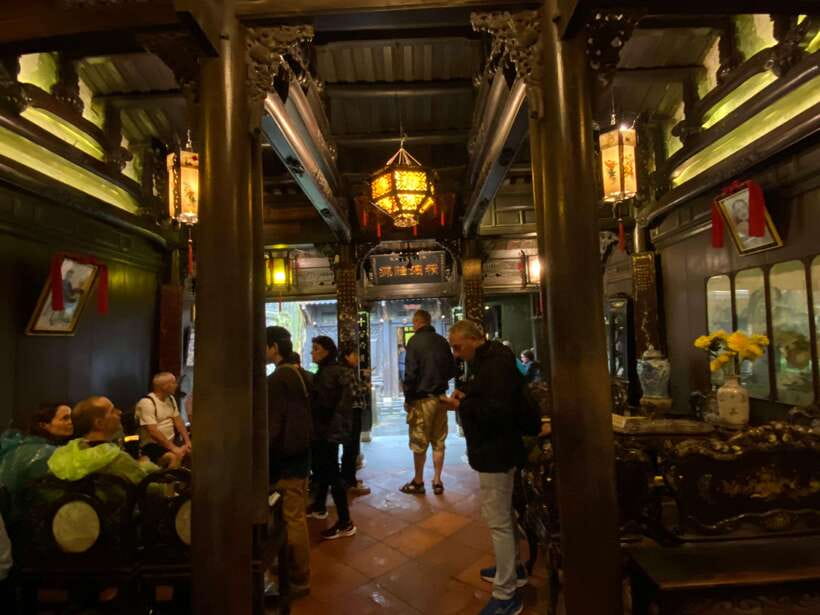
The route continues to an assembly hall identified as Fujian or Cantonese. These halls are among the most useful places for understanding how Hoi An grew as a trading port. Their decoration, layout, and religious purpose show the influence of Chinese communities who lived and traded in the town.
This is where a local guide can make the difference between looking and seeing. Without explanation, you might notice bright colors, carved details, incense, and an elaborate altar. With context, you can begin to understand the building as a place tied to community identity, worship, business, and family connections.
The tour does not treat the Old Town as a row of pretty facades. Guides such as Trung and Duy are repeatedly praised for explaining local culture alongside history, and for answering questions in clear English. Their style seems conversational rather than stiff, with humor used to keep the walking and listening balanced.
As with any active heritage site, be respectful. Keep your voice low when appropriate, follow instructions, and dress comfortably but suitably for visits to religious buildings.
The Japanese Covered Bridge and Kazik Park
The Japanese Covered Bridge is Hoi An’s signature landmark, and it is included for good reason. It is a compact symbol of the town’s trading past and one of the places you will want a photograph. The guide helps you look beyond the famous view by explaining its place in the town’s history and architecture.
Crowds are the main issue here. The bridge is a natural gathering point, and the experience can feel less peaceful when many people are trying to cross or photograph it at once. The guide’s job is especially useful in this part of the route, keeping the group close and finding workable places to stop.
Kazik Park offers a change of mood and another chance to understand how Hoi An remembers its built heritage. It also helps break up the route between major monuments. You should not expect a long rest in the park, but it gives the walk a little breathing room before the heritage houses and museums.
More History Walking Tours in Vietnam
- Explore Hanoi Old Quarter ’s Rich History and Culture By Walking
★ 4.5 · 72 reviews - Hoi An Ancient Town Walking Street Food Tours with Night Market
★ 4.5 · 50 reviews - Hoi An Ancient Town – Night Market Street Food Walking Tours
★ 4.5 · 22 reviews
Tan Ky Heritage House: see how old Hoi An homes worked

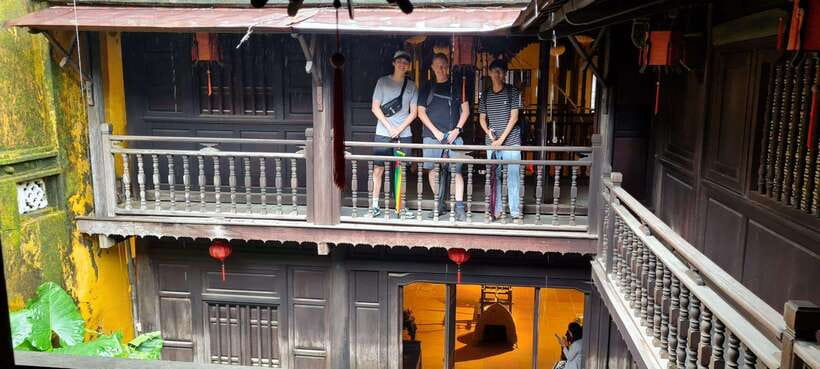
Tan Ky Heritage House is one of the tour’s most valuable stops because it brings the town’s past down to household scale. Instead of seeing only grand religious buildings, you can look at the layout of a merchant home and consider how domestic life, trade, storage, and family space once fitted together.
The house is more rewarding when someone points out the details. A guide can help you notice the materials, narrow arrangement, decorative work, and signs of different cultural influences. The building becomes more than a photogenic interior. It gives you a sense of how Hoi An’s commercial life shaped its homes.
Old houses can feel crowded during busy hours, and the route may move through them at a steady pace. Take the chance to ask questions, but do not expect unlimited time for every room. The benefit is that you see this house as one part of a larger story rather than spending the entire tour in a single property.
Traditional art and the Museum of Folk Culture
The Hoi An Traditional Art Performance House adds a living cultural element to the route. The exact performance details are not specified, so you should think of this stop as an introduction to local artistic traditions rather than book it as a full stage show on its own.
The Museum of Folk Culture broadens the picture. After temples, bridges, and merchant houses, the museum helps connect the town’s architecture with everyday customs and local life. This is also one reason the tour works well before other Hoi An activities. You gain a framework for understanding what you see later, including cultural performances.
One particularly useful tip is to take this walking tour before the Memory Show if that performance is part of your plans. The background provided during the walk can make later scenes and references easier to follow. That is a thoughtful use of your time, especially if you have only a short visit.
Indoor stops are another strong point. Hoi An can be hot, wet, or both, and the route includes several buildings where you can pause out of direct sun or rain. A wet afternoon does not automatically ruin this experience, although you should still wear comfortable clothes and prepare for outdoor walking between stops.
Hoi An Market and the practical side of the tour
The route finishes its sightseeing loop at Hoi An Market, where the focus shifts naturally from history to daily life. Markets can be hard to understand when you arrive without a plan, so a guide’s comments and recommendations are useful here.
You may not have time to shop at length during the tour. That is not a flaw. The market is better treated as a first look, followed by a return visit when you know what you want to eat or buy. Ask the guide about local dishes and nearby places, then use the rest of your stay to test those suggestions for yourself.
The recommendations are one of the strongest practical benefits of this experience. Guides provide ideas for local restaurants, coffee shops, tailor shops, and other things to do in Hoi An. Trung has even followed up with recommendations through WhatsApp in some cases, though you should treat that as a personal extra rather than a guaranteed part of the service.
A note of caution: Hoi An’s tailoring scene is a major part of the visitor experience, but recommendations are still recommendations. Compare prices, materials, delivery timing, and alteration terms before ordering. The guide can point you toward options, but the final choice is yours.
Finish with tea, dessert, or Mot’s herbal drink
The tour includes a traditional dessert or local tea, and some departures finish at Mot with its refreshing herbal drink. It is a small inclusion, but a well-chosen one. After walking through crowded lanes and heritage buildings, sitting or pausing with a local drink gives the tour a natural ending.
This also gives you a chance to ask final questions. You might want help choosing dinner, finding a cafe, planning another activity, or deciding which part of the Old Town deserves a return visit. The guide’s local perspective is most useful when you ask specific questions about what you want to do next.
The exact refreshment can vary, so do not book this expecting a full snack or meal. Think of it as a taste of Hoi An and a pleasant pause before you continue exploring.
What $14 really buys you
At $14 per person, the tour offers good value if you want both access and explanation. You are paying for a 150-minute walk, a live English-speaking guide, a small group, visits to key heritage sites, hidden lanes and photo spots, and a local drink or dessert. The entrance fee is separate at 120,000 VND per person and must be paid in cash.
The fee makes more sense when you consider the time saved. You do not need to map out eight stops, work out which heritage buildings to enter, or spend your first afternoon trying to distinguish one assembly hall from another. You also gain recommendations that can shape the rest of your stay.
It is less useful for you if you prefer total freedom to stop for shopping, photography, or food whenever you wish. A guided route has a schedule, and 150 minutes goes quickly. You will see many places, but you will not have hours at each one.
There is no hotel pickup or drop-off. You need to make your own way to 95 Phan Chu Trinh Street. Since the meeting point is in the Old Town area, check your route and allow time to arrive without rushing.
Free cancellation is available up to 24 hours before the activity for a full refund, and you can reserve now and pay later. The tour is offered in English, with a separate entrance for the included sightseeing access. Babies under one year are not suitable, and baby strollers are not allowed.
Which guide style should you expect?
Guide assignments can vary, but the strongest pattern is clear: expect a friendly local host who explains history and culture in straightforward English. Trung is often singled out for humor, clear explanations, photos, crowd control, and useful follow-up tips. Duy is praised for answering questions and making historical details fun. Tom is described as welcoming and good at keeping everyone included, while Tin is noted for making the city’s past easy to follow.
The experience seems to work because the guides do not simply recite dates. They connect buildings with local life, answer questions, and adjust to the group. That matters when people arrive with different interests and knowledge of Vietnam.
One isolated concern involved an unrelated local person following a group for a short time, which made one participant uncomfortable. The person eventually left, and the tour continued. It is worth noting because crowded public streets can bring unexpected encounters, but it does not change the overall suitability of the walk.
Who should book this Hoi An walking tour?
I would choose this tour for a first visit, a short stay, or anyone who wants a clear introduction before exploring alone. It is especially useful if you enjoy history but do not want a formal lecture, or if you want local advice you can use immediately.
Families with very young babies should choose another activity because infants under one year are not suitable and strollers are not allowed. Older children who can manage a steady town walk may find the stories and photo stops engaging, but the tour is not designed as a children’s program.
You should also book it if heat or rain is a concern. The indoor stops provide useful breaks, though you still need comfortable clothes for the outdoor sections. During Tet and other busy periods, expect crowds. The guide can help the group stay together, but no walking tour can make the narrow Old Town empty.
Should you book it?
Yes, if you want to understand Hoi An before you shop, eat, or wander on your own. The combination of a small group, a manageable pace, major heritage sights, indoor pauses, local recommendations, and a simple drink or dessert makes $14 a fair price, even after adding the separate heritage entrance fee.
Skip it if you already know the Old Town well or prefer to explore without a fixed route. For most first-time visitors, though, this is a smart opening activity. Book it early in your stay, bring cash for the entrance ticket, wear comfortable clothes, and use the guide’s suggestions to plan the rest of your time.
FAQ
How long does the Hoi An walking tour last?
The activity lasts 150 minutes, or about two and a half hours. The sightseeing route covers Hoi An Ancient Town and its main heritage stops.
Where does the tour begin?
The meeting point is 95 Phan Chu Trinh Street, Hoi An, in front of a tailor shop at the corner of the intersection.
What places are included on the route?
The route includes the Ba Mu Temple gate, a Fujian or Cantonese Assembly Hall, the Japanese Covered Bridge, Kazik Park, Tan Ky Heritage House, the Hoi An Traditional Art Performance House, the Museum of Folk Culture, and Hoi An Market.
Is the heritage entrance fee included?
No. You need to pay 120,000 VND per person for the UNESCO heritage site entrance ticket. The ticket must be paid in cash.
What language does the guide speak?
The tour is conducted in English by a local English-speaking guide.
Is the tour suitable for babies or strollers?
Babies under one year are not suitable for this activity, and baby strollers are not allowed.
What is included besides the walking tour?
The price includes the local guide, small-group walking tour, visits to key heritage sites, hidden alleys and photo stops, a traditional dessert or local tea, and recommendations for restaurants, cafes, tailor shops, and other activities in Hoi An.
Latest history tours reviewed in Vietnam
- Da Nang: Full-day My Son Sanctuary And Hoi An Heritage Tour★ 4.8 · 21 reviews
- Cu Chi Tunnels Guided Tour: Vietnam War History Half-Day★ 4.6 · 189 reviews
- Coffee, History, and Architecture of the French Quarter★ 4.9 · 71 reviews
- Boat Ride Phong Nha Cave & Vietnam’s Historic Command Cave★ 5.0 · 18 reviews
- 6 Hours Historical Tour in Cu Chi Tunnel with Free Snack★ 5.0 · 312 reviews
- Private Cu Chi Tunnels Tour – Explore History & Off-the-path Local Sites★ 5.0 · 93 reviews
- Marble Mountain – Hoi An Ancient Town Sunset Private Tour★ 5.0 · 36 reviews
- Heritage Adventure Private Tour by Electric Car★ 5.0 · 96 reviews
Hoi An History Tours, compared.


Hoi An Night Market – Ancient Town street food tours by Night
Read our review →
Browse the lists this tour appears in