
Review · BOSTON
Boston: Underground Railroad History Tour of Beacon Hill
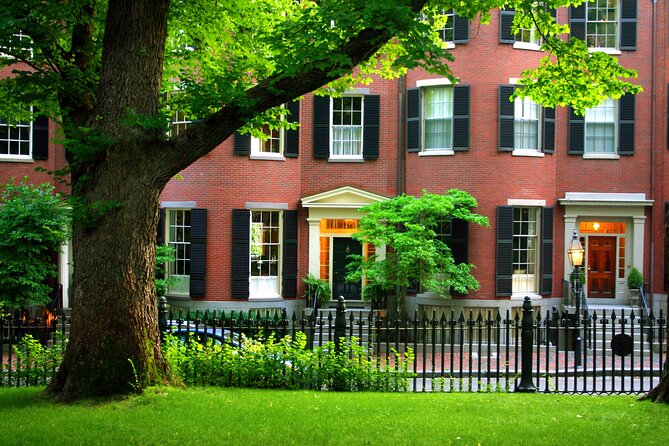
Boston’s Beacon Hill is more than gas lamps, brick sidewalks, and handsome Federal homes. On this walk, you follow the lives of Black Bostonians who built a free community beside some of the city’s wealthiest residents, while the national fight over slavery grew harder to ignore. The route links the Black Heritage Trail with homes, schools, churches, and meeting places tied to that struggle.
I like the small-group format and the strong focus on people whose stories are often left out of a standard Boston sightseeing walk. I also like that the tour ends at the Robert Gould Shaw and 54th Massachusetts Regiment Memorial, giving the walk a clear connection to the Civil War. The main drawback is physical: two miles of hills and uneven, non-ADA-compliant sidewalks can be tiring, and the tour runs outside in all weather.
Key points at a glance

- Start at Boston Common: Meet at the Soldiers and Sailors Monument near the Boston Common Visitors Center.
- Follow the Black Heritage Trail: See homes, schools, churches, and gathering places linked to Boston’s 19th-century Black community.
- Visit the African Meeting House: Allow time for one of the tour’s most important stops, though museum admission is not included.
- Hear the fight over education and equality: The route covers school integration, abolitionist politics, and resistance to racial discrimination.
- Expect a serious, story-led walk: Guides including Will, Dana, Joe, and William have brought strong subject knowledge and lively presentation styles.
- Plan for hills and weather: The walk covers about 2 miles and can last up to three hours.
Why this Beacon Hill walk matters
Many Boston walks concentrate on the Revolution. This one shifts the clock forward to the three decades before the Civil War, when slavery, freedom, citizenship, and racial equality were tearing at the young United States.
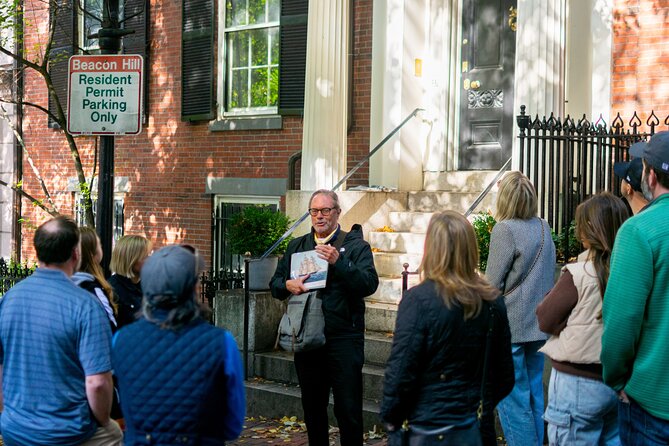
You move through a neighborhood where a free African-American community lived close to Boston’s most powerful white residents. That physical closeness gives the subject force. The story is not presented as something distant or abstract. It happened on streets you can still walk, outside houses that remain part of Beacon Hill, and beside institutions that helped shape public debate.
The tour also avoids reducing the Underground Railroad to a string of secret tunnels or dramatic escapes. You learn about homes connected with people who offered assistance, resisted the Fugitive Slave Law, and took part in the wider abolitionist movement. That broader view is useful. The Underground Railroad was a network of people, choices, risks, and relationships, not a conventional railroad.
More History Tours in Boston:
- Boston: Freedom Trail History Small Group Walking Tour
★ 5.0 · 6,450 reviews - Tour of Historic Fenway Park, America’s Most Beloved Ballpark
★ 4.5 · 3,013 reviews - Boston Food & History: Pizza, North End & Freedom Trail
★ 5.0 · 1,772 reviews
Beginning at Boston Common and Mount Vernon Street
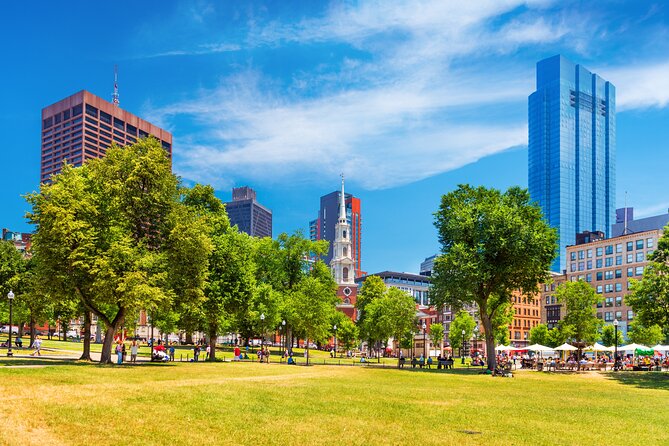
Meet your guide at the Soldiers and Sailors Monument in the center of Boston Common. Look for the tall white granite column topped by a female figure holding a flag, with four bronze statues around its base. It is only steps from the Boston Common Visitors Center at 139 Tremont Street.
The opening section on Boston Common gives you a quick sense of place and introduces the Black Heritage Trail. The tour then heads toward Beacon Hill, where the setting changes from open parkland to narrow streets and steep rises.
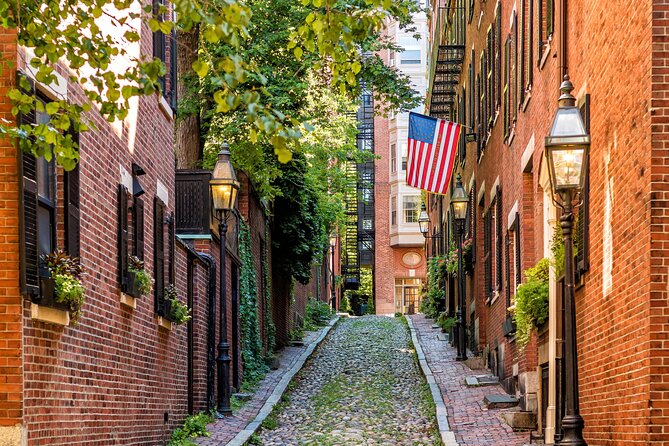
Mount Vernon Street and nearby Acorn Street provide an early look at Beacon Hill’s famous architecture. Acorn Street is photogenic, but this walk uses it for more than pretty pictures. The narrow lane helps you see the contrast between the neighborhood’s polished appearance and the difficult social battles that took place here.
At Louisburg Square, the guide places Beacon Hill’s elite residential setting beside the lives of Black residents who lived only a short walk away. That contrast is one of the tour’s most useful ideas. You are not simply looking at old houses. You are asking who had money, who had political influence, who was allowed access to education, and who had to fight for basic rights.
Phillips School and the fight over education
The Phillips School is one of the key stops because education was central to the struggle for equality. Here, the tour explains debates over racial integration and the barriers faced by Black children in Boston’s public schools.
This part may be especially useful if you think of Boston as automatically progressive because of its abolitionist reputation. The city had important anti-slavery voices, but support for abolition did not erase discrimination in daily life. Education shows that contradiction clearly.
Expect the guide to spend time on the politics and personal stakes behind school policy. Several guides, including Will, Dana, Joe, and William, have been praised for answering questions and making complicated material clear. The best use of this section is to ask about the difference between opposing slavery in the South and supporting equal treatment in Boston.
Homes connected with resistance and refuge
The route passes the John J. Smith House, the John Coburn House, and the Lewis and Harriet Hayden House. These are not just architectural stops. They connect the street to the people who helped organize Boston’s Black community and resist slavery.
The Hayden house is particularly important to the Underground Railroad story. The tour explains how Lewis and Harriet Hayden were connected with efforts to help freedom seekers. You should expect the emphasis to be on people and actions rather than theatrical claims about secret passageways.
That approach suits the subject. The people involved faced serious legal and personal danger, and the story becomes more meaningful when you consider the choices behind it. A guide may use visual aids or act out parts of a scene, as William has done, but the purpose is to make the setting easier to understand, not to turn suffering into a stage show.
You also pass the Otis House Museum and Old West Church. These are viewed from the route rather than treated as full museum visits. The itinerary includes no museum admission, so you should not plan on extended indoor sightseeing as part of the $35 tour.
Same old streets, another chapter:
- Boston: Freedom Trail History Small Group Walking Tour
★ 4.9 · 1,590 reviews - City Cruises Boston Historic Sightseeing Harbor Cruise
★ 4.5 · 1,388 reviews - Boston Pizza Lovers Food and History Walking Food Tour
★ 4.5 · 1,082 reviews - Boston Freedom Trail History Pub Crawl Small-Group Tour
★ 5.0 · 996 reviews
Charles Street Meeting House and Charles Sumner’s home
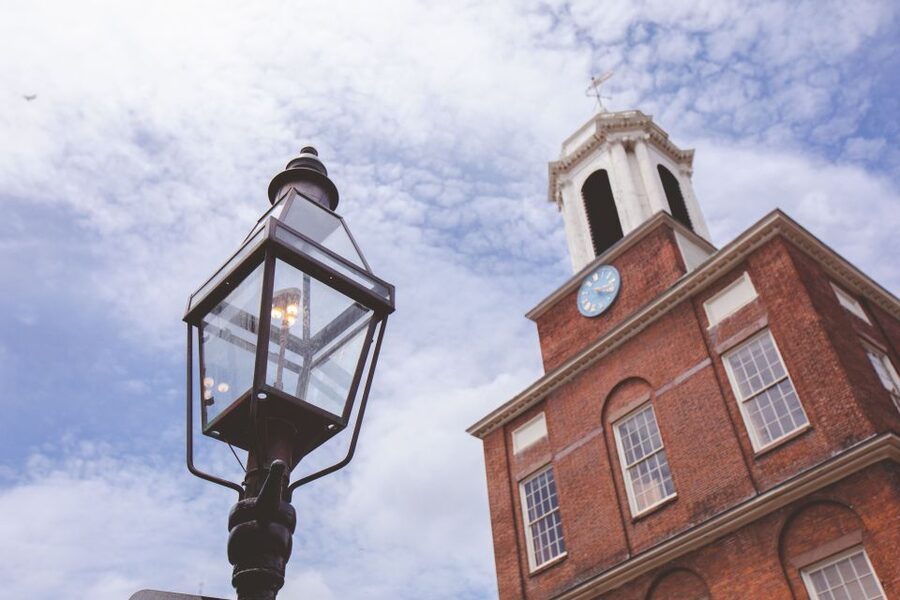
The Charles Street Meeting House is another major stop. The guide uses it to discuss Boston’s religious and civic life, along with the city’s arguments over slavery and racial equality.
This section helps explain how churches and public meeting places could serve as centers for debate and organizing. It also keeps the story from becoming a simple list of private homes. The fight over slavery moved through houses, schools, churches, newspapers, political groups, and public streets.
The walk then reaches the Charles Sumner House. Sumner was a major anti-slavery political figure, and the stop connects Beacon Hill to the national political crisis that led to the Civil War.
I like this part because it widens the tour’s focus. You see that abolition was not only a moral position held by a few idealists. It became a political movement with fierce opponents, public speeches, legislative battles, and real consequences. The guide’s job here is to tie local addresses to national events without losing sight of the people who lived nearby.
Smith Court, Abiel Smith School, and the African Meeting House
Smith Court and the Abiel Smith School bring you into the heart of the Black Heritage Trail. The school is closely tied to the fight for Black education, while the African Meeting House served as an important community and religious center.
The African Meeting House is scheduled for about 20 minutes, making it the longest planned stop on the walk. It is the point where the themes of community, faith, education, abolition, and self-determination come together.
The tour includes a guided visit to the landmark, but admission inside museums is not included in the price. Ask your guide what access is available on your date so you know what to expect. Even if you spend most of the time outdoors, this stop gives the route an anchor. You are no longer just hearing about a community. You are standing at one of its central institutions.
Smith Court and the Abiel Smith School also reward close attention to small details. The surroundings can feel quiet and residential, yet the stories attached to them are tied to large national arguments. That contrast is one of Beacon Hill’s strengths as a history setting.
George Middleton House and the walk back to Boston Common
The George Middleton House follows the African Meeting House. This stop continues the focus on Black leadership and civic life in Boston before the Civil War.
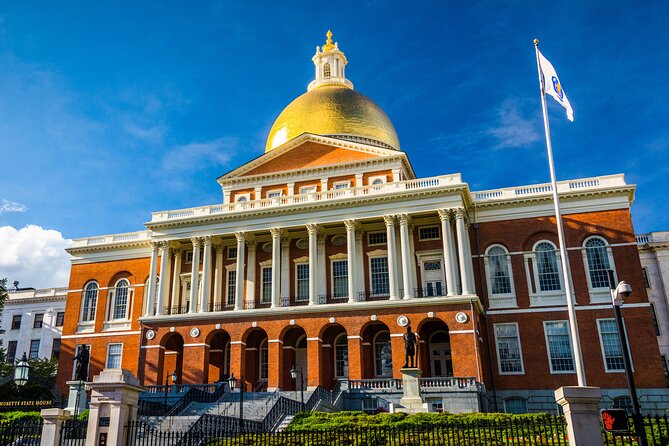
From there, the route passes views of Park Street Church and the Massachusetts State House before returning toward Boston Common. The State House is passed from outside, with no interior tour included. Park Street Church appears as part of the walk rather than as a separate admission stop.
This return section gives you time to connect the local story with Boston’s public institutions. The tour is not only about private courage. It also asks how churches, schools, government, and public opinion shaped the choices available to Black residents and abolitionists.
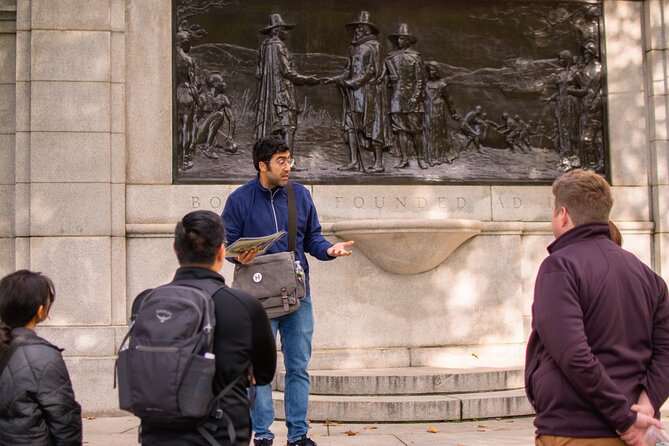
The route loops back to the Robert Gould Shaw and 54th Massachusetts Regiment Memorial. The memorial honors the Black regiment that served in the Union Army during the Civil War, led by Colonel Robert Gould Shaw. It is a fitting ending because the earlier stops have shown the long fight that came before military service and emancipation.
The final discussion lasts about 20 minutes. You will likely leave with a clearer sense that the Civil War did not appear out of nowhere. The disputes over slavery, citizenship, education, and resistance had been building for decades.
The guides and the tone of the experience
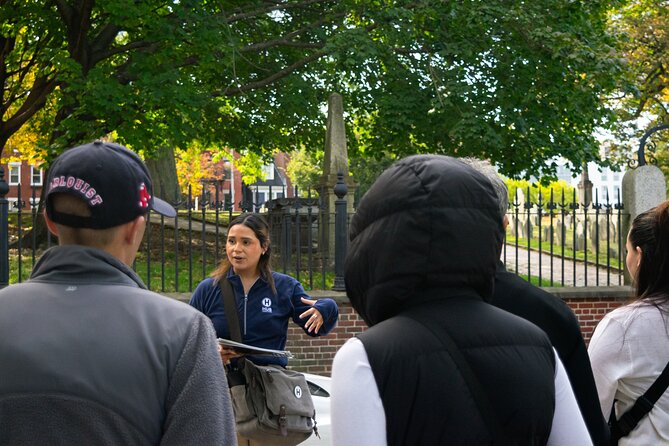
The guide is a major part of the value here. Names associated with past tours include Will, Dana, Joe, and William. Their presentation styles vary, but the feedback points to a common strength: strong command of African-American history, clear explanations, and a willingness to answer questions.
Will has been praised for his passion and for bringing scenes to life. Dana has been described as energetic and highly engaged with the lesser-known parts of Boston’s past. Joe has used visual aids and kept groups moving safely from one stop to the next. William has presented the material with enthusiasm and, at times, acted out scenes to make events easier to picture.
You should feel comfortable asking questions. One useful question concerns the Underground Railroad itself. The tour covers houses and people connected to that network, but it is broader than a narrowly focused Underground Railroad tour. If your main interest is escape routes, hidden rooms, or the mechanics of movement north, you may want an additional museum visit or a more specialized program.
The tone is serious, but not dry. The guides have been praised for making the material engaging without losing its importance. That balance matters on a 150-minute walk.
How much walking, and how hard is it?
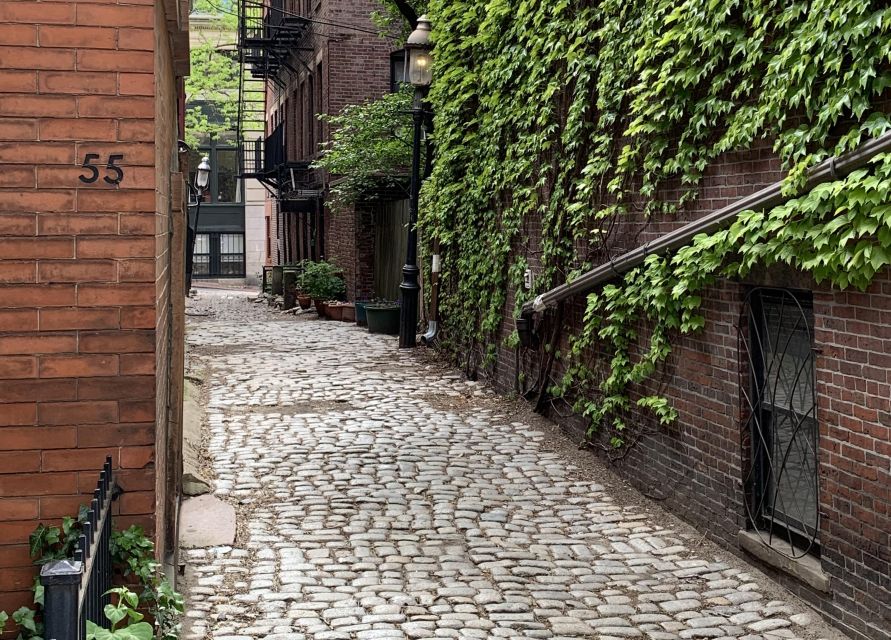
The route covers approximately 2 miles, or 3.2 kilometers. It usually takes 150 minutes, though the total can stretch to three hours depending on the group and discussion.
Beacon Hill includes steep hills, narrow sidewalks, and uneven surfaces. The tour is not suitable for wheelchair users or people with mobility impairments, and it may be uncomfortable if you have a low level of fitness. Wear comfortable shoes and clothing suited to the weather.
The activity runs rain or shine and is entirely outdoors. Bring a light rain layer when the forecast is uncertain. Large bags and luggage are not allowed, and video recording is not permitted.
Because the group is small, you avoid some of the congestion found on busy downtown sidewalks. That makes it easier to hear the guide and pause at homes without blocking the street. It does not remove the physical demands of Beacon Hill, though. Take the hills seriously, especially in hot, wet, or icy weather.
Is $35 a fair price?
At $35 per person, this is a reasonable price for a 150-minute guided walk with a local historian and access to a focused route through Beacon Hill. You are paying for interpretation, not transportation or a long list of paid attractions.
The value is strongest if you want context. You could walk past Acorn Street, the African Meeting House, or the 54th Massachusetts Memorial on your own, but you would miss the links between education, abolition, housing, religion, politics, and the coming war.
The price does not include gratuity or admission inside museums. If you value the guide’s work, a tip is optional. I would also budget extra time and money for a separate museum visit if you want more indoor exhibits after the walk.
You can cancel up to 24 hours ahead for a full refund, and the reserve-now, pay-later option keeps your schedule flexible.
Who should book this tour?
I recommend it for adults, older children over age six, students, and anyone who wants a fuller view of Boston than the usual Revolutionary War circuit. It suits people who enjoy walking, asking questions, and listening to a sustained story rather than rushing from photo stop to photo stop.
It is also a smart choice if you have already seen the Freedom Trail and want a different side of the city. The tour adds depth to Beacon Hill without requiring a full day.
I would think twice if you need step-free access, dislike outdoor walks in poor weather, or want a tour focused only on the Underground Railroad. The subject includes slavery, racism, resistance, and the road to war, so it deserves your attention and energy.
Should you book the Beacon Hill Underground Railroad tour?
Book it if you want to understand how Boston’s Black community shaped the city and challenged the nation before the Civil War. The combination of real addresses, the African Meeting House, school history, abolitionist politics, and the 54th Massachusetts Memorial gives you a strong two-and-a-half-hour introduction.
The biggest reasons to go are the people-centered storytelling, the manageable small-group setting, and the chance to see ordinary Beacon Hill streets through a very different lens. Just wear good shoes, prepare for hills, and remember that the walk is outdoors from start to finish.
FAQ
Where does the tour start?
It starts at the Soldiers and Sailors Monument in the center of Boston Common, near the Boston Common Visitors Center at 139 Tremont Street.
How long does the walking tour last?
The scheduled duration is 150 minutes. The tour can vary in length but will not last more than three hours.
How far does the route go?
The walk covers about 2 miles, or 3.2 kilometers, through Boston Common and Beacon Hill.
Is the tour indoors or outdoors?
The tour is entirely outdoors and operates rain or shine. Museum admission inside landmarks is not included.
Does the tour visit the African Meeting House?
Yes. The African Meeting House is a planned stop with about 20 minutes for a guided visit and break time.
Is the tour accessible for wheelchair users?
No. The route includes steep hills and non-ADA-compliant sidewalks, and it is not suitable for wheelchair users or people with mobility impairments.
What should I bring?
Bring comfortable shoes and weather-appropriate clothing. Large bags and luggage are not allowed.
What language is the tour offered in?
The live guided tour is offered in English.
Latest history tours reviewed in Boston
- Boston: Ultimate Historic Food & Drink Tour★ 4.7 · 20 reviews
- Boston: Historic Pubs Walking & Ferry, Food & Drink Tour★ 4.9 · 56 reviews
- Boston History & Highlights Tour: From Revolution to Today★ 4.8 · 178 reviews
- Boston: Seafood Tasting & Historical Walking Tour★ 5.0 · 28 reviews
- Boston: Haunted Pub Crawl of Historic Pubs and Taverns★ 4.6 · 127 reviews
- Boston: History & Haunts Guided Ghost Tour★ 4.3 · 154 reviews
- Boston: 2-Hour Historic Walking Tour★ 4.7 · 88 reviews
- Boston: Tour of The Freedom Trail with Historic North End★ 4.5 · 154 reviews
Boston History Tours, compared.
Boston: Freedom Trail History Small Group Walking Tour
Read our review →
Tour of Historic Fenway Park, America’s Most Beloved Ballpark
Read our review →
Boston Food & History: Pizza, North End & Freedom Trail
Read our review →
City Cruises Boston Historic Sightseeing Harbor Cruise
Read our review →
Boston Pizza Lovers Food and History Walking Food Tour
Read our review →
Boston Freedom Trail History Pub Crawl Small-Group Tour
Read our review →
Boston History Tour: Scenic Walk Through Time & Landmarks
Read our review →
Boston History & Highlights Tour: From Revolution to Today
Read our review →Browse the lists this tour appears in