
Review · BOSTON
Boston: Tour of The Freedom Trail with Historic North End
Boston’s Freedom Trail is more than a red line through downtown. It is a chain of places where public protest, religion, burial, schooling, and revolution collided. This tour adds a useful twist by continuing past Faneuil Hall into the North End, ending near Paul Revere Mall rather than stopping in the central downtown section.
I especially like the colonial costume and live storytelling, which give the walk a bit of theater without turning it into a stage show. I also like the modest $26 price, since you cover many major sights in less than two hours. The main caution is that this is a walking and standing tour, and longer stories at each stop can make the pace feel slow for some people.
Key points at a glance
- North End extension: Continue beyond Faneuil Hall to Paul Revere House and Paul Revere Mall.
- Strong guide-led storytelling: Guides including Elena, Steve, Jeremiah, Anna, and Captain Pickles have been praised for humor, energy, and clear historical explanation.
- Major downtown sights: See Granary Burying Ground, the Boston Massacre Site, Old State House, Old South Meeting House, and more.
- About 1.3 miles on foot: The route is manageable, but you may stand for much of the presentation.
- Outdoor sightseeing: Admission inside museums and attractions is not included.
- Good value at $26: A practical introduction for first-time visitors who want context instead of simply following the trail alone.
Why the North End addition changes the walk
Many basic Freedom Trail walks focus on the central stretch between Boston Common and Faneuil Hall. That section gives you the essential Revolutionary-era landmarks, but Boston’s story does not stop at the market hall.
This route continues into the North End, one of the city’s oldest neighborhoods, to Paul Revere House and Paul Revere Mall. That extra section helps connect the famous midnight ride with the streets and neighborhood where Revere actually lived.
You will not cover Charlestown on this tour. The route is limited to the standard downtown section and the North End, which keeps the experience compact. If you want every major Freedom Trail site, including the Bunker Hill area, you will need a separate outing.
The walk is listed at 105 minutes, though you should allow up to two hours. That extra time matters because the guide may pause for questions, crowd conditions, or a longer story at an important stop.
More History Tours in Boston:
- Boston: Freedom Trail History Small Group Walking Tour
★ 5.0 · 6,450 reviews - Tour of Historic Fenway Park, America’s Most Beloved Ballpark
★ 4.5 · 3,013 reviews - Boston Food & History: Pizza, North End & Freedom Trail
★ 5.0 · 1,772 reviews
Starting at Boston Common Visitor Center
Meet at 139 Tremont Street, the Boston Common Visitor Center, and arrive 15 minutes early. The tour leaves on time, so do not treat the meeting point as a casual suggestion.
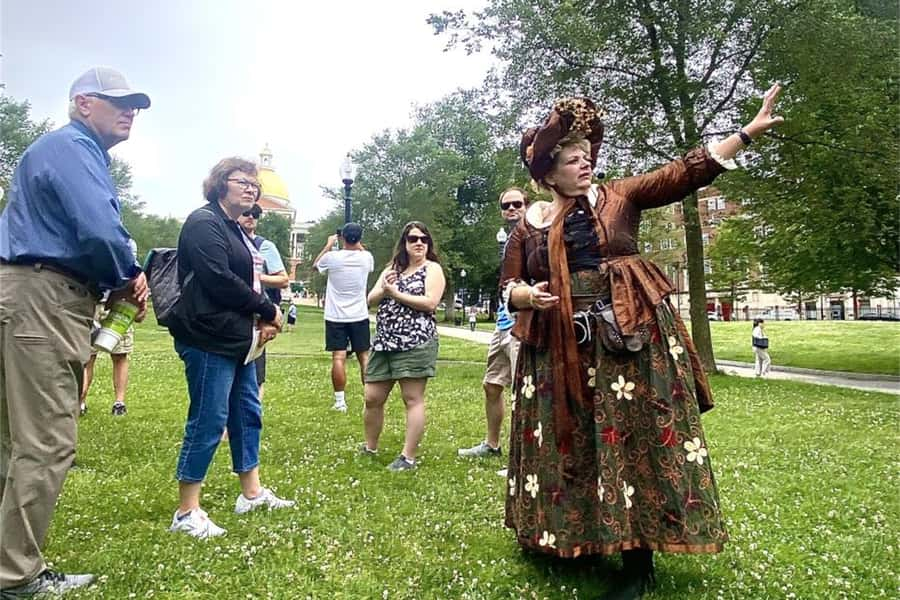
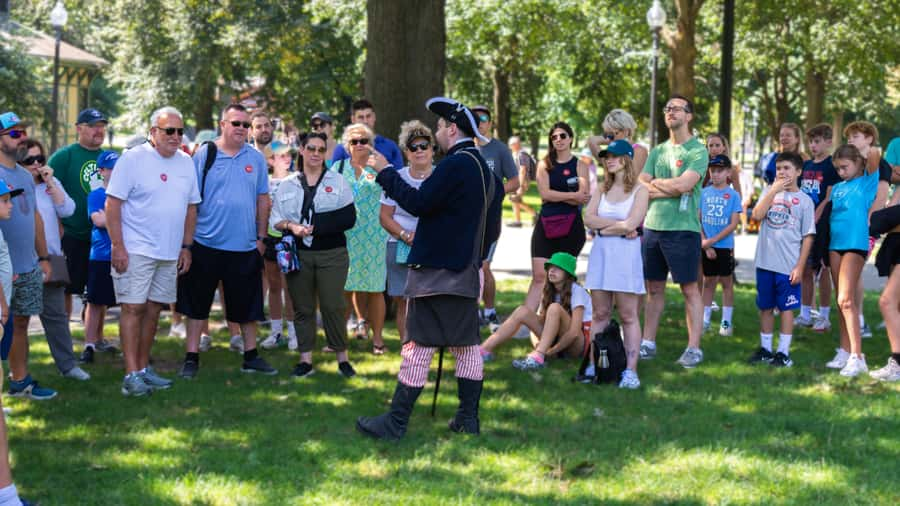
Boston Common gives the guide a natural opening. It is America’s first public park, and it offers room to gather before the group moves into narrower downtown streets. You will meet a colonial-costumed historical interpreter here, then begin walking through Boston’s early civic and political center.
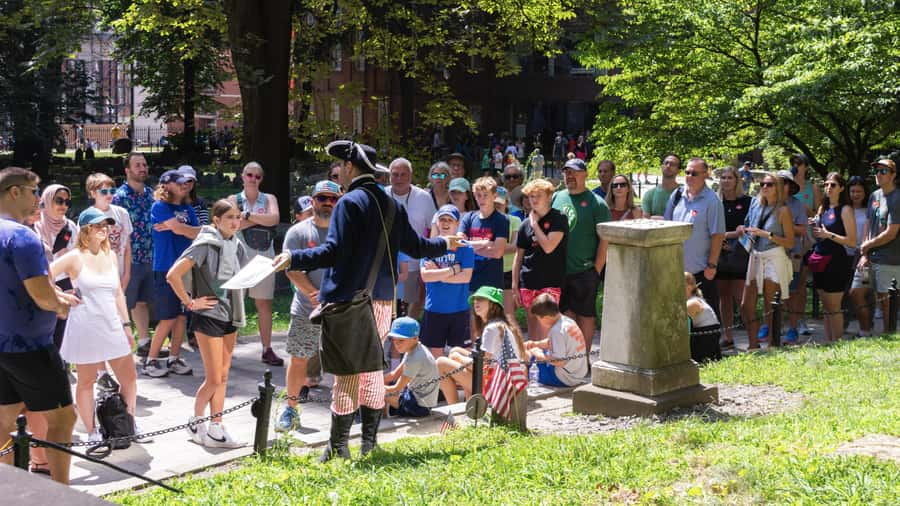
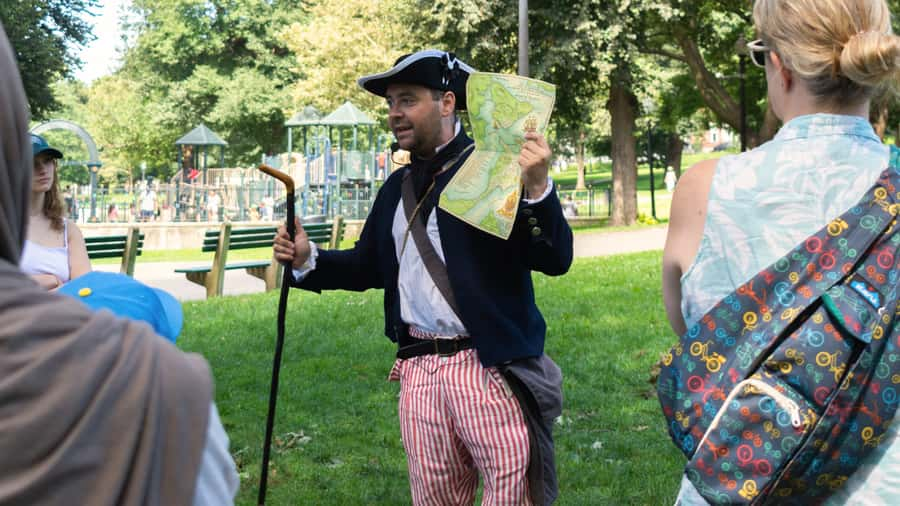
The costume is not just decoration. It helps separate the tour from a dry point-to-point lecture, especially when the guide is working with families or a large group. Steve, for example, was praised for staying in character even on a cold day, while other guides have used humor, music, or lively delivery to keep the group focused.
From the State House to Park Street Church
The first stretch brings you past the Massachusetts State House and Park Street Church. You will primarily see these places from outside, with the guide explaining their role as you walk or stop nearby.
Park Street Church is especially easy to recognize, rising beside the Common with its white steeple. The site helps show how religion and public speech shaped Boston life. The tour does not promise interior access, so think of this as an exterior visit with interpretation rather than a church tour.
The route is not hard in distance, but it is not a ride or a bus tour. You will walk between stops, pause while the guide speaks, and move through ordinary city traffic and public spaces. Comfortable shoes and weather-appropriate clothing are essential.
Granary Burying Ground and Boston’s early leaders
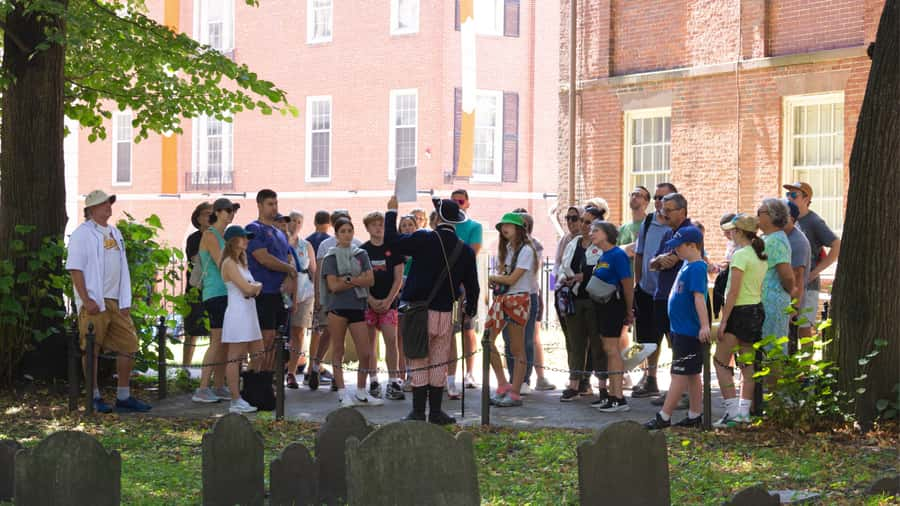
Granary Burying Ground is one of the most important stops on the route. Its gravestones connect the political story of the Revolution with the people who shaped it.
The burial ground includes figures associated with America’s founding era, and the guide uses the site to explain who they were and why they mattered. This is one of the moments when a guided walk gives you more than a map. Without context, a cemetery can become a quick photo stop. With a good interpreter, names and dates gain a human connection.
You will be outdoors and may stand while listening. One practical point comes through clearly: the walking distance is moderate, but the tour can still feel tiring if standing is difficult. The experience is listed as wheelchair accessible, though you should consider your own comfort with outdoor surfaces, crowding, and repeated stops.
Same old streets, another chapter:
- Boston: Freedom Trail History Small Group Walking Tour
★ 4.9 · 1,590 reviews - City Cruises Boston Historic Sightseeing Harbor Cruise
★ 4.5 · 1,388 reviews - Boston Pizza Lovers Food and History Walking Food Tour
★ 4.5 · 1,082 reviews - Boston Freedom Trail History Pub Crawl Small-Group Tour
★ 5.0 · 996 reviews
King’s Chapel and the first public school
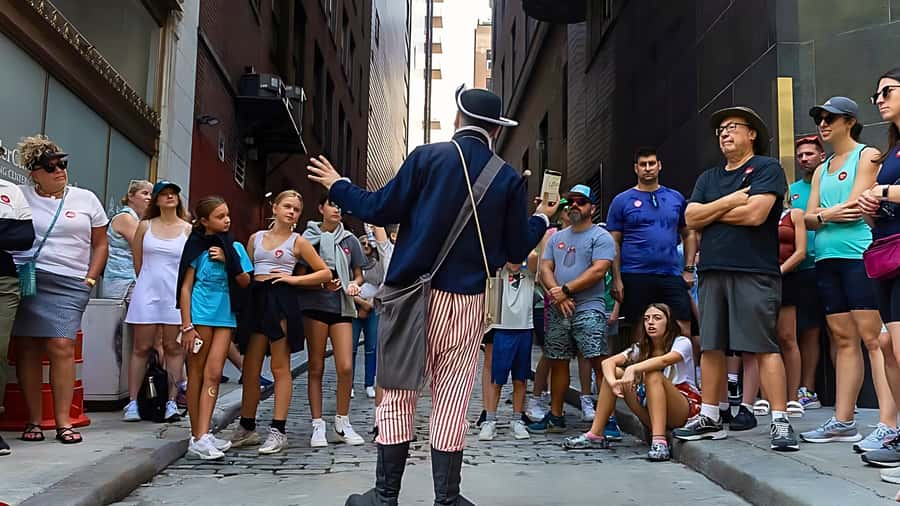
The route passes King’s Chapel Burying Ground and continues toward Boston Latin School and the Benjamin Franklin statue. These sites widen the story beyond battle and protest.
King’s Chapel Burying Ground gives the guide another chance to discuss Boston’s early residents and burial customs. The tour passes by rather than offering a full cemetery visit, so you should expect a brief explanation rather than a long stop.
Boston Latin School and the Benjamin Franklin statue add an education angle. The school is identified as America’s first public school, while Franklin’s statue recalls one of Boston’s best-known sons. The combination is useful because it shows how education, civic life, and public reputation were tied together in the colonial city.
This portion can be easy to rush through if you are walking alone. The guide’s role is to point out what you might miss while moving through the modern city.
Old Corner Book Store and Old South Meeting House
The Old Corner Book Store is a small but distinctive landmark among larger civic buildings. It gives the walk a more everyday scale, reminding you that Boston’s historic story also unfolded in shops, meeting places, and busy streets.
Old South Meeting House is one of the strongest political stops. The building is linked to the events leading to the Boston Tea Party, and its role makes clear how public meetings could turn anger into organized action.
The guide will explain the site from the outside unless you separately arrange admission. This is important when comparing tours. The $26 fee pays for the walk, costumed interpretation, and live narration. It does not cover entry into museums or attractions.
For many people, that is a fair trade. You see a large number of major places in one compact route, then choose later which interiors deserve extra time. If you prefer detailed indoor visits, this tour works best as an orientation rather than a complete museum program.
Old State House and the Boston Massacre Site
The Old State House is one of the walk’s central landmarks. Its location makes it a natural place to discuss colonial government, public authority, and the tension between local residents and British rule.
Nearby, the Boston Massacre Site marks one of the most charged moments before the Revolution. The location is easy to overlook because it sits in the middle of a modern street area. That is exactly why a guide helps. You get a clear explanation of what happened and why the event became such a powerful piece of revolutionary messaging.
Expect the guide to stop, gather the group, and tell the story rather than simply point at a plaque. Several guides have been praised for keeping these explanations witty and approachable. Jeremiah, Steve, Elena, and others have been singled out for making serious history easy to follow without losing the human side.
A possible downside is sound. Downtown streets can be crowded, and one assessment noted that it was sometimes hard to hear in busy places. Stay close to the guide and position yourself where you can see and hear clearly.
Faneuil Hall, then into the North End
Faneuil Hall is the natural climax of the downtown portion. Its nickname as a place of public debate reflects the way Boston’s revolution was shaped through speeches, meetings, and argument, not only through fighting.
The stop also marks the point where this tour differs from a shorter central Freedom Trail walk. Instead of ending here, you continue into Boston’s North End.
That extension is valuable because it changes the mood of the experience. The first portion focuses heavily on public institutions and revolutionary flashpoints. The North End brings the story into a neighborhood setting, with narrower streets and a closer connection to Paul Revere.
The guide continues narrating as the group walks. You should not expect a long break for food or shopping, and you will not be touring the North End as a restaurant crawl. This is a history walk that uses the neighborhood as its setting.
Paul Revere House and Paul Revere Mall
Paul Revere House is the key reason to choose this version of the tour. You will see the home from the outside, hear about Revere, and connect his famous ride with the neighborhood where he lived.
Admission inside the house is not included. If you want to tour the interior, plan to return separately and pay the applicable admission. The guided walk gives you context first, which can make a later indoor visit more meaningful.
Paul Revere Mall is the stated finishing area. It offers a final North End setting for the story and provides a clear endpoint near the Old North Church area. The itinerary identifies the Old North Church as a sight to see, though the listed stop sequence finishes at Paul Revere Mall rather than promising an interior church visit.
There is a small logistical wrinkle in the supplied meeting details: the route lists Paul Revere Mall as the finish, while the meeting information also says the activity ends back at the meeting point. Confirm the exact end location when booking, especially if you have a timed dinner, museum entry, or train connection afterward.
The guides make the biggest difference
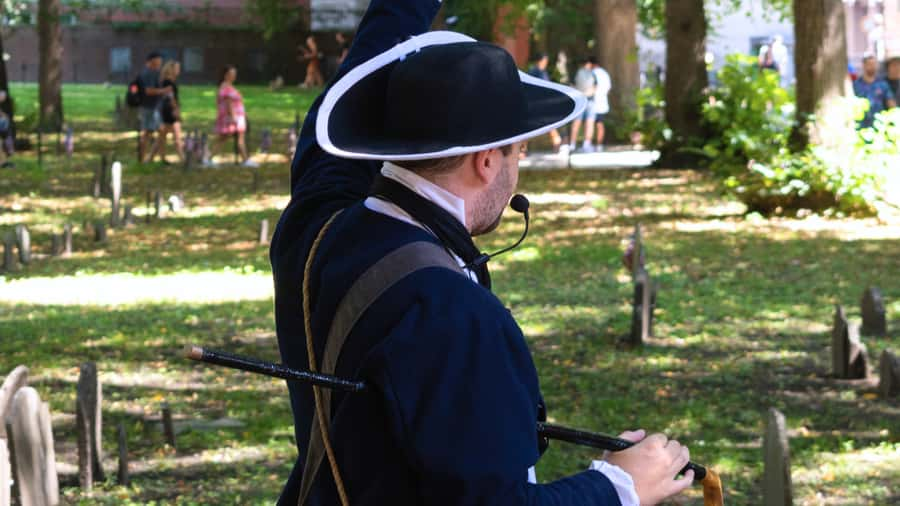
This experience depends heavily on the person leading it. The format allows for a playful colonial character, but the best guides also give you structure and clear facts.
Catherine has been praised for staying positive in the rain. Ben was described as both informed and entertaining. Elena, also called Mother Goose, received particularly strong praise for her storytelling and the way she explained details that an independent walk might miss.
Jeremiah Poole has been noted for keeping history light and witty, even with a group of about 50 people. Steve has been praised for his period clothing, humor, and ability to hold attention on a cold day. Anna and Captain Pickles have also been recognized for lively, engaging presentations.
These names do not guarantee who will lead your departure. They do show the range of the tour’s style. Expect an interpreter who may use jokes, character work, stories, and possibly music rather than a quiet academic lecture.
Large groups are possible. A good guide can keep the group together and project well, but a crowded departure may feel less personal. One clear tradeoff is that you may pay a little more for a smaller group elsewhere if close interaction matters most to you.
Is $26 good value?
At $26 per person, this is a solid value for a first look at Boston’s central historic district. You receive a live English-language guide, a costumed interpreter, and coverage of many major sites in roughly two hours.
The price is strongest if you are new to Boston, short on time, or want help connecting the landmarks. Walking the route alone costs less, but you must provide your own research and may miss the importance of places such as the Old Corner Book Store, the Boston Massacre Site, or the burial grounds.
The fee is less attractive if you want interior admission, a tiny group, or a long visit at every landmark. This is an outdoor overview with storytelling, not a full collection of museum entries.
Free cancellation up to 24 hours before the activity and a reserve-now, pay-later option make it easier to fit into a changing schedule. The tour is conducted in English only.
Who should book this Freedom Trail walk?
I would choose this tour for first-time Boston visitors, families, history fans, and anyone who wants a useful introduction before exploring on their own. It is also a good match if Paul Revere’s House and the North End matter to you, since many shorter walks stop at Faneuil Hall.
You should bring comfortable shoes, water, and clothing suited to the forecast. Rain does not necessarily stop the tour, so prepare for outdoor conditions rather than assuming a weather cancellation.
The experience may be less suitable if you have trouble standing, dislike theatrical interpretation, or want a fast photographic sweep. The walk is not especially long, but the guide may spend several minutes at each major stop.
Should you book it?
Book this tour if you want Boston’s famous landmarks explained by a lively human guide, and if the North End extension matters to you. The combination of Granary Burying Ground, Old State House, Faneuil Hall, Paul Revere House, and Paul Revere Mall gives you a strong historical route for $26.
Skip it if you plan to visit every attraction inside, need a small private group, or want to include Charlestown. In that case, use this walk only as a starting point or choose a longer, more specialized tour.
For most first-time visitors, it is a practical choice. You get the main downtown story, a taste of the North End, and enough guidance to make the Freedom Trail feel like a connected chapter of history rather than a series of old buildings.
FAQ
Where does the tour start?
The tour starts at 139 Tremont Street, the Boston Common Visitor Center in Boston, Massachusetts.
How long does the tour last?
The listed duration is 105 minutes, but you should plan for the activity to last up to two hours.
How far does the tour walk?
The route covers a short 1.3-mile stretch through Boston’s central historic area before continuing into the North End.
Does the tour include Charlestown?
No. The route covers the standard section of the Freedom Trail and the North End, but it does not cover Charlestown.
Does the price include admission to Paul Revere House?
No. Admission inside museums and attractions is not included in the tour price.
Is the tour wheelchair accessible?
The activity is listed as wheelchair accessible. It is still a walking tour with periods of standing, so consider your comfort with the full route and outdoor stops.
What language is the tour conducted in?
The tour is conducted in English with a live guide.
What should I bring?
Bring comfortable shoes and clothing suitable for the weather. Arrive 15 minutes before the scheduled start because the tour leaves on time.
Latest history tours reviewed in Boston
- Boston: Underground Railroad History Tour of Beacon Hill★ 4.9 · 38 reviews
- Boston: Ultimate Historic Food & Drink Tour★ 4.7 · 20 reviews
- Boston: Historic Pubs Walking & Ferry, Food & Drink Tour★ 4.9 · 56 reviews
- Boston History & Highlights Tour: From Revolution to Today★ 4.8 · 178 reviews
- Boston: Seafood Tasting & Historical Walking Tour★ 5.0 · 28 reviews
- Boston: Haunted Pub Crawl of Historic Pubs and Taverns★ 4.6 · 127 reviews
- Boston: History & Haunts Guided Ghost Tour★ 4.3 · 154 reviews
- Boston: 2-Hour Historic Walking Tour★ 4.7 · 88 reviews
Boston History Tours, compared.
Boston: Freedom Trail History Small Group Walking Tour
Read our review →
Tour of Historic Fenway Park, America’s Most Beloved Ballpark
Read our review →
Boston Food & History: Pizza, North End & Freedom Trail
Read our review →
City Cruises Boston Historic Sightseeing Harbor Cruise
Read our review →
Boston Pizza Lovers Food and History Walking Food Tour
Read our review →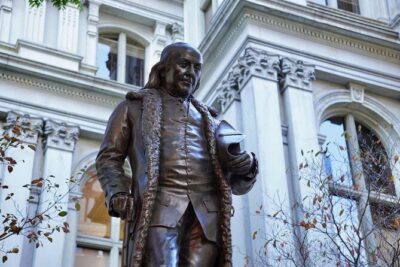
Boston Freedom Trail History Pub Crawl Small-Group Tour
Read our review →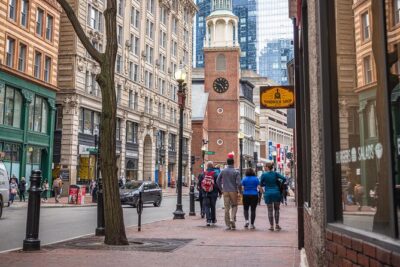
Boston History Tour: Scenic Walk Through Time & Landmarks
Read our review →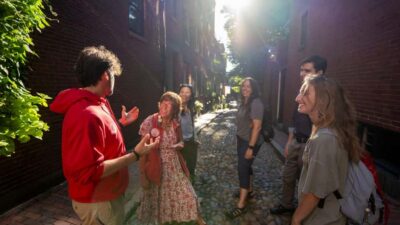
Boston History & Highlights Tour: From Revolution to Today
Read our review →Browse the lists this tour appears in