
Review · PRAGUE
Prague: Oldtown, Medieval Underground & Dungeon History Tour
Prague’s most curious streets are not always the ones you can see. This 85-minute tour leads you below Old Town’s cobbles into 12th to 14th-century rooms and corridors, then into a dungeon filled with torture and execution displays. Above ground, your guide connects those low, dim spaces to the city’s wars, floods, fires, and daily life.
I like the way the tour joins real medieval rooms with lively storytelling, rather than leaving you to stare at bare stone. I also like the short format: long enough to add a new layer to Prague, but not so long that the history turns into a lecture. The main drawback is the setting itself. Stairs, narrow passages, darkness, and no underground toilets make this a poor choice for anyone with mobility limits, claustrophobia, or a small child.
Key points before you book
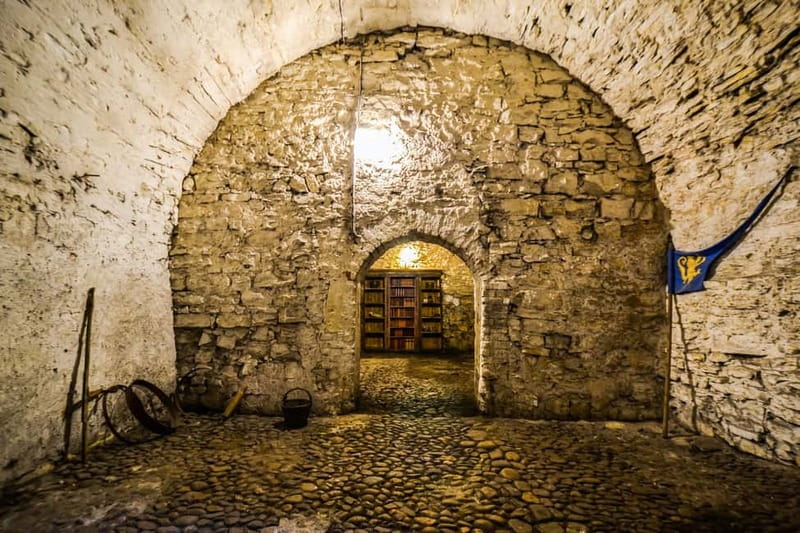
- Descend two floors below Old Town: Walk through Romanesque and Gothic rooms that helped form the lower levels of today’s Prague.
- History with a human edge: Hear about rebellions, civil wars, floods, fires, plague, executions, and how people lived in the medieval city.
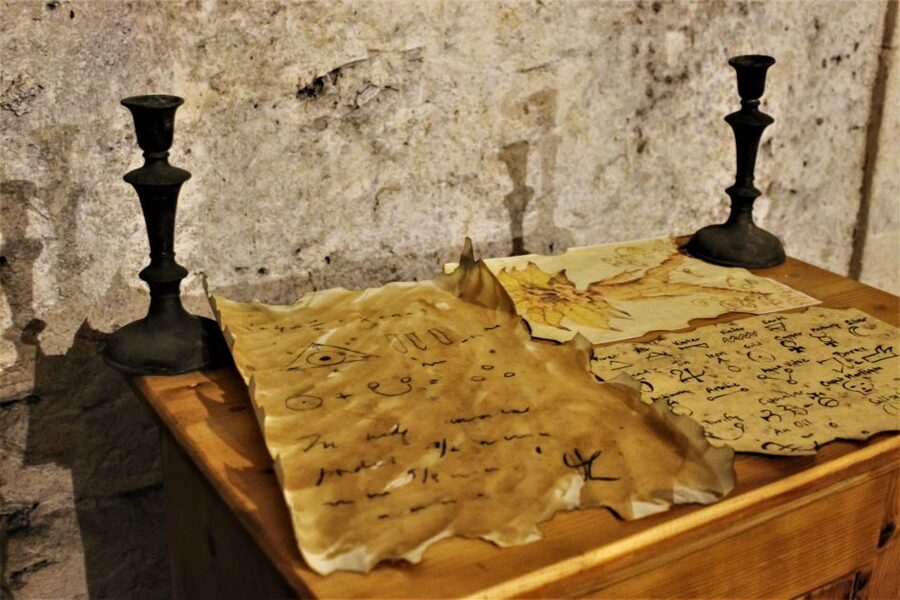
- Alchemy and the Golem: See a recreated secret laboratory with equipment linked to Prague’s long-running alchemy legends.
- A sober dungeon visit: The final section covers torture and executions, including the infamous executioner Jan Mydlář.
- Strong guide-led experience: Patrik, Julia, Susan, Nicole, Barbora, and Hastal are among the guides praised for humor, clear English, and easy conversation.
- Plan for stairs and darkness: Wear sensible shoes, arrive five to ten minutes early, and do not expect a toilet below ground.
Why Prague’s real mystery sits below the street
Most first-time visits to Prague focus on castles, churches, bridges, and ornate facades. That is sensible, but it can make the city feel like a collection of beautiful exteriors. This tour changes the angle. You walk through the Old Town first, then go below the modern street level to see the older city that floods, rebuilding, and rising ground levels left underneath.
That idea is the key to the whole experience. Prague was not built on one neat layer. Parts of the present city sit above earlier floors, houses, cellars, and streets. As the city changed, some medieval spaces were buried or incorporated into later buildings. The underground rooms are therefore more than atmospheric chambers. They help you picture how the city developed over several centuries.
I like this kind of history because it gives you something concrete to hold on to. Instead of hearing only that Prague suffered floods, you can connect the story to rooms that ended up below street level. Instead of treating medieval life as a distant chapter, you see the cramped spaces where people once worked, stored goods, moved between buildings, or sought shelter.
The guide matters a great deal here. A plain stone wall needs explanation. Patrik has been praised for mixing personal stories with dry humor, while Julia is noted for her passion for medieval Czech history and willingness to answer questions. Susan, Nicole, Barbora, and Hastal are also names associated with engaging, funny presentations. The quality of your guide can shape the entire tour, since much of the experience comes through spoken explanation rather than elaborate displays.
More Medieval History Tours in the world:
- Prague Old Town, Medieval Underground and Dungeon Historical Tour
★ 4.5 · 3,227 reviews - Templar Tour Convent of Christ & Almourol Castle from Lisbon
★ 5.0 · 704 reviews - London: Medieval History Walking Tour from The Tower
★ 4.9 · 318 reviews
Meeting the guide in Male Namesti Square
The meeting point is at the ticket office inside the Art Passage at Male Namesti Square 459/11 in Prague 1 Old Town. It is about 20 meters to the right of Black Angels Bar and Hotel U Prince. You should arrive five to ten minutes before the start time, but not much earlier, since check-in and registration take place shortly before departure.
This location puts you in the heart of Old Town, close to many major sights. Give yourself enough time to find the passage without rushing. The tour does not wait indefinitely once it has left, and joining late is not guaranteed.
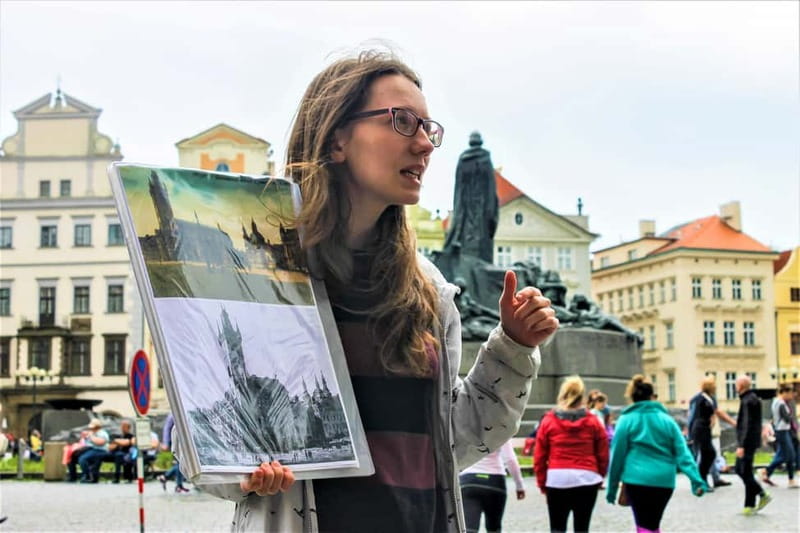
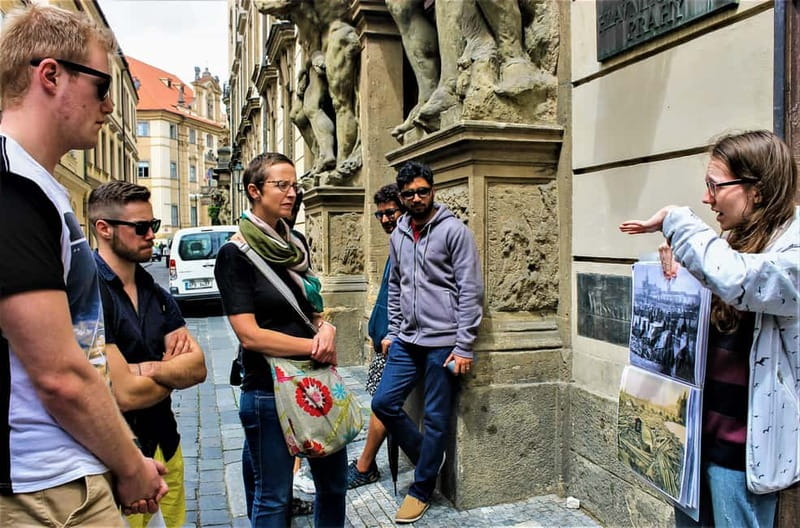
The walk begins outdoors, so you are not underground from the first minute. Your guide uses the Old Town streets to set up the story and point out how the medieval city relates to the buildings around you. That opening walk is useful. Without it, the underground rooms could feel like an isolated attraction. With it, you can connect what is below to the streets and buildings above.
English and German tours are available. You need to understand the selected language, and translating during the tour is not allowed for safety and practical reasons. Photos are allowed, but video recording requires extra permission.
The Old Town walk puts the cellars in context
The above-ground part of the tour is not a full Prague sightseeing walk. It is a short route designed to lead you toward the underground sites and explain their place in the city. You will hear about the medieval period, local conflicts, and the disasters that changed Prague.
The subject matter is unusually broad for an 85-minute activity. Rebellions and civil wars show the city under political pressure. Floods and fires explain physical change. Plague and executions remind you that medieval urban life was not all church towers and market squares.
The guides tend to keep this section conversational. Several have been praised for making history approachable, even for people who do not usually enjoy it. That is important because the tour moves quickly. A guide who simply recites dates would make the experience feel rushed. A guide who links the facts to buildings, streets, and local customs gives you a better sense of place.
You may also pick up modern Prague tips along the way. Some guides have directed people toward restaurants, beer halls, shops, or a vintage store after the tour. Those recommendations are not a formal part of the activity, but they can help you continue exploring once the history lesson ends.
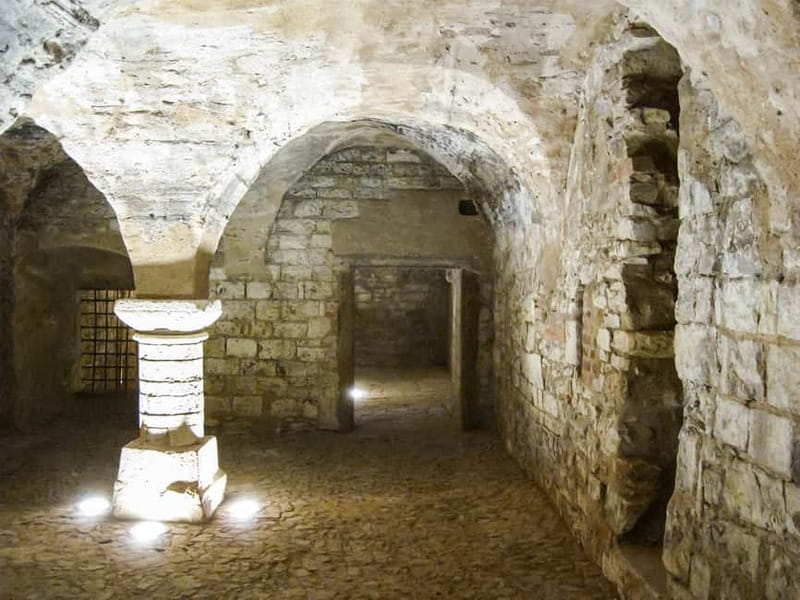
Romanesque and Gothic rooms below modern Prague
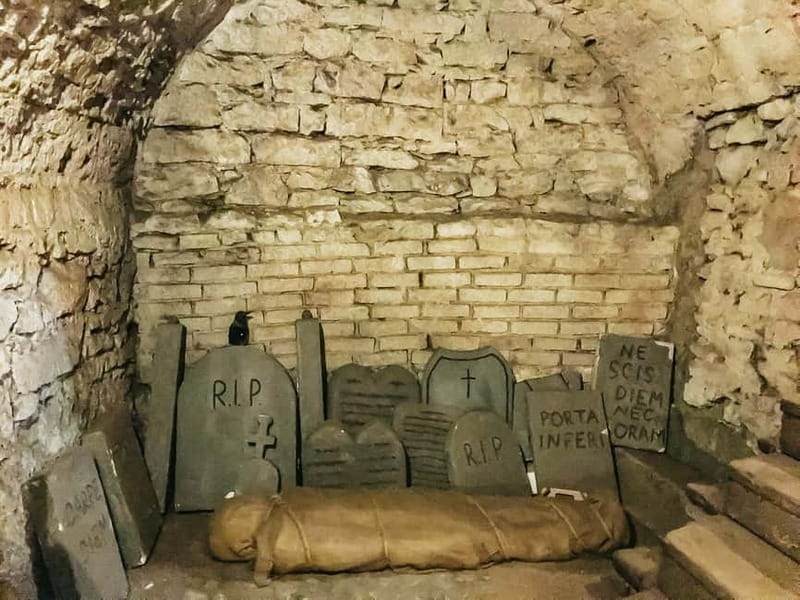
The main attraction is the descent into medieval underground spaces reaching as much as two floors below today’s street. Expect stairs, uneven walking, low light, and enclosed rooms. Comfortable walking shoes are the practical choice.
The rooms date from the Romanesque and Gothic periods, broadly from the 12th through the 14th centuries. Their value lies in their age and survival, but also in the way they explain Prague’s changing levels. You are not simply entering a decorative cellar built for tourists. You are seeing parts of an older urban setting that became buried or absorbed as the city changed.
The exact mood depends on your guide and the size of the group. In a small group, it is easier to hear every explanation and ask questions. In a larger group, narrow spaces can feel crowded, and one person noted that a smaller group would make it easier for nobody to get separated during busy periods.
Pay attention to sound as well as sight. Underground rooms tend to make voices echo, while the guide may need to speak over movement between chambers. One person found a guide difficult to hear at times. That is a useful warning: stay close enough to the guide, especially if the group is large, and ask for a repeat if you miss a point.
More History Tours in the world:
- New York City: American Museum of Natural History Ticket
★ 4.5 · 15,447 reviews - History and Hauntings of Salem Guided Walking Tour
★ 5.0 · 14,564 reviews - Colosseum: Underground and Ancient Rome Tour
★ 4.7 · 12,691 reviews - Lisbon: History, Stories and Lifestyle Walking Tour
★ 4.8 · 10,902 reviews
Stories of floods, fires, plague, and survival
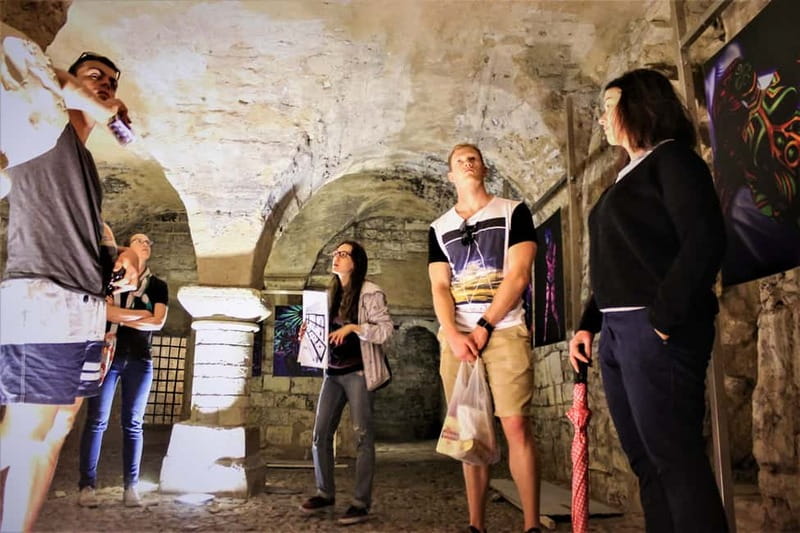
The underground works best when your guide explains why these rooms are below you. Prague’s medieval inhabitants lived through floods, fires, disease, political uprisings, and violence. Each event affected where people lived and how the city was rebuilt.
Flooding is especially important to the physical story. Water damage and later rebuilding helped shape the levels of Prague’s Old Town. Hearing this while walking through lower rooms makes the process easier to picture than a description on a museum label.
The tour also brings attention to ordinary medieval life. You hear what these premises were used for and what life may have been like for the people who occupied them. The information is presented in a compact format, so you will not receive a university course on medieval Bohemia. You will get a focused introduction with enough detail to make the streets above more meaningful.
I appreciate that the activity does not treat the past as only grand kings and famous monuments. Rebellions, executions, disease, and cramped living spaces give the period some weight. The humor from guides such as Patrik, Nicole, or Hastal keeps the tone from becoming grim all the way through, but the subject matter still includes suffering and death.
The alchemy laboratory and Prague’s Golem legend
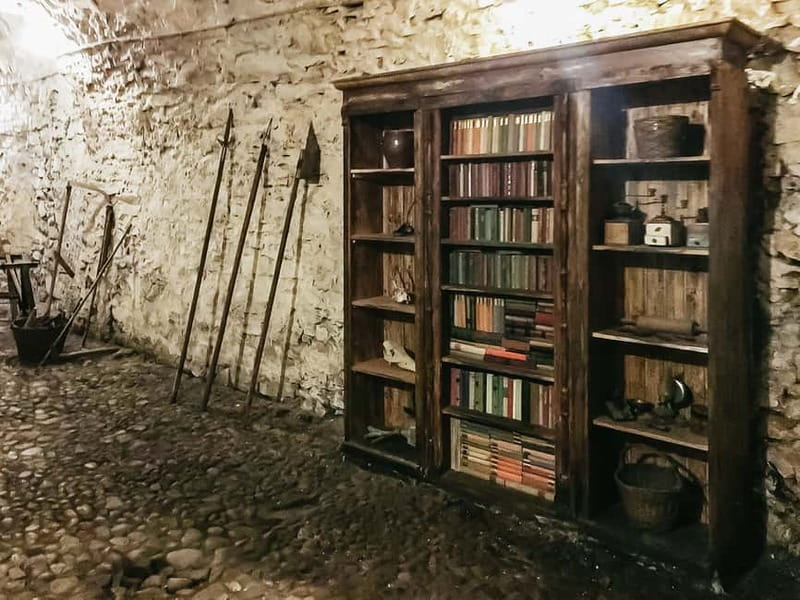
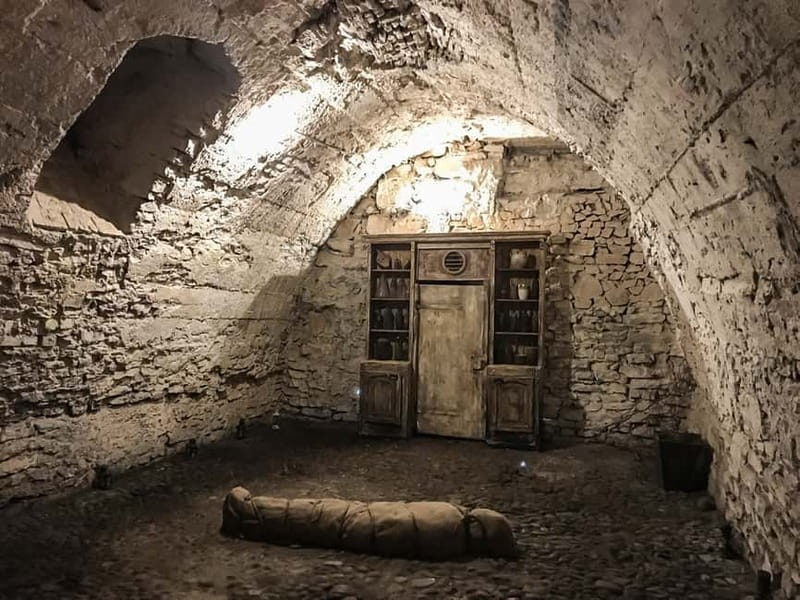
One of the tour’s more unusual stops is a secret alchemy laboratory containing equipment and stories linked to the famous Golem monster. Prague has long been associated with alchemy, mystery, and legends, so this section gives the tour a touch of the city’s stranger side.
You should treat the laboratory as part of Prague’s historical imagination, not as a simple proof that every legend happened exactly as told. That distinction makes the stop more interesting, not less. Medieval and early modern people used science, belief, religion, and folklore in ways that do not fit modern categories neatly.
The equipment gives the story a physical focus. Rather than only hearing about alchemists, you see the kind of objects connected with their work. The Golem story adds another layer, tying the underground setting to one of Prague’s best-known legends.
This is likely to appeal to you if you enjoy old legends, secret rooms, and the border between fact and folklore. If you prefer strictly documented political history, this section may feel lighter. The tour includes both approaches, but the alchemy material is clearly meant to create atmosphere as well as teach.
The dungeon, torture instruments, and Jan Mydlář
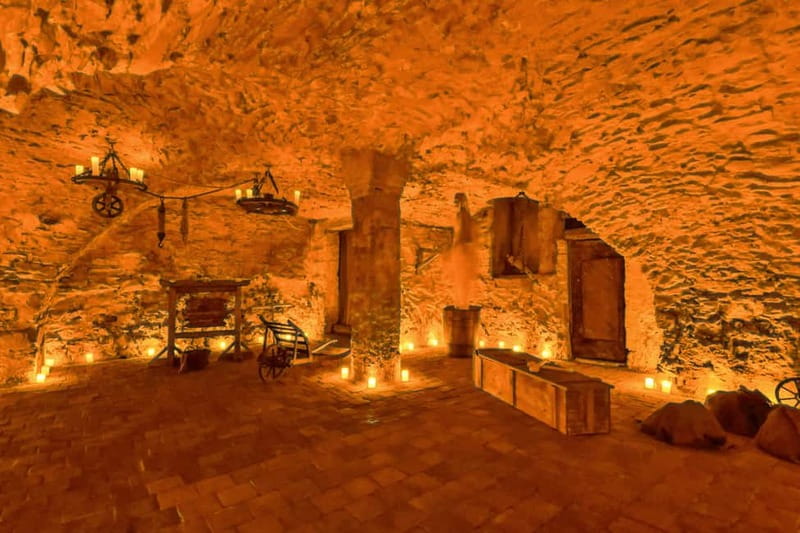
The final major section is the medieval Dungeon, where you see a display of torture instruments and executions. It is the darkest part of the tour, both in tone and subject. The displays are intended to explain medieval punishment, not to provide a playful haunted-house show.
The name Jan Mydlář is central here. He is remembered as an infamous executioner, and his story gives the subject a human figure. Instead of discussing executions only as an abstract legal practice, the guide can connect them to a person who carried out this work.
You should decide in advance how comfortable you are with this material. The tour is not suitable for children under seven, infants, or the youngest school-age children, and the dungeon may not be a good fit for anyone particularly sensitive to displays of torture or death.
Still, the dungeon adds useful context. Medieval justice was public, physical, and often designed to frighten as much as punish. Seeing the instruments while hearing how executions fit into city life can help you understand the period’s harsh social rules. It is unsettling, but that is part of the point.
Is $31 good value for 85 minutes?
At $31 per person, this is not the cheapest short activity in Prague. The value depends on what you want from a tour. You are paying for a live guide, a focused Old Town walk, entry to the medieval underground, and entry to the dungeon. There is no food, drink, or hotel transport included.
I consider the price fair if you want access to spaces you would not easily understand on your own. The underground rooms need interpretation, and a good guide can turn them from dark cellars into a readable part of Prague’s past. The activity also fits neatly into a busy day because it lasts about 85 minutes.
The value is lower if you mainly want a broad overview of Prague’s famous monuments. This is not a replacement for a major city walking tour, the National Museum, or a castle visit. It is a specialized add-on for people who want something beneath the standard sightseeing route.
Free cancellation is available up to 24 hours before the start, and you can reserve now and pay later. Online tickets are available until 30 minutes before the tour begins. These policies help if your schedule is still shifting, but you still need to reach the meeting point on time.
Who will enjoy this tour most?
I would recommend it to adults, older children who meet the age requirement, history fans, architecture fans, and anyone who likes unusual city experiences. It also suits repeat visitors who have already seen the Charles Bridge, Old Town Square, and Prague Castle and want a different angle.
The tour is particularly good for you if:
- You enjoy stories about medieval crime, punishment, disease, and urban life.
- You like old legends such as the Golem and the mystery of alchemy.
- You want a compact activity that fits between other plans.
- You value a lively guide who can answer questions and use humor.
- You can manage stairs, uneven surfaces, darkness, and enclosed rooms.
It is not suitable for wheelchair users or people with mobility impairments. Baby strollers and pets are not allowed. You should also avoid it if you have serious claustrophobia or heart issues, or if darkness and tight spaces cause distress.
There are no toilets in the underground. Plan accordingly before check-in, since the tour moves through the historic rooms without a restroom stop.
Practical advice for a smoother visit
Wear normal walking shoes with good grip. You will spend the activity on foot and use stairs, so this is not the place for delicate footwear or a heavy bag that makes movement awkward.
Arrive five to ten minutes early at the ticket office. Do not arrive under the influence of alcohol or drugs, and smoking is not allowed. Bachelor parties, costumed groups, and disruptive behavior are also excluded, which helps keep the atmosphere suitable for the history being explained.
The tour may vary by about 10 to 15 minutes depending on group size. Bring patience if the spaces are crowded. Stay near the guide so you can hear the commentary, especially in rooms where sound carries poorly.
Photos are allowed, but video needs extra permission. Keep your camera use discreet so you can watch your footing and stay with the group. This is an experience where the explanation matters as much as the image.
Should you book Prague’s underground tour?
Book it if you want Prague to feel older, stranger, and more human than its postcard views suggest. The combination of buried medieval rooms, flood stories, alchemy equipment, the Golem legend, and the dungeon gives you a memorable 85-minute change of pace.
I would skip it if you dislike stairs, confined spaces, dark rooms, or torture displays. I would also choose a different tour if your main goal is a full survey of Prague’s landmarks.
For everyone else, $31 is a reasonable price for a compact, guide-led look at the city below street level. Try to get an English guide with a clear voice, stay close in the underground rooms, and come ready for a tour that is part history lesson, part local legend, and part sobering look at medieval punishment.
FAQ
How long does the tour last?
The stated duration is 85 minutes. The actual length can vary by about 10 to 15 minutes depending on the group size.
What languages are available?
The tour is offered in English and German. You need to speak the selected language, and translating during the tour is not allowed.
Where does the tour begin?
It begins at the ticket office inside the Art Passage at Male Namesti Square 459/11, Praha 1 Old Town. The passage is about 20 meters to the right of Black Angels Bar and Hotel U Prince.
How early should I arrive?
Arrive five to ten minutes before the starting time for check-in and registration. Joining is not guaranteed once the group has left.
Is the tour suitable for children?
It is not suitable for children under seven, infants, or the youngest school-age children.
Can wheelchair users join?
No. The stairs and walking route make the tour unsuitable for wheelchair users and people with mobility impairments.
Are there toilets underground?
No. There are no toilets in the underground section, so plan ahead before the tour begins.
Are photos allowed?
Yes, photography is allowed. Video recording requires extra permission.
Can I cancel or pay later?
You can cancel up to 24 hours before the tour for a full refund. The reserve-now, pay-later option lets you hold a place without paying immediately.
Latest history tours reviewed in the world
- From Athens: Ancient Olympia Full-Day Private Tour★ 4.8 · 22 reviews
- From Athens: Explore Ancient Corinth & Charming Nafplion★ 4.6 · 102 reviews
- From Athens: Explore Ancient Greece 4-Day Tour★ 4.7 · 73 reviews
- From Albufeira: Historical Algarve Region Tour★ 4.7 · 585 reviews
- From Alexandria: Full-Day Guided Tour of Historical Sights★ 4.5 · 54 reviews
- From Albufeira: Wine Tasting & Historic Silves Tour★ 4.9 · 421 reviews
- Franklin: Ghost Tour in Historic Franklin★ 4.8 · 65 reviews
- Freiburg: Exciting City Tour with sightseeing and history★ 4.3 · 103 reviews
Prague History Tours, compared.
Prague Old Town, Medieval Underground and Dungeon Historical Tour
Read our review →
Prague: Communism History and Nuclear Bunker Guided Tour
Read our review →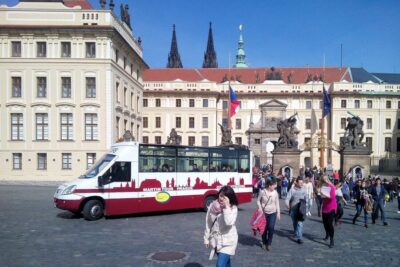
Prague: Historic City Center Bus Tour with Top Sights
Read our review →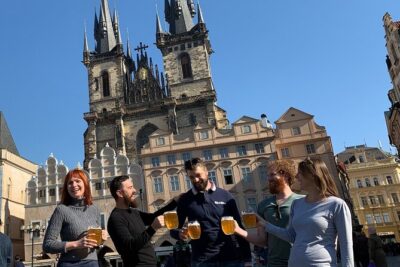
Prague Historic Pub Tour with Drinks Included
Read our review →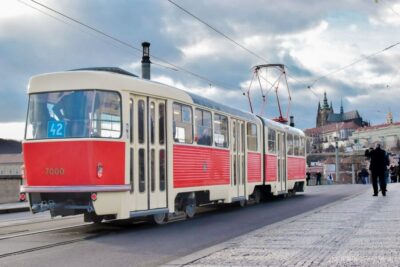
Prague: Hop-on Hop-Off Historical Tram Ticket for Line 42
Read our review →
Prague: Top Sights and Historic Center Introduction Tour
Read our review →
Absinthe Tasting Prague: Historic Cellar Experience
Read our review →Browse the lists this tour appears in