Review · ROME
Ancient Rome: Archeological area Largo Argentina
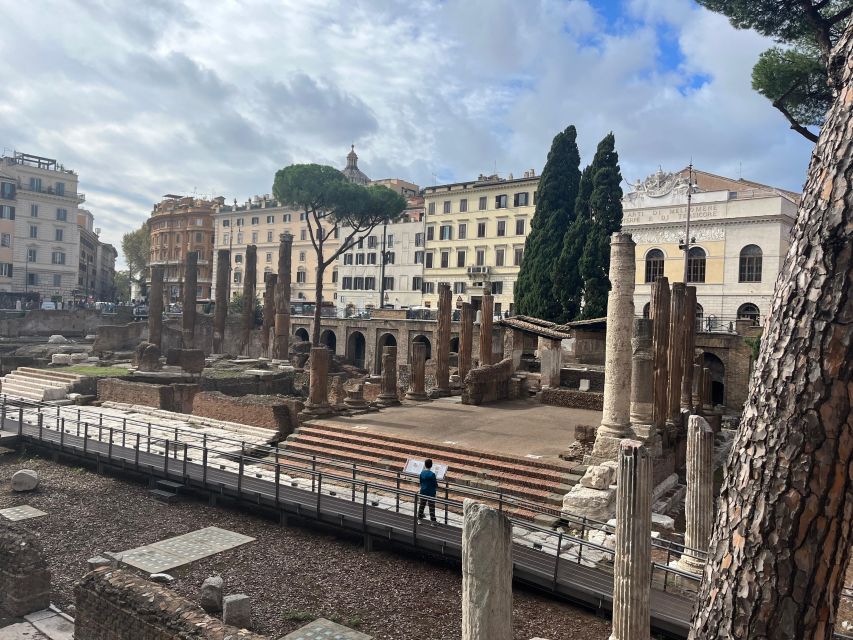
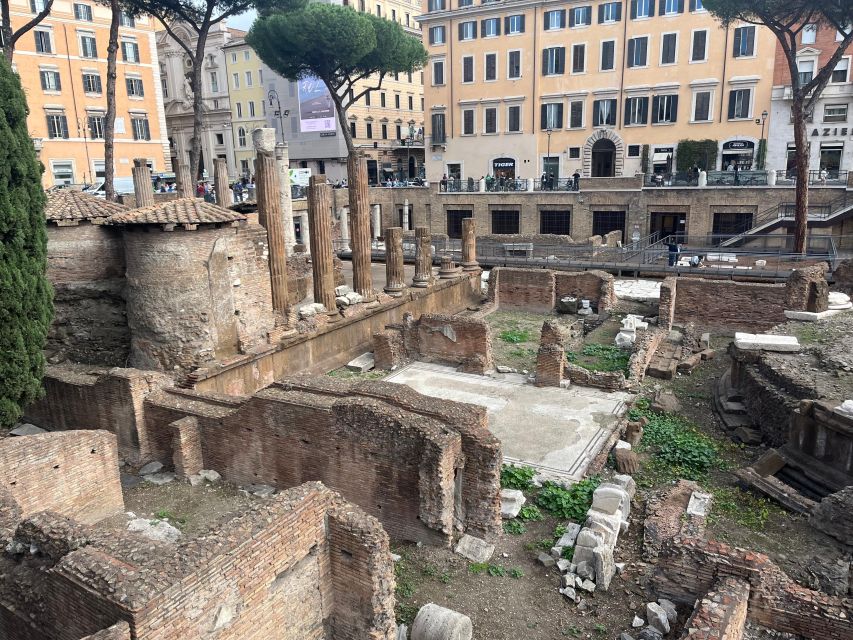
Largo Argentina preserves the place where Julius Caesar was killed on the Ides of March in 44 BC. You’ll also see four temples built between the 4th and 1st centuries BC, all set below modern Rome. I like the clear multimedia reconstruction and the chance to view an archaeological site tied to one of history’s most famous political murders. The main drawback is that much of the area can be seen from outside, so the $23 price makes the most sense if you want the film, audio guide, and close access to the excavations.
I also like the easy one-hour format. It fits neatly between other sights, and the English audio guide lets you move at your own pace. Just remember that your booked time is at the Touristation Aracoeli office, not at the archaeological site, which is about a six-minute walk away.
Key points to know before you go
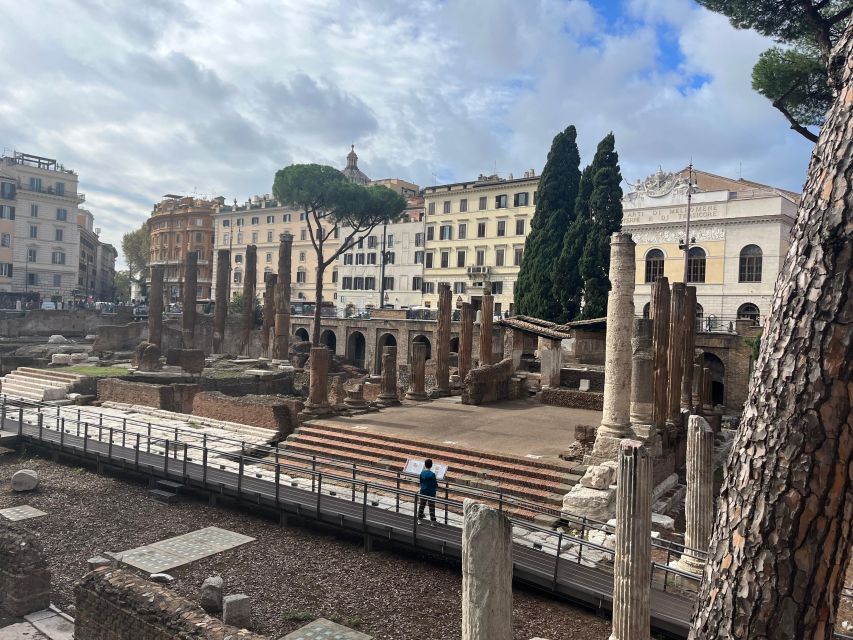
- See Caesar’s assassination site: The ruins include the tuff base of Pompey’s Curia, where ancient sources place Caesar’s killing.
- Four temples in one archaeological area: The remains date from the 4th through the 1st centuries BC.
- Begin with a 30-minute film: The multimedia presentation shows how the buildings may have looked in ancient times.
- Expect an audio-guided visit, not a live tour: English commentary is supplied through an app.
- Check the meeting point carefully: Redeem your voucher at Touristation Aracoeli, Piazza d’Aracoeli 16, before walking to Largo Argentina.
- Consider the value at $23: The site is visible from outside, so the ticket is most useful if you want the film and interior access.
Why Largo Argentina matters in Rome
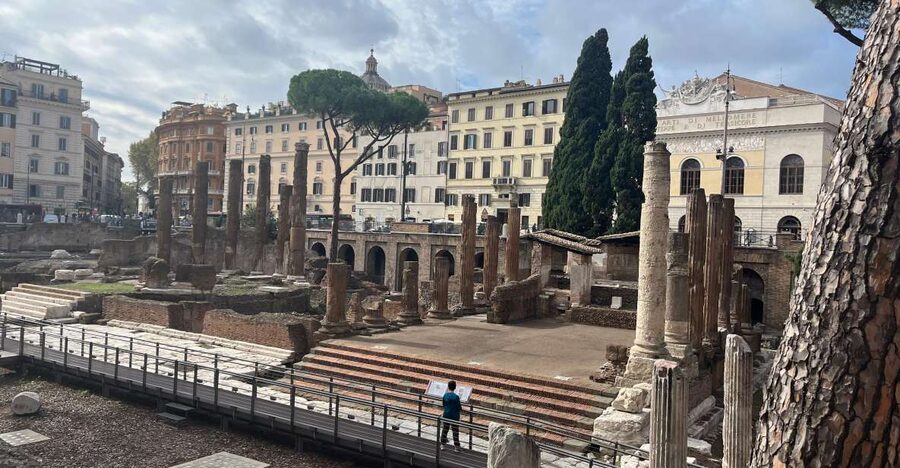
Rome is full of grand monuments, but Largo di Torre Argentina has a different appeal. It is not a polished imperial showpiece. It is a layered excavation in the middle of the modern city, surrounded by streets, buses, shops, and daily Roman life.
That contrast gives the place its character. You look down from the present day into a sacred area that remained active for more than 2,000 years. The ruins reflect several periods, from Republican temples to imperial changes and medieval structures.
The best-known event here is the assassination of Julius Caesar. On March 15, 44 BC, Caesar was killed at the Curia of Pompey, a meeting hall connected with the theater complex built by Pompey. The remains of that building include the tuff base associated with the site described by ancient writers.
You do not get a theatrical reenactment. Instead, the appeal comes from matching a famous historical event with a real piece of ground. That can be more powerful than a restored monument because the ruins leave room for you to picture the setting yourself.
More Ancient History Tours in Italy
- Colosseum: Underground and Ancient Rome Tour
★ 4.7 · 12,691 reviews - Colosseum & Ancient Rome with Arena Floor Option I Max 6 People
★ 5.0 · 3,306 reviews - Rome: Colosseum, Ancient Rome Tour or AudioGuided Tour
★ 4.4 · 2,879 reviews
Start at Touristation Aracoeli, not at the ruins
Your selected time refers to the Touristation Aracoeli office at Piazza d’Aracoeli 16. This detail matters. If you walk straight to Largo Argentina, you may still need to return to the office to redeem your voucher.
Look for the office near a fountain and orange flags at the entrance. After collecting what you need, allow about six minutes to reach the archaeological area. That short walk is easy to fit into a day in central Rome, but you should build it into your schedule rather than arriving at the ruins at the last minute.
The office also provides assistance at the meeting point, a paper city map, and WiFi. Those extras are modest, but they are handy if you are organizing several sights in the historic center.
The visit begins with a 30-minute ancient Rome multimedia video. This is not just filler before the ruins. It helps explain the buildings in a way that bare stone cannot. One particularly useful feature is the visual reconstruction of how the structures may have looked thousands of years ago.
If you have already spent the morning looking at fragmentary ruins, the film can give you a clearer sense of scale and design. It also makes the later walk through the archaeological area easier to follow.
Four temples from Rome’s Republican period
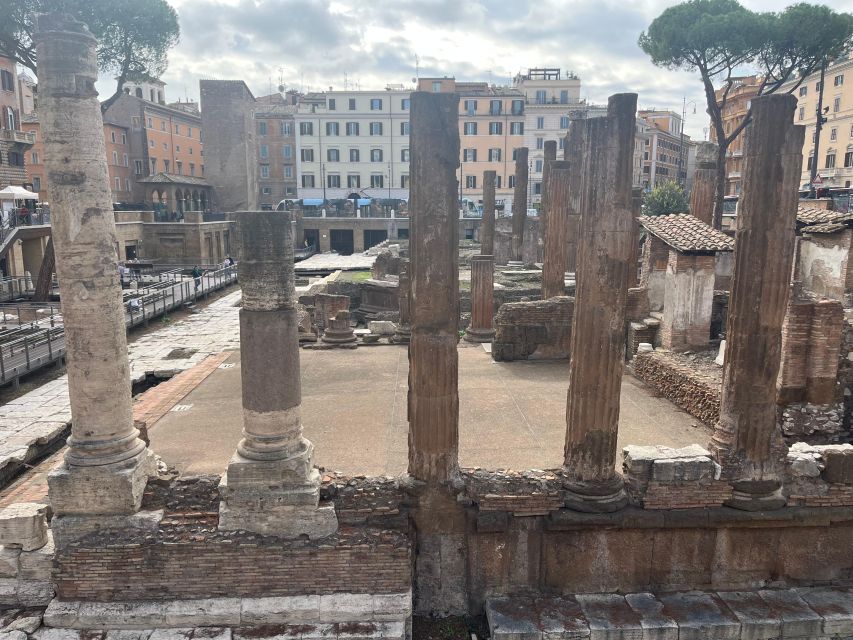
The central archaeological area contains four temples dating from the 4th to the 1st centuries BC. Their exact appearance has changed over time, but the remains show how important this part of Rome was before the imperial monuments most people associate with the city.
The temples sit below the modern street level. That change in height is important. Rome was built and rebuilt repeatedly, so the city you see today is physically higher than parts of ancient Rome. At Largo Argentina, you can look down into one of those earlier levels.
I like this site because it gives you several buildings in a compact area. You do not spend the entire hour walking from one isolated ruin to another. Instead, the temples, later structures, and Curia remains form a connected historical picture.
The site also rewards patience. At first glance, the remains can look like a collection of columns, walls, and stone foundations. The film and audio guide help explain which parts belong to different periods and why the area changed over time.
The Curia of Pompey and Caesar’s final moments
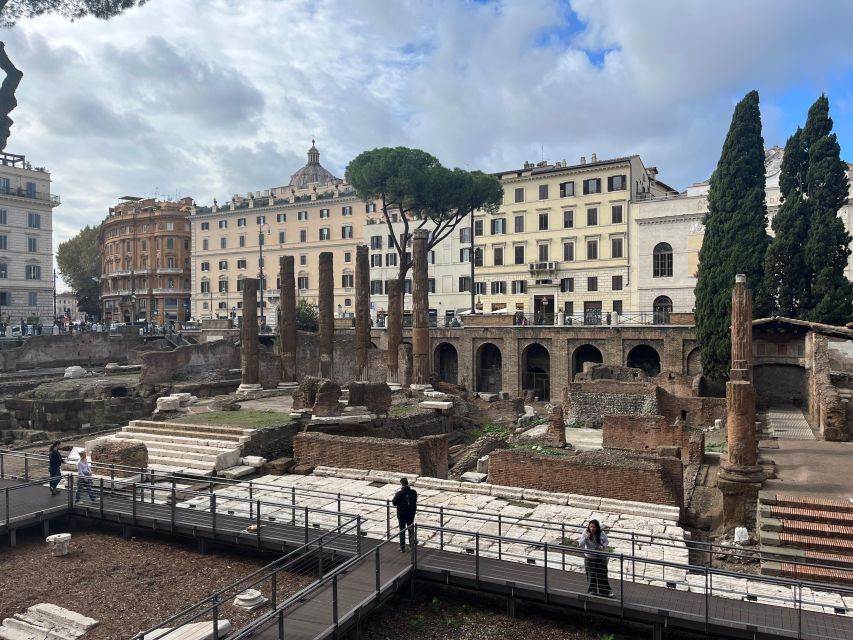
The Curia of Pompey is the emotional center of the visit. It was the place where the Roman Senate met, and its surviving base is linked with Caesar’s assassination.
Caesar’s death was not a random street attack. It happened in a political setting, inside a building connected with the Roman state. That makes the ruins especially interesting. You are not simply seeing an old temple precinct. You are standing near the location of a moment that changed Roman politics and helped shape the transition from Republic to Empire.
The exact modern view is made up of foundations and archaeological remains rather than a complete hall. You should not expect to walk into a preserved Senate chamber. The value comes from the location and the explanation supplied by the audio guide and multimedia presentation.
For history fans, this may be the strongest reason to book. If Caesar is only a name from a school textbook, the site still gives you a memorable introduction to one of Rome’s major turning points. If you already know the story well, you may find the physical setting more rewarding than the basic explanation.
More Ancient History Tours in Rome
- Colosseum Underground & Ancient Rome Guided Tour
★ 4.5 · 2,590 reviews - Pantheon Elite Guided Tour – Rome’s Iconic Ancient Temple
★ 5.0 · 1,447 reviews - Ancient Rome: Colosseum Underground Group Tour
★ 4.5 · 1,059 reviews - Colosseum Express Guided Tour and Ancient Rome Admission Included
★ 4.0 · 1,008 reviews
Layers of history below modern Rome
Largo Argentina was not frozen in the Republican era. The archaeological area also preserves evidence from the imperial period and the Middle Ages.
The temples were altered during the Empire, and later structures appeared as the city continued to use the area. This uninterrupted life over roughly two millennia is one of the site’s most useful lessons. Ancient Rome was not abandoned as soon as the Empire changed. People continued to build, adapt, and reuse its spaces.
The medieval remains can be easy to overlook if you are focused only on Caesar. Use the audio guide to notice the later additions. They show that Rome’s history is not a straight line from ancient glory to modern city. It is a long sequence of changes layered over the same ground.
The excavation itself feels like an ancient island below the busy city. Modern Rome surrounds it on every side, while the temples and foundations occupy their own sunken space. That contrast makes Largo Argentina different from a large enclosed monument such as the Colosseum.
What the audio guide adds
This is an audio-guided visit in English, delivered through an app. It is not a guided walk with a named historian or an in-person tour leader.
That arrangement gives you freedom. You can pause, look longer at a particular ruin, or move on when you are ready. It also means you need to pay attention to the app and keep your own bearings. Visitors who want a lively conversation or the chance to ask detailed questions may prefer a private or group guided tour instead.
The audio guide is most useful when paired with the film. The video gives you the broad picture and visual reconstruction. The app then helps you connect what you saw on screen with the actual stones and foundations.
The English language option is important to check before booking. The supplied information identifies English as the available language, so this is not a multilingual audio experience.
Is the $23 price worthwhile?
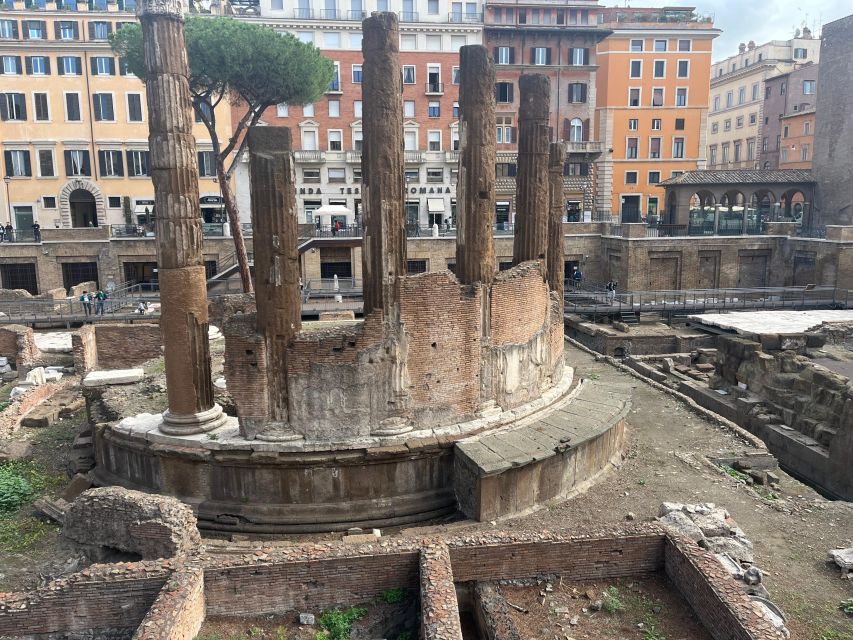
At $23 per person, this is a moderate-cost short visit. The price includes reserved entry to the Largo Argentina excavations, the 30-minute multimedia video, the English audio guide app, meeting-point assistance, a paper map, and WiFi.
The value depends on what you want from the stop. If you only want to see the ruins, you may decide the ticket is not essential. The archaeological area is visible from outside, and one part of the paid experience is a small underground museum. A person focused on quick sightseeing could look at the site without spending an hour inside.
The ticket becomes more useful if you want context. The multimedia film is the strongest added feature because it shows the ancient buildings as more than broken foundations. Reserved entry may also be convenient if you prefer having a planned time rather than sorting out access at the gate.
One practical point is worth noting: the ticket does not include transportation, food, or drink. You arrange your own way around central Rome. Since the office and site are only about six minutes apart on foot, this is not a major problem, but it does mean the experience is not a door-to-door excursion.
Who will enjoy this one-hour visit?
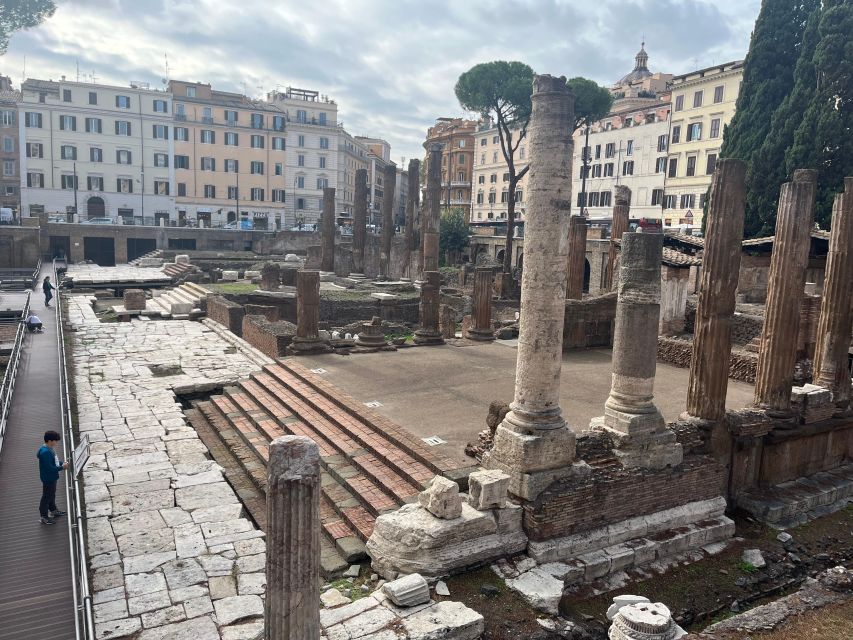
I would recommend Largo Argentina to you if you like ancient history but do not want another long museum visit. The one-hour duration is compact, and the subject is focused: Republican temples, later layers, and Caesar’s assassination.
It is also a good introduction to Rome for a first visit. The multimedia presentation gives you a quick historical frame, while the ruins introduce the city’s habit of building over its past. You can then recognize that same pattern elsewhere in Rome.
Families with older children may find the Caesar connection more engaging than a general archaeological lecture. The film can help younger visitors understand the missing walls and columns. Still, the experience is educational rather than entertainment-focused, and the information is delivered through video and audio rather than a live guide.
History enthusiasts should consider it if they are particularly interested in Julius Caesar, the Roman Senate, or the Republican period. If your main interests are famous intact buildings, art, or panoramic views, this may feel less rewarding.
Tips for making the visit smoother
Arrive at Piazza d’Aracoeli 16 for the time on your reservation. Do not treat the site entrance as the starting point.
Bring your passport, which is listed as a required item. Leave large bags and luggage behind, since they are not allowed. Pets, glass objects, alcohol, and drugs are also prohibited.
Plan the visit around the 30-minute film. If you have a tight schedule, the presentation takes up half of the stated one-hour duration, before you spend time with the ruins and audio guide.
Bring a phone that can use the audio guide app, and make sure you are comfortable following app-based instructions. WiFi is provided at the meeting point, but you should still keep your booking details available.
The area works well as a short stop during a day in central Rome. The archaeological visit itself does not include transportation, so you need to connect it with your own walking route or other plans.
Should you book Largo Argentina?
Book this experience if you want more than an outside glimpse of the ruins. The multimedia reconstruction, English audio guide, and reserved entry add useful context to a site that can otherwise look hard to read.
Skip it if you only want a quick photograph or if you prefer a live guide who can answer questions. Since much of Largo Argentina is visible from outside, the $23 cost is not the best choice for every sightseeing style.
For many visitors, the strongest reason to go is the combination of place and story. You see the remains of four ancient temples, stand near the Curia of Pompey, and connect the stones with Caesar’s final political meeting. It is a short, focused stop that brings one of Rome’s most famous events down to ground level.
FAQ
Where does the experience begin?
You begin at the Touristation Aracoeli office at Piazza d’Aracoeli 16. Look for the fountain and orange flags near the entrance.
Is the meeting point at Largo Argentina?
No. The selected booking time refers to the Touristation Aracoeli office. The archaeological area is about a six-minute walk away.
How long does the experience last?
The stated duration is one hour. The visit includes a 30-minute ancient Rome multimedia video.
How much does the experience cost?
The price is $23 per person.
Is a guided tour included?
No. A live guided tour is not included. You receive an English audio guide through an app.
What does the ticket include?
It includes the ancient Rome multimedia video, reserved entry to the Largo Argentina excavations, an English audio guide app, meeting-point assistance, a paper city map, and WiFi.
Is transportation included?
No. Transportation is not included, and you arrange your own way to and from the meeting point and archaeological area.
What language is available?
The available audio guide language is English.
What should you bring?
Bring your passport. Large bags, luggage, pets, glass objects, alcohol, and drugs are not allowed.
Can you cancel or pay later?
You can cancel up to 24 hours in advance for a full refund. A reserve-now, pay-later option is also available.
More Archaeological Site Tours in Rome
- Discover the Ancient Ruins of Pompeii: Day Trip from Rome
★ 3.5 · 2,247 reviews - Ancient Ruins Tour – Guided Arizona Desert Tour by UTV
★ 5.0 · 684 reviews - Ancient Olympia: Archaeological Site and Museum Entry Ticket
★ 4.3 · 555 reviews - Cusco: Historical Guided City Tour with 4 Inca Ruins
★ 4.5 · 99 reviews
More Ancient Rome and Colosseum Tours in Rome
- Rome: Colosseum with Arena, Roman Forum and Palatine Guided Tour
★ 4.0 · 5,598 reviews - Colosseum with Arena, Roman Forum and Palatine Hill Guided Tour
★ 4.5 · 3,526 reviews - Rome: Colosseum Arena, Roman Forum & Palatine Hill Tour
★ 4.5 · 1,874 reviews - Colosseum, Roman Forum & Palatine Hill Guided Tour
★ 4.5 · 1,568 reviews
Latest history tours reviewed in Rome
- Day drinking in Rome – Scandalous Roman History★ 4.8 · 31 reviews
- Rome: Colosseum Arena and Ancient Rome Guided Tour★ 4.8 · 23 reviews
- Rome: Colosseum and Ancient Rome Access with Optional Arena★ 4.5 · 198 reviews
- Ancient Rome Half-Day Segway Tour★ 4.8 · 25 reviews
- Colosseum Forum Ancient Rome Small Group Tour for Kids Families★ 5.0 · 198 reviews
- VIP Colosseum Underground and Ancient Rome Small Group Tour★ 4.5 · 332 reviews
- Ancient Ostia Antica Semi-Private Day Trip from Rome by Train with Guide★ 4.5 · 579 reviews
- Colosseum & Ancient Rome Semi-Private Tour★ 5.0 · 208 reviews
Rome History Tours, compared.
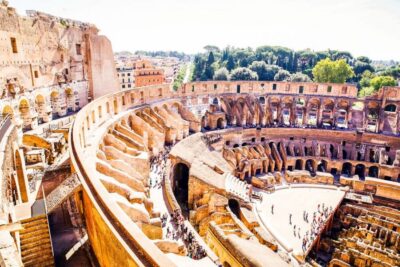
Colosseum: Underground and Ancient Rome Tour
Read our review →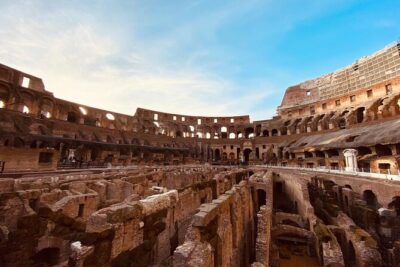
Rome: Colosseum with Arena, Roman Forum and Palatine Guided Tour
Read our review →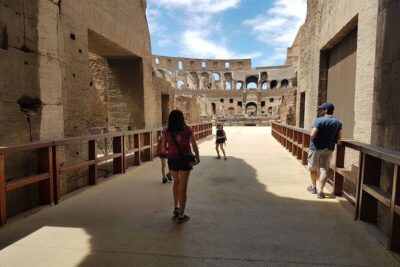
Colosseum & Ancient Rome with Arena Floor Option I Max 6 People
Read our review →
Rome: Colosseum, Ancient Rome Tour or AudioGuided Tour
Read our review →
Colosseum, Roman Forum & Palatine Hill Guided Tour
Read our review →
Pantheon Elite Guided Tour – Rome’s Iconic Ancient Temple
Read our review →
Rome in a Day Tour with Vatican, Colosseum and Historic Center
Read our review →