Review · ATHENS
Private Tour of Apostle Paul’s Footsteps in Ancient Corinth
Ancient Corinth gives you something rare: a place where biblical history, Greek ruins, Roman power, and dramatic mountain views all meet in one half-day trip. You trace Paul’s arrival at Kenchreai, picture him speaking at the Agora, and then climb toward Acrocorinth, the fortress above the city. I especially like the mix of major sights and smaller stops, including the Diolkos and the modern church dedicated to Saint Paul.
I also like the freedom of a private car and driver. Guides such as Giannis, Nick, Ruslan, George, and Fotis are praised for safe driving, clear explanations, extra help for older family members, and flexible pacing. The main catch is important: this is not a fully licensed guide-led archaeological tour, and the €15 site and museum admission is extra.
At a glance
- Paul’s Corinth in one route: Visit Kenchreai, the Agora, the Bema, the Temple of Apollo, and Saint Paul’s Church.
- A striking engineering stop: Look down into the Corinth Canal, cut through the Isthmus in 1893.
- A private half-day outing: Only your group rides in the vehicle, with pickup from an Athens hotel, apartment, or port.
- Acrocorinth adds the drama: Ancient, Byzantine, Frankish, Venetian, and Ottoman defenses climb the mountain above Corinth.
- Useful personal service: Drivers provide bottled water, hotel or port transfers, and help with older passengers when needed.
- Good value for small groups: The price is $169.03 per person, with group discounts available, but admission costs extra.
Why Corinth matters to Paul’s story
Corinth was not a quiet religious outpost. It was a powerful city at a major trade crossing, linking mainland Greece with the Peloponnese. Its position near the Isthmus brought merchants, sailors, soldiers, local worshippers, and foreign customs together.
That setting helps explain why Paul’s time here mattered. The route connects places tied to his work around 51 A.D., including the eastern port of Kenchreai and the public center of Ancient Corinth. You are not simply looking at scattered stones. You are seeing the commercial and civic setting in which Paul preached, met fellow workers, and dealt with Roman authority.
The Christian meaning depends on how much background you bring. If you know Acts or Paul’s letters to the Corinthians, the Bema, the Agora, and Kenchreai will carry clear weight. If you do not, the ruins and Greek religious sites still make this a strong history outing. One practical point: the tour can explain Paul’s connection to Corinth, but it is not built around a long sermon or formal biblical study.
More Ancient History Tours in Athens
- Athens: Ancient Greek Theater Performance
★ 4.7 · 2,481 reviews - Historical Delphi One Day Tour with Arachova Stop & Expert Guide
★ 4.5 · 1,247 reviews - From Athens: Ancient Corinth Day Trip with Canal & VR Guide
★ 4.6 · 1,073 reviews
The Corinth Canal and the old overland shortcut
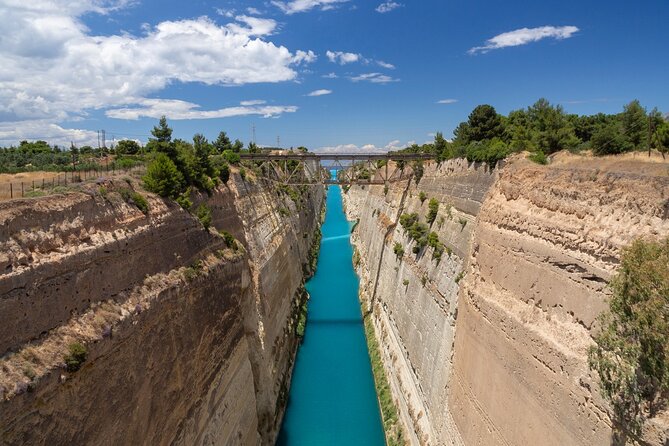
Your first stop is the Isthmus of Corinth, the narrow strip of land connecting mainland Greece with the Peloponnese. The modern canal cuts through this route for 6.3 kilometers, with steep limestone sides dropping toward the water.
You get about 20 minutes here. That is enough for photographs and a quick look, but not a long visit. The canal is a fine opening because it shows why this region mattered long before Paul arrived. Control of the isthmus meant control of movement between two parts of Greece.
Nearby, the remains of the Diolkos offer a more unusual sight. This ancient stone-paved track allowed ships or cargo to be hauled overland across the isthmus. It was a practical answer to the dangerous voyage around the Peloponnese, and it predates the canal by more than 2,000 years.
The Diolkos stop lasts about 10 minutes. Do not expect a large monument or a long walk. Its appeal is the idea behind it: ancient engineers found a way to save ships and goods a difficult sea journey. It is a small stop, but it gives the day useful context.
Kenchreai, the port linked to Paul and Phoebe
At the ancient port of Kenchreai, also called Kechrees, you reach the eastern harbor of Corinth. Paul is associated with arriving here during his first visit to Corinth around 51 A.D., and with sailing from here toward Ephesus later.
The remains are modest, so your imagination does some of the work. This is not a grand harbor complex with intact buildings. The value lies in its connection to movement: Paul arrived through this port, and the early Christian network used it as a point of departure.
The site also connects with Phoebe, a prominent Christian woman from the local church. Paul entrusted his letter to the Romans to her as she traveled from Kenchreai. That detail gives the port a human dimension and reminds you that early Christianity depended on real people carrying messages, making journeys, and maintaining links between communities.
You spend roughly 20 minutes here. Wear shoes that handle uneven ground, and bring a hat and sunscreen. The Greek sun can be strong, even during a relatively short outdoor visit.
Ancient Corinth, where Paul met Roman power
Ancient Corinth is the center of the tour. Here, you walk through the Agora, the city’s public marketplace and civic heart. Paul’s work took place in this kind of public setting, where trade, politics, religion, and ordinary daily life overlapped.
The Bema is the key Paul site. This raised platform was used for public proceedings, and Paul is associated with appearing before the Roman proconsul here. Standing near it gives you a direct connection to the political world behind the story in Acts.
The Agora also helps you picture Paul’s daily surroundings. Shops and streets once filled this space. The nearby connection with Aquila and Priscilla, who worked with Paul as tentmakers, makes the commercial setting especially relevant. You can also look for the street associated with Erastus, a civil servant linked with Paul’s circle.
The Temple of Apollo provides a sharp contrast. Its surviving columns recall Corinth’s older pagan worship, while the Christian story nearby reflects a changing religious world. That contrast is one of the strongest parts of the visit. You see not only where Paul preached, but also the beliefs and public traditions that Christianity challenged.
The scheduled visit here is about 40 minutes. That is enough for a focused overview, but it may feel short if you want to read every sign, take your time with the ruins, and photograph the site from several angles. A private driver can explain the setting and point out the key locations, but remember that a licensed guide is not included to accompany you inside the archaeological area.
More Ancient History Tours in Greece
- Acropolis, Parthenon & Athens Old City Heritage Walking Tour
★ 4.5 · 876 reviews - Private Biblical Tour Ancient Corinth & Isthmus Canal from Athens
★ 5.0 · 762 reviews - Athens: Ancient Corinth & Nafplio Full Day Trip with Swim
★ 4.8 · 531 reviews - Athens: Ancient Agora E-Ticket and Audio Tour
★ 3.9 · 413 reviews
The museum fills in the missing details
The Archaeological Museum of Corinth adds useful depth after the outdoor ruins. Built in 1932, it holds objects found during excavations and helps connect the broken remains with daily life.
The galleries cover a long span of Corinthian history, including prehistoric material and finds from the Sanctuary of Asklepios. You will see evidence of domestic life, art, worship, and public culture. This matters because the outdoor site can sometimes feel like a collection of foundations and columns. The museum shows what the people who used those spaces made, valued, and believed.
The planned visit lasts about 45 minutes. That is a sensible amount of time for the main rooms, though museum lovers may want longer. The €15 admission charge covers the archaeological sites and museum according to the tour information, and it is paid separately from the booking price.
Acrocorinth gives the day its best view
Acrocorinth is the fortified high point above Ancient Corinth. It is also the stop that most changes the scale of the day. From below, Corinth can seem like an archaeological site. From Acrocorinth, you understand why this mountain mattered for defense and control.
The walls and towers reflect many periods of use. Greek, Byzantine, Frankish, Venetian, and Ottoman builders repaired or strengthened the fortress. You are walking through layers of power rather than a single ancient ruin.
The site also connects with the Temple of Aphrodite, a sanctuary associated with Corinth’s pagan religious life. The account of up to 1,000 priestesses is part of the site’s traditional historical description, and it helps explain the contrast between the city’s older worship and Paul’s Christian message.
You get about 40 minutes here. That is enough to walk through part of the fortified area and take in the broad views, but Acrocorinth requires more effort than the lower site. Comfortable shoes are essential. If you have limited mobility, ask about the walking involved before booking, since the tour information says most people can participate but does not promise step-free access.
The mountain fortress is also a good reason to choose a private tour over a large group outing. Your driver can help you manage the timing and may adjust the pace for an older passenger. Several guides, including George and Nick, have been praised for helping people in and out of the vehicle, carrying water, and making the day easier for families.
Saint Paul’s Church closes the loop
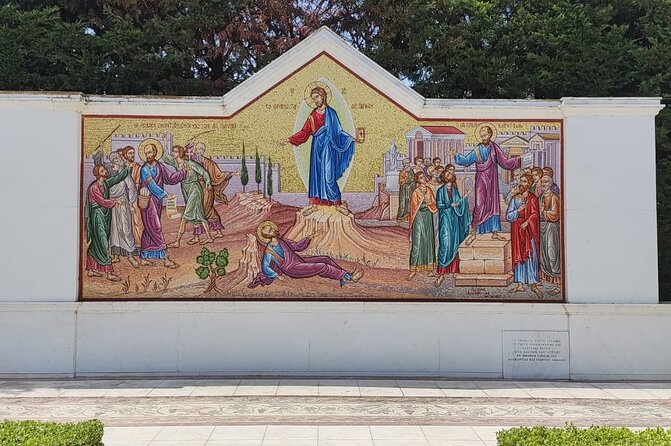
The final stop is the modern Apostolos Pavlos Church in the heart of Ancient Corinth. Inside, a mosaic by Pastorutti and Tsotsonis depicts Paul’s journey and mission in the city.
This is a quiet way to end the tour. After the canal, harbor, ruins, museum, and fortress, the church brings the focus back to Paul’s lasting place in modern Greek religious life. It also gives Christian visitors a moment for reflection without requiring the entire tour to be devotional.
You spend about 20 minutes here. The visit works best if you have already seen the ancient setting. The mosaic then feels like a modern response to the same city and the same story.
What the private format really gives you
The tour lasts about five to six hours, including driving time from Athens. Pickup is available at an Athens hotel, apartment, or port. At a hotel or apartment, the driver waits at the entrance. At the port, the driver waits at the gate with a sign bearing your name.
For groups of one to four people, the company uses a sedan. Larger groups may use another vehicle, though the exact vehicle depends on group size. Air conditioning, onboard Wi-Fi, bottled water, and hotel or port drop-off are included.
The strongest practical advantage is control. You can ask questions about Paul, Greek history, food, churches, or places you pass along the road. You can also take photographs without keeping up with strangers. Guides such as Ruslan, Giannis, Nick, George, Dennis, Johnny, and Fotis receive repeated praise for being punctual, friendly, patient, and safe behind the wheel.
The driver is not automatically a licensed archaeological guide. That distinction matters. You get historical explanation and help at each stop, but anyone expecting a formal expert lecture inside every monument should arrange a licensed guide separately.
Price, meals, and timing
At $169.03 per person, the value depends on your group size and starting point. For a couple, it is more expensive than taking public transport or joining a large bus excursion, but you gain door-to-door service, a private vehicle, water, and a flexible schedule.
For a small family or group, the price can make more sense because group discounts are available and the vehicle is private. Port pickup and drop-off are especially useful if you are visiting Athens by cruise ship. Airport pickup is possible for an additional €50 per booking.
Food is not included. Some drivers recommend local restaurants, and one guide took a group to a highly praised meal of lamb chops, Greek salad, and dessert. Treat that as an optional addition, not part of the fixed tour. Ask about lunch timing if food matters to you.
The tour is often booked well ahead, with an average booking lead time of about 65 days. That suggests planning ahead during busy periods. Free cancellation is available up to 24 hours before the start time. Poor weather can lead to a different date or a full refund.
Who should book this Corinth tour?
I would choose this experience if you want Paul’s Corinth placed inside a larger Greek story. It suits Christian visitors who want to connect Acts and Paul’s letters with real ports, streets, civic spaces, and religious sites.
It also works for people who are not Christian but enjoy archaeology and ancient history. The Temple of Apollo, the Agora, the Diolkos, the canal, and Acrocorinth give you plenty to see beyond the biblical theme.
Families and older travelers may appreciate the private vehicle and the personal attention. Guides are repeatedly praised for helping older passengers, offering water, allowing picture stops, and adjusting the pace. Still, Acrocorinth and the archaeological ruins involve walking on uneven ground, so ask about your needs before booking.
I would hesitate if your main goal is an intensive Bible study. One three-star assessment made this exact point: the outing is a drive to Corinth with historical discussion, not a fully biblical tour. That is a fair expectation to set. The experience is strongest as a private history tour with a clear Christian connection.
Should you book it?
Book this tour if you want an efficient, personal way to see Corinth from Athens, especially if you are traveling by cruise ship, with family, or with someone who needs extra assistance. The best parts are the range of stops, the private vehicle, Acrocorinth’s views, and the chance to connect Paul’s story with the working city around him.
Skip it if you want a long, formal archaeological lecture or extensive time at each ruin. For most people who want a well-paced introduction to Corinth, the $169.03 price is reasonable, particularly when shared by a small group and paired with pickup and drop-off convenience.
FAQ
How long does the Apostle Paul Corinth tour last?
The tour lasts approximately five to six hours, including travel time.
Where does the tour begin?
Pickup is offered from Athens hotels, apartments, and ports. Airport pickup and drop-off are available for an additional €50 per booking.
Is the tour private?
Yes. Only your group participates in the activity.
What language is the tour offered in?
The tour is offered in English, with an English-speaking professional driver.
Is a licensed archaeological guide included?
No. A licensed guide to accompany you inside the archaeological sites is not included.
Are entrance fees included?
No. Entrance to the archaeological sites and museum costs €15 per person and is paid separately.
What vehicle is used for a small group?
Groups of one to four people use a sedan vehicle. The vehicle includes air conditioning and Wi-Fi.
Is food included?
No. Meals are not included. Drivers may recommend local restaurants, but any meal is an additional expense.
What should I wear or bring?
Wear comfortable shoes for walking. Bring a hat and sunscreen because the weather can be hot and sunny. Bottled water is provided.
Can I cancel for a full refund?
You can cancel at least 24 hours before the experience starts for a full refund. Cancellations or changes made less than 24 hours before the start time are not refunded.
More Private History Tours in Greece
- Athens: Corinth Canal and Ancient Olympia Private Trip
★ 4.6 · 21 reviews - From Athens: Ancient Sparta and Mystras Private Day Trip
★ 4.8 · 18 reviews
More Private History Tours in Athens
- Ancient Athens for Kids 4-Hour Private Walking Tour
★ 5.0 · 66 reviews - Athens: The History of Greek Mythology Private Tour
★ 4.7 · 53 reviews - Private Athens Walk: Ruins, Markets & Local Stories
★ 5.0 · 41 reviews - From Athens: Ancient Olympia Full-Day Private Tour
★ 4.8 · 22 reviews
Latest history tours reviewed in Athens
- From Athens: Ancient Olympia Full-Day Private Tour★ 4.8 · 22 reviews
- From Athens: Explore Ancient Corinth & Charming Nafplion★ 4.6 · 102 reviews
- From Athens: Explore Ancient Greece 4-Day Tour★ 4.7 · 73 reviews
- Athens: Women in Ancient Greece★ 5.0 · 98 reviews
- Athens: The History of Greek Mythology Private Tour★ 4.7 · 53 reviews
- Athens: Ancient Corinth & Nafplion Guided Premium Tour★ 4.7 · 237 reviews
- Athens: Roman Agora & Ancient Agora E-ticket & 2 Audio Tours★ 4.1 · 107 reviews
- Athens: Kotsanas Ancient Greek Technology Museum Guided Tour★ 5.0 · 29 reviews
Athens History Tours, compared.
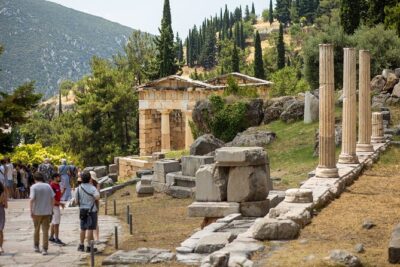
Historical Delphi One Day Tour with Arachova Stop & Expert Guide
Read our review →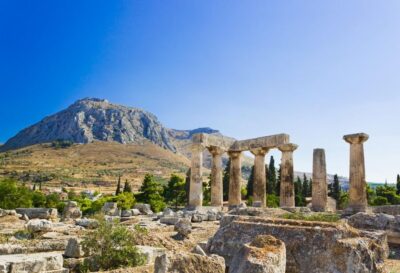
From Athens: Ancient Corinth Day Trip with Canal & VR Guide
Read our review →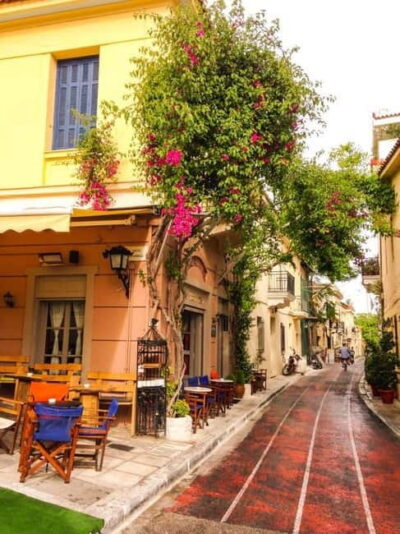
Historic Athens: Small Group Electric Bike Tour
Read our review →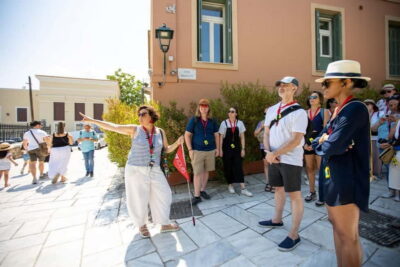
Acropolis, Parthenon & Athens Old City Heritage Walking Tour
Read our review →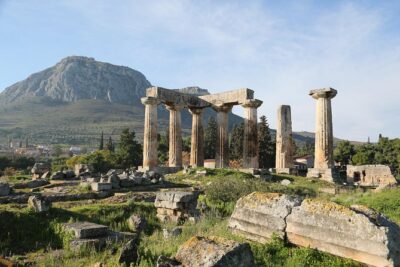
Private Biblical Tour Ancient Corinth & Isthmus Canal from Athens
Read our review →
Athens: Ancient Corinth & Nafplio Full Day Trip with Swim
Read our review →