Review · ROME
Golf Cart Tour Rome: Glide By Ancient Wonders & Hidden Gems
Rome is a city built for grand entrances, sudden views, and ancient ruins tucked beside ordinary streets. This small-group golf cart tour gives you a fast, comfortable look at the big sights, from the Colosseum to the Trevi Fountain, while your guide fills in the stories between stops.
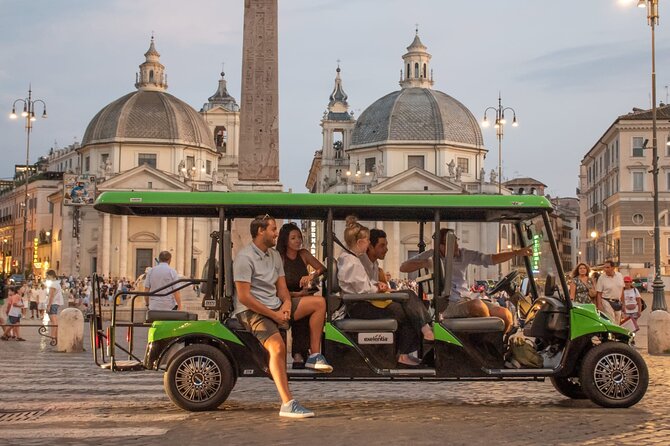
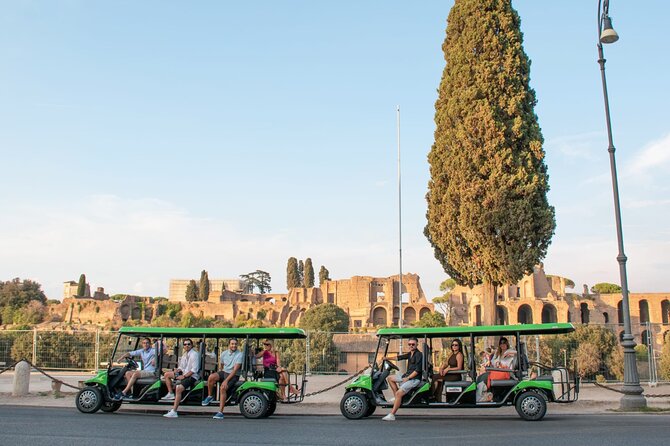
I like two things right away. First, the cart lets you cover far more ground than you could on foot in two and a half hours. Second, the group is limited to seven people, so guides such as Vladimir, Vitaly, Federico, and Antonio can answer questions, adjust the pace, and help with photos.
The main tradeoff is clear: you do not go inside the monuments. The Pantheon, Colosseum, and other sights are viewed from outside, making this an orientation tour rather than a substitute for timed entry to Rome’s major archaeological sites.
Key points to know before booking
- Seven-person maximum: You get a more personal ride than on a large coach, with room for questions and conversation.
- A strong first-day tour: The route helps you understand where Rome’s major sights sit in relation to one another.
- External sightseeing only: You stop for views, stories, and photographs, but admission to monuments is not part of the tour.
- Useful guide personalities: Vladimir is repeatedly praised for his humor and flexibility, while Vitaly, Federico, and Antonio are also singled out for warm, informed guiding.
- Good for saving your legs: The cart is helpful in Rome’s heat and for anyone who wants to cover the center without long walks.
- Flexible departure times: Several start times make it easier to fit the tour around meals, museum visits, or an arrival day.
Why a golf cart works so well in Rome
Rome’s sights are close enough to connect, but not always close enough to reach comfortably on foot. The Colosseum, Trevi Fountain, Spanish Steps, Piazza Navona, and the city’s panoramic viewpoints are spread across a large historic center. A golf cart bridges that gap without the enclosed feel of a bus.
You get wraparound views as you ride, and the open sides make it easier to spot columns, fountains, churches, and street life along the way. The cart can also bring you closer to certain viewpoints than a taxi might, according to the experience details.
I see this as a get your bearings fast tour. You can learn how the center fits together, note the places you want to revisit, and then spend the rest of your stay exploring the interiors at your own pace.
The small size matters, too. With no more than seven people, the guide can keep the conversation lively rather than delivering a speech to a crowd. Several guides are praised for adjusting the route or timing to suit the group, and one family of seven was able to travel together in a single cart.
More Ancient History Tours in Italy
- Colosseum: Underground and Ancient Rome Tour
★ 4.7 · 12,691 reviews - Colosseum & Ancient Rome with Arena Floor Option I Max 6 People
★ 5.0 · 3,306 reviews - Rome: Colosseum, Ancient Rome Tour or AudioGuided Tour
★ 4.4 · 2,879 reviews
Starting at the Colosseum
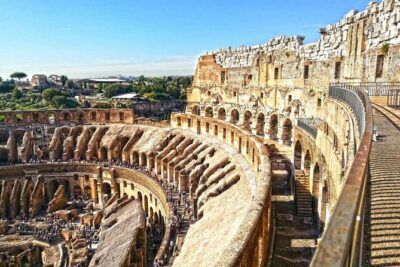
The meeting point is Largo Gaetana Agnesi, near the Colosseum. The tour opens with an outside view of Rome’s most famous ancient arena, giving you a chance to take photographs and hear a short introduction to gladiatorial contests and the crowds that once filled the seats.
The company says its guides began their careers at the Colosseum. That background shapes the opening stop, which focuses on correcting familiar myths and explaining how the arena worked. You get about ten minutes here, so expect a sharp overview rather than a full archaeological visit.
This is important to understand before you book. The tour does not include entry to the Colosseum, underground levels, or upper seating areas. If walking through the arena is high on your list, you will need a separate ticket and a different block of time.
Still, the outside view has value. You can see the building in context, hear the first stories of ancient Rome, and avoid spending the entire morning inside one site. For a first look at the city, that balance works well.
The birthplace of Rome and Circus Maximus
After the Colosseum, the cart rides past the area associated with Rome’s earliest beginnings. You’ll get broad city views, stories about emperors’ palaces, and smaller details that are easy to miss when you move through Rome on your own.
The route then reaches Circus Maximus, the enormous ancient chariot-racing track. Today, the open space can be hard to read without help. Your guide points out the former racing area and helps you picture the noise, speed, and crowds that once filled the course.
There is a brief photo stop of about ten minutes. You also get a playful local lesson about using a Roman fountain, a small detail that gives the stop a more personal feel than a simple drive-by.
Circus Maximus is less visually complete than the Colosseum, so your guide’s explanation does much of the work. I like this stop because it gives you a sense of scale. Rome’s public entertainment was not limited to one famous arena. The city had vast spaces built for mass events, and this stop makes that clear.
A Roman theater with a curious architectural question
One of the shorter stops takes you past a historic Roman theater with large arches and a distinctive exterior. You pause for photographs and hear about its design and performances.
The guide also answers a question that many people notice but rarely ask: why does this ancient building have windows? That kind of detail is exactly where a good city tour earns its keep. You may remember the answer, but more importantly, you begin looking at Roman ruins as working buildings rather than piles of old stone.
Because the stop is brief and external, it is best viewed as part of the route rather than a major visit on its own. The value comes from connecting the architecture to daily life, public entertainment, and the changing uses of Roman buildings.
More Ancient History Tours in Rome
- Colosseum Underground & Ancient Rome Guided Tour
★ 4.5 · 2,590 reviews - Pantheon Elite Guided Tour – Rome’s Iconic Ancient Temple
★ 5.0 · 1,447 reviews - Ancient Rome: Colosseum Underground Group Tour
★ 4.5 · 1,059 reviews - Colosseum Express Guided Tour and Ancient Rome Admission Included
★ 4.0 · 1,008 reviews
The Pantheon from the outside
The Pantheon is one of the route’s strongest visual stops. Its massive columns and ancient facade are impressive even when you see them from the square, and the guide points out the famous opening in the roof, known as the oculus.
You will not have time to enter the Pantheon during this tour. That limitation is stated clearly, and it keeps the route moving toward the other sights. Instead, the guide shows a private video explaining why rain does not simply pour through the oculus and collect on the floor.
The explanation focuses on the fireplace effect created by air movement and the building’s design. It is a clever way to discuss the engineering without stopping the tour for a full interior visit.
If the Pantheon is a priority, plan a separate return visit. You can enter it independently, but this golf cart experience gives you the useful first look and the architectural context. For many people, that is enough to decide which interiors deserve their limited Rome time.
Trevi Fountain and the art of the photograph
The Trevi Fountain receives about fifteen minutes, traffic permitting. That final condition matters. Rome’s traffic and pedestrian flow can affect how close the cart gets and how long the group can pause.
You’ll have time to admire the fountain, learn about the coin-toss tradition, and take photographs. The guides are also described as having a sharp eye for composition, so you can ask for help finding a better angle instead of settling for the same crowded picture everyone else takes.
The fountain is one of Rome’s most popular photo stops, and it can feel hectic. The golf cart does not remove the crowds, but it does save you the effort of navigating between distant sights on foot. Keep your expectations practical: this is a lively public square, not a quiet private viewing.
A short stop also means you may need to move quickly. Have your camera ready, follow the guide’s timing, and avoid treating this as a long break. The strength here is efficient access and useful photo advice.
Spanish Steps and Piazza Navona
At the Spanish Steps, you can climb a few steps, watch the flow of people, and hear stories tied to Roman life and films. The guide points out photo spots and explains why the staircase is more than a famous backdrop.
The stop lasts about fifteen minutes. That is enough for a look and a few pictures, but not enough for an extended neighborhood walk. If you want to shop, visit nearby churches, or explore the streets around the steps, return later.
Piazza Navona adds a different mood. The square’s fountains, including Bernini’s famous fountain featuring river gods, provide one of Rome’s most enjoyable outdoor scenes. Street performers and the open space give you time to take pictures and absorb the setting.
Your guide can also suggest a restaurant in or near the square for an Italian lunch or dinner. That recommendation may be especially helpful because the square is surrounded by places aimed at passing diners. Ask for practical advice on where to eat and what kind of meal suits your budget.
Ending with a panoramic garden
The tour ends at a peaceful garden with views across Rome. The precise garden is not identified in the supplied details, so you should treat this as a final panoramic stop rather than plan around a named attraction.
It is a sensible way to finish. After several famous squares and ancient sites, you get a quieter place to take final photographs and look back over the city. The ending point is Piazza Campo de’ Fiori, though the route includes a panoramic garden before the final drop-off.
This last section also shows why the tour is more than a simple list of monuments. Rome is not only arenas, fountains, and grand facades. The city also rewards you with elevated viewpoints and pauses away from the main crowds.
What the guides add to the ride
The guide is the heart of this experience. The vehicle gets you from place to place, but the stories determine whether the route feels like transportation or a real introduction to Rome.
Vladimir receives especially strong praise for his humor, clear explanations, photography help, and ability to tailor the tour to the group’s interests and available time. He is also described as communicating clearly about delays and meeting locations.
Vitaly is noted for detailed explanations and a friendly, professional manner. Federico is praised for creating a relaxed evening ride and for adding lesser-known places to the major stops. Antonio is singled out for his engaging style and personal affection for Rome.
Guide quality can vary from day to day, but the repeated pattern is useful: expect an interactive tour, not just a driver pointing at buildings. Guides may offer bathroom breaks, water, photo help, restaurant suggestions, and choices about how to use limited stop time.
One particularly useful point is that a guide may come to Rome from another country but still have lived in the city for many years. That can offer a fresh perspective, combining local familiarity with an outsider’s appreciation for what makes Rome special.
Is $163.33 a fair price?
At $163.33 per person, this is not a cheap way to get around Rome. You are paying for a private-feeling vehicle, an English-speaking guide, bottled water, and a tightly planned route through many major sights.
The value improves if you have only one or two days in the city, are arriving tired, want to avoid long walks, or are traveling with older family members. It also makes sense for a group that wants to stay together rather than split up across taxis.
The price is harder to justify if your main goal is entering the Colosseum, Pantheon, or other monuments. No admission tickets are included, and you will need to pay separately for interior visits. Independent visitors who enjoy walking and already know the city may prefer to spend the same money on specific entry tickets and meals.
I would think of the cost as paying for time, comfort, and orientation. If those three things matter to you, the price can be worthwhile. If you mainly want detailed archaeology inside each site, choose a specialist walking tour with admission instead.
Timing, comfort, and practical details
The experience lasts about two and a half hours. Several departure times are available, making it easier to place the tour on your first morning, late afternoon, or evening.
The open cart is useful in warm weather because you can see the city as you ride, but Rome’s sun can be strong. Bring sun protection and water beyond the supplied bottle if you need it. The cart also helps you avoid a tiring sequence of long walks, a point that matters for families and anyone with limited energy.
Confirmation is provided at booking. The tour is offered in English, service animals are allowed, and it operates near public transportation. Most people can participate, but the details do not promise full accessibility at every stop, so anyone with specific mobility needs should confirm before booking.
The tour begins at Largo Gaetana Agnesi and ends at Piazza Campo de’ Fiori. Check both locations carefully before setting out, especially if you are arriving by taxi or public transport.
Free cancellation is available up to 24 hours before the start time. Cancellations or changes made within 24 hours are not accepted for a refund.
Who should book this Rome golf cart tour?
I would recommend it most strongly to first-time visitors who want a city overview before choosing which sights to revisit. It is also a smart choice for families, older adults, people traveling in hot weather, and anyone with a short stay.
It suits you if you value stories, photographs, and efficient sightseeing more than long interior visits. The small group and flexible guide style are useful if you like asking questions or want help adjusting the pace.
I would hesitate if you dislike vehicles, want hours inside ancient sites, or prefer to explore one neighborhood slowly. The route gives you a broad first look, not a deep visit to each monument.
Should you book it?
Book this tour if you want to see Rome’s main icons in a comfortable two-and-a-half-hour ride, especially at the start of your stay. The Colosseum, Circus Maximus, Pantheon, Trevi Fountain, Spanish Steps, Piazza Navona, and a panoramic viewpoint make a strong first pass through the city.
Skip it if you need included admission or want a detailed archaeological tour on foot. For everyone else, the seven-person limit, English-speaking guides, photo help, and ability to cover a lot without wearing out your feet make this a practical way to get oriented.
FAQ
How long is the golf cart tour of Rome?
The tour lasts approximately 2 hours and 30 minutes.
What landmarks are included?
The route includes outside views of the Colosseum, the area associated with Rome’s beginnings, Circus Maximus, a historic Roman theater, the Pantheon, Trevi Fountain, the Spanish Steps, Piazza Navona, and a panoramic garden.
Do I enter the Colosseum or Pantheon?
No. The tour includes external visits only. You will not have time to enter the Pantheon, and admission tickets to the monuments are not included.
How many people can join the tour?
The maximum group size is seven people.
Where does the tour start and end?
The tour starts at Largo Gaetana Agnesi, 00184 Rome, and ends at Piazza Campo de’ Fiori, 00186 Rome.
Can I cancel for a full refund?
Yes. You can cancel up to 24 hours before the experience begins for a full refund. Changes or cancellations made less than 24 hours before the start time are not accepted for a refund.
More History Bike, Segway and Tuk-Tuk Tours in Rome
- Ancient Appian Way PRIVATE Bike Tour
★ 5.0 · 89 reviews - Ancient Rome Tour in a Golf Cart
★ 4.5 · 72 reviews - Rome in Golf Cart 4 Hours History & have Fun
★ 5.0 · 37 reviews - Ancient Rome Half-Day Segway Tour
★ 4.8 · 25 reviews
Latest history tours reviewed in Rome
- Day drinking in Rome – Scandalous Roman History★ 4.8 · 31 reviews
- Rome: Colosseum Arena and Ancient Rome Guided Tour★ 4.8 · 23 reviews
- Rome: Colosseum and Ancient Rome Access with Optional Arena★ 4.5 · 198 reviews
- Ancient Rome: Archeological area Largo Argentina★ 3.9 · 49 reviews
- Ancient Rome Half-Day Segway Tour★ 4.8 · 25 reviews
- Colosseum Forum Ancient Rome Small Group Tour for Kids Families★ 5.0 · 198 reviews
- VIP Colosseum Underground and Ancient Rome Small Group Tour★ 4.5 · 332 reviews
- Ancient Ostia Antica Semi-Private Day Trip from Rome by Train with Guide★ 4.5 · 579 reviews
Rome History Tours, compared.
Colosseum: Underground and Ancient Rome Tour
Read our review →
Rome: Colosseum with Arena, Roman Forum and Palatine Guided Tour
Read our review →
Colosseum & Ancient Rome with Arena Floor Option I Max 6 People
Read our review →
Rome: Colosseum, Ancient Rome Tour or AudioGuided Tour
Read our review →
Colosseum, Roman Forum & Palatine Hill Guided Tour
Read our review →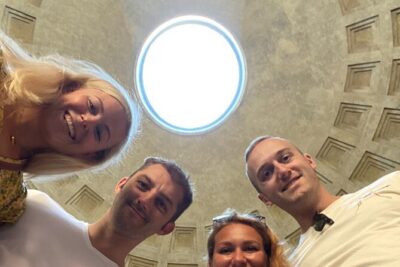
Pantheon Elite Guided Tour – Rome’s Iconic Ancient Temple
Read our review →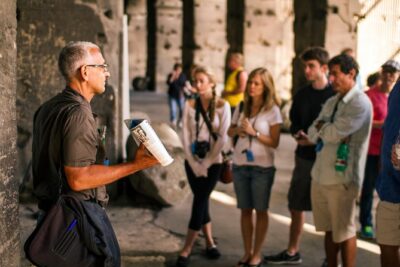
Rome in a Day Tour with Vatican, Colosseum and Historic Center
Read our review →