
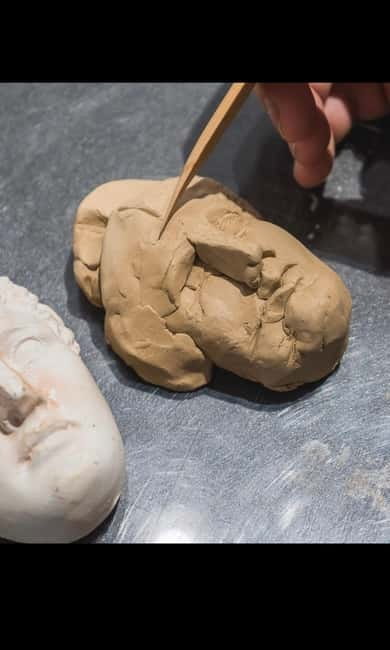
Review · ATHENS
Athens: Be an Ancient Sculptor: Craft Your Greek Masterpiece
The most unusual part of this Athens activity is that it links ancient wine culture with hands-on sculpture. You begin in a room styled like an ancient Greek symposium, examine replicas of kraters and kylixes, then move into a gallery before shaping your own small clay work.
I like two things here: the patient, step-by-step instruction and the fact that your souvenir is something you made yourself. Manos takes time with beginners, explains facial shaping and texture, and shares stories about the pieces in his atelier. The main consideration is that this is a small, focused workshop rather than a major museum visit, and it is not suitable for wheelchair users.
Key points to know before booking
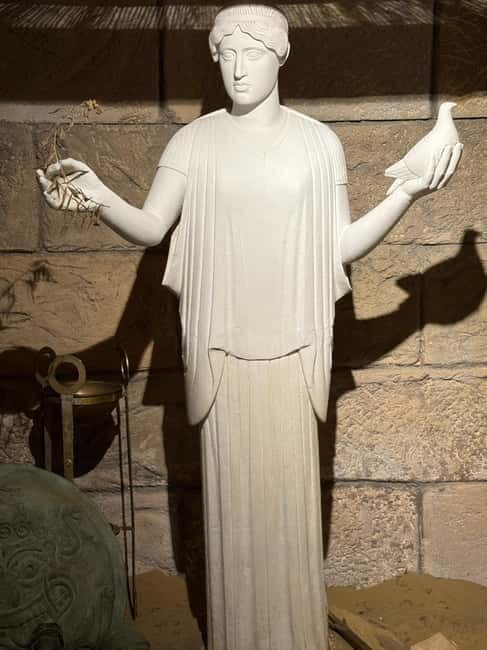
- Ancient wine sets the scene: Learn how wine was made and used in social and religious life, with replicas of decorated Greek vessels.
- You create the souvenir: Clay, tools, instruction, and your finished small sculpture are included in the price.
- Manos teaches patiently: Expect calm, personal help with shaping, detail, and texture.
- The gallery adds context: See recreations of ancient statues alongside modern Greek works inspired by mythology.
- Easy central location: Ancient Symposium is at Doiranis 39 in Kallithea, a few minutes from the Acropolis Museum and near Syngrou Avenue.
- Allow two hours: Wear comfortable clothes and shoes, and arrive about 10 minutes early.
A hands-on Greek art lesson in Kallithea
Athens gives you many ways to look at ancient art. You can stand before marble statues in a museum, follow a guide around the Acropolis, or watch craftsmen at work. This experience takes another route: you learn a little, handle clay, and make something of your own.
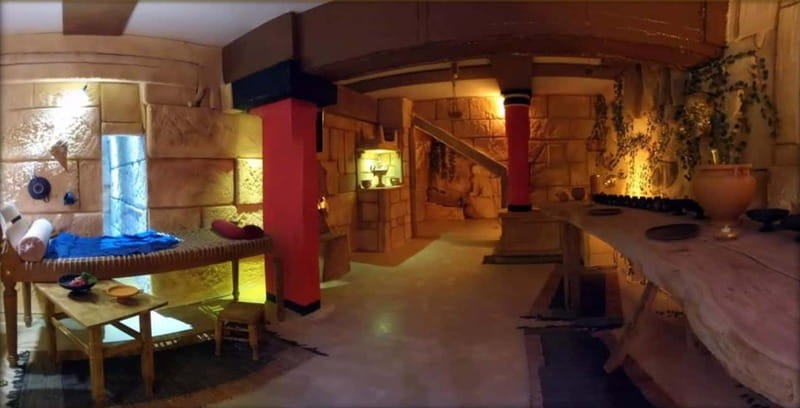
The setting is Ancient Symposium, a family-run art space in Kallithea. Its Ancient Room is designed to suggest the atmosphere of a Greek symposium, the social gathering where wine, conversation, music, philosophy, and art came together. It is not a preserved ancient building, so you should not expect archaeological remains. The appeal is the interpretation and the chance to take part.
The activity lasts two hours and is conducted in Greek and English. It costs $58 per person. That is more than a quick craft demonstration, but the price includes the guided Ancient Room visit, gallery tour, all materials and tools, personal instruction, and your finished sculpture. For someone who wants an active cultural experience rather than another hour of looking at displays, the package offers fair value.
More Ancient History Tours in Athens
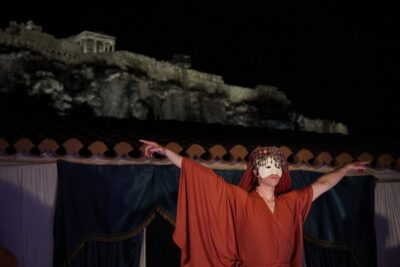
- Athens: Ancient Greek Theater Performance
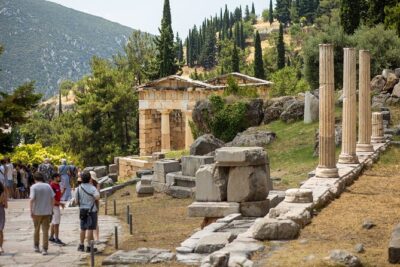
★ 4.7 · 2,481 reviews - Historical Delphi One Day Tour with Arachova Stop & Expert Guide
★ 4.5 · 1,247 reviews - From Athens: Ancient Corinth Day Trip with Canal & VR Guide
★ 4.6 · 1,073 reviews
Beginning with kraters, kylixes, and ancient wine
The first portion takes place in the Ancient Room. Here, you learn about the production of ancient Greek wine and its place in daily, social, and religious life. The subject matters because wine in ancient Greece was not simply a drink. It helped shape the setting for gatherings where people talked, performed, debated, and formed social ties.
You will see replicas of vessels including kraters and kylixes. A krater was used for mixing wine and water, while a kylix was a shallow drinking cup. The vessel shapes and painted scenes provide a useful bridge between wine and art. You are not just looking at decoration. You are considering how an object was used, who handled it, and what its images might have communicated.
This section should appeal to you if you like cultural context but do not want a long academic lecture. The presentation connects objects to ordinary activities and ceremonies. It also helps explain why ancient Greek artists decorated practical vessels with scenes from mythology, social life, and religious tradition.
The room’s ancient Greek theme adds to the mood. One visitor described the interior, background music, and overall atmosphere as especially effective. That atmosphere will not replace an archaeological site, but it can make the subject easier to picture before you begin working with clay.
Seeing ancient and modern Greek art together
Next, you visit the Ancient Symposium Gallery. The gallery brings together recreations of ancient statues and modern Greek art inspired by mythology. This gives you a chance to compare the visual language of antiquity with later interpretations.
The guide explains how ancient Greek sculptors approached their work and how sculpture served religious, decorative, and historical purposes. You will also hear about basic methods used to create statues and figures. Since the workshop follows soon afterward, this is practical preparation rather than information floating by with no use.
I particularly like the order of the experience. You first learn about a social setting and its objects. Then you look at larger works of art. Finally, you try a small version of the process yourself. The sequence makes the workshop feel connected to Greek art instead of being an unrelated pottery class with a Greek label.
Keep your expectations sensible. The gallery is part of a two-hour activity, not a substitute for the Acropolis Museum or the National Archaeological Museum. If you want thousands of original antiquities, choose a museum. If you want a more personal introduction to Greek artistic ideas, the gallery makes a good companion to your museum visits.
Your turn at the sculpting table
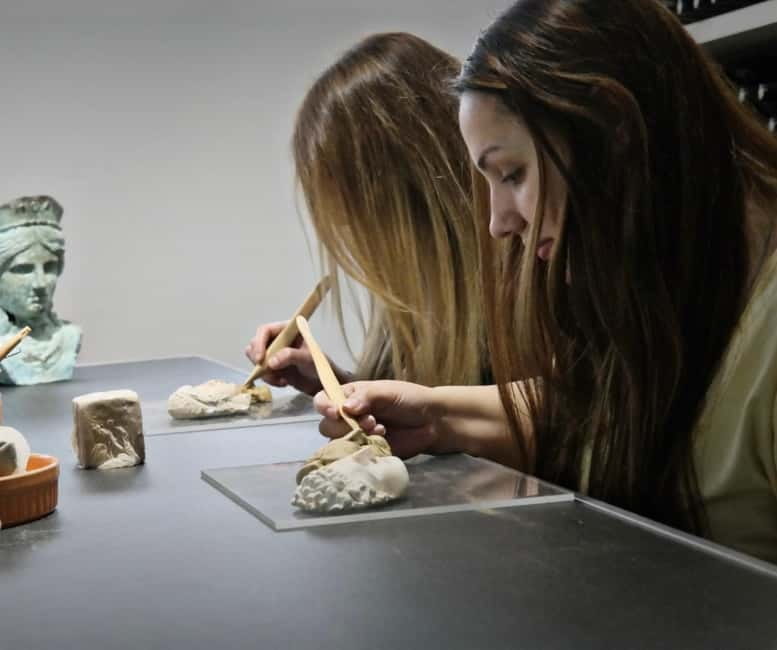
The final portion is the main event. You receive clay and professional sculpting tools, then learn basic techniques for shaping a small Greek-inspired sculpture. Instruction covers facial form, small details, and texture.
You do not need to arrive with art training. The point is not to reproduce a museum masterpiece. You are learning how a lump of clay changes when you add, remove, press, smooth, and mark the surface. A calm instructor can make a big difference here, especially when you are unsure how much detail to attempt.
Manos is named as the instructor in the activity feedback, and his teaching style is repeatedly described as patient and unhurried. He helps with the next step without taking over the work. That is important. A craft class can become frustrating if the instructor produces the piece for you, or rushed if there is no time to correct mistakes.
You can expect guidance with facial shaping and texture, but the final result remains your own. Some people will make a neat, recognizable figure. Others may produce something more abstract. Either is fine. The value comes from understanding the work involved in shaping a face, building a form, and adding detail by hand.
The clay sculpture is yours to take home. That makes this more memorable than a standard guided visit. You leave with an object tied to a particular afternoon in Athens, rather than another photograph that may soon disappear into your phone.
More Ancient History Tours in Greece
- Acropolis, Parthenon & Athens Old City Heritage Walking Tour
★ 4.5 · 876 reviews - Private Biblical Tour Ancient Corinth & Isthmus Canal from Athens
★ 5.0 · 762 reviews - Athens: Ancient Corinth & Nafplio Full Day Trip with Swim
★ 4.8 · 531 reviews - Athens: Ancient Agora E-Ticket and Audio Tour
★ 3.9 · 413 reviews
How much personal help can you expect?
The available information does not specify a group size, so I would not book this expecting a private lesson unless that is confirmed separately. Still, the instructor’s patient approach is a strong point for beginners and families who want help at the table.
The class is designed to be interactive. You are not simply watching a sculptor demonstrate. You are given materials, tools, and time to work. Previous participants have found the activity relaxing as well as fun, which makes sense: sculpting gives your hands something to do while your attention settles on one small task.
Arrive about 10 minutes early. That gives you time to find the location, settle in, and meet the instructor before the scheduled start. Wear clothes and shoes suitable for working with clay. Comfortable clothing is the practical choice, especially if you want to concentrate on the sculpture rather than worry about keeping an outfit spotless.
Smoking is not allowed. The activity is not suitable for wheelchair users, so check the access details carefully before booking.
Location near the Acropolis Museum
Ancient Symposium is at Doiranis 39 in Kallithea, on the first parallel street of Syngrou Avenue. The venue is described as a few minutes from the Acropolis Museum and close to one of Athens’ main routes between the city center and the coast.
This is useful when planning your day. You can pair the workshop with a museum visit or another stop around central Athens, though you should leave enough time for the journey and for finding the address. The area is described as quiet and easy to approach, with bus stops and metro connections nearby.
Do not assume that every route will feel as direct as a visit to a central landmark. Kallithea is well connected, but Athens traffic and street layout can slow you down. Arriving early is a simple way to avoid beginning your class in a hurry.
The location also works well if your hotel is in central Athens. Many hotels are described as being around the Ancient Symposium area, and Syngrou Avenue gives you a clear major route to follow. Confirm your exact transport route on the day, especially if you are carrying bags or traveling with children.
Is $58 a fair price?
At $58 per person, this is not the cheapest cultural activity in Athens. You could spend less on a museum ticket or a short craft demonstration. The better comparison is with other guided workshops, where the value depends on how much teaching and material you receive.
Here, your fee covers three connected parts: the Ancient Room, the gallery, and the clay workshop. You also receive all tools and materials, personal guidance, and the sculpture you make. If you value an activity that occupies your hands and leaves you with a physical keepsake, the price is reasonable.
The value is weaker if you are mainly interested in original antiquities. The vessels and statues described here are replicas or recreations, and the gallery is compact enough to fit into a two-hour experience. In that case, spend your time at Athens’ major museums and consider this only if the workshop appeals to you.
I would see it as a good midrange choice for a couple, a family with older children, or a solo visitor who wants a break from monuments. It also gives you a social activity that does not revolve around food or nightlife. The connection to wine may tempt you to add another Ancient Symposium experience later, but this booking focuses on art and sculpture.
Who will enjoy this workshop most?
You are likely to enjoy it if you meet one or more of these descriptions:
- You want a cultural activity where you make something, not just look at something.
- You enjoy Greek mythology, ancient art, or the social customs of antiquity.
- You are a beginner who appreciates clear instructions and calm guidance.
- You want a small souvenir with a personal story behind it.
- You need an indoor activity for part of an Athens afternoon.
- You are traveling with friends or family and want to compare your finished sculptures.
It may not suit you if you want a major archaeological collection, a long professional ceramics course, or a fully accessible venue. The activity centers on a small sculpture, so anyone hoping to make a large or highly polished statue should adjust expectations.
Children may find the clay work engaging, but the supplied information does not give a minimum age. If you are booking for a child, confirm age suitability before paying.
Practical planning for the two-hour visit
Book this on a day when you are not racing between several major sights. The activity has a clear progression, and you will get more from it if you have enough mental space to listen, look, and work.
Wear comfortable clothes and shoes. The information specifically recommends clothing suitable for sculpting, which is good advice even though the class provides the tools. Bring patience rather than artistic ambition. Your first attempt may not look like a classical statue, and that is part of the fun.
The instructor speaks Greek and English. If you are more comfortable in English, this is an important practical detail. The activity also offers free cancellation up to 24 hours before the start and a reserve-now, pay-later option, which can help when your Athens schedule is still changing.
The strongest praise centers on the instructor’s patience, the friendly atmosphere, and the pleasure of creating a personal piece. Those qualities matter more here than the size of the gallery or the number of objects on display. This is a people-focused workshop, and its success depends on the teaching.
Should you book Ancient Symposium?
Book it if you want to connect ancient Greek culture with your own hands. The wine vessels and gallery provide context, while the workshop turns that context into a small, personal sculpture. Manos’ calm, detailed instruction is especially useful if you are new to clay or easily intimidated by art classes.
Skip it if your priority is seeing original antiquities or visiting a large museum. Also check the access arrangements if anyone in your party uses a wheelchair.
For most visitors, the best reason to book is simple: you get a two-hour cultural activity with a clear beginning, middle, and end, then take home something you made yourself. In Athens, where so much sightseeing involves standing and looking, that change of pace is worth considering.
FAQ
Where is Ancient Symposium located?
Ancient Symposium is at Doiranis 39 in Kallithea, a few minutes from the Acropolis Museum and near Syngrou Avenue.
How long does the experience last?
The experience lasts two hours.
What languages are available?
The instructor offers the activity in Greek and English.
What is included in the price?
The price includes the Ancient Greek Room tour, gallery tour, sculpture workshop, all materials and tools, personalized guidance, and the sculpture you create.
Do I get to take my sculpture home?
Yes. Your small clay sculpture is provided as a souvenir at the end of the activity.
Do I need previous sculpting experience?
Previous experience is not stated as a requirement. The activity teaches basic techniques including facial shaping, detailing, and texture with guidance from an experienced sculptor.
What should I wear?
Wear comfortable clothes and shoes suitable for sculpting.
How early should I arrive?
Arriving about 10 minutes early is recommended so you have time to settle in and meet the instructor.
Is the activity wheelchair accessible?
The activity is listed as not suitable for wheelchair users.
Latest history tours reviewed in Athens
- From Athens: Ancient Olympia Full-Day Private Tour★ 4.8 · 22 reviews
- From Athens: Explore Ancient Corinth & Charming Nafplion★ 4.6 · 102 reviews
- From Athens: Explore Ancient Greece 4-Day Tour★ 4.7 · 73 reviews
- Athens: Women in Ancient Greece★ 5.0 · 98 reviews
- Athens: The History of Greek Mythology Private Tour★ 4.7 · 53 reviews
- Athens: Ancient Corinth & Nafplion Guided Premium Tour★ 4.7 · 237 reviews
- Athens: Roman Agora & Ancient Agora E-ticket & 2 Audio Tours★ 4.1 · 107 reviews
- Athens: Kotsanas Ancient Greek Technology Museum Guided Tour★ 5.0 · 29 reviews
Athens History Tours, compared.
Historical Delphi One Day Tour with Arachova Stop & Expert Guide
Read our review →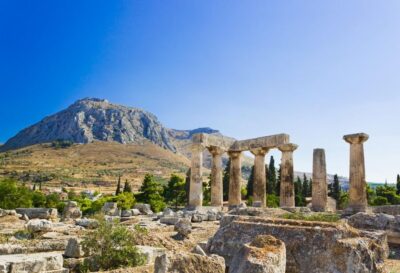
From Athens: Ancient Corinth Day Trip with Canal & VR Guide
Read our review →
Historic Athens: Small Group Electric Bike Tour
Read our review →
Acropolis, Parthenon & Athens Old City Heritage Walking Tour
Read our review →
Private Biblical Tour Ancient Corinth & Isthmus Canal from Athens
Read our review →
Athens: Ancient Corinth & Nafplio Full Day Trip with Swim
Read our review →
Browse the lists this tour appears in