
Review · MOROCCO
Walking Tangier Tour from ancient Kasba to Bustling Souks
Tangier reveals itself best on foot, one narrow lane at a time. This private walk links the city’s main historic quarters with several small museums, moving from Grand Socco to the Kasbah, old medina, American Legation, and Moshe Nahon Synagogue.
I like the personal touch. Guides Anas, Bilal, and Rabab are praised for making the walk lively, adjusting it to individual interests, and explaining Tangier as locals know it. I also like that the $48.50 price includes admission to the listed sights, not just a stroll through the streets.
The main consideration is time. The route covers a lot in roughly 2 to 4 hours, and the listed stops alone add up to about three hours. You will walk through uneven, narrow lanes, so this is not the tour for anyone hoping for a slow, effortless outing.
Key points at a glance
- Grand Socco begins the story: This busy square connects Tangier’s modern city with the old medina.
- The Kasbah gives you the city’s best sense of place: High walls, steep lanes, and old defenses frame the walk.
- Dar El Makhzen adds context: The former sultan’s palace holds maps, mosaics, and objects tracing the region from prehistory to the 19th century.
- A private guide changes the pace: Anas, Bilal, and Rabab are named as guides who tailor the experience to interests such as architecture, maps, and local culture.
- Several admissions are included: The Kasbah Museum, American Legation Museum, and Moshe Nahon Synagogue are part of the route.
- You get more than shopping streets: The walk brings together Moroccan, Andalusian, Jewish, American, Phoenician, Roman, and European threads.
Starting at Grand Socco, Tangier’s great crossroads
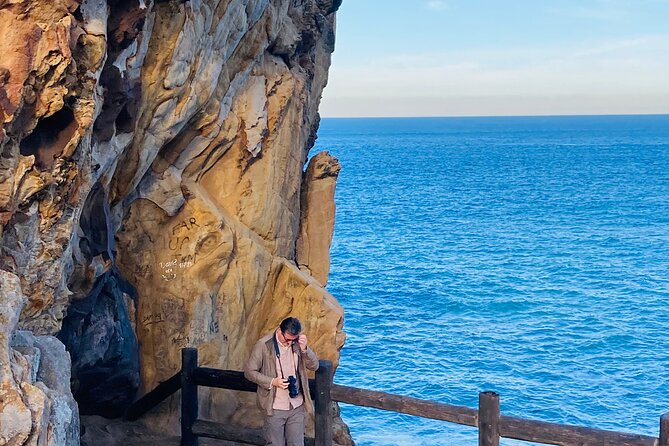
Place du Grand 9 Avril 1947, usually called Grand Socco, is a useful place to begin because it explains Tangier’s layout before you enter the old city. The square acts as a hinge between the newer parts of town and the medina, with traffic, pedestrians, shops, and old buildings all meeting in one open space.
The name comes from souk, the Arabic word for market. That matters because Grand Socco is not simply a photo stop. It gives you a quick lesson in how Tangier has worked for generations, as a meeting point for trade, conversation, and movement between districts.
You spend about 15 minutes here. That is enough to get your bearings and hear the basic story without letting the opening become a long lecture. I would use this moment to ask your guide how the old medina differs from the modern city, since the answer will help you notice the change as you walk.
The square can feel hectic. Cars, people, and commerce share the same space, and the open setting offers little shade or quiet. Still, that activity is part of the point. Tangier begins with movement, not a polished monument.
More Ancient History Tours in Morocco
- Atlas Mountains – Ancient Ait Ben Haddou Day Tour from Marrakech
★ 5.0 · 411 reviews - Full-Day Tour to Essaouira – The Ancient Mogador City from Marrakech
★ 5.0 · 127 reviews - Fez: Walking Tour in the Ancient City of Fez
★ 4.8 · 73 reviews
Inside the Kasbah, where Tangier rises above the city

The Tangier Kasbah occupies the city’s high ground. Its position explains its original purpose: walls and elevation offered a defensive advantage, while the narrow lanes made the area difficult for outsiders to read.
The 45-minute visit is likely the physical heart of the walk. You move through winding streets and old walls where the city’s Arab, Andalusian, and earlier Mediterranean connections come together. The architecture is not presented as one clean style. Instead, you see layers left by different peoples and periods.
This is where a private guide earns the fee. On your own, you could easily wander in circles or pass an important doorway without knowing why it matters. A guide can point out the shape of the lanes, explain the Kasbah’s defensive role, and connect the buildings to Tangier’s place between Europe and North Africa.
The route is not described as a strenuous hike, but the setting suggests uneven surfaces, inclines, and tight passages. Wear shoes with a firm sole. If you have limited time in Tangier, this section gives you a strong visual sense of the city even before you enter a museum.
Dar El Makhzen and the Kasbah Museum
The Kasbah Museum occupies Dar El Makhzen, a former sultan’s palace. Its exhibits cover the area from prehistoric times through the 19th century, giving you an indoor pause after the streets and a broader frame for what you have seen.
Allow about 35 minutes. The visit begins around the first courtyard, continues indoors, and ends with an Andalusian garden. That sequence makes the museum feel like part of the palace rather than a detached display hall.
A few objects deserve special attention. The mosaic of Venus from Volubilis connects Tangier to the Roman world of Morocco. Maps trace trade routes from Phoenician metal trading to modern electronic goods, showing how commerce has shaped the region over a very long span.
Another map, made in Tangier in 1154, shows the known world from a medieval point of view. The map is displayed upside down by modern convention, so do not assume you are looking at it incorrectly. Ask your guide to explain how people at the time pictured the world.
One practical point: the museum material is presented in French and Arabic only. If you do not read either language, the guide becomes especially useful. The visit will be more rewarding if you ask for explanations rather than trying to take in every label.
Walking the old medina through narrow lanes
The medina is the longest continuous street portion of the experience, with about 35 minutes set aside for it. This is where Tangier becomes most sensory. You may notice spice smells, changing colors, patterned doors, old walls, small shops, and the call to prayer blending with ordinary city sounds.
The medina is not a staged historic district. It is a working part of Tangier, and that gives the walk its appeal. You are seeing routes used for daily errands, trade, worship, and conversation, not just preserved facades.
The narrow lanes also demand patience. A short distance can take time when the route bends, crowds gather, or a shop catches your eye. The tour’s private format lets you ask questions and set the emphasis. If you care about architecture, say so. If you want the social side of the medina, local food, or the city’s literary connections, tell your guide early.
Tangier has long drawn artists and writers, and the medina carries that association. The walk touches the bohemian image of the city, but it is better when treated as a living neighborhood rather than a literary backdrop.
There is also a practical advantage to having a local guide here. The medina can be confusing, particularly if you are trying to find museums or a particular street on a tight schedule. You avoid spending your limited time on wrong turns.
More History Walking Tours in Morocco
- Fez: Guided Walking Tour of the Historic Medina
★ 5.0 · 359 reviews - Historical Marrakech Walking Tour
★ 5.0 · 198 reviews - Fes: A Guided Walking Tour Through the Historic Medina
★ 4.4 · 97 reviews
The American Legation and an unusual United States connection
The Tangier American Legation Museum receives about 30 minutes. It occupies a property acquired by the United States government in 1821, recognized as the oldest American diplomatic property in the world.
That makes this a surprisingly important stop in a Moroccan walking tour. The relationship between Morocco and the United States began with the Moroccan-American Treaty of Friendship in 1786, before the U.S. Constitution. The legation helps explain why Tangier has long been a meeting point for diplomats, merchants, and cultures from both sides of the Atlantic.
The building also breaks up the route nicely. After the open square, defensive walls, palace rooms, and crowded medina lanes, you get a different angle on the city’s international past.
Thirty minutes is enough for a focused visit, though not enough for every display in detail. If this subject interests you, tell your guide. The private setup makes it easier to spend a little more time on the diplomatic story, provided the rest of the schedule allows.
Moshe Nahon Synagogue and Tangier’s Jewish past
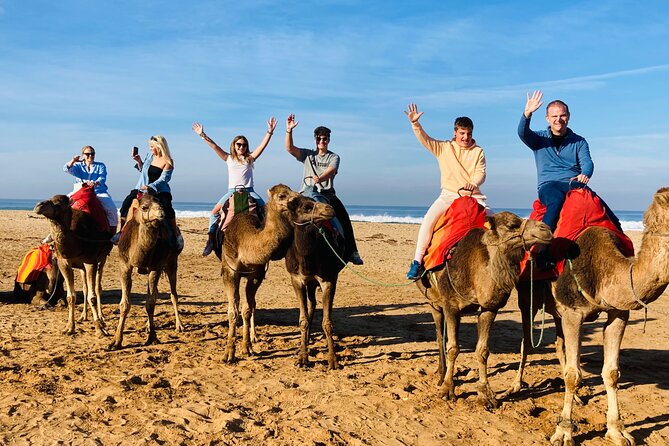
The final listed stop is Moshe Nahon Synagogue, with about 15 minutes set aside. It sits on a dead-end street off Rue des Synagogues in the Beni Idir quarter of the medina.
The synagogue was built in the 19th century by Moïse Nahon, an educator and scholar from an influential Jewish family in Tangier. It stopped operating in the second half of the 20th century, later fell into disrepair, and was restored in 1994. Today it functions as a museum.
This small stop adds an important dimension to the walk. Tangier’s identity cannot be reduced to one tradition, and the synagogue helps you see the city as a place shaped by Jewish, Muslim, European, and Mediterranean communities.
Fifteen minutes is brief, so think of this as a concentrated introduction rather than a full museum visit. The location on a dead-end street also makes it feel like a place you might miss without a guide.
What the private format changes
This is a private activity, so only your group participates. That matters most in the medina and Kasbah, where a large group could slow down the walk and make it harder to hear.
The guides named in the available feedback include Anas, Bilal, and Rabab. Anas is praised for being informative and entertaining while making sure the group was comfortable. Bilal is described as professional and well informed about Tangier and Morocco. Rabab is noted for asking about personal interests and shaping the walk around them, with special attention to maps and architecture when those subjects appealed to the person she guided.
Those details suggest a useful approach: tell the guide what you care about at the start. A person fascinated by maps should not have the same walk as someone more interested in food, religious buildings, or Tangier’s literary past.
The private structure also suits families and mixed-age groups. The pace can be adjusted, within reason, and you do not have to match the preferences of strangers. Still, it remains a walking tour through old streets. Private does not mean flat, quiet, or effortless.
Is $48.50 a fair price?
At $48.50 per person, the value depends on how much use you make of the guide. The price includes a private experience, local interpretation, and admission to the listed sights. You are not paying only for directions between the Kasbah and medina.
The route includes six distinct stops, with museums and historic interiors that would be harder to understand without context. If you are in Tangier for only a short stay, the tour also saves planning time. You get a structured introduction to the city instead of trying to connect these places yourself.
For a person who prefers wandering alone, the price may feel high. You could walk through Grand Socco, the Kasbah, and the medina without booking a guide. But you would miss some of the connections between the sites, and museum labels at the Kasbah Museum are only in French and Arabic.
The tour is often booked about 41 days ahead. That is useful planning information if your dates are fixed, especially since the experience operates in a morning window from 10 a.m. to 1 p.m. Confirm the exact start time when booking, since the stated duration can range from 2 to 4 hours.
Pickup is offered, and the activity has a mobile ticket. It is near public transportation, and most people can participate. Free cancellation is available until 24 hours before the start time. After that point, the amount paid is not refunded, and late changes are not accepted.
Who should book this Tangier walk?
I would choose this tour if you want a first look at Tangier that mixes streets, museums, religion, diplomacy, and daily life. It is especially useful if you have limited time or do not want to work out the medina’s layout alone.
It suits people who like asking questions. The best value comes from using the guide’s local knowledge, not simply following behind from one stop to the next.
Families may appreciate the private format, since the pace can be more personal. Culture-focused visitors will find plenty to discuss, from the Volubilis mosaic and medieval map to the synagogue and American Legation.
I would think twice if you dislike walking on narrow or uneven streets, want a very slow museum visit, or prefer a quiet excursion with long periods of free time. This route covers a lot. The experience is strongest when you welcome variety and do not expect every stop to receive equal attention.
Should you book the Walking Tangier Tour?
Book it if you want an efficient, private introduction to Tangier with real attention to the city’s mixed past. The combination of Grand Socco, Kasbah lanes, Dar El Makhzen, the medina, American Legation, and Moshe Nahon Synagogue gives you far more range than a simple market walk.
Ask for a guide who matches your interests, and mention those interests before you begin. Anas, Bilal, and Rabab are all associated with strong personal attention in the available feedback. At $48.50, the tour makes the most sense for someone who values clear local guidance, included admissions, and a flexible private pace.
FAQ
How long does the Walking Tangier Tour last?
The stated duration is approximately 2 to 4 hours. The listed stops have planned visits ranging from 15 to 45 minutes, so the exact length can depend on the pace and the time spent at each place.
What places are included on the route?
The route includes Place du Grand 9 Avril 1947, also called Grand Socco, Tangier Casbah, Musee de la Kasbah, the Medina of Tangier, Tangier American Legation Museum, and Moshe Nahon Synagogue.
Is this a private tour?
Yes. Only your group participates in the activity.
Is pickup available?
Yes, pickup is offered. The activity is also near public transportation.
Are admission tickets included?
Admission is listed as included for each of the six stops on the route.
Can I cancel for a full refund?
You can cancel for a full refund up to 24 hours before the experience start time. Cancellations or changes made less than 24 hours in advance are not accepted for a refund.
Latest history tours reviewed in Morocco
- Fes: A Guided Walking Tour Through the Historic Medina★ 4.4 · 97 reviews
- Casablanca to Fez: Scenic & Historical Day Trip with Lunch★ 4.7 · 111 reviews
- Casablanca Cultural Tour: Medina, Views & Local Delights★ 4.6 · 126 reviews
- private VIP half journey of Marrakesh : History & Culture.★ 4.5 · 64 reviews
- Private Cultural Tour in Marrakech City★ 5.0 · 77 reviews
- Fez: Guided Walking Tour of the Historic Medina★ 5.0 · 359 reviews
- Historical Marrakech Walking Tour★ 5.0 · 198 reviews
- History and culture with Fes Medina private tour guide★ 5.0 · 56 reviews
Morocco History Tours, compared.
Marrakech: Saadian Tombs & Bahia Palace, Medina Guided Tour
Read our review →
Marrakech Historical and Cultural Tour – Half Day City Tour
Read our review →
Atlas Mountains – Ancient Ait Ben Haddou Day Tour from Marrakech
Read our review →
Fez: Guided Walking Tour of the Historic Medina
Read our review →
Full-day Historical Meknes Volubilis and Moulay Idriss Tour
Read our review →
Full-Day Tour to Essaouira – The Ancient Mogador City from Marrakech
Read our review →
Casablanca Cultural Tour: Medina, Views & Local Delights
Read our review →Browse the lists this tour appears in