
Review · WASHINGTON DC
DC: Georgetown History & Architecture Tour with Local Guide
Georgetown is the part of Washington where the capital’s polished image gives way to cobblestones, canal locks, old churches, and house fronts with stories to tell. The neighborhood was here before Washington, DC, was planned, and this two-hour walk shows you why it still feels like a separate town.
I like the route’s mix of visible details and human stories. You’ll look for firemarks, coal chutes, ironwork, and gas lanterns, then hear about the Kennedys, Black residents, immigrants, women who challenged convention, and the neighborhood’s link to Georgetown University. I also like that the walk finishes at the university, rather than simply looping back to the shopping streets.
The main thing to consider is the title’s promise of architecture. The tour does cover buildings and house styles, but its strength is the blend of history, local personalities, and entertaining anecdotes. If you want a formal architectural survey, this may feel a little light. At $39, though, it offers a useful introduction at a fair price.
Key points at a glance
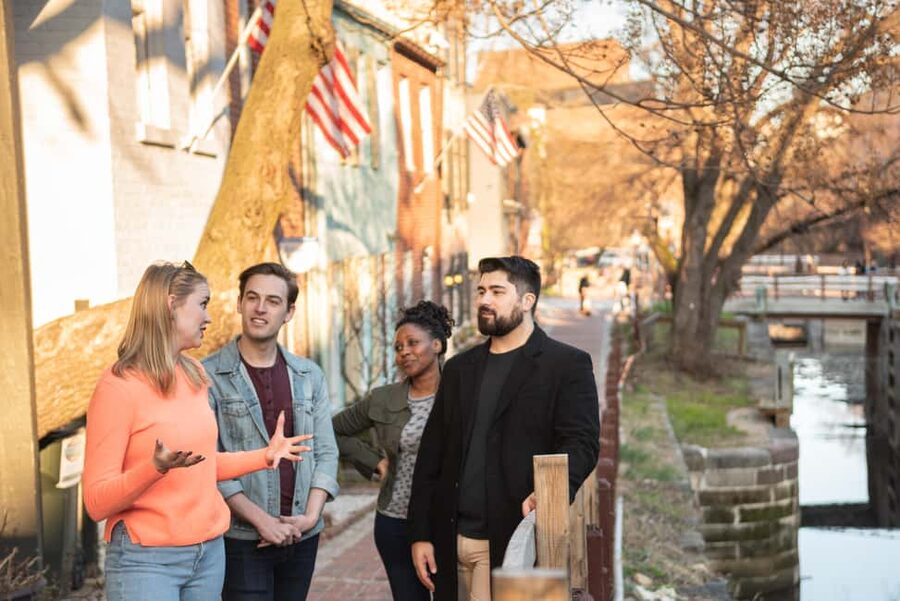
- C&O Canal beginning: Start beside Lock 3, where Georgetown’s industrial past comes into view.
- Old Stone House access: Visit the yard of one of the area’s oldest homes and see a National Park site.
- Historic homes up close: Study 18th and 19th-century buildings, original firemarks, coal chutes, ironwork, and gas lanterns.
- Personal stories: Hear about John and Jackie Kennedy, Black Georgetown, immigrants, women reformers, and notable local residents.
- Georgetown University finish: End on campus, with time to look around and connect the university to the neighborhood.
- Local guide style: Guides such as Vicky, Wesley, Becca, Ingeborg, Georgia, and Wayne bring different personalities, humor, and stories to the walk.
Why Georgetown makes a good walking tour
Georgetown is older than Washington itself, which gives the neighborhood a different rhythm. Its streets were shaped by a colonial port town, not by the broad avenues and monumental planning associated with the federal city. That difference becomes clear almost at once.
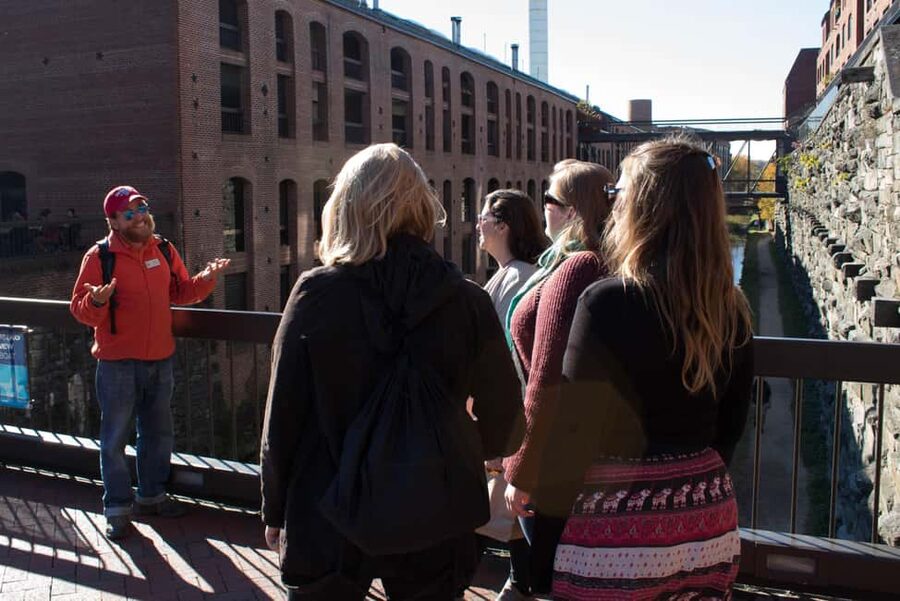
You begin at the Chesapeake and Ohio Canal Historic Park, beside Lock 3. From there, the route moves through a neighborhood where commerce, politics, religion, education, and private life have all left marks on the same few blocks. I like this starting point because it gives you context before the walk turns toward handsome homes and fashionable M Street.
The route is also manageable. Two hours is long enough to get beyond a quick photo stop, but short enough to fit into a busy Washington day. You will be on foot throughout, and the pace has been described as neither rushed nor sluggish. One guide also took care to accommodate older walkers who could not move quickly.
More Architecture and Landmark Tours in the USA:
- Chicago in a Day: Food, History & Architecture Walking Tour
★ 5.0 · 1,153 reviews - Historic Charleston Walking Tour: Rainbow Row, Churches, and More
★ 5.0 · 691 reviews - Charleston: History and Architecture Guided Walking Tour
★ 4.8 · 349 reviews
Lock 3 and the canal’s working past
The first stop, C&O Canal Lock 3, is more than a meeting point. It introduces the less polished side of Georgetown, a place of boats, warehouses, labor, and trade. The canal carried goods through the industrial part of the neighborhood, linking Georgetown with the interior.
Your guide spends about 15 minutes here, with time for photographs and an explanation of how the waterway shaped local life. This is a useful counterweight to Georgetown’s later reputation for grand houses and political connections. Before the neighborhood became associated with refined homes and prominent residents, it was a working waterfront.
The canal is especially helpful for visitors who might otherwise see Georgetown only as a shopping district. You get a clearer sense of why the streets developed as they did, and why the neighborhood’s history includes both wealth and hard physical work.
Old Stone House and the earliest homes
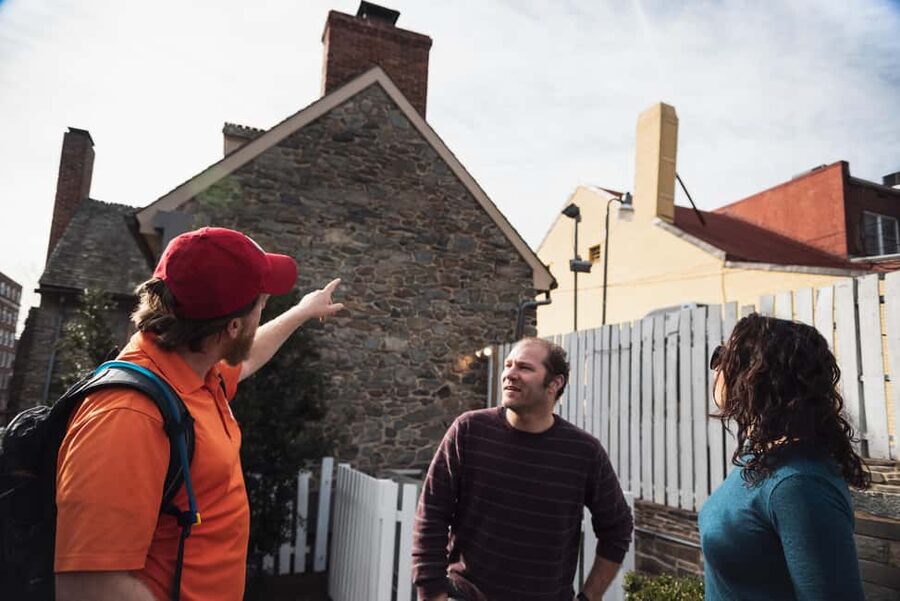
The walk then reaches the Old Stone House, one of the most important early buildings in the district. You can visit its yard and pause for photographs. The house is now a National Park site, and its survival gives you a tangible link to Georgetown’s early residential years.
The stop is brief, about 10 minutes, so do not expect a long interior museum visit. The value is in seeing the building in its setting and hearing how an old residence fits into the wider story of the neighborhood. It helps you read the surrounding streets with a better eye.
This is also where the tour begins shifting from broad historical context to small physical clues. Georgetown rewards slow looking. A doorway, wall, or iron fitting can reveal more than a grand monument if you know what to notice.
M Street, cobblestones, and layers of style
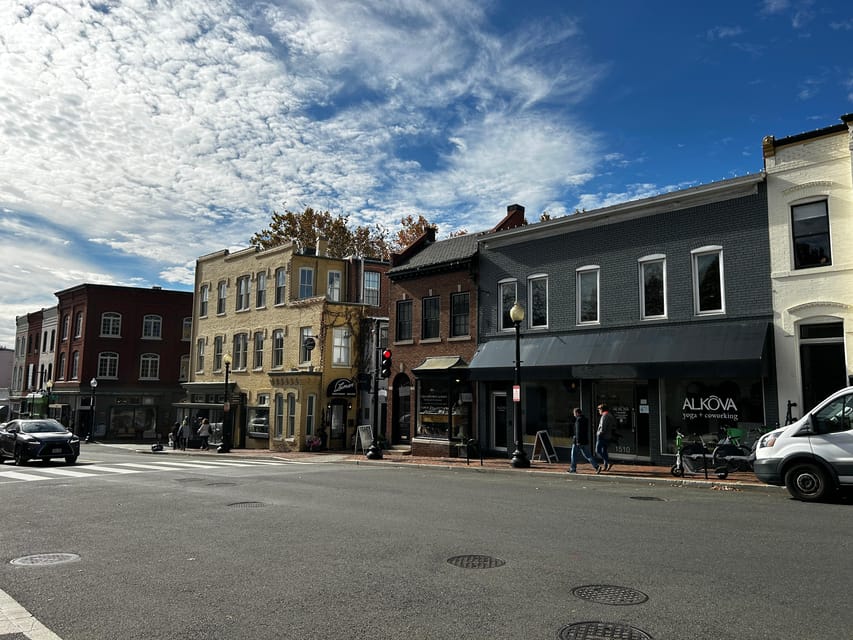
M Street is Georgetown’s best-known commercial artery, but the tour uses it as a gateway into the older residential streets. You’ll see historic buildings alongside shops and restaurants, a reminder that Georgetown is both a living neighborhood and a major stop on the Washington visitor route.
The guide points out features such as original firemarks, coal chutes, ironwork, and gas lanterns. These details are easy to miss when you walk alone. A firemark could identify a building’s insurance company, while a coal chute hints at the practical systems that once kept a house warm. The details make the past feel less decorative and more ordinary.
You should expect some time in active parts of Georgetown, especially around M Street. That means the surroundings can feel less quiet than the residential lanes. Still, the short stop provides a good transition between the canal and the more intimate streets ahead.
More Guided Tours in the USA:
- History and Hauntings of Salem Guided Walking Tour
★ 5.0 · 14,564 reviews - Historic Charleston Guided Sightseeing Walking Tour
★ 5.0 · 6,216 reviews - Historic Savannah Guided Walking Tour
★ 5.0 · 2,918 reviews - 2-Hour Gettysburg Battlefield Guided History Bus Tour with a National Park Guide
★ 4.5 · 2,201 reviews
Newton D. Baker House and Georgetown’s residents
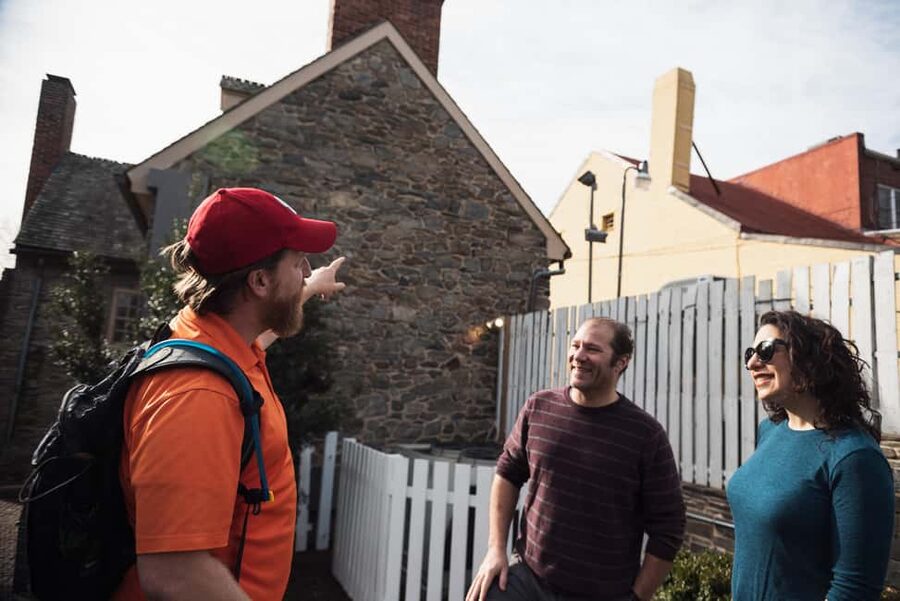
The Newton D. Baker House is one of the named stops, with about five minutes for a visit and explanation. It helps anchor the tour in individual residents rather than treating Georgetown as a collection of anonymous old buildings.
That approach continues throughout the neighborhood. You hear about politicians, families, social figures, and people whose lives did not fit the usual public story. The tour includes Black Georgetown communities, immigrant groups that helped shape the area, and women who pushed against the limits placed on them.
This is one of the strongest parts of the experience for me. Historic neighborhoods can become a parade of famous names, but the wider social story gives you a more honest view. You are not just looking at expensive-looking houses. You are considering who lived nearby, who worked there, who had influence, and who was left out of the official version of Georgetown.
The long central walk through Georgetown

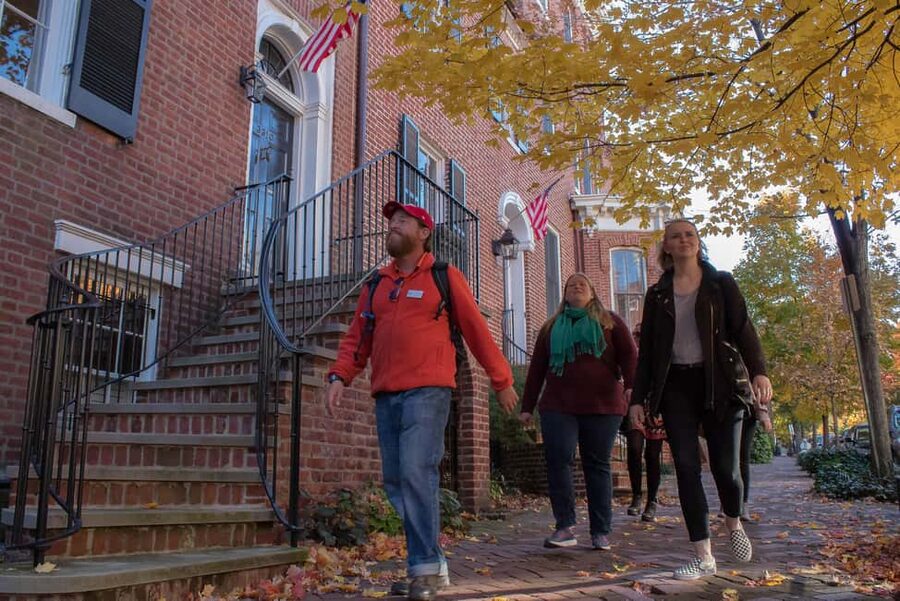
The central Georgetown portion takes roughly 45 minutes, making it the main body of the tour. Here you move along cobblestone streets and past 18th and 19th-century houses, historic churches, Victorian homes, and carefully preserved facades.
The architecture is presented through stories and close observation rather than a classroom lecture. You might learn how a house changed over time, what a particular exterior feature was used for, or how a former resident connected to national events. The guides are local experts and published authors on Georgetown’s past, and that background shows in the range of material they can draw on.
The balance can vary by guide. Some, such as Vicky and Becca, are praised for packing in a great deal of information without losing the thread. Wesley is described as both informative and entertaining, while Wayne adds plenty of jokes. Ingeborg has a lively, engaging style, and Georgia is praised for strong stories about politicians and celebrities.
You may hear more local gossip and famous-person anecdotes than you expect from a strict architecture tour. That is part of the appeal, but it is also the main limitation. One visitor wanted a stronger focus on architectural analysis and less on gossip. If your priority is building styles, tell your guide early. If you like history with personality, the blend should suit you.
Kennedy connections and Martin’s Tavern

Martin’s Tavern is a short photo stop, lasting about five minutes. It connects with the tour’s attention to the Kennedys and their time in Georgetown before and after John F. Kennedy’s assassination.
The tour also covers homes associated with John and Jackie Kennedy. These stories place national political history on ordinary-looking residential streets. You are not simply hearing about a president at a memorial or museum. You are seeing the neighborhood connected with his life as a congressman and public figure.
This part will appeal to anyone interested in Washington politics, but the tour does not turn into a full Kennedy biography. The homes are part of a broader Georgetown story that also includes architecture, local society, and daily life.
The supplied highlights also connect Georgetown with Taylor Swift, though the available details do not specify a particular residence or extended stop. Treat that as a possible pop-culture reference, not the main reason to book. The substantial material concerns the neighborhood’s older residents and political past.
The Wave Wall and quieter visual details

The Wave Wall is another short stop, with about five minutes for a visit, photographs, and explanation. It adds a more recent visual note to a walk otherwise centered on old buildings and historic events.
Short stops like this keep the route moving. You are not spending half an hour at every location, which helps the two-hour format cover several different sides of Georgetown. The tradeoff is that you may want extra time afterward to return to a favorite street or take more photographs.
I recommend keeping your eyes open between the official stops. The route’s appeal lies partly in the gaps, when you pass iron railings, old masonry, church fronts, and house details that may not receive a separate stop. This is a walk for looking around, not only for listening.
Georgetown University and the Lincoln connection
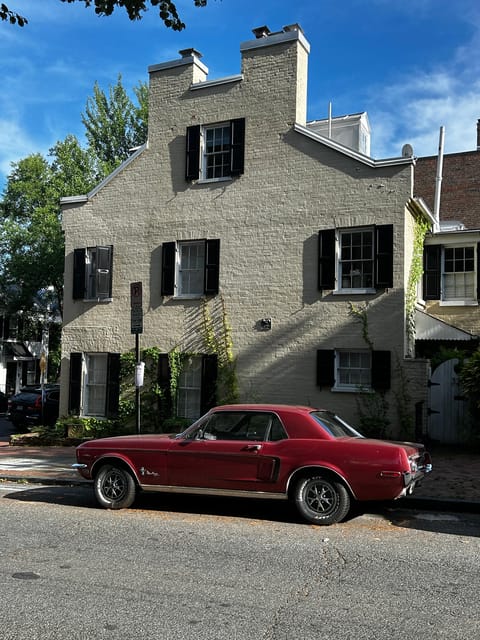
The tour finishes at Georgetown University, with about 10 minutes for photographs and free time. Reaching the campus gives the walk a clear ending and expands the story beyond houses and political figures.
Your guide explains how the neighborhood influenced the university, then gives you a chance to see the campus. This is useful even if you are not a prospective student. The university is one of the major institutions that gives Georgetown its identity, and its presence helps explain why the area has long attracted educated, influential, and politically active residents.
The tour information also promises more about President Lincoln and his grand memorial. The listed route finishes at Georgetown University rather than at the Lincoln Memorial, so do not book this expecting a visit to that monument. Lincoln material may be part of the wider Washington context or the guide’s commentary, but the walking route itself is centered on Georgetown.
Guide personality and group feel
The guide can shape the experience as much as the route. Vicky is repeatedly praised for being friendly, attentive, and able to combine history with dining and shopping advice. Wesley is noted for clear storytelling and care with slower walkers. Becca is described as informative and insightful, while Catherine, Georgia, Katherine, Ingeborg, and Wayne each bring their own style.
Some departures may be small. One became a private tour, and another group had eight people, a size that makes questions and conversation easier. The exact group size is not guaranteed, but the format allows for a more personal feel than a large sightseeing bus.
The best guides on this route do more than recite dates. They answer questions, adjust the pace, and explain why a small feature matters. You should expect an English-language tour led by a licensed professional, with the tone ranging from scholarly to playful depending on the guide.
Price, pace, and practical planning
At $39 per person, this is good value if you want a guided introduction to Georgetown rather than a self-guided walk with a phone in hand. You get two hours, a licensed guide, access to the yard of the Old Stone House, and a visit to Georgetown University. The cost is especially reasonable for first-time visitors who want context before exploring on their own.
Wear comfortable shoes. The tour is a walking experience over streets that include cobblestones, and the route does not provide a vehicle between stops. The pace is generally moderate, but you should still be comfortable standing and walking for two hours.
The meeting point can be confusing because C&O Canal Lock 3 has no normal street address. Look for the large park on the north side of the canal, between Thomas Jefferson and 30th Street NW. If you use a taxi or rideshare, Baked & Wired at 1052 Thomas Jefferson Street NW is a practical landmark, about a two-minute walk from the start. You can even pick up a pastry there before joining the group.
Bring water, especially in warm weather, and leave room in your schedule after the tour. The walk ends at Georgetown University, not back at Lock 3, so plan your next stop from the campus area. Dining and shopping suggestions from guides such as Vicky and Wesley can also help you make use of the rest of your Georgetown visit.
Free cancellation is available up to 24 hours before the tour, and you can reserve now and pay later. Those terms are useful if your Washington plans are still shifting.
Who should book this Georgetown walk?
I would choose this tour if you want local stories tied to real streets and houses, especially if Georgetown is new to you. It suits visitors who enjoy politics, architecture, neighborhood history, famous residents, and a little gossip in the same walk.
It also works well for people who prefer a relaxed pace. The tour is not described as strenuous, and guides have adjusted for older participants. Families and mixed-age groups may appreciate the short stops and variety, though the amount of historical detail may be more than very young children want.
I would look elsewhere if you want a long interior museum visit, a detailed study of architectural styles, or a tour focused mainly on the Lincoln Memorial. This experience stays outdoors and keeps Georgetown itself at the center.
Should you book it?
Book it if you want to understand why Georgetown feels different from the rest of Washington. The C&O Canal, Old Stone House, historic homes, Kennedy connections, Black Georgetown, and Georgetown University form a useful two-hour introduction, and the price is fair for the amount of local context.
Go in expecting a lively neighborhood history walk, not a specialist architecture seminar. You may hear jokes, political gossip, and celebrity connections alongside serious history. That mix, delivered by guides such as Vicky, Wesley, Becca, or Ingeborg, is exactly what makes the tour appealing.
FAQ
How long is the Georgetown history and architecture tour?
The guided walking tour lasts two hours.
How much does the tour cost?
The price is $39 per person.
Where does the tour begin?
It begins at C&O Canal Lock 3 in Chesapeake and Ohio Canal Historic Park, between Thomas Jefferson Street and 30th Street NW.
Is there a street address for Lock 3?
There is no standard street address. For a taxi or rideshare, use Baked & Wired at 1052 Thomas Jefferson Street NW as a nearby landmark. The meeting point is about a two-minute walk away.
Where does the tour finish?
The walk finishes at Georgetown University.
What language is the tour offered in?
The live guided tour is offered in English.
Is the Old Stone House included?
Yes. The tour includes access to the yard of one of Georgetown’s oldest houses, the Old Stone House, which is now a National Park site.
Can I cancel the booking?
You can cancel up to 24 hours in advance for a full refund. You can also reserve now and pay later.
Latest history tours reviewed in the USA
- Franklin: Ghost Tour in Historic Franklin★ 4.8 · 65 reviews
- Fort Worth: Stockyards History Tour Pub Crawl★ 4.8 · 39 reviews
- Downtown Flagstaff Haunted History Walking Tour★ 4.7 · 46 reviews
- New York City: Flatiron Food, History, and Architecture Tour★ 4.8 · 43 reviews
- Fairbanks: Gold Dredge 8 Historic Train Tour★ 4.7 · 219 reviews
- Fairbanks: Private Mush on the Historic Yukon Quest Trail★ 5.0 · 30 reviews
- Charleston:Evening Haunted History Horse-Drawn Carriage Tour★ 4.7 · 38 reviews
- Philadelphia: Valley Forge National Historical Park Tour★ 4.9 · 39 reviews
Washington DC History Tours, compared.
Guided African American History Tour with Reserved Museum Entry
Read our review →
DC Monuments & History Guided E-Cart Tour-Blankets
Read our review →
Smithsonian Museum of Natural History – Exclusive Guided Tour
Read our review →
African American History Tour with Museum of African American History Ticket
Read our review →
Washington, DC: African American History Tour & Museum Entry
Read our review →
D.C: Monuments & History Guided Open-Air Bus Tour-Day &Night
Read our review →Browse the lists this tour appears in