Review · ROME
Ancient Ostia Antica Semi-Private Day Trip from Rome by Train with Guide
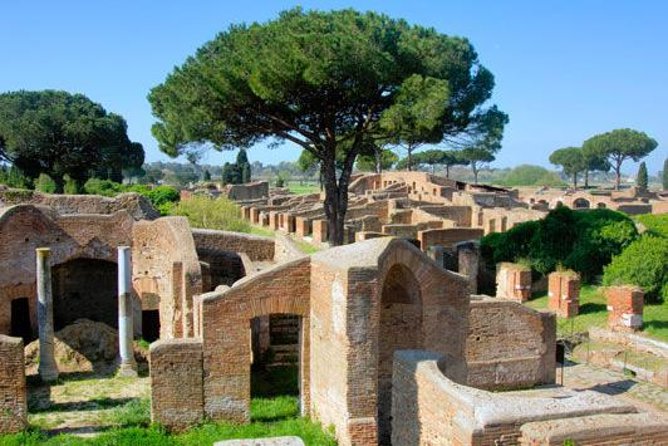
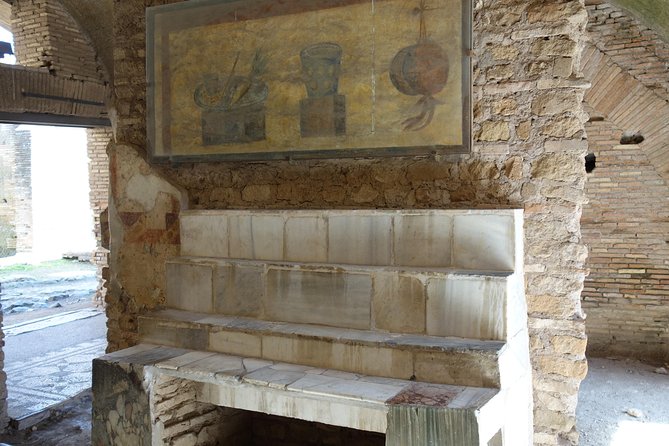
Ostia Antica gives you something Rome’s famous center rarely can: a whole ancient city to walk through without the same crush of people. This former port has an amphitheater, public baths, taverns, apartments, shops, mosaics, and long streets that make Roman daily life easier to picture than a single grand monument does.
I like the simple train ride, with your guide handling the round-trip tickets, and the small group of no more than 12, which makes it easier to ask questions. The main caution is that the site is large and uneven, and the pace may not suit anyone who needs extra time on stairs or rough ground.
Key points at a glance
- A full Roman town, not just one monument: Walk the Decumanus Maximus, ancient shops, homes, baths, temples, and public buildings.
- Baths of Neptune: Look for the striking mosaic of Neptune riding behind a four-horse chariot.
- Amphitheater views: Sit in a theater built in 12 BC that once held about 3,500 spectators.
- Easy transport from Rome: Meet near Piramide, then ride the train with your guide to the archaeological park.
- Useful guide names to know: Alberto, Cat, Rob, Laura, Barbara, and others have received praise for clear explanations and good pacing.
- Four hours well spent: About 2.5 hours are devoted to the ruins, with the rest used for meeting and train travel.
Why Ostia Antica can be a better half-day choice than Pompeii
Pompeii is the grand comparison, but it is a long trip from Rome. Ostia Antica sits much closer and gives you a similar sense of walking through a Roman town, without turning your day into a major travel project.
The difference is scale and mood. Ostia was the port city of ancient Rome, with a population that may have reached more than 100,000. Its remains show ordinary urban life: where people shopped, bathed, worshiped, worked, and lived. You are not simply looking at a triumphal arch or a famous arena. You are following streets through a functioning city.
I especially like the way the ruins explain the less glamorous side of Roman life. The shops and apartments can be more revealing than statues of emperors. You get a better sense of how a town was organized and how people spent their days.
The site is sometimes compared with Pompeii, but that nickname can undersell it. Ostia Antica is not small. The archaeological park is broad enough to feel open and quiet, and you could spend much longer than the guided visit exploring it on your own.
More Ancient History Tours in Italy
- Colosseum: Underground and Ancient Rome Tour
★ 4.7 · 12,691 reviews - Colosseum & Ancient Rome with Arena Floor Option I Max 6 People
★ 5.0 · 3,306 reviews - Rome: Colosseum, Ancient Rome Tour or AudioGuided Tour
★ 4.4 · 2,879 reviews
Meeting near Piramide and taking the train
The tour begins at Piazza Ostiense, near the Piramide metro station. You do not receive hotel pickup, so you need to make your own way to the meeting point. Allow enough time to find the exact location, especially if you are unfamiliar with Rome’s public transport system.
Your guide provides the train tickets for the trip out and back. That removes one small but useful task from your morning, and it keeps the group together from the start. The ride takes you southwest of Rome toward the coast, ending near Ostia Antica.
This is part of the appeal. You are not being driven in a private vehicle or shut away from the city. You use Rome’s rail system as locals do, with a guide beside you to keep the transfer straightforward. The train ride also makes this feel like a real side trip rather than another attraction inside central Rome.
The return ends back at the original meeting point. The advertised duration is about four hours, although the timing can run a little longer because of transport or other conditions. Keep the rest of your day flexible rather than scheduling something immediately afterward.
Walking the Decumanus Maximus
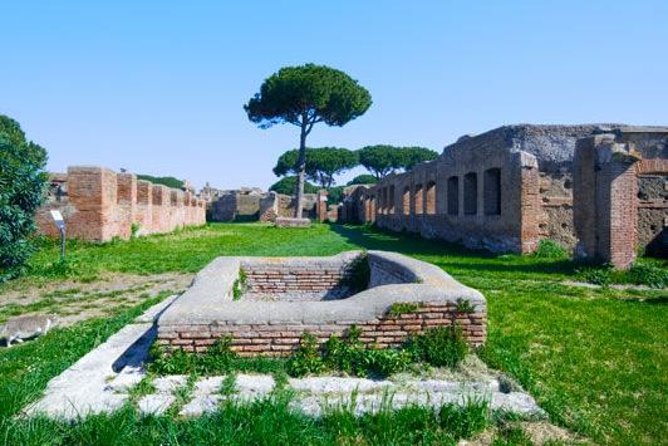
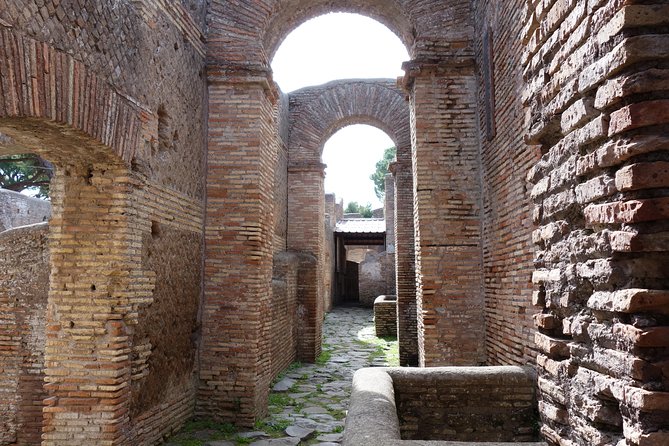
Once inside the archaeological park, expect roughly 2.5 hours of walking. The main route follows the Decumanus Maximus, the city’s principal road. This long street gives the tour its backbone and helps you understand how the different parts of Ostia fit together.
Your guide points out the structures along the way and explains what they reveal about urban life. You may pass ancient statues lining the walkways, ruined storefronts, living quarters, public buildings, and places connected with trade.
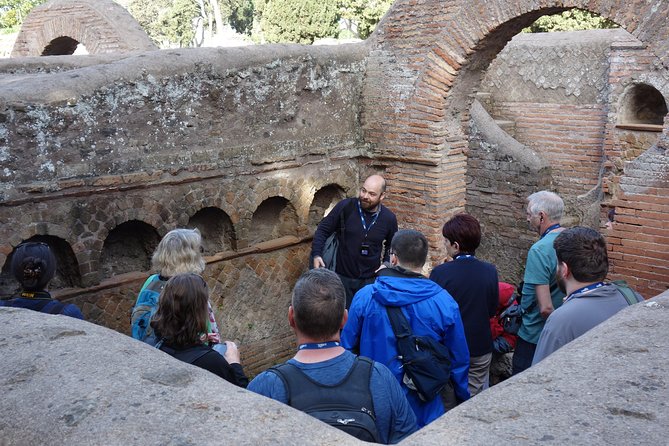
This is where a guide adds real value. Ostia’s remains are extensive, and without context, a row of walls can blur into the next row of walls. A good guide helps you see the difference between a shop, an apartment, a bath complex, and a religious building. Alberto, Cat, Rob, Laura, Barbara, and several other guides have been praised for making the site easier to follow and for connecting buildings to everyday Roman routines.
Guide quality is not perfectly consistent. Some visitors found their guide lively, patient, and clear, while others felt the delivery was flat or the pace too fast. That is the main variable in this experience. The ruins themselves are consistently the reason to come, but your enjoyment of the explanations will depend on who leads your group that day.
The Baths of Neptune and Roman public life
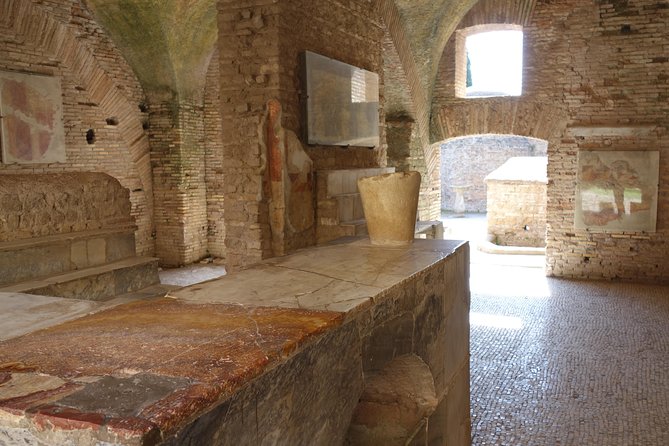
The Baths of Neptune are one of the tour’s main stops. Their most memorable feature is the mosaic showing the sea god Neptune behind a four-horse chariot. The image gives you a chance to see Roman decoration in place, rather than in a museum case removed from its original setting.
Public baths were not simply places to wash. They were social centers, and a stop here helps explain the communal side of Roman life. Your guide can also give the surrounding structures meaning, so you are not left trying to decode the remains by yourself.
The mosaic is one of the strongest photo opportunities on the route, but it is worth listening before reaching for your camera. The details of the baths, their decoration, and their place in the city’s daily routine are what make the stop memorable.
The site has little shade in some areas, and summer heat can make the walking harder. Several guides have been praised for choosing shady places when explaining a monument and for pointing out where to refill water bottles. Still, bring water, wear practical shoes, and expect sun exposure.
More Ancient History Tours in Rome
- Colosseum Underground & Ancient Rome Guided Tour
★ 4.5 · 2,590 reviews - Pantheon Elite Guided Tour – Rome’s Iconic Ancient Temple
★ 5.0 · 1,447 reviews - Ancient Rome: Colosseum Underground Group Tour
★ 4.5 · 1,059 reviews - Colosseum Express Guided Tour and Ancient Rome Admission Included
★ 4.0 · 1,008 reviews
Sitting in the ancient amphitheater
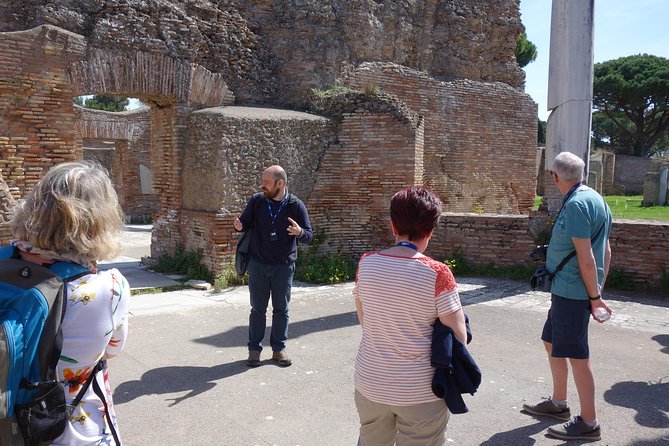
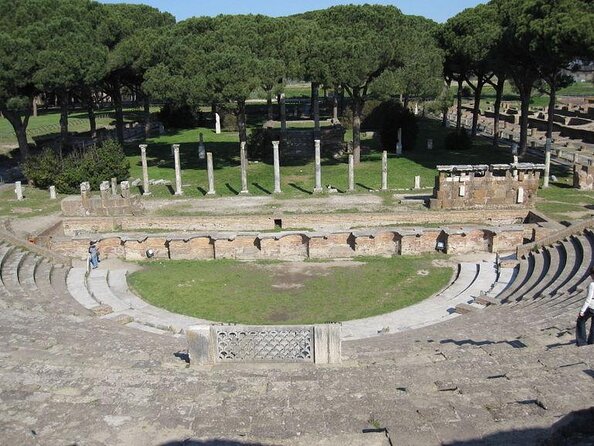
The amphitheater dates to 12 BC and held around 3,500 spectators. It is smaller than Rome’s Colosseum, but that is part of its charm. You can sit in the seating area and see how the building worked as a gathering place.
The amphitheater also helps you understand the scale of Ostia. This was not a remote settlement with a few scattered buildings. It was a substantial city with entertainment, commerce, religion, and public services.
The stop is especially good for families and younger visitors because it offers a clear visual break from streets and foundations. You can stand in the theater, look across the structure, and imagine a crowd filling the seats. One guide, Alberto, has been singled out for keeping children engaged, while other guides have used humor and short stories to make the ancient setting easier to follow.
You should not expect a theatrical performance or a long stop at every monument. The tour is designed to cover the principal sights within the available time. After the guided portion, you may have the option to continue exploring the site, depending on the day’s timing and arrangements.
Shops, apartments, and the Forum of the Corporations
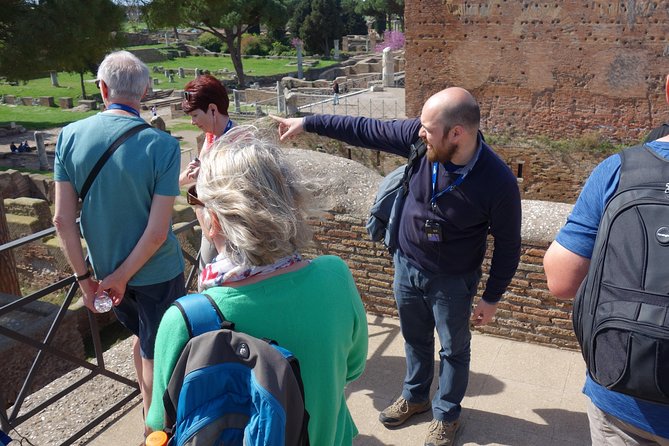
The most rewarding part of Ostia may be the ordinary buildings. The ruined shops and apartments show a side of Rome that the grand monuments in the city center often hide.
The Forum of the Corporations is another important area, connected with the commercial life of Ostia. As a port, the city relied on trade and shipping, and its public spaces reflect that role. Your guide can help connect the forum with the wider workings of the port city.
You also pass the Collegiate Temple and taverns. Together, these stops create a picture of a community rather than a collection of isolated ruins. I find this useful for anyone who has already seen the Colosseum and Roman Forum but still wants to know how regular people lived.
The archaeological park is large enough to feel a little overwhelming. That is exactly where the small group and guided route help. You get a clear path through the highlights instead of spending your entire visit guessing which buildings matter most.
What the $59.26 price includes
At $59.26 per person, the price is reasonable if you want a guide and prefer not to sort out the train and entrance arrangements yourself. The fee includes the English-speaking guide, round-trip train tickets, admission to Ostia Antica, and a group capped at 12 people.
You are paying for organization as much as for commentary. The train is easy enough to use independently, and the archaeological park can be visited without this tour, so independent visitors may prefer buying their own admission and an audio guide. That option gives you more freedom and removes the risk of being paired with a guide whose speaking style does not suit you.
The tour makes better financial sense if you value a structured route and live explanations. It is also useful if you have limited time in Rome and want to see the key buildings without planning the trip yourself.
The group size matters. Twelve people is not truly private, but it is much easier to hear and ask questions than in a large coach group. A few groups may be smaller, and the atmosphere can feel relaxed when everyone stays together.
Pace, heat, and mobility
You need a moderate level of physical fitness. The tour includes a train transfer, substantial walking, uneven ground, and stairs. This is not a good choice if you need a completely level route or require a very slow pace.
If you use a cane or have a knee problem, contact the operator before booking and explain your needs clearly. The site itself may present challenges, and the guide may need to adjust the route or allow more time. Do not assume the group will automatically slow down.
Comfort also depends on the weather. The tour requires good weather, and hot days can be tiring. One guide was praised for keeping people in the shade during a 95-degree day, but that should not replace your own preparation. Carry water, use sun protection, and wear shoes with a firm sole.
Parents should know that the tour length worked well for families with teenagers, but younger visitors may need extra encouragement during the longer stretches of ruins. The amphitheater and mosaics provide strong visual anchors, and some guides are particularly good at keeping children interested.
Guide quality and the best way to set expectations
The strongest part of the experience is often the guide. Alberto is repeatedly praised for his clear explanations, humor, patience, pacing, and ability to balance different levels of interest. Cat has been described as friendly and well informed, while Rob has received praise for storytelling and for looking after the group in hot conditions.
Laura and Barbara have also been noted for warmth, organization, and strong explanations. These names are useful examples of the standard you may encounter, but you cannot choose a specific guide based on the tour details provided.
Most importantly, expect interpretation rather than a lecture on every stone. The best guides explain how people used the buildings and keep the information connected to what you can see. A less effective guide may sound dry or move ahead before everyone has caught up.
You can improve your experience by arriving early, staying near the guide, and asking questions when the group stops. If you want a slow, highly detailed archaeological study, an audio guide and a self-guided visit may suit you better.
Should you book the Ostia Antica train tour?
Book it if you want to see an ancient Roman city beyond the standard center, prefer a half-day outing, and value having someone explain the ruins as you walk. The combination of train tickets, admission, a small group, and an English-speaking guide gives you a practical package for $59.26.
I would choose it over Pompeii when my Rome schedule allowed only half a day. Ostia is closer, less demanding to reach, and excellent for understanding daily Roman life. I would skip the guided option if I wanted to explore every corner at my own speed or if uneven ground and a fixed walking pace would be a problem.
Cancel at least 24 hours before the start for a full refund. Changes made inside that window are not accepted, and poor weather or an insufficient minimum group may lead to a new date or a refund.
FAQ
How long does the Ostia Antica tour last?
The experience lasts about four hours. Around 2.5 hours are spent walking through the archaeological park, with the remaining time used for meeting and train travel.
Where does the tour start?
The meeting point is at Piazza Ostiense 11, near the Piramide metro station in Rome.
Where does the tour end?
The activity ends back at the original meeting point in Rome.
Is transportation included?
Yes. The tour includes train tickets to and from Rome, and you travel with your guide.
Is the entrance ticket included?
Yes. Admission to the Ostia Antica archaeological site is included.
What language is the tour offered in?
The tour is offered in English with an English-speaking guide.
How large is the group?
The group has a maximum of 12 people.
Is the tour suitable for people with limited mobility?
The tour requires moderate physical fitness and includes stairs, uneven ground, walking, and train transfers. It may be difficult for anyone with limited mobility.
Can I cancel for a refund?
You can cancel at least 24 hours before the start time for a full refund. If the tour is canceled because of poor weather or an insufficient minimum group, you are offered another date or a full refund.
More Ancient Rome and Colosseum Tours in Rome
- Rome: Colosseum with Arena, Roman Forum and Palatine Guided Tour
★ 4.0 · 5,598 reviews - Colosseum with Arena, Roman Forum and Palatine Hill Guided Tour
★ 4.5 · 3,526 reviews - Rome: Colosseum Arena, Roman Forum & Palatine Hill Tour
★ 4.5 · 1,874 reviews - Colosseum, Roman Forum & Palatine Hill Guided Tour
★ 4.5 · 1,568 reviews
More Private History Tours in Italy
- Colosseum & Ancient Rome Semi-Private Tour
★ 5.0 · 208 reviews - Private Rome Food Tour in the Historic Centre with 8+Tastings
★ 5.0 · 135 reviews - Ancient Appian Way PRIVATE Bike Tour
★ 5.0 · 89 reviews - Ancient Pompeii Private Tour: Skip the Line & Kid-Friendly Option
★ 5.0 · 167 reviews
Latest history tours reviewed in Rome
- Day drinking in Rome – Scandalous Roman History★ 4.8 · 31 reviews
- Rome: Colosseum Arena and Ancient Rome Guided Tour★ 4.8 · 23 reviews
- Rome: Colosseum and Ancient Rome Access with Optional Arena★ 4.5 · 198 reviews
- Ancient Rome: Archeological area Largo Argentina★ 3.9 · 49 reviews
- Ancient Rome Half-Day Segway Tour★ 4.8 · 25 reviews
- Colosseum Forum Ancient Rome Small Group Tour for Kids Families★ 5.0 · 198 reviews
- VIP Colosseum Underground and Ancient Rome Small Group Tour★ 4.5 · 332 reviews
- Colosseum & Ancient Rome Semi-Private Tour★ 5.0 · 208 reviews
Rome History Tours, compared.
Colosseum: Underground and Ancient Rome Tour
Read our review →
Rome: Colosseum with Arena, Roman Forum and Palatine Guided Tour
Read our review →
Colosseum & Ancient Rome with Arena Floor Option I Max 6 People
Read our review →
Rome: Colosseum, Ancient Rome Tour or AudioGuided Tour
Read our review →
Colosseum, Roman Forum & Palatine Hill Guided Tour
Read our review →
Pantheon Elite Guided Tour – Rome’s Iconic Ancient Temple
Read our review →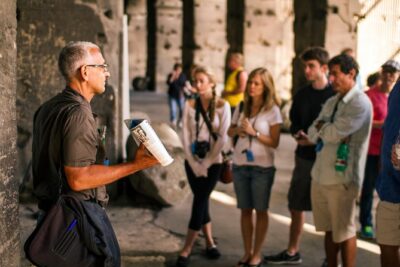
Rome in a Day Tour with Vatican, Colosseum and Historic Center
Read our review →