
Review · AUSTRALIA
Ultimate Melbourne Walking Tour: History, Laneways & Culture
Melbourne’s best stories are often found between the major sights: in a graffiti-covered lane, under a Victorian arcade roof, or over coffee on Degraves Street. This three-hour walk links those smaller details with big landmarks such as Federation Square, Flinders Street Station, the State Library, and Old Melbourne Gaol.
I like the small maximum group of 12, which makes it easier to hear the guide and ask questions. I also like the practical finish: coffee during the walk, a drink at Captain Melville, a city map, and suggestions for what to do next.
The main consideration is pace. You cover a lot of central Melbourne in three hours, and some stops are brief. This is an excellent introduction, but it is not a substitute for visiting the interiors of every major attraction.
Key points to know before booking
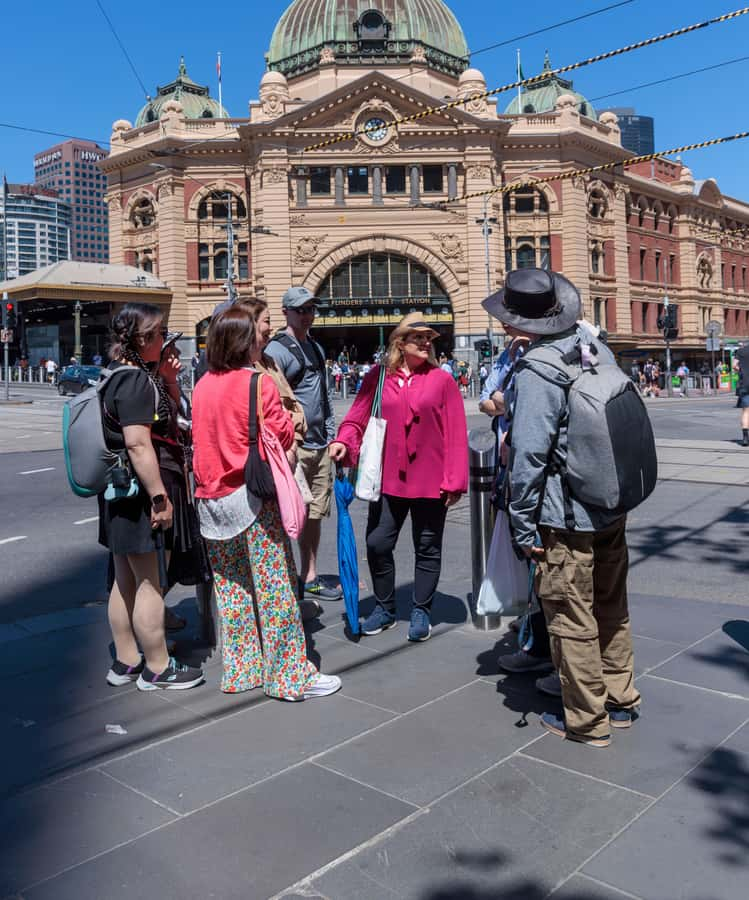
- The walk begins at 11am at Gordon Reserve, opposite the Hotel Windsor, and finishes at Captain Melville on Franklin Street.
- The route covers old and new Melbourne, from Gold Rush architecture and Ned Kelly stories to street art, coffee lanes, and modern Federation Square.
- Hosier Lane may be included, while Duckboard Place and AC/DC Lane are specific street-art stops on the route.
- Two drinks are included, a Melbourne coffee or hot chocolate and a beer, wine, cider, or soft drink at the end.
- Guides bring the city to life with personal stories, with Emily, Ian, Hugo, Bo, Mike, and Deneille receiving especially warm praise for their energy and local insight.
- The price is $92.52 per person, which is fair if you value a small group, local commentary, two drinks, and useful advice for the rest of your stay.
Start with Melbourne’s grand colonial setting at Gordon Reserve
Meet at 11am in Gordon Reserve, a small park opposite the historic Hotel Windsor. The meeting point is easy to identify by the fountain, and the tour team uses blue umbrellas.
This opening gives you a useful sense of Melbourne’s formal side. You get distant views toward Victoria’s state government buildings and their colonial architecture before moving toward the Old Treasury Building.
The guide does more than point at facades. The aim is to explain how Melbourne grew during the Gold Rush and why the city became so wealthy and ambitious in the 19th century. That context helps the rest of the walk make sense.
The Old Treasury Building gets only about five minutes, but it is a worthwhile early stop. Its Gold Rush-era design shows the confidence of a city built on mineral wealth. You will not tour the interior on this experience, so think of this as an architectural introduction rather than a museum visit.
More History Walking Tours in Australia
- Sydney: The Rocks 90-Minute History Walking Tour
★ 4.7 · 1,092 reviews - Discover Perth Walking Tour: History, Art, Local Insights + More!
★ 5.0 · 458 reviews - Ultimate Melbourne Walking Tour: History, Laneways & Culture
★ 4.8 · 338 reviews
Collins Street and Melbourne’s changing city center

A short stop on Collins Street brings you into Melbourne’s premium shopping and financial district. Historic buildings sit beside polished shops and office towers, giving you a quick lesson in how the city has changed without losing its older street pattern.
This section is brief, but that is part of the tour’s design. The walk does not linger at every landmark. Instead, it uses short explanations to connect one part of central Melbourne to the next.
For a first visit, that approach is useful. You get an overview of the city’s layout without spending the whole morning inside one attraction.
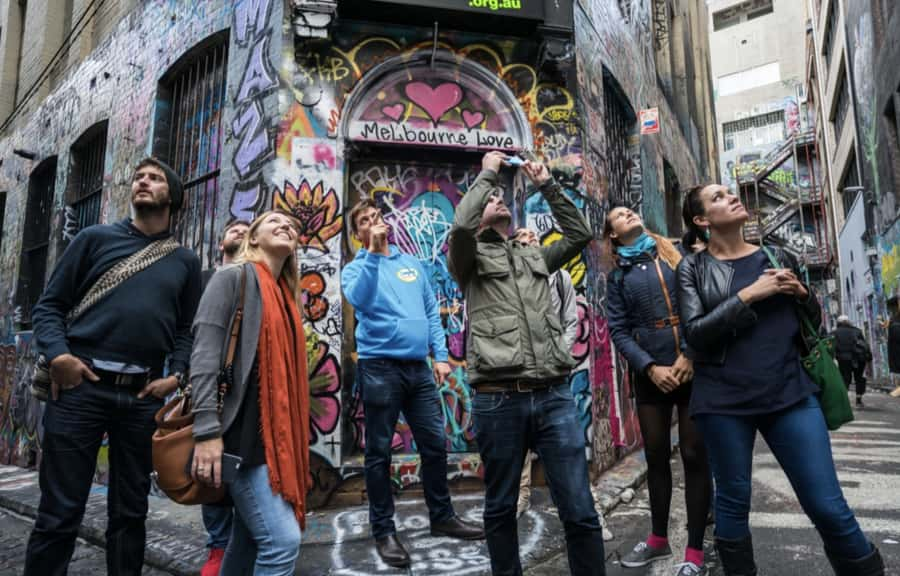
Street art in Duckboard Place, AC/DC Lane, and possibly Hosier Lane
Melbourne’s laneways are a major reason to choose a walking tour rather than a vehicle tour. The narrow passages change often, with murals and graffiti by local and international artists. Duckboard Place and AC/DC Lane are named stops, and the route may also include Hosier Lane, the city’s most famous street-art destination.
AC/DC Lane brings a rock-and-roll theme to the route, with murals tied to the band and the city’s music culture. The art is not presented as a fixed museum collection. It is part of the street, and the walls may look different when you return later in your visit.
Hosier Lane is not guaranteed on every route, so do not book this tour solely for that one location. Even without it, the walk includes several laneways and plenty of chances to see Melbourne’s public art scene.
Your guide can add the detail a photo stop cannot provide: how the lanes fit into the city, why certain areas became known for art, and how Melbourne mixes formal architecture with a more informal street culture.
Federation Square, Flinders Street Station, and the Yarra
Federation Square is Melbourne’s main cultural square and one of its most recognizable modern spaces. Its angular architecture divides opinion, which makes it a good place to hear how Melbourne handles new design beside older buildings.
The tour then reaches Flinders Street Station, perhaps Melbourne’s most familiar landmark. You get time to admire the exterior and hear about its role in the city rather than entering for a long guided visit.
The route also provides distant views of the Melbourne Cricket Ground. The MCG is a major sporting symbol, and the guide explains its place in Australian sports culture and the surrounding sporting area. The stop is short, so this is best treated as an orientation point. If the stadium is a priority, you will need separate time for it.
A walk beside the Yarra River adds a change of pace. After streets, arcades, and painted walls, the riverbanks offer a more open setting and a chance to see another side of the city center.
More Local Culture and Traditions Tours in Australia
- Snorkel & Dive the Reef: Sustainable, Scientific & Cultural Tour
★ 4.5 · 841 reviews - From Perth: Wave Rock, York and Aboriginal Cultural Tour
★ 4.6 · 498 reviews
Coffee culture on Degraves Street
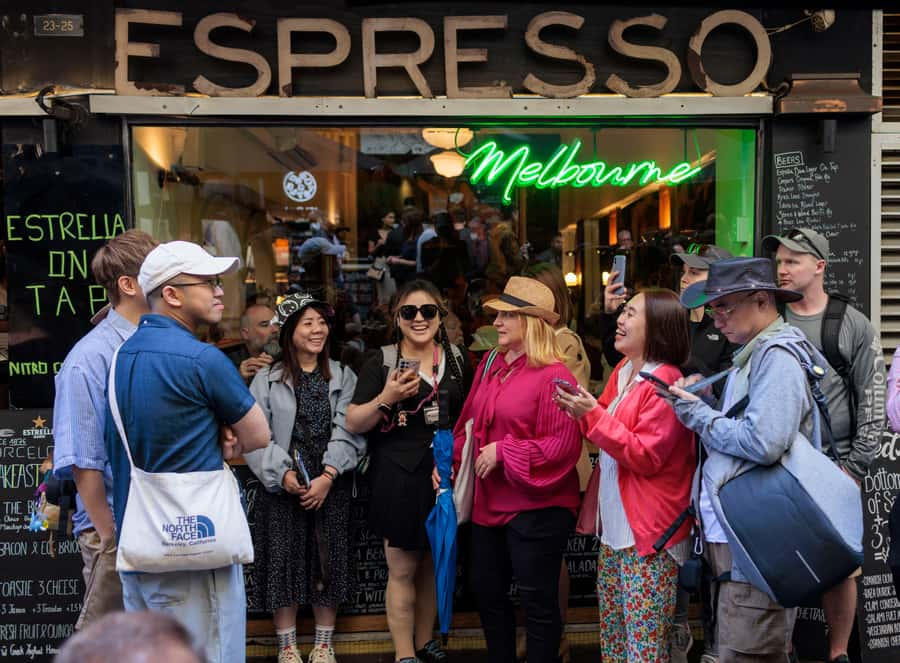
Degraves Street is one of the tour’s most useful stops because it combines atmosphere with a practical Melbourne ritual: coffee. You receive a complimentary hot drink at a local cafe, with flat white, long black, and hot chocolate listed among the choices.
The coffee break lasts about 20 minutes, giving you a chance to sit down, regroup, and ask the guide questions. It also breaks up the walking in a sensible way.
Melbourne takes coffee seriously, and this stop helps explain why the cafe lanes matter to the city’s daily life. You are not simply photographing a narrow street. You are seeing a place built for lingering, eating, and meeting friends.
This is one of the strongest parts of the experience for anyone who wants more than a sequence of monuments. The guide can also point out places to revisit later, though the tour does not promise a full food tour or a meal at this stage.
Arcades, Bourke Street, and the State Library

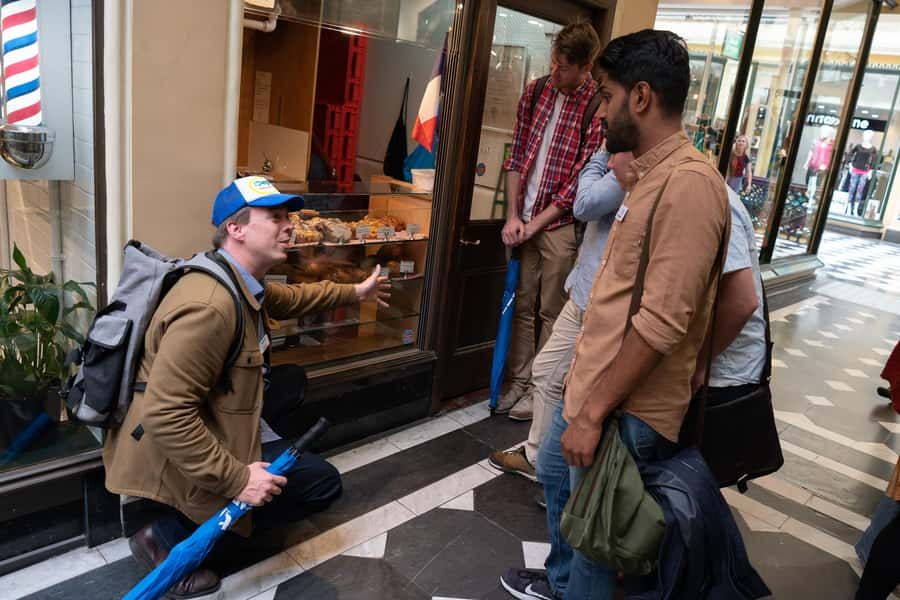
The Block Arcade brings you back to Melbourne’s grand Victorian side. Its mosaic floors and decorative interior make it one of the prettiest short stops on the route. The five-minute visit is enough to admire the design, though anyone interested in architecture may wish to return later.
The route also passes the Royal Arcade, Australia’s oldest arcade, known for the mythical Gog and Magog figures. These indoor passages are a good reminder that Melbourne’s laneway culture is not only about graffiti. It also includes covered shopping corridors, old storefronts, tiled floors, and ornate details.
You then reach Bourke Street Mall, the city’s main pedestrian shopping precinct. This is a quick orientation stop rather than a shopping session. It helps you understand how the central business district connects its retail streets, arcades, and smaller lanes.
At the State Library Victoria, the guide discusses the building and Ned Kelly’s famous story. The library itself is a major heritage building and a state research institution, but this tour does not include a full indoor visit. You will need to return independently if you want more time inside.
Old Melbourne Gaol and Chinatown
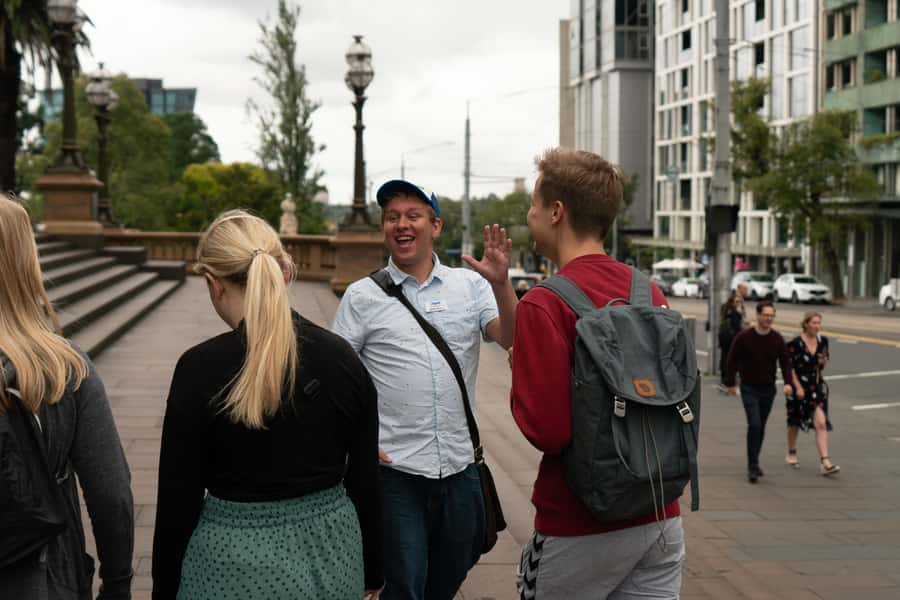
Old Melbourne Gaol is another short outdoor stop. The bluestone prison operated from 1845 to 1929, and its history gives the city center a darker edge. The guide’s discussion of Ned Kelly connects naturally with the earlier State Library stop.
Three minutes is not enough for the gaol’s full museum experience. If prison history interests you, consider booking separate admission at another time. On this walk, the value is the setting and the story, not an extended examination of the cells.
Chinatown offers a different part of Melbourne’s identity. It is described as the world’s oldest continuously operating Chinatown, with restaurants and long-standing cultural connections. The stop helps widen the tour beyond colonial buildings and British-era institutions.
You will not receive a full restaurant tour, but the guide can give suggestions for eating later. That kind of advice is especially useful if you take this walk early in your stay.
Finish at Captain Melville with a drink
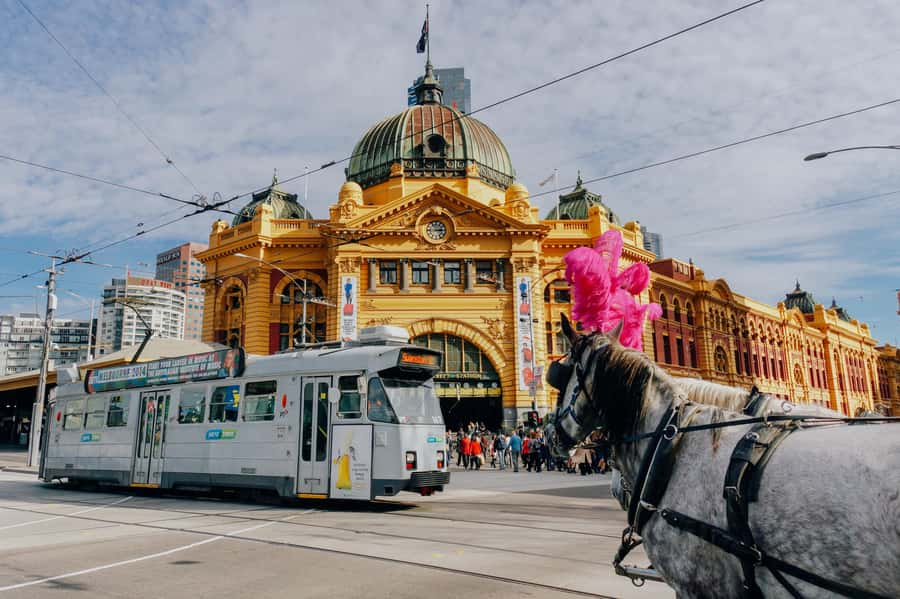
The official route ends at Captain Melville on Franklin Street, where you receive a complimentary house beer, wine, cider, or soft drink. This 20-minute finish gives the group time to relax and continue the conversation.
The end point is more than a final free drink. It gives you a natural chance to ask about restaurants, neighborhoods, museums, and places that did not fit into the three-hour route. Several guides are praised for making personal recommendations and encouraging questions, so use this time well.
The walk begins at 108 Spring Street and ends at 34 Franklin Street. You are not returned to the starting point, so plan the rest of your day from the northern side of central Melbourne.
What the guides add to the experience
The guide quality is a major strength. Emily is repeatedly described as warm, energetic, and well prepared. Ian is praised for tailoring facts to the group and making sure everyone feels included. Hugo brings humor and energy, while Bo is especially strong on Melbourne’s past and current affairs.
Mike is noted for his affection for the city and for keeping the tour friendly and easy to follow. Deneille is also praised for making the walk informative and enjoyable.
You should still stay close to the guide, especially on busy streets. One comment noted that Ian could be hard to hear when someone fell behind. That is a useful practical point for any walking tour: remain near the guide, and ask for repetition if traffic or street noise gets in the way.
The commentary mixes historical facts with modern Melbourne. You may hear about architecture, sport, street art, local events, and the people who shaped the city. That blend is more useful than a string of dates because it helps you understand how Melbourne works today.
Is $92.52 a fair price?
At $92.52 per person, this is not the cheapest way to walk around central Melbourne. You can see many of the public places on your own for free.
The price makes more sense when you count what is included: a professional local English-speaking guide, a small group capped at 12, a coffee or hot chocolate, an alcoholic drink or soft drink, a Melbourne map, and personal recommendations. You also avoid spending time figuring out the city’s layout on your first day.
The tour includes outdoor attractions and viewpoints, but it does not include admission to the Old Melbourne Gaol, the Old Treasury Building, the MCG, the State Library, or the top of Melbourne’s highest tower. If you want entry tickets, you will pay separately.
I see the best value for a first-time visitor who wants to get oriented quickly. If you already know central Melbourne well, the price may feel high unless you particularly want the stories, local guide, and social small-group setting.
Pace, comfort, and who should book
The tour lasts about three hours and is described as an easy, manageable walk rather than a strenuous march. There are regular stops, a coffee break, and a final drink, which makes the pace more comfortable than the number of sights might suggest.
Most people can take part, and children must be accompanied by an adult. The experience is designed for individual bookings in small groups. Groups larger than 10 should contact the provider about arranging a private tour.
Book it near the start of your Melbourne stay if you can. The map and recommendations are more useful when you still have several days left. You can then return to the arcades, library, gaol, restaurants, or laneways that catch your attention.
The tour runs at 11am, so it is not an early-morning activity. That timing suits people who want a relaxed start, though it leaves less time for other major sights on the same day.
My verdict: a strong first look at Melbourne
I would book this walk if I were visiting Melbourne for the first time and wanted a clear introduction without spending half a day inside a vehicle. The route gives you colonial buildings, street art, coffee culture, sport, shopping arcades, Chinatown, the river, and local stories in one compact outing.
The strongest reasons to choose it are the small group, the guides’ lively personal delivery, and the way the tour connects famous sights with places you might otherwise walk past. The included coffee and final drink are useful touches, not just extras.
Choose something else if you want long visits inside museums, a dedicated food tour, or a detailed look at the MCG and Old Melbourne Gaol. For most first-time visitors, though, this is a well-priced orientation walk that can make the rest of Melbourne easier to explore.
FAQ
How long is the Melbourne walking tour?
The tour lasts approximately three hours.
What time does the tour begin?
The tour begins at 11am.
Where does the tour start?
It starts at 108 Spring Street, East Melbourne, near Gordon Reserve and opposite the Hotel Windsor.
Where does the tour finish?
The tour finishes at Captain Melville Bar, 34 Franklin Street, Melbourne.
Is coffee included?
Yes. You receive a complimentary hot drink, with flat white, long black, and hot chocolate listed as options.
Is an alcoholic drink included?
Yes. At Captain Melville, you can receive a house beer, wine, cider, or a soft drink.
Does the tour enter the Old Melbourne Gaol or other attractions?
The tour provides access to outdoor attractions and viewpoints. Admission to indoor attractions is not listed as included.
What is the maximum group size?
The tour has a maximum of 12 travelers.
Can I cancel for a full refund?
Yes, if you cancel at least 24 hours before the experience start time. Cancellations made less than 24 hours in advance are not refunded.
Latest history tours reviewed in Australia
- Discover Perth Walking Tour: History, Art, Sights + More!★ 4.9 · 183 reviews
- Darwin: Small Group 2-Hour Heritage Walk★ 4.9 · 28 reviews
- Albany: Historic Whaling Station Entry Ticket★ 4.8 · 24 reviews
- A Barossa Valley pickup: Wine and Heritage Tour, Local Guide★ 4.9 · 20 reviews
- From Perth: Wave Rock, York and Aboriginal Cultural Tour★ 4.6 · 498 reviews
- Hobart: Historic Lunch Cruise★ 4.6 · 271 reviews
- Tasman Peninsula Tour, Cruise & Port Arthur Historic Site★ 4.9 · 339 reviews
- Tasman Island Cruises and Port Arthur Historic Site Day Tour from Hobart★ 5.0 · 477 reviews
Australia History Tours, compared.

Puffing Billy Railway: Heritage Steam Train Journey
Read our review →
Morning World Heritage Cruise on the Gordon River from Strahan
Read our review →
Sydney: The Rocks 90-Minute History Walking Tour
Read our review →
Experience History onboard The Mary Valley Rattler
Read our review →
Snorkel & Dive the Reef: Sustainable, Scientific & Cultural Tour
Read our review →
Derwent River Historic Harbour Cruise From Hobart
Read our review →
From Perth: Wave Rock, York and Aboriginal Cultural Tour
Read our review →
Tasman Island Cruises and Port Arthur Historic Site Day Tour from Hobart
Read our review →Browse the lists this tour appears in