
Review · AUSTRALIA
Snorkel & Dive the Reef: Sustainable, Scientific & Cultural Tour
The best part of this Great Barrier Reef trip is the choice. You can swim over coral and tropical fish, watch the reef through a glass-bottom boat, or stay dry in the semi-submersible and underwater observatory. The floating Marine World platform gives you a steady base for several hours, which is far easier than trying to do everything from a small boat.
I like the fast catamaran ride, which leaves more of your day for the reef, and I like the mix of marine science and cultural education. Guides such as Ella, Ethan, Kaitlin, and Takuya have helped guests with snorkeling, underwater photos, and scuba sessions. The main drawback is the open-sea crossing: rough water can cause motion sickness, and the platform can feel crowded when all activities run at once.
Key points to know before booking
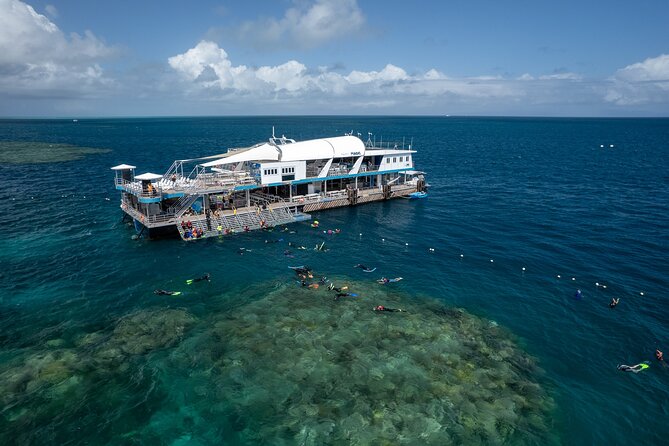
- A full day at an outer-reef platform: You get about eight hours from Cairns, with roughly 90 minutes each way on the catamaran.
- Several ways to see the reef: Snorkeling, a glass-bottom boat, semi-submersible viewing, and the underwater observatory are included.
- Good for mixed groups: Strong swimmers, first-time snorkelers, children, older adults, and non-swimmers can all find something to do.
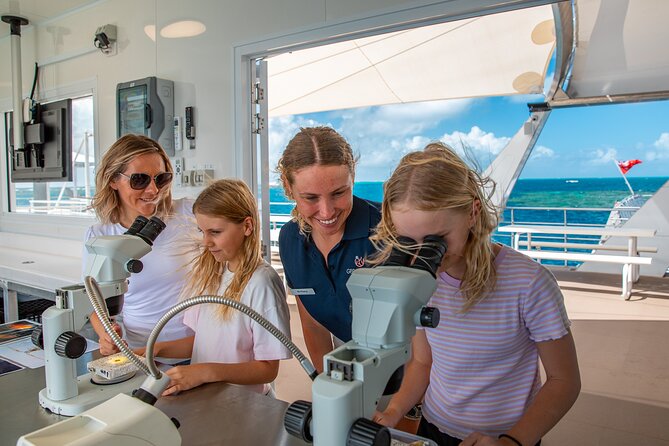
- Marine biologist presentations: The crew explains reef life, while cultural talks add a human side to the visit.
- Optional extras cost more: Scuba sessions, helmet walks, guided snorkel safaris, helicopter flights, and massage are not included.
- Motion sickness deserves planning: The return crossing can be rough, so bring suitable medication if you are prone to seasickness.
A fast morning run from Cairns to the outer reef
Your day begins at 8:00 am at 1 Spence Street in central Cairns. This tour does not include pickup from Cairns hotels or the Northern Beaches, so you need to make your own way to the marina meeting point.
The catamaran has indoor seating and outdoor areas. That matters in tropical weather, since you can move inside if the sun is strong or the sea turns rough. The crossing takes about 90 minutes each way, so the fast boat is a real advantage. It cuts down the time spent traveling and gives you several useful hours at the Marine World platform.
The ride is also the part of the day most likely to test your stomach. Strong winds and swells have made some return trips uncomfortable, even when the reef itself was calm. I would bring motion-sickness tablets or ask the crew about available remedies before the boat gets underway. Ginger pills and motion-sickness bags have been available on board, but it is wiser to prepare before departure.
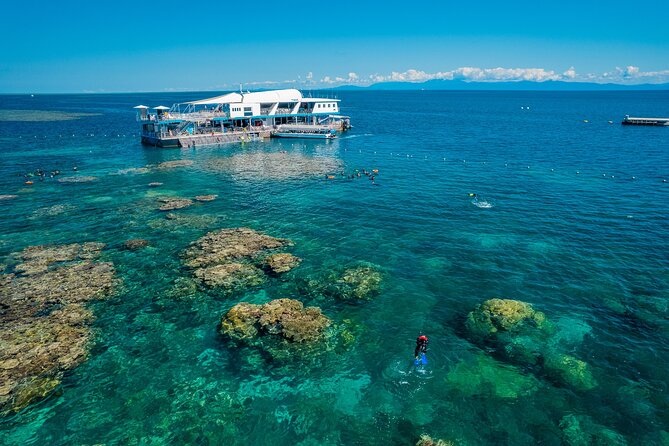
Once the platform comes into view, the day feels less like a boat trip and more like a reef base camp. You can change, collect your equipment, attend a presentation, eat lunch, and choose your water activity without packing up every hour.
More Local Culture and Traditions Tours in Australia
- Ultimate Melbourne Walking Tour: History, Laneways & Culture
★ 5.0 · 1,451 reviews - From Perth: Wave Rock, York and Aboriginal Cultural Tour
★ 4.6 · 498 reviews - Ultimate Melbourne Walking Tour: History, Laneways & Culture
★ 4.8 · 338 reviews
What makes the Marine World platform useful
A platform is not the wildest way to reach the Great Barrier Reef, but it is practical. It provides ladders, shaded areas, indoor facilities, equipment stations, and several viewing options in one place. For families or groups with different comfort levels, that can make the difference between a relaxed day and a difficult one.
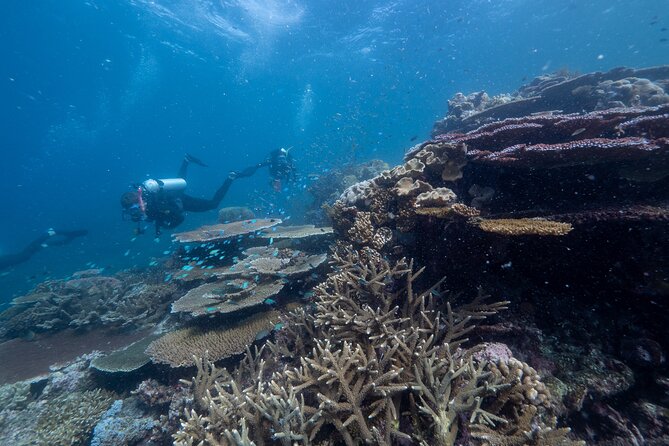
The snorkeling area is sheltered and roped off. You can enter the water gradually rather than jumping from the side of a moving boat. Life guards, flotation aids, noodles, wet suits, masks, and fins are available, and staff ask about your swimming and snorkeling ability.
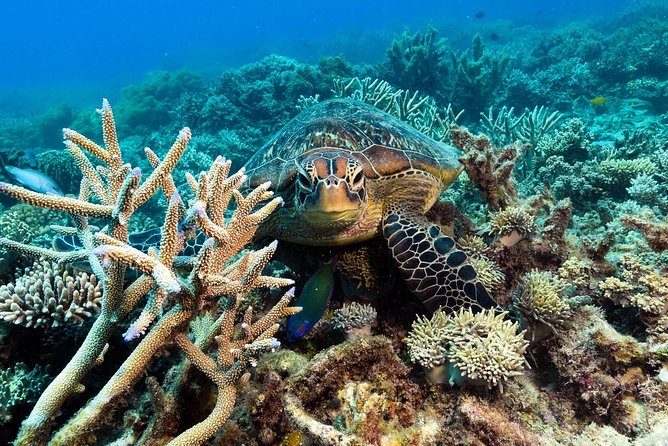
The roped area may feel limiting if you want to range far across the reef. Still, it gives first-timers a clear boundary and helps staff keep watch. The reef close to the platform can offer plenty to see, including tropical fish, coral, and, if conditions cooperate, turtles. One guest saw a green sea turtle, while another encountered a turtle during an introductory scuba session.
The water can also be a good option for older adults. Two guests in their seventies found snorkeling manageable after initially feeling unsure. You do not need to be an expert swimmer to get something from the platform, but you should be honest about your ability when staff provide equipment and safety instructions.
Snorkeling with supplied gear and crew support
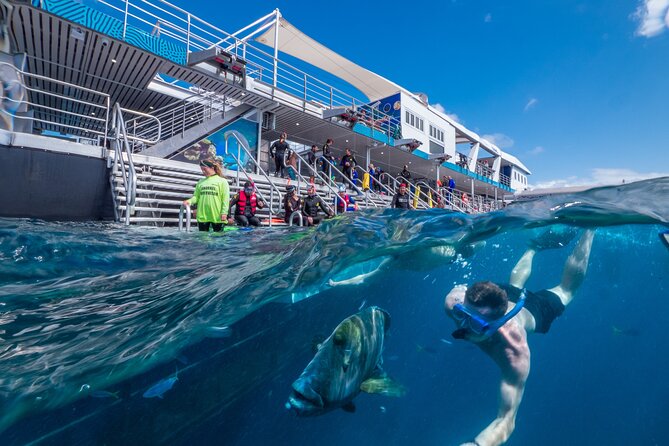
The basic snorkeling setup is included in the price. You receive a mask, fins, and either a wetsuit or lycra suit. The protective suits are useful in tropical waters, both for comfort and for protection from stingers.
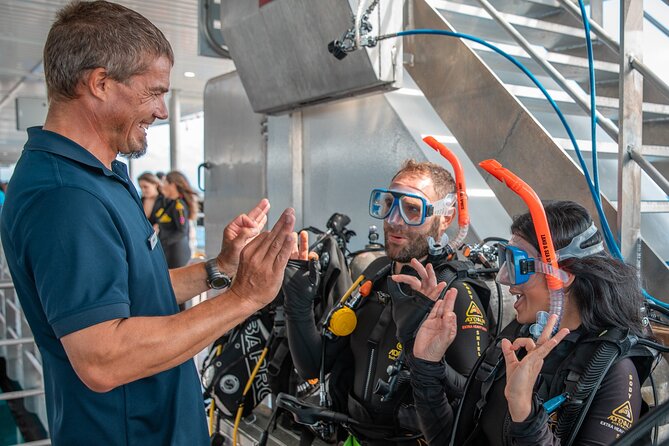
Good mask fit is essential. If your mask lets in water, tell a crew member right away and ask for another size or adjustment. Staff have helped nervous snorkelers with equipment, entry into the water, and basic safety. Ella and Ethan have received special praise for guided snorkeling, with Ethan also helping guests take underwater photos and videos.
A guided snorkel safari is available for an extra charge. This is worth considering if you want more structure or help spotting marine life. The regular snorkeling zone gives you freedom, but a guide can point out details that are easy to miss when you are concentrating on breathing and staying comfortable.
Prescription masks are available for rental, not included. If you need one, arrange it before entering the water. Also bring a waterproof phone case if you want to take your own pictures. One useful tip is to charge your phone fully and carry a battery pack, since the trip gives you many opportunities to use it.
Do not expect every minute in the water to look the same. Reef visibility, fish activity, weather, and sea conditions change. The attraction is the chance to see coral and marine life in their own setting, not a guarantee of a particular animal or color display.
Dry options that make this a mixed-group tour
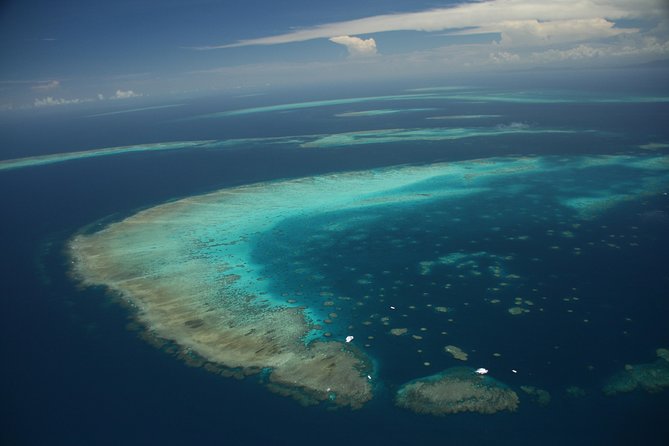
The strongest feature for a group with different interests is the range of non-swimming activities. A glass-bottom boat lets you look down through the hull while remaining above the water. The semi-submersible takes you below the surface without requiring a mask or snorkel, and the underwater observatory gives you another fixed viewpoint.
These options are especially helpful for young children, older adults, and anyone who feels uneasy in open water. A five-year-old can enjoy the boats and observatory while older family members take turns snorkeling. Someone who dislikes swimming can still see coral and fish rather than waiting on the deck.
The semi-submersible can become warm inside, particularly toward the end of the ride. It is also wise to check the activity schedule when you arrive. A glass-bottom trip may not fit neatly around snorkeling, lunch, and other activities if you leave decisions until late in the day.
The platform itself has a spacious sundeck. You can sit in the sun, watch people enter the water, or take a break between activities. A massage therapist may be available for an additional purchase. That is a pleasant extra, but it is not part of the core reef experience and adds to the day’s cost.
Same old streets, another chapter:
- Puffing Billy Railway: Heritage Steam Train Journey
★ 4.6 · 1,195 reviews - Morning World Heritage Cruise on the Gordon River from Strahan
★ 5.0 · 1,193 reviews - Strahan: World Heritage Cruise on Gordon River with Lunch
★ 4.8 · 1,143 reviews - Sydney: The Rocks 90-Minute History Walking Tour
★ 4.7 · 1,092 reviews
Marine science and cultural stories
The educational side gives this excursion more shape than a simple swim stop. Marine biologists give presentations about the reef ecosystem, including the large variety of fish and coral found across the Great Barrier Reef. The crew also discusses reef biology during the trip and around the platform.
The cultural material adds a different point of view. Guides explain Indigenous connections and local cultural history through talks and interactive activities. The combination works well because you are not only looking at coral as scenery. You are also learning about the living system and the people connected to this part of Australia.
Kaitlin has helped explain marine life, while Takuya, a Japanese-speaking scuba instructor, has assisted guests in the water. The crew includes people with different areas of expertise, so you can ask questions about safety, animals, equipment, or reef conditions.
The amount of teaching depends on how you use your time. If you spend the whole visit snorkeling, you may miss a presentation. Check the timetable when you arrive and choose one or two talks that interest you rather than trying to attend everything.
Lunch, tea, and the real cost of the day
The price is about $232.39 per person. That is a considerable day-trip expense, but it includes more than transport and a short reef stop. Your fare covers the catamaran, platform access, snorkeling equipment, morning and afternoon tea, coffee, tea, filtered water, a hot and cold buffet lunch, marine biologist presentations, the glass-bottom boat, the semi-submersible, and the underwater observatory.
That package can be good value if you plan to use several included activities. A swimmer who snorkels, joins a boat trip, attends a presentation, and uses the observatory gets much more from the fare than someone who stays on the sundeck all day.
Lunch is practical rather than a major culinary event. The buffet includes hot and cold choices, salads, vegetables, and other dishes. Some people may find the selection less appealing if they do not eat the featured curry or particular meal on offer. Pay attention to the serving time, since waiting until the last minute can mean a rushed meal or fewer choices.
The extras can change your budget quickly. Scuba sessions, helmet walks, guided snorkel safaris, helicopter flights, massage, and prescription masks cost more. The helicopter is tempting because it gives you a view of the reef from above, and one pilot even extended a flight after spotting a shark. Still, you do not need any add-on to have a complete day.
You should also expect sales offers for optional activities, photos, and equipment. Decide in advance what you want to spend, then feel free to say no. The included activities are enough for most people.
Scuba sessions and helmet walks
Scuba sessions are available for beginners, and no prior experience is required for the introductory option. Certified divers need to show their certification cards. All scuba participation requires an onboard medical questionnaire, and conditions such as asthma, epilepsy, or high blood pressure, as well as certain medications, may prevent you from taking part.
The minimum age for scuba is 12, with parent or guardian permission for anyone under 18. You should also plan your return travel carefully. After scuba, the recommended wait before flying is 12 to 24 hours, depending on depth and total time underwater.
If you are certified but have not been in the water recently, tell the instructor exactly what you need. One guest found an introductory session frustrating because of weight and mask adjustments. That does not make the activity unsuitable, but it shows why clear communication matters before leaving the platform.
The helmet walk is another paid option for people who want to see the reef without using a mask. It may suit someone who is uneasy about snorkeling but still wants to enter the water. Since both scuba and the helmet experience cost extra, check the final price before committing.
Weather, crowds, and comfort
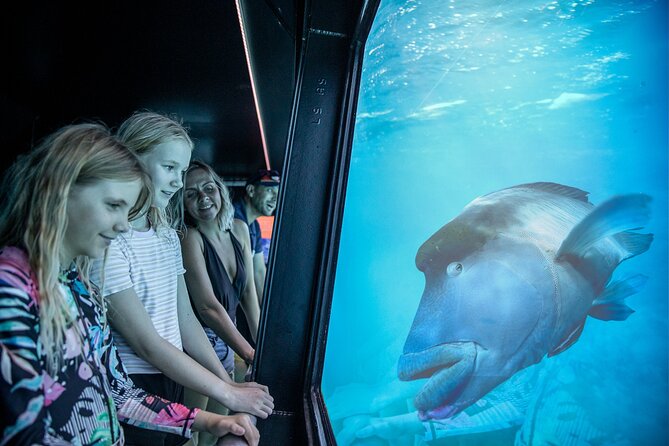
The reef can have better weather than Cairns on a rainy day, but no operator can promise calm seas or clear visibility. This experience requires good weather. If poor weather cancels the trip, you can choose another date or receive a full refund.
The maximum group size is 200 people. The platform is spacious, but a large operation still means busy boarding, activity queues, and set meal times. One part of the day can feel orderly while another feels crowded, especially when many people want the same boat or water activity.
That scale also brings useful advantages. There are enough staff to help with equipment, safety, and different activity levels. Life guards, flotation aids, and crew assistance make the platform approachable for first-timers. The tradeoff is that you are sharing a major reef site with a lot of other people rather than visiting a quiet, small-group location.
Wear a swimsuit and bring a hat, towel, sunscreen, sunglasses, and a payment card or cash for purchases. The sun can be strong even when the breeze feels cool. A waterproof phone case and spare battery are sensible if photography matters to you.
Who will get the most from this tour?
I would choose this trip for a family group, a couple with different interests, or a first visit to the Great Barrier Reef. The platform lets you split up without splitting the day: one person can snorkel, another can use the observatory, and someone else can take the semi-submersible.
It also suits nervous swimmers because the crew provides equipment and support, and the snorkeling area has a gradual access point and clear boundaries. Older adults can enjoy the reef without committing to a long period in open water.
Strong swimmers and experienced scuba participants may prefer a smaller boat with more time away from a fixed platform. This tour favors choice, structure, and comfort over solitude. If you want a quiet reef encounter, the group size may frustrate you.
The same applies if you dislike set schedules. Lunch, boat rides, presentations, and water activities all compete for your time. You can make the day work well, but you need to check the timetable early.
Should you book Reef Magic?
Book it if you want a reliable full-day introduction with many ways to see the reef. The included boats and observatory give non-swimmers a real experience, while the snorkeling area, marine science talks, and optional scuba sessions give more active visitors plenty to do.
The price makes the most sense when you use several inclusions and appreciate the support of a large professional operation. Prepare for a 90-minute sea crossing, possible motion sickness, extra-cost sales, and crowds of up to 200 people.
I would not choose it for a quiet small-group outing or a trip built only around serious scuba. For families, first-timers, and mixed-ability groups, though, the platform format is practical and flexible. With sunscreen, a charged phone, motion-sickness preparation, and a clear budget for extras, you can make the most of the Great Barrier Reef in one long, well-filled day.
FAQ
Where does the tour begin?
It begins at 1 Spence Street, Cairns City, Queensland 4870, Australia.
What time does the tour start?
The scheduled start time is 8:00 am.
How long does the experience last?
The tour lasts about eight hours and returns to the original meeting point.
Is transport from Cairns hotels included?
No. Transfers from Cairns hotels and the Northern Beaches are not included.
What snorkeling equipment is provided?
The tour provides a mask, fins, and a wetsuit or lycra suit. Prescription masks are available to rent separately.
Are the glass-bottom boat and semi-submersible included?
Yes. The glass-bottom boat, semi-submersible, and underwater reef viewing observatory are included.
Is lunch included?
Yes. A hot and cold buffet lunch is included, along with morning and afternoon tea, coffee, tea, and filtered water.
Can non-swimmers take part?
Yes. You can use the glass-bottom boat, semi-submersible, and underwater observatory without swimming. The platform also has flotation aids and crew support.
Is scuba available for beginners?
Yes. Scuba sessions are available without previous experience, but they cost extra and require completion of an onboard medical questionnaire. The minimum age is 12, and anyone under 18 needs parent or guardian permission.
What happens if bad weather cancels the tour?
You can choose a different date or receive a full refund if the operator cancels because of poor weather. For a standard cancellation, you must cancel at least 24 hours before the start time for a full refund.
Latest history tours reviewed in Australia
- Discover Perth Walking Tour: History, Art, Sights + More!★ 4.9 · 183 reviews
- Darwin: Small Group 2-Hour Heritage Walk★ 4.9 · 28 reviews
- Albany: Historic Whaling Station Entry Ticket★ 4.8 · 24 reviews
- A Barossa Valley pickup: Wine and Heritage Tour, Local Guide★ 4.9 · 20 reviews
- From Perth: Wave Rock, York and Aboriginal Cultural Tour★ 4.6 · 498 reviews
- Hobart: Historic Lunch Cruise★ 4.6 · 271 reviews
- Tasman Peninsula Tour, Cruise & Port Arthur Historic Site★ 4.9 · 339 reviews
- Tasman Island Cruises and Port Arthur Historic Site Day Tour from Hobart★ 5.0 · 477 reviews
Australia History Tours, compared.

Ultimate Melbourne Walking Tour: History, Laneways & Culture
Read our review →
Puffing Billy Railway: Heritage Steam Train Journey
Read our review →
Morning World Heritage Cruise on the Gordon River from Strahan
Read our review →
Sydney: The Rocks 90-Minute History Walking Tour
Read our review →
Experience History onboard The Mary Valley Rattler
Read our review →
Derwent River Historic Harbour Cruise From Hobart
Read our review →
From Perth: Wave Rock, York and Aboriginal Cultural Tour
Read our review →
Tasman Island Cruises and Port Arthur Historic Site Day Tour from Hobart
Read our review →Browse the lists this tour appears in