
Review · GREECE
Naxos: Half-Day Guided History and Culture Sightseeing Tour
The best thing about this Naxos tour is how quickly it carries you from the port into the island’s rural heart. In four hours, you move from a 6th-century BC sanctuary to olive groves, quiet villages, a working pottery studio, Byzantine frescoes, marble quarries, and an unfinished ancient statue. It gives you a useful first look at Naxos beyond the beaches.
I like the local perspective. Guides such as Alex and Thanos have been praised for sharing personal knowledge of the island, while drivers such as George and Giorgos handle narrow, twisting roads with calm skill. I also like the $35 price, which covers a lot of ground without taking your whole day.
The trade-off is time. Chalki gets about an hour, but most other stops are short. You’ll see a great deal, though you won’t have time for a slow museum visit, a long village lunch, or much independent wandering.
Key points at a glance
- Demeter’s Temple begins the cultural story: See a carefully restored sanctuary from the 6th century BC and visit its small museum.
- Damalas offers a real craft stop: A fourth-generation potter demonstrates traditional work on the wheel.
- Chalki is your longest village break: Use roughly 50 to 60 minutes for cafés, shopping, alleys, or the optional kitron distillery.
- The island’s marble tradition comes alive at Flerio: See the famous Kouros statue and pause for a view of modern marble quarries.
- The bus saves you from difficult driving: You can enjoy the scenery while a skilled local driver manages tight roads and hairpin turns.
- The pace is brisk but efficient: This suits first-time visitors with limited time, but not anyone wanting a relaxed, in-depth visit.
Why this four-hour route works so well
Naxos is much larger and more varied than its port town suggests. If you stay near Chora, the beaches, and the waterfront, you can miss the island’s mountain villages, old farm roads, marble industry, and inland churches.
This tour fixes that problem in a half day. It follows a practical loop through the center of Naxos, with a guide explaining what you are seeing between stops. The route is not just a string of photo opportunities. It connects several parts of island life: ancient religion, village commerce, pottery, church art, farming, and stonework.
The bus departs from the Naxos Bus Transfer Office just outside the port. Morning pickup is also available from selected spots around Plaka Beach, Maragkas, Agia Anna, Agios Prokopios, Stelida, and nearby hotels and camping areas. There is no hotel drop-off, so plan to finish back at the bus office.
The vehicle is air-conditioned, and luggage storage is included. That makes the tour especially useful on arrival or departure day, provided the timing fits your ferry schedule. I would still allow plenty of extra time before a ferry, since road conditions and stops can vary.
More Local Culture and Traditions Tours in Greece
- Naxos Half Day History and Culture Guided Tour
★ 5.0 · 491 reviews - Small-Group Food and Cultural Tour in Corfu
★ 5.0 · 299 reviews - Corfu: History and Culture Walking Tour
★ 4.9 · 55 reviews
Demeter’s Temple gives the morning a strong start
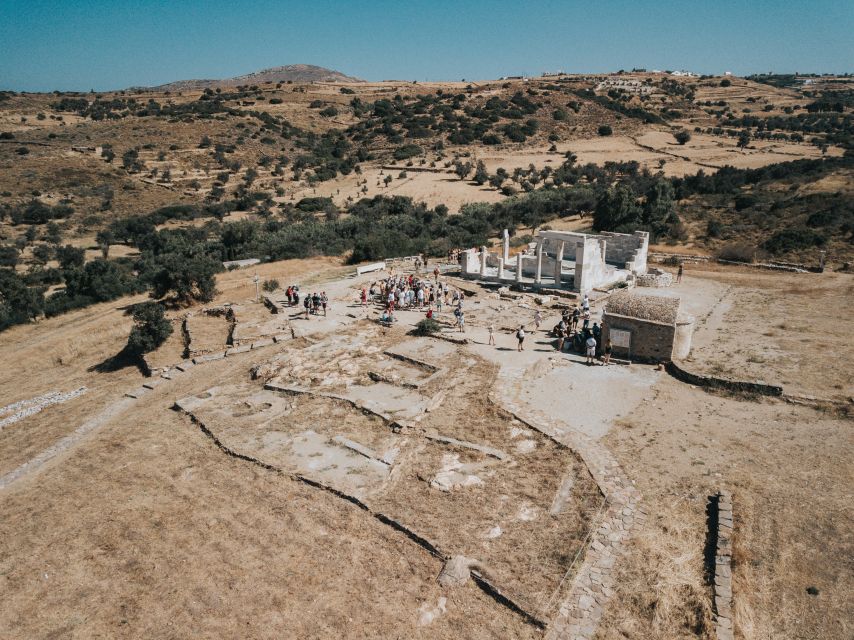
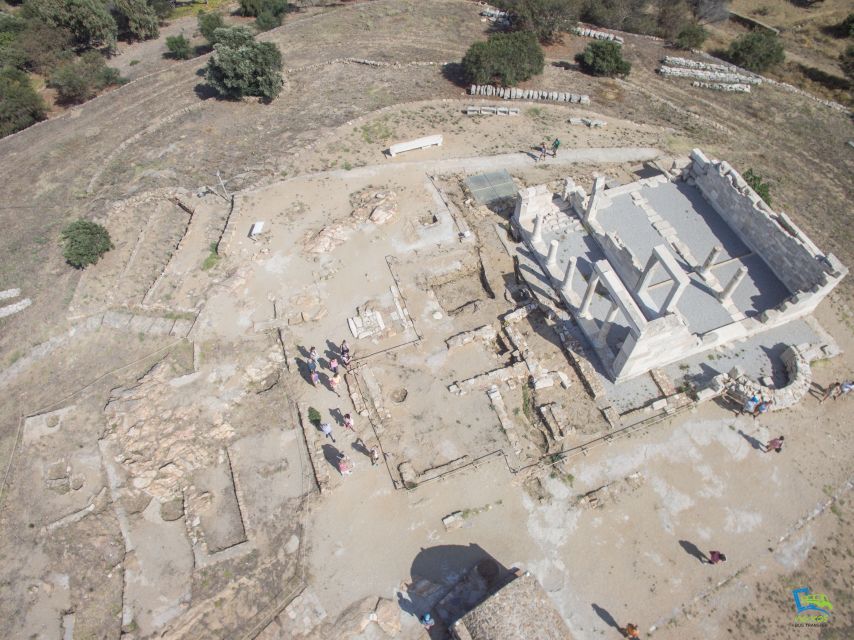
The first major stop is the Temple of Demeter, reached after about 30 minutes on the bus. The sanctuary dates to the 6th century BC and has been restored in a way that makes its design easier to understand than many scattered Greek ruins.
You’ll have about 40 minutes here. Expect steps and an uphill walk, so comfortable shoes matter. The site is not suitable for people with mobility impairments, and the brisk schedule makes it harder for anyone who needs frequent pauses.
Your guide explains the monument before you enter, since the guide is not licensed to give a running explanation inside the temple. You can then explore and take photographs on your own, along with a visit to the small museum.
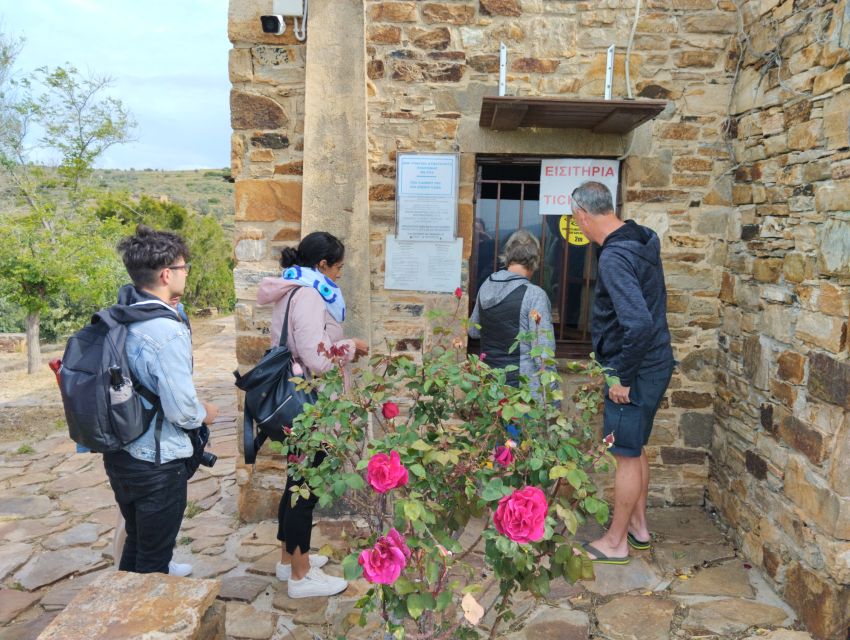
Admission costs €5 in cash and is not included. Bring euros, since this is one of several points where cash will be useful. The temple closes on Tuesdays and May 1. It can also close at noon during a predicted heat wave, in which case the relevant tour replaces it with a visit to Filoti Village.
That change is worth checking before you book if Demeter’s Temple is your main reason for joining. Filoti is a handsome mountain village and a good substitute, but it is not the same archaeological experience.
Damalas shows you Naxian pottery in use
From Demeter’s Temple, the bus takes about ten minutes to Damalas, a small community of roughly 100 people among the olive groves of Tragea. This is one of the most appealing stops because it feels connected to daily island life rather than arranged only for sightseeing.
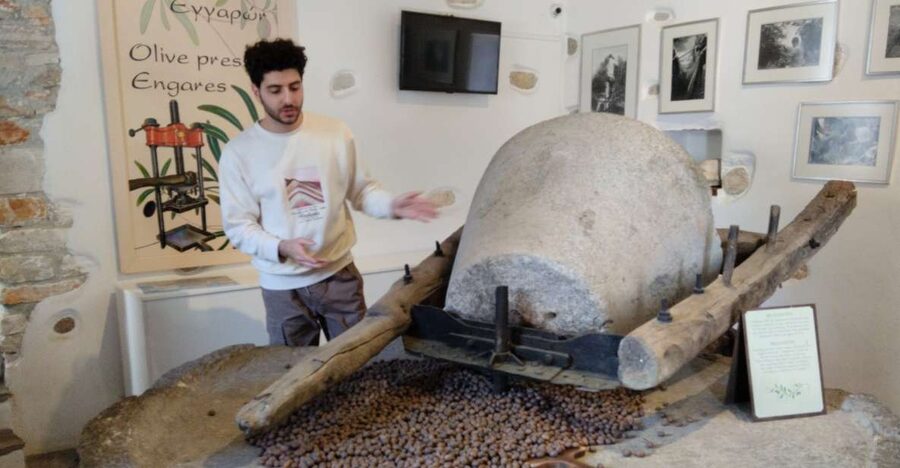
At a traditional, fourth-generation pottery workshop, local potter Manolis welcomes the group. He demonstrates how he works clay on the wheel and explains the methods passed through his family.
I like this stop because it gives you something to watch and understand, not just photograph. Pottery can seem like a generic souvenir until you see the handwork and hear how a local family keeps the practice going.
The visit lasts about 30 minutes and includes time for shopping. You might find small pieces that are easier to pack than bulky souvenirs, but the tour does not give you a long browsing period. If you want to buy something, look first, listen to the demonstration, and leave enough time to pay and rejoin the bus.
Chalki is the best place to slow down
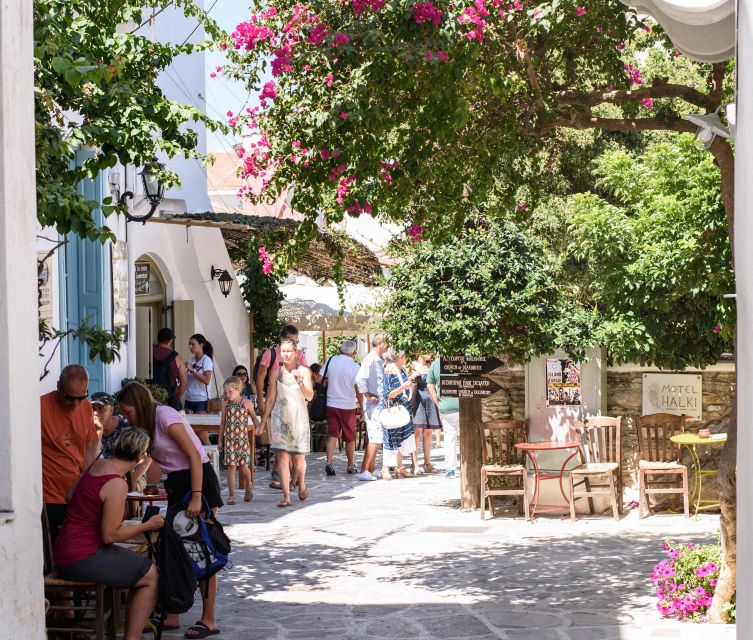
A short ride brings you to Chalki, the former capital and once the island’s main commercial center. This is the most flexible stop on the route, with about 50 minutes in the published schedule and roughly an hour in the fuller description.
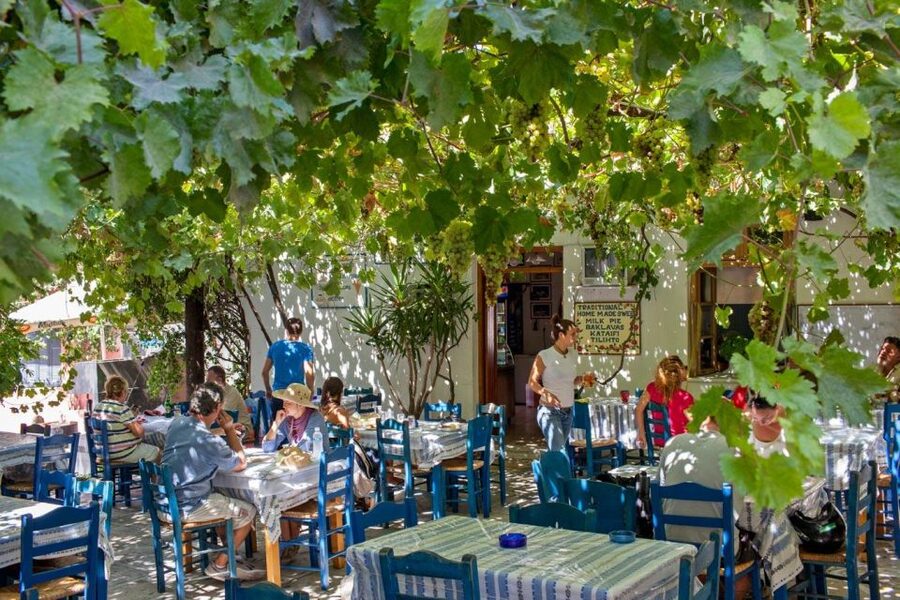
Chalki is known for colorful lanes, old buildings, small shops, cafés, and a quieter feel than the port. You can use the time in several ways:
- Walk through the village and take photographs.
- Buy handmade souvenirs.
- Sit with a coffee.
- Visit the Vallindras Kitron Distillery.
- Simply enjoy a break from the bus.
The Vallindras distillery is optional and costs €3 in cash. Kitron is a local citrus-based liqueur, so this is a useful stop if you want a taste of a Naxian product rather than another general souvenir shop.
Still, 50 minutes goes quickly. Several people have wished for more time in Chalki, and I understand why. If you enter the distillery, shop, and stop for coffee, there may be little time left for wandering. Decide in advance what matters most to you.
The free time also means the guide is not escorting you through every corner. That is a plus if you value independence, but you should keep track of the meeting time. The bus cannot wait for a leisurely second coffee.
Same old streets, another chapter:
- Athens: Ancient Greek Theater Performance
★ 4.7 · 2,481 reviews - Historical Delphi One Day Tour with Arachova Stop & Expert Guide
★ 4.5 · 1,247 reviews - From Athens: Ancient Corinth Day Trip with Canal & VR Guide
★ 4.6 · 1,073 reviews - Historic Athens: Small Group Electric Bike Tour
★ 4.9 · 966 reviews
Panagia Drosiani is a quick but memorable stop
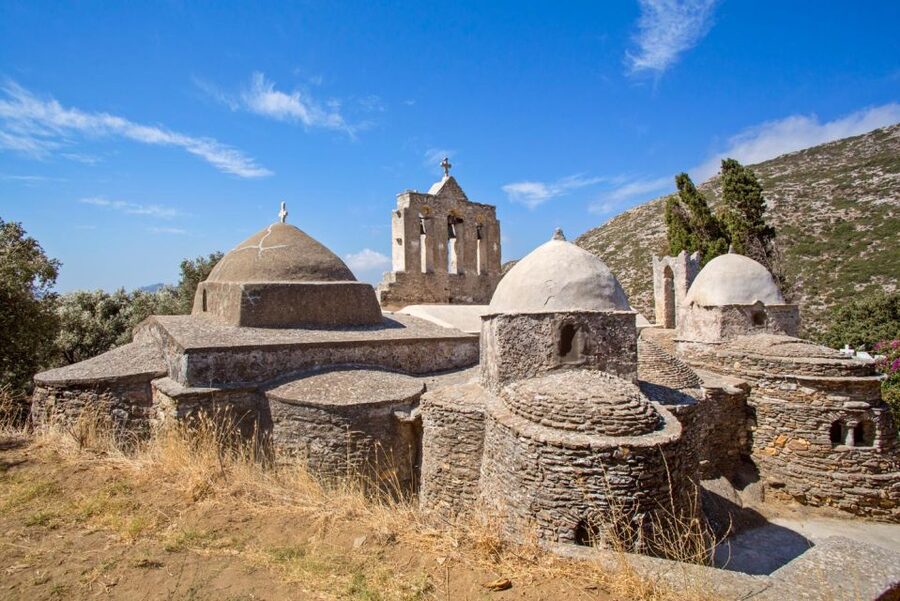
The route continues through old olive groves to Panagia Drosiani, a church dedicated to the Virgin Mary. It is considered one of the oldest churches in the Balkans and is important for both its architecture and its frescoes.
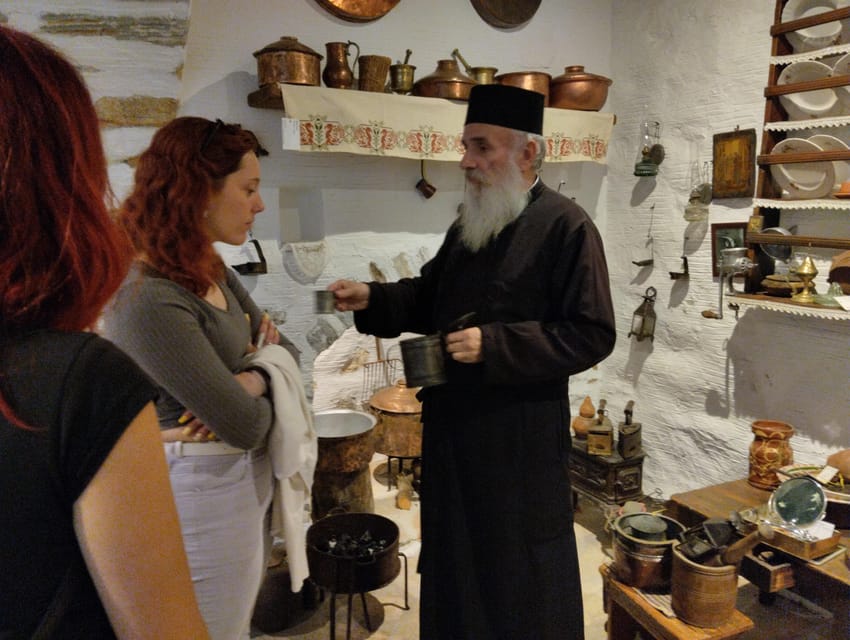
The stop is brief, about ten minutes. Usually, you’ll receive an explanation outside and have a chance to take photographs. If the church is open, you can step inside to see the frescoes.
The guide cannot provide a formal explanation inside the church, but can give you background before you enter. A small donation of €1 to €5 is customary at Greek churches, so keep a few coins handy.
This is one place where the tour’s fast pace is most noticeable. The church deserves more time than the schedule allows, especially if you are interested in early Christian art. Still, even a short visit helps you understand that Naxos is not only an island of beaches and classical ruins. Its religious buildings also carry a long story.
The marble quarry stop connects old and new Naxos
Just outside Kinidaros, the bus makes a roadside photo stop of contemporary marble quarries. You do not tour the quarry, but you get a view of the large-scale stone industry that remains part of Naxos today.
This brief pause works because it prepares you for the next stop. The island’s marble is not simply a material seen in ancient monuments. It is still quarried and worked, linking modern employment with the stone used by ancient builders and sculptors.
You’ll have only about five minutes here, so think of it as a quick viewpoint rather than a full visit. Keep your camera ready and listen for the guide’s explanation before the bus moves on.
Flerio Valley and the unfinished Kouros
The final major stop is Flerio Valley, a greener area with gardens and old marble-working sites. You’ll walk for about 20 minutes to see the Kouros at Melanes, an enormous unfinished statue carved from Naxian marble.
The Kouros is striking because it remains attached to the rock. You can see how ancient sculptors began shaping the figure and then abandoned it, leaving the rough connection between the statue and the ground.
This stop rewards close attention. Look at the scale, the unfinished surfaces, and the way the statue sits within the valley rather than in a museum hall. It offers a direct look at ancient technique, including the point where a large commission could fail or be left behind.
The walk is not a long hike, but the route includes uneven ground and the overall tour has a brisk rhythm. Wear shoes with a firm sole. If you have trouble with hills or uneven paths, this stop and Demeter’s Temple may be uncomfortable.
The guides and drivers make a real difference
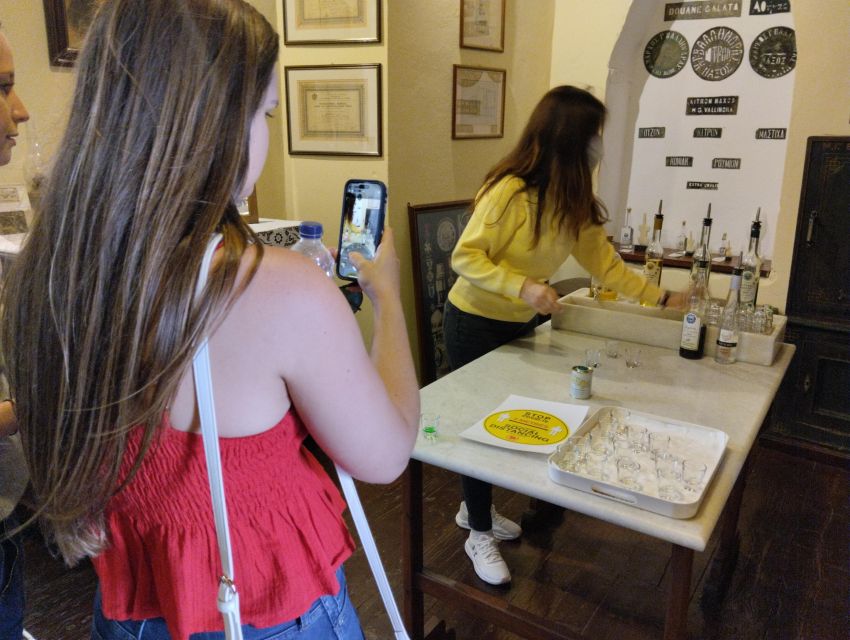
The guide’s style can shape the whole experience. Names that have appeared with this tour include Alex, Thanos, Aggeliki, Demetrius, and Panos, but your guide will depend on the date and departure.
The strongest guides use the drive time well. Thanos, for example, is from Naxos and has been praised for connecting the monuments with island life, while Alex has been described as warm, engaging, and good at answering questions. You should expect English and Greek guiding, with stories and explanations delivered mainly between stops and before entering sites.
The driver is just as important here. Naxos has narrow roads, sharp bends, and tight village streets. Drivers such as George, Giorgos, and Yorgos have drawn particular praise for handling the route smoothly and safely. Riding by bus means you can watch olive groves and mountain villages instead of concentrating on the road.
The air-conditioning is a practical advantage in summer. One bus once had an air-conditioning problem and was replaced during a stop, but mechanical issues can happen on any road tour. The operator’s response in that case was prompt.
Is $35 good value for Naxos?
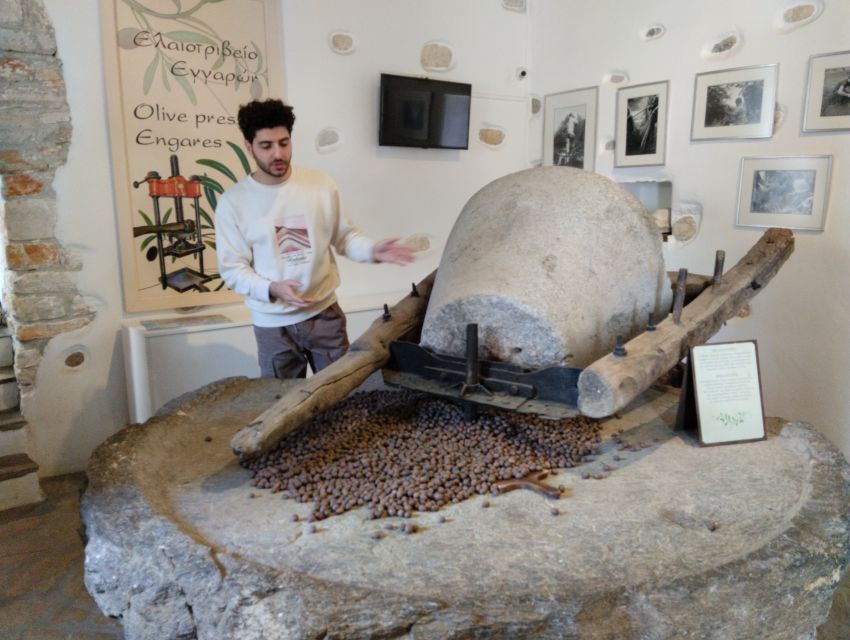
At $35 per person, I consider this strong value if you do not have a rental car. A car would give you more control, but driving unfamiliar mountain roads, finding parking, and fitting these sites into four hours would not be easy.
The price includes the bus, driver, local guide, taxes, and luggage storage. You still pay €5 for Demeter’s Temple, €3 for the optional Vallindras distillery, and any church donation. Those extra costs are small, but bring cash so they do not interrupt the day.
The tour also saves you from paying for a full-day outing when you only want an introduction. Families with children have found the half-day length manageable, and it leaves the rest of the day open for the beach, dinner, or Chora.
The value is less clear if you already have a car and want long visits at each site. In that case, a self-guided day could offer more freedom. You would, however, give up the local commentary and the ease of having someone else manage the roads.
Who should book this tour?
I would choose this tour if you are visiting Naxos for only a few days, do not want to drive, or want a quick introduction before exploring on your own. It also suits families who prefer four hours of sightseeing rather than a demanding full-day trip.
You should be comfortable walking uphill, climbing steps, and keeping to a schedule. The tour is not recommended for people with mobility impairments, and it is not a good fit if your ideal day means lingering over lunch or spending an hour inside each monument.
Bring comfortable shoes, a hat, water, and cash. The tour runs rain or shine, so a light rain layer is sensible outside the hottest months. On summer days, expect strong sun at exposed archaeological sites.
Cancellation is free up to 24 hours before departure, and you can reserve now and pay later. Pickup is offered only for the morning departure, from selected points. Afternoon departures meet at the bus office unless you book the private option, which includes accommodation pickup and drop-off in selected areas.
Should you book the Naxos history and culture tour?
Book it if you want to see the inland side of Naxos without renting a car. The mix is unusually good for four hours: an ancient sanctuary, a family pottery workshop, a former capital, an old church, active marble quarries, and an unfinished statue.
Skip it if you want a slow archaeological visit or dislike group schedules. The short stops are the clear weakness, especially at Chalki and Panagia Drosiani.
For most first-time visitors, I think the tour earns its price. It gives you the island’s ancient, religious, rural, and working sides in one efficient morning or afternoon, with a local guide filling in the details as you go.
FAQ
Where does the Naxos history and culture tour meet?
The standard meeting point is the Naxos Bus Transfer Office, located just outside Naxos Port.
Is hotel pickup available?
Pickup from selected spots is available only for the morning departure. The private tour option includes pickup and drop-off from accommodation in selected areas. Standard hotel drop-off is not included.
How long does the tour last?
The tour lasts four hours, including bus travel and visits to the listed sites.
What languages are available?
The live guide service is offered in English and Greek.
Is Demeter’s Temple included in the tour price?
The visit is included in the route, but entry costs €5 per person and must be paid in cash on the spot.
What happens if Demeter’s Temple is closed?
On Tuesdays and May 1, the temple visit is replaced with a stop at Filoti Village. The temple may also close at noon during a predicted heat wave, in which case the afternoon tour visits Filoti Village instead.
Can I visit the Vallindras Kitron Distillery?
Yes. The visit is optional and costs €3 in cash. You can also use your free time in Chalki to walk, shop, or sit at a café.
Is the tour suitable for people with mobility impairments?
No. You need to climb steps and walk uphill at Demeter’s Temple, and the tour follows a relatively brisk pace. It is not recommended for people with mobility impairments.
More Half-Day Tours in Greece
- Lima’s Vibrant Heritage: Exploring the City’s Landmarks Half-day
★ 4.5 · 581 reviews - From Ho Chi Minh: Cu Chi Tunnels Half-Day History Tour with Guide
★ 5.0 · 480 reviews - Singapore: Historical Half-Day Bike Tour
★ 4.8 · 399 reviews - Miyajima Half-day Trip Historical Walking Tour
★ 5.0 · 284 reviews
Latest history tours reviewed in Greece
- From Athens: Explore Ancient Greece 4-Day Tour★ 4.7 · 73 reviews
- From Athens: Ancient Olympia Full-Day Private Tour★ 4.8 · 22 reviews
- From Athens: Explore Ancient Corinth & Charming Nafplion★ 4.6 · 102 reviews
- Corfu: Historic Buildings and Great Personalities Tour★ 4.8 · 24 reviews
- Corfu Town express tour: 90 minutes of History and Culture★ 5.0 · 19 reviews
- Classical guitar concert in a historic olive press★ 5.0 · 23 reviews
- Athens: Women in Ancient Greece★ 5.0 · 98 reviews
- Athens: The History of Greek Mythology Private Tour★ 4.7 · 53 reviews
Greece History Tours, compared.
Historical Delphi One Day Tour with Arachova Stop & Expert Guide
Read our review →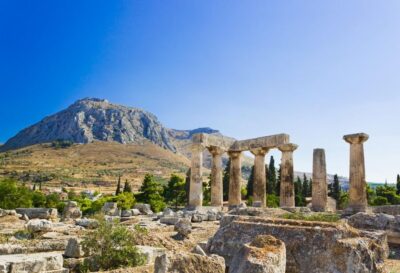
From Athens: Ancient Corinth Day Trip with Canal & VR Guide
Read our review →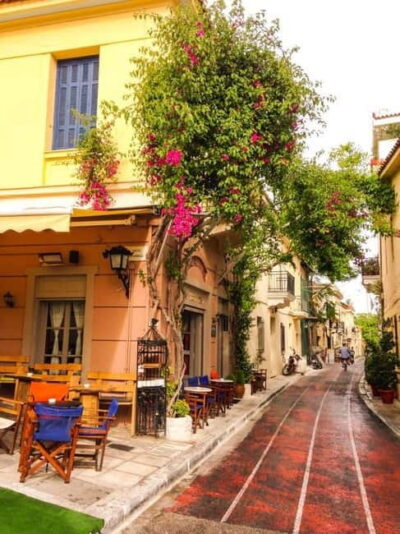
Historic Athens: Small Group Electric Bike Tour
Read our review →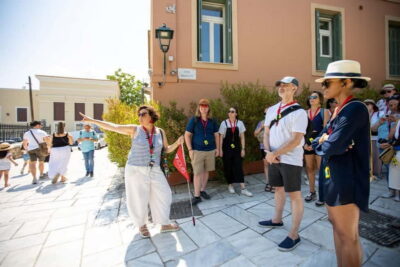
Acropolis, Parthenon & Athens Old City Heritage Walking Tour
Read our review →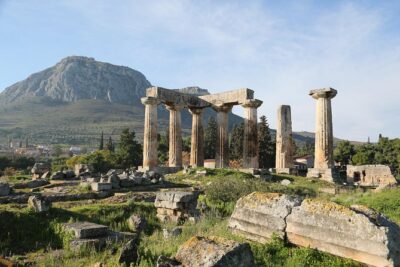
Private Biblical Tour Ancient Corinth & Isthmus Canal from Athens
Read our review →
Ancient Olympia: Archaeological Site and Museum Entry Ticket
Read our review →
Athens: Ancient Corinth & Nafplio Full Day Trip with Swim
Read our review →Browse the lists this tour appears in