Review · ATHENS
Ancient Athens Segway Tour
Athens is easier to understand when you connect its ruins, hills, markets, and pedestrian streets in one sweep. This two-hour Segway tour starts in Plaka and links the Acropolis area with the Areopagus, Pnyx, Kerameikos, Ancient Agora, and Monastiraki, giving you a quick feel for the city’s 3,000-year story.
I like the patient training for first-time riders and the views along Dionysiou Areopagitou Street. I also like the way the route mixes famous sights with everyday Athens around Monastiraki. The catch is simple: you do not enter the archaeological sites, and talking while riding can be hard in busy areas.
Key points at a glance
- Beginner-friendly training: You receive instruction, practice time, and a helmet before setting off.
- Acropolis views without a long climb: Dionysiou Areopagitou Street and the Areopagus provide some of the best outdoor views on the route.
- Ancient Athens in one ride: See the Theater of Dionysus, Odeon of Herodes Atticus, Pnyx, Kerameikos, and Ancient Agora.
- A useful first-day orientation: The ride helps you understand where Plaka, Thiseio, Monastiraki, and the main archaeological zones sit in relation to one another.
- Local guides make a difference: Guides including Demie, Dimitry, Yota, Menelaos, and Alexander have been praised for patience, clear explanations, and practical Athens advice.
- Know the limits: Site admission is not included, large bags are not allowed, and riders must meet the stated age, weight, and mobility rules.
Why this is a smart way to see central Athens
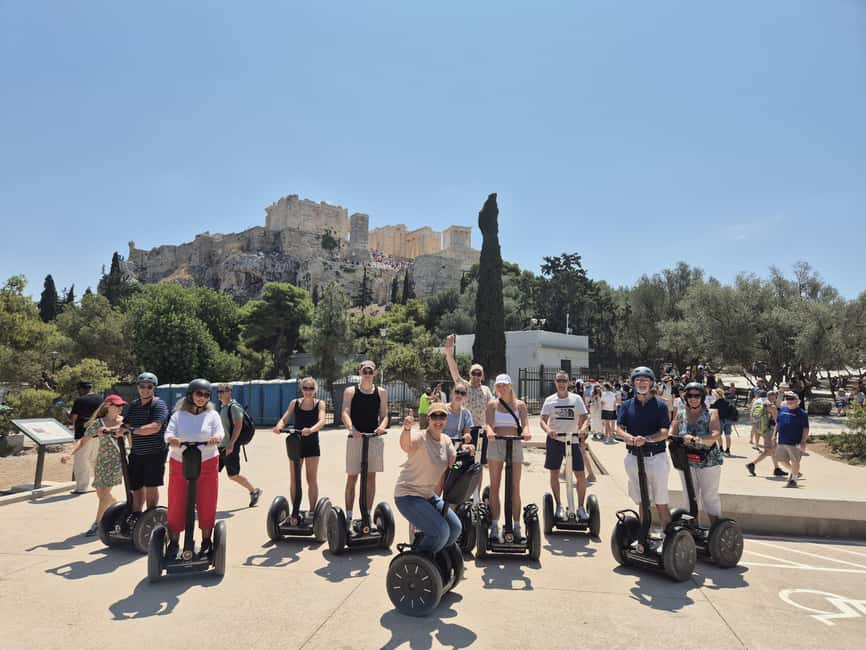
A Segway is useful in Athens because the major sights are close together on a map but spread across streets, slopes, plazas, and pedestrian paths. Walking from Plaka to Kerameikos and back can eat up much of a morning or afternoon. On this tour, you cover more ground while still stopping often for views and explanations.
I would not treat it as a substitute for visiting the Acropolis or the Ancient Agora inside. Instead, think of it as a moving introduction. You see where the sites are, hear why they matter, and get a sense of which places deserve a longer visit later.
The price is $81 per person. That is not cheap for two hours, especially since entrance tickets are extra. Still, the value improves if you are short on time, visiting Athens for the first time, or traveling with people who do not want to spend hours walking in the heat. You are paying for equipment, instruction, a local guide, and a route that ties together several parts of the historic center.
The experience has a 4.9 rating from 89 ratings, with repeated praise for the guides’ patience and the ease of learning the Segway. One rider said it took about two minutes to feel comfortable. That will not be true for everyone, but the training period is built into the experience, and first-time riders are not expected to arrive with any skill.
More Ancient History Tours in Athens
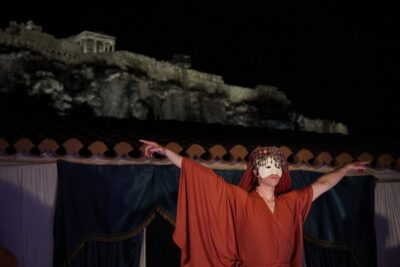
- Athens: Ancient Greek Theater Performance
★ 4.7 · 2,481 reviews - Historical Delphi One Day Tour with Arachova Stop & Expert Guide
★ 4.5 · 1,247 reviews - From Athens: Ancient Corinth Day Trip with Canal & VR Guide
★ 4.6 · 1,073 reviews
Starting in Plaka with a proper lesson
You meet at Eschinou 9 in Plaka, Athens 105 58. Plaka is a sensible starting point because you are already in the oldest and most picturesque part of central Athens, close to the Acropolis and the pedestrian routes used during the ride.
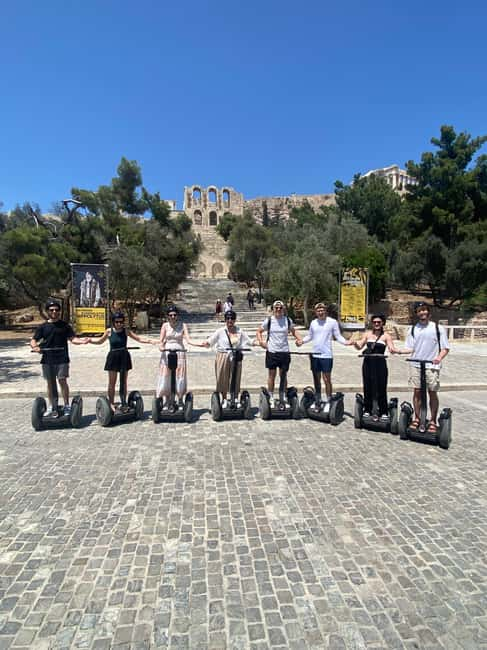
Before moving into the city, the guide explains how to start, stop, turn, and control the Segway. You also receive a helmet and safety instructions. This matters more than it may sound. A short lesson gives you time to understand the machine before dealing with pedestrians, uneven streets, and narrow urban routes.
You need to be able to make movements such as climbing and descending stairs without help. The minimum riding age is 10, and anyone under 18 must have an adult with them. The Segway is not suitable for anyone under 45 kilograms or over 113 kilograms, and the activity is not recommended during pregnancy.
Wear comfortable shoes. Do not bring a suitcase or large bag. These rules are practical rather than fussy, since bulky luggage makes a two-wheeled ride awkward and unsafe.
Dionysiou Areopagitou Street and the Acropolis
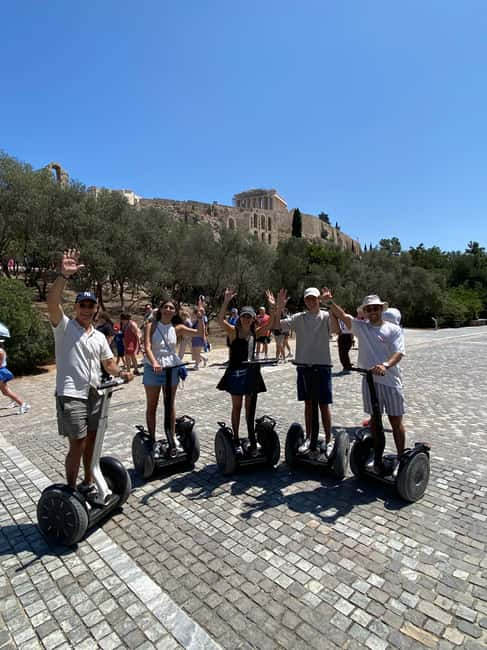
The route moves onto Dionysiou Areopagitou Street, a pedestrian promenade with a clear view toward the Acropolis. This is one of the strongest parts of the ride. You can look up at the Parthenon area while gliding along a broad, scenic route instead of stopping every few steps in a crowd.
The Acropolis Museum appears along the way. The tour does not include admission or a guided visit inside, but the guide can place the museum and the monuments around it into the larger story of Athens. If you plan to visit the museum later, this first look helps you understand its location and relationship to the Acropolis.
You also pass the Theater of Dionysus, often linked to the beginning of formal Western theater. Ancient Athenians gathered here for dramatic performances, and the setting gives you a direct connection between the city’s political life, religious festivals, and theater.
The Odeon of Herodes Atticus sits on the southwest slope of the Acropolis. Built in 161 AD by Herodes Atticus, the stone theater still hosts performances during the Athens Festival. You view it from outside on this tour. That limitation is worth remembering, but the exterior setting is impressive and easy to appreciate from the route.
Areopagus and Pnyx: two hills that explain Athens
The stop at the Areopagus, also called the Hill of Mars, adds a short climb and a strong payoff. From this rocky outcrop, you look across central Athens, with ancient monuments set against the modern city. The spot also mattered in ancient legal and political life, so the view is tied to more than photography.
You receive time for photos and free time here, along with a guided explanation. Be careful with your footing. The experience information stresses the ability to manage stairs and similar movements, and a rocky hill is not the place for slippery shoes or a hurried step.
The Pnyx is one of the most meaningful stops for anyone interested in government. Ancient citizens gathered here for political assemblies, and the site is closely tied to the early practice of direct democracy. It is easy to reduce the Pnyx to a simple photo stop, but the guide’s explanation helps you picture citizens meeting outdoors to debate public decisions.
These two hills also break up the riding. You are not continuously moving for two hours. The itinerary includes short riding sections, photo stops, free time, and explanations, which makes the pace manageable for a first-time rider.
More Ancient History Tours in Greece
- Acropolis, Parthenon & Athens Old City Heritage Walking Tour
★ 4.5 · 876 reviews - Private Biblical Tour Ancient Corinth & Isthmus Canal from Athens
★ 5.0 · 762 reviews - Athens: Ancient Corinth & Nafplio Full Day Trip with Swim
★ 4.8 · 531 reviews - Athens: Ancient Agora E-Ticket and Audio Tour
★ 3.9 · 413 reviews
Thiseio and the route between the ruins
Thiseio connects the Acropolis area with the western side of the historic center. This part of the route gives you scenic views while moving through an area where cafés, pedestrian paths, ruins, and city life meet.
The planned riding time around Thiseio is about 10 minutes. That sounds brief, but the stop works as a link between major sights rather than a full museum visit. You get a sense of the layout and continue toward Kerameikos and the Ancient Agora.
A benefit of using a Segway here is that you can cover the distance without spending your energy on pavement. A drawback is that the guide may need to pause or repeat information when the route becomes busy. One rating specifically noted that it was difficult to hear the guide while moving. If a historical explanation matters to you, stop fully before listening and ask questions at the next pause.
Kerameikos, Athens’ old pottery district
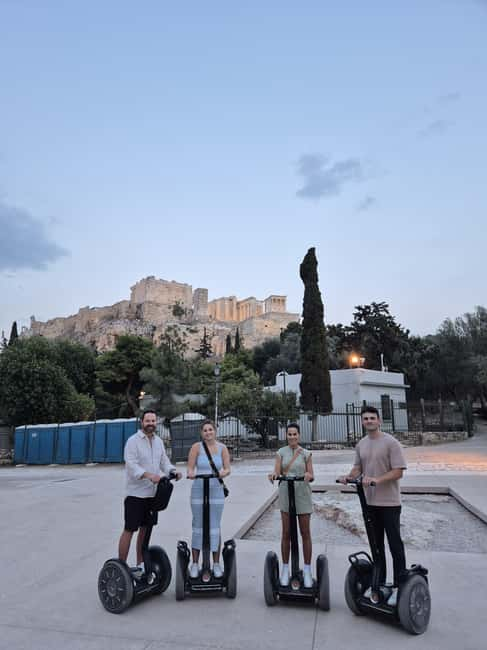
Kerameikos is often missed by people who stick to the Acropolis and Monastiraki. The area was Athens’ ancient pottery quarter, and the archaeological remains offer a different view of the city. Instead of focusing only on temples and public debate, this stop points you toward craft, work, burial customs, and the everyday side of ancient Athens.
The tour allows time for a photo stop, a visit from the route, and an explanation. You do not enter the archaeological site as part of the activity, so you should not expect to walk among the ruins with a ticket. Still, seeing the site’s position in the city helps you decide if it deserves a separate visit.
I value this stop because it prevents the tour from becoming an Acropolis-only circuit. Athens was not built only by famous philosophers and politicians. Kerameikos gives the route a more ordinary human scale.
Ancient Agora and the daily life of classical Athens
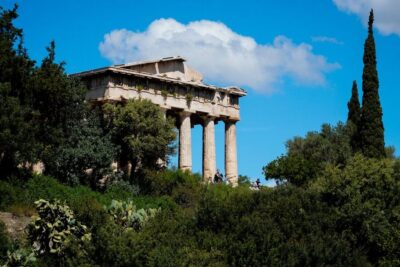
The Ancient Agora is another major outdoor sight viewed from the route rather than entered with a tour ticket. In classical Athens, this was a center of public life, with government buildings, temples, commercial activity, and open gathering spaces.
The route gives you time for photos, sightseeing, and a guide’s explanation. You can then return on your own if you want to explore the ruins in detail. I recommend doing that if you care about ancient civic life, since the Agora rewards slow walking and close attention more than a quick pass.
The key value here is context. The Pnyx shows where citizens gathered for assemblies. The Agora shows the civic spaces that supported daily political and commercial life. Taken together, these stops make the idea of Athenian democracy more concrete.
The planned riding time around the Ancient Agora is about 15 minutes. That is enough to get your bearings, not enough for a full archaeological visit. Keep that distinction clear before booking.
Monastiraki, Hadrian’s Library, and the Roman Agora
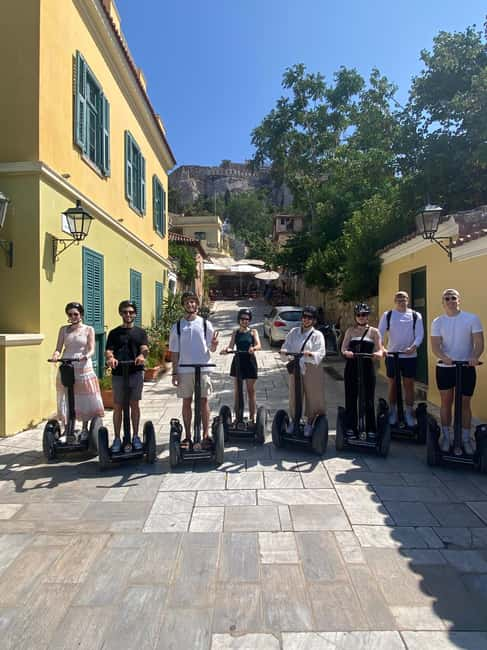
Monastiraki changes the mood. After the quiet ruins and hilltop views, you move into one of central Athens’ busiest public areas, with shops, street life, and the flea market. The square is a useful place to see how Athens continues to change while remaining surrounded by ancient remains.
The route passes Hadrian’s Library and the Roman Agora, adding Roman-era layers to the story. You are not seeing one neatly separated ancient period. Greek, Roman, Byzantine, Ottoman, and modern Athens overlap in the same central districts.
The planned riding time in Monastiraki is about five minutes, with a break, photos, free time, and sightseeing. That short riding segment does not mean the area is unimportant. It means the guide is using it as part of a broader city circuit, not as a dedicated market tour.
Be ready for pedestrians. Riding through busy pedestrian streets is fun for some people and stressful for others. Keep your attention forward, listen for instructions, and expect the group to slow down. The route may feel less smooth here than on the wider promenades near the Acropolis.
What the guides add to the experience
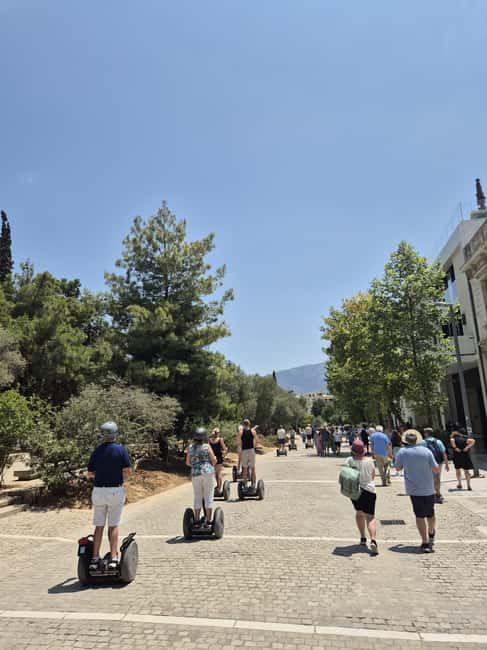
The guide can make or break a short city tour. The most repeated praise here is for calm instruction, patience with beginners, and useful historical explanations. Demie was praised for fitting in extra information and modern history, while Dimitry was noted for taking time with explanations. Yota, Menelaos, Alexander, Gina, and Georgia were also singled out for friendly help, clear English, or strong local advice.
These names do not guarantee who will lead your tour, but they show the kind of guiding style to expect. The languages offered are English, Spanish, Hebrew, Russian, and Ukrainian. If you have specific language needs, check availability when you book.
The guides may also adjust the route. One tour was tailored for people who had already visited the Acropolis, allowing more attention to areas they might otherwise miss. That flexibility is useful, but the exact route can depend on the group, traffic, and the guide’s judgment.
Time, group pace, and practical value
The advertised duration is two hours, including training, riding, stops, and explanations. That is enough for an overview, not a deep visit to every landmark. The itinerary lists about 15 minutes at the Areopagus, 10 minutes around Thiseio, 15 minutes at Kerameikos, 15 minutes at the Ancient Agora, five minutes around Monastiraki, and roughly an hour across Athens’ connected streets.
A large group can slow the ride, especially during the practice session or when crossing busy areas. One person was offered a free future tour after delays caused by a large family group. That suggests the operator takes timing seriously, but you should still avoid scheduling a tight connection immediately afterward.
I would book this early in your Athens stay. It helps you get your bearings, locate the major districts, and collect ideas for later visits. It also works well after a long travel day, when you want to see the city without tiring your feet.
Free cancellation is available up to 24 hours before the start for a full refund, and you can reserve now and pay later. Those terms help if your Athens schedule is still moving around.
Who should book this Segway tour?
I would recommend it to first-time Athens visitors, families with teenagers, and anyone who wants a broad introduction before choosing which sites to enter. It is especially useful if you want outdoor views and a bit of history but do not want to spend an entire afternoon walking between ruins.
It also suits people who have already visited the Acropolis and want more attention on Kerameikos, the Agora, Pnyx, Thiseio, and Monastiraki. The route gives you a different angle on the city than a single monument visit.
I would think twice if your main goal is detailed archaeology. Since the tour does not enter the sites, you will need separate tickets and time for the Acropolis Museum, Acropolis, Ancient Agora, or other archaeological areas.
I would also skip it if you dislike balancing on moving equipment, have mobility limits that make stairs difficult, are pregnant, or need to carry a large bag. The Segway is easy for many beginners, but it is still active sightseeing.
Should you book it?
Book this tour if you want a fast, cheerful orientation to central Athens, especially on your first day. The patient training, strong city views, and mix of major ruins with Monastiraki street life give you plenty for two hours.
Do not book it expecting entry into archaeological sites or a long scholarly talk at each monument. At $81, the price makes the most sense when you value saved walking time, a flexible local guide, and the chance to see several districts in one outing. For that purpose, it is a practical and enjoyable choice.
FAQ
Where does the Ancient Athens Segway Tour start?
It starts at Eschinou 9 in Plaka, Athens 105 58, Greece.
How long does the tour last?
The tour lasts two hours, including Segway training, riding, sightseeing, photo stops, and guided explanations.
Is Segway training included?
Yes. Training, safety instructions, and a helmet are included before the group leaves Plaka.
Does the tour enter the archaeological sites?
No. The tour passes and views sites such as Kerameikos and the Ancient Agora, but entry tickets and guided visits inside the archaeological sites are not included.
What age can children be to ride?
The minimum age to ride a Segway is 10. Anyone under 18 must be accompanied by an adult.
Are there weight restrictions?
Yes. The Segway is not suitable for anyone under 45 kilograms or over 113 kilograms.
What languages are available?
Live guides are available in English, Spanish, Hebrew, Russian, and Ukrainian.
Can I bring a large bag or luggage?
No. Large bags and luggage are not allowed. Comfortable shoes are recommended.
What is the cancellation policy?
You can cancel up to 24 hours in advance for a full refund. You can also reserve now and pay later.
More History Bike, Segway and Tuk-Tuk Tours in Greece
- Athens: Bike Tour of Athens Historical Centre
★ 5.0 · 61 reviews - Ancient Athens Electric ATV Scooter Tour
★ 4.9 · 29 reviews
More History Bike, Segway and Tuk-Tuk Tours in Athens
- Historic Athens: Small Group Electric Bike Tour
★ 4.9 · 966 reviews - Athens: Small Group E-Bike Tour of Historic Highlights
★ 4.9 · 154 reviews - Athens Highlights by E-Bike: Small-Group Historic Tour
★ 5.0 · 131 reviews - Ancient Athens Segway Tour with Agora and Kerameikos
★ 5.0 · 94 reviews
Latest history tours reviewed in Athens
- From Athens: Ancient Olympia Full-Day Private Tour★ 4.8 · 22 reviews
- From Athens: Explore Ancient Corinth & Charming Nafplion★ 4.6 · 102 reviews
- From Athens: Explore Ancient Greece 4-Day Tour★ 4.7 · 73 reviews
- Athens: Women in Ancient Greece★ 5.0 · 98 reviews
- Athens: The History of Greek Mythology Private Tour★ 4.7 · 53 reviews
- Athens: Ancient Corinth & Nafplion Guided Premium Tour★ 4.7 · 237 reviews
- Athens: Roman Agora & Ancient Agora E-ticket & 2 Audio Tours★ 4.1 · 107 reviews
- Athens: Kotsanas Ancient Greek Technology Museum Guided Tour★ 5.0 · 29 reviews
Athens History Tours, compared.
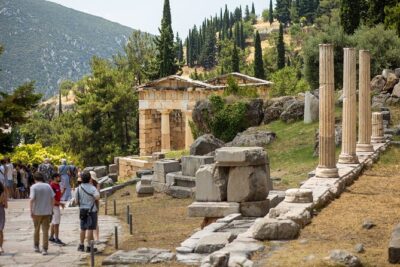
Historical Delphi One Day Tour with Arachova Stop & Expert Guide
Read our review →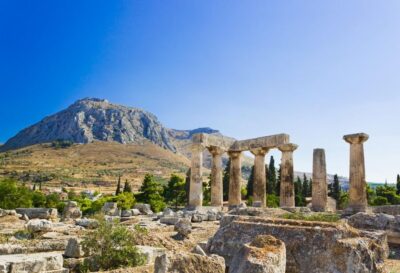
From Athens: Ancient Corinth Day Trip with Canal & VR Guide
Read our review →
Historic Athens: Small Group Electric Bike Tour
Read our review →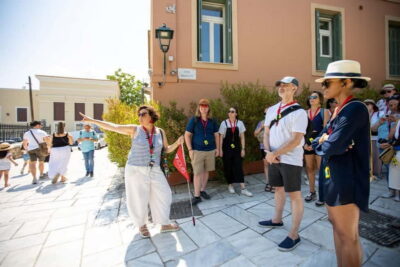
Acropolis, Parthenon & Athens Old City Heritage Walking Tour
Read our review →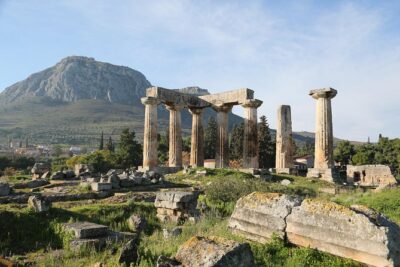
Private Biblical Tour Ancient Corinth & Isthmus Canal from Athens
Read our review →
Athens: Ancient Corinth & Nafplio Full Day Trip with Swim
Read our review →